
BuddhistCatholicContemplativeEvangelicalGeneral ChristianHinduJewishLatter-day SaintMuslimNew VisionsProgressive Christian
Beliefs
- Buddhist
- Catholic
- Contemplative
- Evangelical
- General Christian
- Hindu
- Jewish
- Latter-day Saint
- More Voices
- Muslim
- New Visions
- Pagan
- Progressive Christian
Topics
- Religion News
- Food and Religion
- Sports and Religion
- Religious Art
- Religious Music and Entertainment
- Religious Events
- History and Religion
- Style and Religion
- Politics and Religion
- Women in Religion
- Recreation Outdoors and Religion
- Business Finance and Religion
- Careers Workplace and Religion
- Education and Religion
- Family Parenting and Religion
- Health Fitness and Religion
- Home and Religion
- Relationships and Religion
- Technology and Religion
- Travel and Religion
Columnists
- Buddhist Columnists
- Business Finance and Religion Columnists
- Careers Workplace and Religion Columnists
- Catholic Columnists
- Contemplative Columnists
- Education and Religion Columnists
- Evangelists Columnists
- Family Parenting and Religion Columnists
- General Christian Columnists
- Health Fitness and Religion Columnists
- Hindu Columnists
- History and Religion Columnists
- Home and Religion Columnists
- Jewish Columnists
- More Voices Columnists
- Latter Day Columnists
- Muslim Columnists
- New Visions Columnists
- Nonreligious Columnists
- Pagan Columnists
- Politics and Religion Columnists
- Progressive Columnists
- Recreation Outdoors and Religion Columnists
- Relationships and Religion Columnists
- Religion News Columnists
- Religious Art Columnists
- Religious Events Columnists
- Religious Music and Entertainment Columnists
- Sports and Religion Columnists
- Style and Religion Columnists
- Technology and Religion Columnists
- Travel and Religion Columnists
- Women in Religion Columnists
Resource Library
- 2026 Calendar
- Library of World Religions
- The 100 Most Holy Places on Earth
- Patheos Answers
- Podcasts
- Videos
- Faith Leaders Database
- Anglican Episcopalian
- Bahai
- Baptist
- Buddhism
- Christianity
- Confucianism
- Eastern Orthodoxy
- Hinduism
- Holiness and Pentecostal
- ISKCON
- Islam
- Judaism
- Lutheran
- Methodist
- The Church of Jesus Christ of Latter-day Saints
- New Age
- Paganism
- Presbytarian and Reformed
- Protestantism
- Religion Behind the Scenes
- Roman Catholic
- Scientology
- Shia Islam
- Sikhism
- Sufism
- Sunni Islam
- Taoism
- Zen
- See all religions
Research Tools
 Ad-Free & Subscriber Log-In Subscription Support
Ad-Free & Subscriber Log-In Subscription Support
Follow Patheos 

- Trending:
- Forgiveness
- |
- Marriage
- |
- Consciousness
- |
- Death Penalty
- |
- Election
- |
- Halloween
 The Great Divide
- Home
- Evangelical
- Self-Awareness: The Key to Authenticity
Self-Awareness: The Key to Authenticity
Last updated on: November 7, 2016 at 9:20 am by Adrian Crawford
Self-Awareness: The Key to Authenticity 2016-11-07T09:20:36-04:00 Adrian Crawford
Patheos Explore the world's faith through different perspectives on religion and spirituality! Patheos has the views of the prevalent religions and spiritualities of the world.
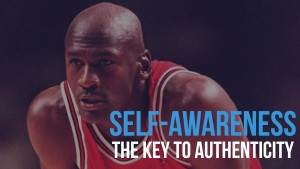
“Authentic” is the current buzz word of the leadership community. It would be impossible to attend a conference or any other forum devoted to refining the art of leadership without hearing the mantra of authenticity. What I have not heard a lot of talk on, however, is what it really takes to be authentic.
For someone to truly be authentic, meaning that they lead from who they are and not from who they are not, they must first and foremost be self-aware. Self-awareness has many levels and dimensions, but at it’s most basic definition it is “an awareness of one’s own personality or individuality.” I believe in the core of every individual, God has placed gifts inside of each of his image bearers, but our fears and insecurities bury them. Unfortunately, the higher the circles I get into with people where the demand for high capacity leaders is palpably bursting, I am amazed at how some of the people in these discussions are just not self-aware.
What hinders us from full self-awareness is the same thing that hinders us from most good things God has for us… sin. When we break the commandments, we take gigantic steps further and further away from knowing and growing our own personalities and individuality.
First, we covet. We try to steal the gifts and callings that others have and claim them for our ourselves. While I may admire and learn from others, it is a grave disservice to myself and to those I lead for me to try to make things that are not mine, into my own. Here is what I mean. When I was growing up I emulated my basketball game after the one and only, Michael Jordan. Everything was MJ, from how I wore my wristband on my mid-forearm, folded my socks like he did, to how I carried myself. I even tried to copy the legendary strut – all hoopers know what I’m saying. I wanted to be Michael, and doing all of these things at some level was harmless. The problem came as I got older. Still playing basketball, but I found out the hard way that God gave Jordan things that he clearly did not give me. This forced me to discover what ways God gifted me to play the game, and while I still admired MJ, I had to work on Adrian if I ever wanted to actually be good at my craft. Hear me, I could have continued to try to be Michael, and maybe that would have carried me for a little while, but I doubt I would have ever grown to play at the capacity that I eventually did when I embraced who I was as a player. Some leaders copy and walk around with success at times, but as imposters they are not experiencing the deepness of what God has given them. They are not fulfilled and they are not living as they were meant to be.
If we don’t covet, we lust (and sometimes we do both). Sin deceives, this is a fact. What lusting in leadership causes us to do is crave power and platforms. The diabolical part of lust is that it is never satisfied. We might even obtain the crowd and followers we so thirst for, but even these can deceive us. Anything gained through lust eventually crumbles because it’s built on facades. Lust craves to dominate, so as it grows it devalues everything around it, even the object of its desire. So even if the goal is obtained, it has been devalued so much that another goal is required because the initial one no longer satisfies.
One of the worst sins we can commit as leaders is failing to love others as God has loved us. We tear others down as our platform. Leaders have built entire movements and followings on what they are NOT like. They build their lives into a person who is opposite of someone who has hurt them or they don’t like; when we do this, we put ourselves on a pedestal that we are better than this other person. It is toxic and unpleasant and stifles authenticity. We should learn from hurts and pains, but it should never be the platform we build on. You may not agree with what another leader is doing, so what?! Focus on what you are doing, get further in the direction that you want to head and keep moving. In the Church, this can be most detrimental. Jesus died for his bride and when we start throwing rocks at her, we need to evaluate the posture of our hearts and start over if that is what it takes.
Previous Post

November 3, 2016
Competition, the Fuel for Greatness
Next Post

November 14, 2016 Empathy is Free, but it Might Cost You Everything
Browse Our Archives
Select a Category Uncategorized
Select a Month July 2017 June 2017 April 2017 March 2017 February 2017 January 2017 December 2016 November 2016 October 2016 September 2016 August 2016 July 2016 June 2016
Follow Us!
TAKE THE
Religious Wisdom Quiz
Which chapter in Proverbs describes detailed work habits of the ant?
Select your answer to see how you score.
Proverbs 24 Proverbs 6 Proverbs 31 Proverbs 2
Related posts from The Great Divide




Currency Exchange: Building Relational Capital Will Get You...
TRENDING AT PATHEOS Evangelical

The REST of Your Life: A Creative Wrestles...
This week I had a conversation with a good friend from church....

How the author of the world's best hymn...
I've been working with John Newton for a while now. This makes...

Long before this Lectio Divina, Psalm 130 - the song - started...

What About the Trees? Another Living Parable
After I finished writing the last article about falling leaves as a...

Why Classical Education Is a Conversation, Not a...
Come and Read: Joy in Classical Education When I was a little...

Cornell University has received a great deal of negative publicity and intense...
view all Evangelical blogs
Ad-Free & Subscriber Log-In Subscription Support
- About Us
- 2026 Calendar
- Videos
- Podcasts
- Library of World Religions
- Faith In Media Tracker
- Advertise With Us
- Write for Us
- Privacy Policy
- Terms of Service
- Do Not Sell My Data
- Contact Us
- Radiant Digital
- Manage Newsletter Subscriptions
- Unsubscribe From Notifications
- Sitemap
Copyright 2008-2026, Patheos. All rights reserved.
Subscription Support Ad-Free & Subscriber Log-In
Follow Patheos