
BuddhistCatholicContemplativeEvangelicalGeneral ChristianHinduJewishLatter-day SaintMuslimNew VisionsProgressive Christian
Beliefs
- Buddhist
- Catholic
- Contemplative
- Evangelical
- General Christian
- Hindu
- Jewish
- Latter-day Saint
- More Voices
- Muslim
- New Visions
- Pagan
- Progressive Christian
Topics
- Religion News
- Food and Religion
- Sports and Religion
- Religious Art
- Religious Music and Entertainment
- Religious Events
- History and Religion
- Style and Religion
- Politics and Religion
- Women in Religion
- Recreation Outdoors and Religion
- Business Finance and Religion
- Careers Workplace and Religion
- Education and Religion
- Family Parenting and Religion
- Health Fitness and Religion
- Home and Religion
- Relationships and Religion
- Technology and Religion
- Travel and Religion
Columnists
- Buddhist Columnists
- Business Finance and Religion Columnists
- Careers Workplace and Religion Columnists
- Catholic Columnists
- Contemplative Columnists
- Education and Religion Columnists
- Evangelists Columnists
- Family Parenting and Religion Columnists
- General Christian Columnists
- Health Fitness and Religion Columnists
- Hindu Columnists
- History and Religion Columnists
- Home and Religion Columnists
- Jewish Columnists
- More Voices Columnists
- Latter Day Columnists
- Muslim Columnists
- New Visions Columnists
- Nonreligious Columnists
- Pagan Columnists
- Politics and Religion Columnists
- Progressive Columnists
- Recreation Outdoors and Religion Columnists
- Relationships and Religion Columnists
- Religion News Columnists
- Religious Art Columnists
- Religious Events Columnists
- Religious Music and Entertainment Columnists
- Sports and Religion Columnists
- Style and Religion Columnists
- Technology and Religion Columnists
- Travel and Religion Columnists
- Women in Religion Columnists
Resource Library
- 2026 Calendar
- Library of World Religions
- The 100 Most Holy Places on Earth
- Patheos Answers
- Podcasts
- Videos
- Faith Leaders Database
- Anglican Episcopalian
- Bahai
- Baptist
- Buddhism
- Christianity
- Confucianism
- Eastern Orthodoxy
- Hinduism
- Holiness and Pentecostal
- ISKCON
- Islam
- Judaism
- Lutheran
- Methodist
- The Church of Jesus Christ of Latter-day Saints
- New Age
- Paganism
- Presbytarian and Reformed
- Protestantism
- Religion Behind the Scenes
- Roman Catholic
- Scientology
- Shia Islam
- Sikhism
- Sufism
- Sunni Islam
- Taoism
- Zen
- See all religions
Research Tools
 Ad-Free & Subscriber Log-In Subscription Support
Ad-Free & Subscriber Log-In Subscription Support
Follow Patheos 

- Trending:
- Forgiveness
- |
- Marriage
- |
- Consciousness
- |
- Death Penalty
- |
- Election
- |
- Halloween
 The God Article with Mark Sandlin
- Home
- Progressive Christian
- “SELMA”: Inspiring and, Thankfully, Not Iconic
“SELMA”: Inspiring and, Thankfully, Not Iconic
Last updated on: January 9, 2015 at 2:10 pm by Mark Sandlin
“SELMA”: Inspiring and, Thankfully, Not Iconic 2015-01-09T14:10:28-05:00 Mark Sandlin
Patheos Explore the world's faith through different perspectives on religion and spirituality! Patheos has the views of the prevalent religions and spiritualities of the world.
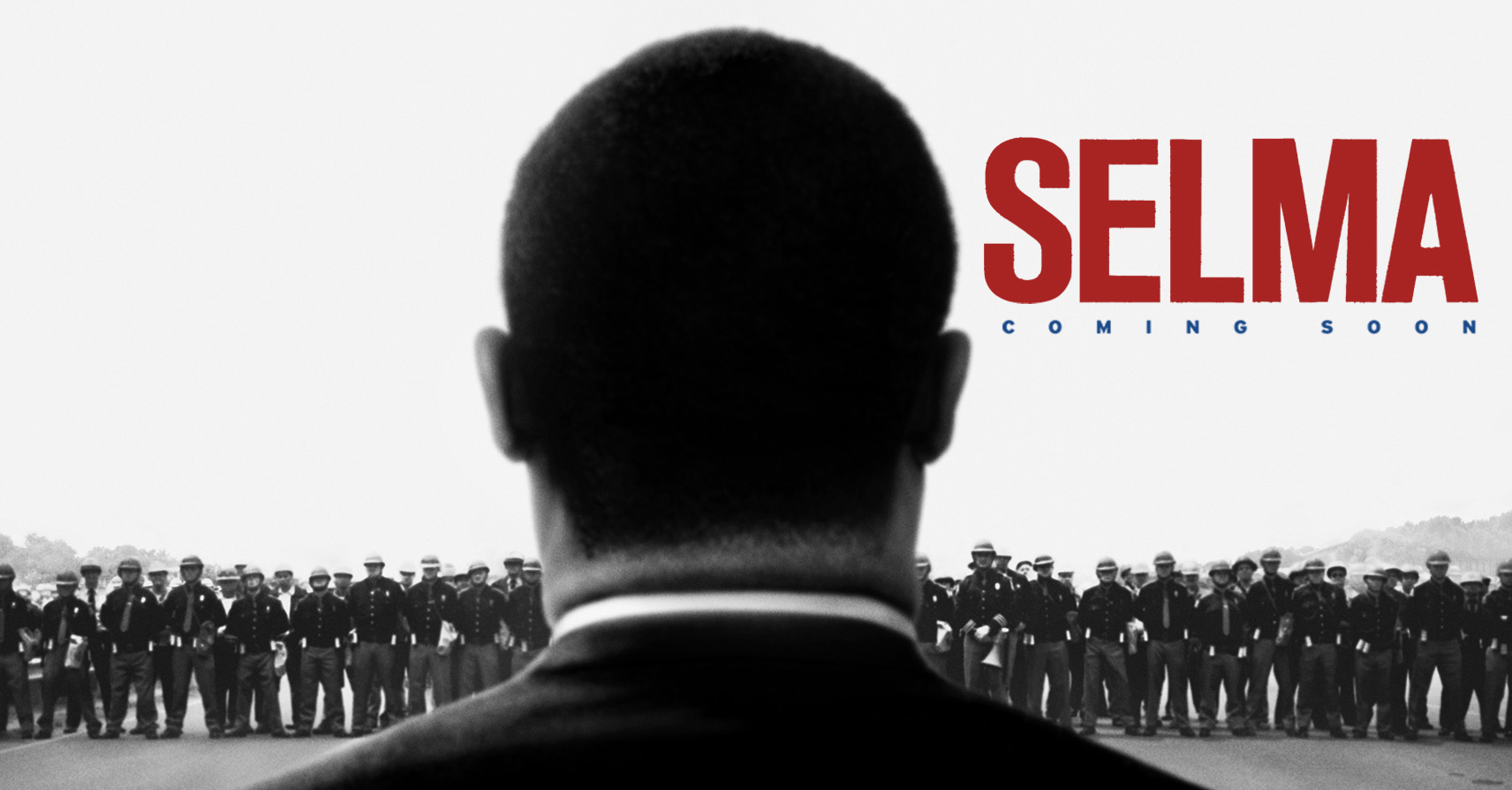 SELMA begins with Dr. King receiving the Nobel Peace Prize.
In his acceptance speech, of which we do not get to hear the actual text, since Stephen Spielberg and DreamWorks own the rights to all of his speeches, Dr. King accepts the award on behalf of all of those who made the Civil Rights movement possible. (It should be noted that director Ava DuVernay, in a stunning rewrite of Paul Webb’s original screenplay, time and time again manages to deftly approximate the style of Dr. King’s speech writing – so much so that I, an avid reader of King’s work, was frequently unsure throughout the movie whether the speeches weren’t actually King’s words).
At this point I should note, there will be light spoilers in the remainder of this review.
After crediting the Civil Rights movement and those who gave their lives for it, two key scenes follow quickly on heels of his acceptance of the Nobel Peace Prize.
The first is of the bombing of the 16th Street Baptist Church in Birmingham, Alabama. If you know anything of the history of the Civil Rights movement, your stomach is tied in knots long before the bomb goes off. As you watch those four young girls walking down the stairs, you know they will not make it to the bottom.
I couldn’t help but hear the words DuVerney put into King’s mouth at the beginning of the film as he practices his Nobel acceptance speech: “I accept this honor for our lost ones whose deaths pave our path, and for the twenty million Negro men and women motivated by dignity and a disdain for hopelessness.”
Scene two brings the always welcome return of Oprah Winfrey to the screen. Winfrey, as nurse Annie Lee Cooper, attempts to register to vote. We get far too little of Winfrey in the movie, but this scene is certainly a gem. In it she navigates both a fierce determination and a bit of resigned sadness as she recognizes that, once again, she will be “DENIED” based on restrictive and arbitrary registration practices that were used throughout the south specifically to disenfranchise potential black voters.
“I accept this honor for our lost ones whose deaths pave our path, and for the twenty million Negro men and women motivated by dignity and a disdain for hopelessness.”
The first nine minutes of the movie perfectly set the tone for what not only needed to happen in the movie but, in fact, did happen.
Specifically, SELMA does not turn King into an icon.
It may actually be that the inability to use King’s speeches played deftly into DuVerney’s hands.
In a speech given to the House of Representatives on January 20, 2004 in memory of Dr. King, Dr. Valery Smith, the Woodrow Wilson Professor of Literature and the Director of African American Studies at Princeton University, made what I have found to be a profound and insightful observation:
“ …by focusing on the same moments in Dr. King’s life, and on a few words from one speech in particular, we, paradoxically, reduce him to the status of an icon. We do a disservice to his memory, to the movement to which he gave so much and in the service of which he died, and to the legacy we seek to honor. For the struggle for freedom and equality preceded and extends beyond what we commonly call the Civil Rights Movement. As he suggests so eloquently in his Nobel acceptance speech, The Movement was and is larger than his leadership. And of course, Dr. King was much, much more than these phrases and these moments.”
SELMA recognizes the reality to which Smith points. Its opening salvo is to say this is not a film about the Reverend Dr. Martin Luther King, this is a film about a movement – a movement that was present and needed before Dr. King’s leadership, and a movement that continues to be present and needed. One only needs to consider Ferguson to recognize the present need of the Civil Rights movement.
In his portrayal of Dr. King, David Oyelowo (Interstellar, The Butler) walks right to the edge of being iconic, but blends in enough frustration, doubt and trepidation to allow King’s vulnerable humanity to show through. Coupled with DuVerney’s telling of King’s sometimes stressed home life, he quickly becomes someone with whom we can identify rather than an icon from a time long past.
And that matters.
Just as Dr. King said in his final sermon entitled “The Drum Major Instinct” that he did not want to be remembered for his achievements and awards but rather for serving others, SELMA is a not film about a historical achievement but, rather, it is about a community coming together and serving a greater good.
It is a film that invites us to re-remember the power of non-violent protest, the peaceful victory that can be achieved through well-organized majorities and the relative weakness of the powerful when faced with the quiet strength of real community.
You see, there’s a reason the film is named SELMA and not MLK.
There’s much talk about Oscar nominations in almost all categories for this film. I find myself in disagreement with many of them. While it is a fantastic movie and I highly recommend that everyone see it, I find that well made films about difficult historical moments, featuring convincing lead actors frequently are given extra consideration simply for being that kind of film.
That said there are a few places where I’d be particularly happy to see nominations: Best Director (Ava DuVernay – partly because of her uncredited rewrite of the screenplay), Best Actor (David Oyelowo as Dr. Martin Luther King, Jr.), Best Supporting Actor (Tom Wilkinson as President Lyndon B. Johnson), Best Supporting Actress (Carmen Ejogo as Coretta Scott King and Oprah Winfrey as Annie Lee Cooper) and possibly most deservingly Bradford Young for stunning cinematography.
I hope you watch SELMA and I hope you do not enjoy it.
I hope it disturbs you to your core.
I hope you are reminded of the terrible injustices that have always existed in this world.
I hope something grabs hold of your spirit and inspires you to be part of the solution, because this is not just a film about SELMA. It is not just a film about the Reverend Dr. Martin Luther King. This is a film about your town and the inequalities that exist there today and how a group of determined citizens can bring about change non-violently.
In the end, I hope you find it to be a film about why you are going to join the movement.
Consider supporting Mark’s blogging. Help create a market for Progressive Christianity. Not through big publishers or big denominations, but through the grassroots. We need to encourage the growth of progressive Christian voices in the marketplace. Even a dollar will help.
Facebook continues to make it increasingly difficult for me to let you know about new blog posts like this. Please consider signing up for my mailing list where we can insure you are notified. Just click here!
Mark is a co-founder of The Christian Left. Come and join the conversation!
Previous Post

January 9, 2015
How the “I'm Special” Confirmation Bias Ruins the Bible
Next Post
January 15, 2015 The Irrationality of Fundamentalism in Progressive Thought
Browse Our Archives
Select a Category abortion Advent Afterlife agnostic America atheist Bible bourbon Brad Pitt Brokeness Christianity Christmas Church Civil Rights Confessions Congress Conservative Christianity Crucifixion Easter election Elections Equality Facebook Feminism Ferguson Fiction Following Jesus Foodie Gamers God GOP Gospels Gun Control Health Care Hell Heretic Heritic Holy Week Humanism immigration Inclusiveness Innovation Institutionalized Church Intellectualism Islam Jesus Job Justice Lectionary LGBT Life Love Matthew 11 Minister MLK Mother's Day Movie Review Movies Music Nones Obama peace Political Pope Francis Poverty Prayer Prison Progressive Christianity Prophetic Question Mark refugee Resistance sex shooting Sin Spirit Thanksgiving The 10% The Christian Left The Walking Dead Theology Trinity Trump Uncategorized unChristian Unemployment United States violence voting war Women's rights workers rights
Select a Month January 2017 July 2016 May 2016 April 2016 March 2016 February 2016 January 2016 December 2015 November 2015 October 2015 September 2015 August 2015 July 2015 June 2015 May 2015 April 2015 March 2015 February 2015 January 2015 December 2014 November 2014 October 2014 September 2014 August 2014 July 2014 June 2014 May 2014 March 2014 February 2014 January 2014 December 2013 November 2013 October 2013 September 2013 August 2013 July 2013 June 2013 February 2013 January 2013 December 2012 November 2012 October 2012 September 2012 August 2012 July 2012 June 2012 May 2012 March 2012 February 2012 January 2012 December 2011 October 2011 August 2011 July 2011 June 2011 May 2011 April 2011 March 2011 February 2011 January 2011 December 2010 November 2010 October 2010
Follow Us!
TAKE THE
Religious Wisdom Quiz
Who interpreted the handwriting on the wall?
Select your answer to see how you score.
Paul Daniel Peter Joseph
Related posts from The God Article with Mark Sandlin

Following Jesus in the Age of Trump: Resistance...
The God Article with Mark Sandlin

On Living Wide Awake: A Prayer
The God Article with Mark Sandlin

10 Things Church Can Learn From Geeks
The God Article with Mark Sandlin

On the Limitations of Words - A Prayer
The God Article with Mark Sandlin
TRENDING AT PATHEOS Progressive Christian

Why Christians Have a Sacred Duty to Vote:...
The Bible offers strong support for the sacred duty to vote. Here...

What Being a Modern-Day Apostle Means to Me
In my last column, I discussed the ins and outs of modern-day...

Did Ancient China Once Worship the God of...
Across human history, a common thread weaves through the origins of the...

Love Your Neighbor – Including Earth-Kin: Lev. 19,...
God’s command to love your neighbor means acting in an ethical and...

Lead a Church Study of “Jesus and Lao...
Guest writer Jack Thomas (The Irreverent Reverend) reflects on leading his church...

Principles for Understanding the Apostolic Ministry Today
Whenever people discover that my formal ministry title is "apostle," as in...
view all Progressive Christian blogs
Ad-Free & Subscriber Log-In Subscription Support
- About Us
- 2026 Calendar
- Videos
- Podcasts
- Library of World Religions
- Faith In Media Tracker
- Advertise With Us
- Write for Us
- Privacy Policy
- Terms of Service
- Do Not Sell My Data
- Contact Us
- Radiant Digital
- Manage Newsletter Subscriptions
- Unsubscribe From Notifications
- Sitemap
Copyright 2008-2026, Patheos. All rights reserved.
Subscription Support Ad-Free & Subscriber Log-In
Follow Patheos