
BuddhistCatholicContemplativeEvangelicalGeneral ChristianHinduJewishLatter-day SaintMuslimNew VisionsProgressive Christian
Beliefs
- Buddhist
- Catholic
- Contemplative
- Evangelical
- General Christian
- Hindu
- Jewish
- Latter-day Saint
- More Voices
- Muslim
- New Visions
- Pagan
- Progressive Christian
Topics
- Religion News
- Food and Religion
- Sports and Religion
- Religious Art
- Religious Music and Entertainment
- Religious Events
- History and Religion
- Style and Religion
- Politics and Religion
- Women in Religion
- Recreation Outdoors and Religion
- Business Finance and Religion
- Careers Workplace and Religion
- Education and Religion
- Family Parenting and Religion
- Health Fitness and Religion
- Home and Religion
- Relationships and Religion
- Technology and Religion
- Travel and Religion
Columnists
- Buddhist Columnists
- Business Finance and Religion Columnists
- Careers Workplace and Religion Columnists
- Catholic Columnists
- Contemplative Columnists
- Education and Religion Columnists
- Evangelists Columnists
- Family Parenting and Religion Columnists
- General Christian Columnists
- Health Fitness and Religion Columnists
- Hindu Columnists
- History and Religion Columnists
- Home and Religion Columnists
- Jewish Columnists
- More Voices Columnists
- Latter Day Columnists
- Muslim Columnists
- New Visions Columnists
- Nonreligious Columnists
- Pagan Columnists
- Politics and Religion Columnists
- Progressive Columnists
- Recreation Outdoors and Religion Columnists
- Relationships and Religion Columnists
- Religion News Columnists
- Religious Art Columnists
- Religious Events Columnists
- Religious Music and Entertainment Columnists
- Sports and Religion Columnists
- Style and Religion Columnists
- Technology and Religion Columnists
- Travel and Religion Columnists
- Women in Religion Columnists
Resource Library
- 2026 Calendar
- Library of World Religions
- The 100 Most Holy Places on Earth
- Patheos Answers
- Podcasts
- Videos
- Faith Leaders Database
- Anglican Episcopalian
- Bahai
- Baptist
- Buddhism
- Christianity
- Confucianism
- Eastern Orthodoxy
- Hinduism
- Holiness and Pentecostal
- ISKCON
- Islam
- Judaism
- Lutheran
- Methodist
- The Church of Jesus Christ of Latter-day Saints
- New Age
- Paganism
- Presbytarian and Reformed
- Protestantism
- Religion Behind the Scenes
- Roman Catholic
- Scientology
- Shia Islam
- Sikhism
- Sufism
- Sunni Islam
- Taoism
- Zen
- See all religions
Research Tools
 Ad-Free & Subscriber Log-In Subscription Support
Ad-Free & Subscriber Log-In Subscription Support
Follow Patheos 

- Trending:
- Forgiveness
- |
- Marriage
- |
- Consciousness
- |
- Death Penalty
- |
- Election
- |
- Halloween

- Home
- Catholic
- Religion News
- Foreword to the French Edition of “Devoted to Death: Santa Muerte, the Skeleton Saint”
Foreword to the French Edition of “Devoted to Death: Santa Muerte, the Skeleton Saint”
Last updated on: January 3, 2022 at 11:02 am by Andrew Chesnut
Foreword to the French Edition of “Devoted to Death: Santa Muerte, the Skeleton Saint” 2022-01-03T11:02:35-05:00 Andrew Chesnut
Patheos Explore the world's faith through different perspectives on religion and spirituality! Patheos has the views of the prevalent religions and spiritualities of the world.
By Dr. Kate Kingsbury*
We are living in a time of much death, or what Mexicans might call mala muerte, bad death. Not only due to the casualties of the COVID-19 pandemic that has beset our world but also, in Mexico and elsewhere, due to the increased precarity created by pandemic conditions. Lockdowns and other such measures have worsened economic conditions, pushing those already living on the knife’s edge further into the parlous peripheries, where death roams in plain sight, scythe in hand. While the pandemic has not affected us all equally, with those from minority groups and occupying the margins being the worst hit, all of us have been blitzkrieged with the constant reminder of our own impermanence.
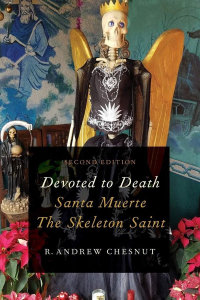
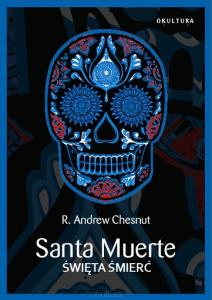
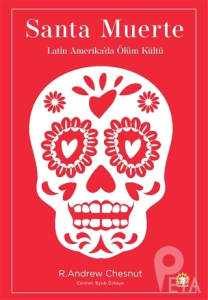
Mortality salience studies during times of COVID-19 have concluded that the constant visibility of death cues –whether it be in the form of facemasks, antibacterial sprays, social distancing or public health campaigns– have increased death-related thoughts in people across the world. There could therefore not be a more apposite time for this French translation of Andrew Chesnut’s ground-breaking book on the female folk saint of death, Santa Muerte. Already available in English, Spanish, Polish and Turkish, this French edition will bring to yet another audience Chesnut’s original oeuvre on the fastest growing new religious movement (NRM) in the Americas which provides us not only with information about this death positive NRM but also furnishes us with new insights through which to understand death and come to accept our own mortality.

Given innumerable macabre depictions on the television and in the press, the popular image of the Mexican folk saint of death is most often one of a nefarious narco-saint propitiated by drug traffickers for dirty deeds. But while discussing this facet of Santa Muerte devotion in this seminal book, Dr. R. Andrew Chesnut also illuminates the many other faces of death, from her role as love sorceress to her powers as a money miracle-worker. By colour coding each chapter for every hue of Santa Muerte votive candle, Chesnut exposes not only the wide plethora of Santa Muerte’s perceived powers but also the diversity in devotees of death who are not only narcos but range from taxi drivers to teens and from housewives to policemen. By providing such a wide array of testimonies, Chesnut reveals that Santa Muerte cannot be defined by the Manichean dichotomies of good and bad that blotch press portrayals.
In addition to evading binaries by focusing on Santa Muerte’s varied following who supplicate the skeleton saint for manifold favours, Chesnut argues that the skeleton saint offers a social function in providing a pragmatic faith. This NRM, he details, is a religious response to and a means to deal with the misery and madness of modernity in the post-colony of Mexico and its borders, which are riddled by violence, poverty, and precarity in a state that is characterized by lawlessness and disorder.
Ten years since its first edition, Devoted to Death remains the only exhaustive and scholarly single-author tome on Santa Muerte and her role in contemporary culture. Despite, as I have detailed, countering the media discourse of Santa Muerte solely as narco-saint, Chesnut does not refrain from examining the media’s treatment of Santa Muerte nor her appearance in popular culture. From films, such as Paco Del Toro’s eponymous oeuvre, to narco-corridos (Mexican folk ballads glorifying narco deeds) he discusses her depictions in the media, whether as a love sorceress or as a dealer of death. Chesnut makes clear that whether in the media or musical odes alluding to her miraculous abilities, such portrayals have a dualistic effect. Whilst spreading fear of death they concomitantly further belief in her powers. Moreover, such appearances must be considered integral to the saint’s ability to impel and infuse all aspects of Mexican popular culture with her mystical attributes.
Chesnut also underscores the saint’s important presence on social media, including the many Euro-American followers of the saint on Facebook and Twitter. Santa Muerte is increasingly visible online. There are innumerable groups dedicated to her worship, in particular on Facebook where Chesnut’s photos, some from the website dedicated to the folk saint, www.skeletonsaint.com, which he co-curates with myself and David B. Metcalfe, have been reformatted with the addition of prayers and redistributed as devotional images by devotees. The saint’s virtual presence attests to the incessant dynamic of the new religious movement that is not only memetic but, as Chesnut evinces, is mobile and versatile, evolving in ever new ways with l’air du temps.
Teaching a class at university on magic, witchcraft and religion, I was drawn to Chesnut’s text which provides an excellent tool not only for students to understand the fastest growing new religious movement but also to see how functionalist theory is applied. Examining the social and psychological effects of Santa Muerte, Chesnut alludes to the practical and this-worldly wishes of devotees who, he argues have pressing needs that they desperately require solutions for. The text also gives accurate and moving insights into what life is like for Mexicans today, and what the experiences are of a wide range of people.
The faithful might be narcotraffickers who need to get a shipment of drugs safely across the border into the US –as Chesnut details in the black candle chapter– but they might also be Mexican migrants in Richmond, Virginia, who long for love and supplicate the folk saint to matchmake them with a marriageable suitor, as detailed in the red candle chapter. The folk saint offers something to everyone. The police, celebrities, pornstars, lawyers, prisoners, and government officials all feature among the followers, as Chesnut details, and all also have their pressing needs that the multi-faceted, miraculous folk saint of death promises to resolve. Chesnut’s well-rounded account goes beyond the sensationalistic depictions to be found in the media, of a saint associated with drug dealers and criminals. He situates Santa Muerte in a wider contemporary context as a pragmatic product within the Mexican spiritual supermarket thus elucidating the real reasons for the folk saint’s ever-increasing following.
Since Chesnut penned this book, the key figures within Santa Muerte devotion have seen some changes. Enriqueta Vargas, the leader of Santa Muerte Internacional a transnational conglomerate of churches dedicated to the folk saint, died and was replaced by her daughter, Kristhel Legaria Vargas who continues to hold Sunday services at the temple in Tultilán. Moreover, she honors her brother and mother in rituals every year, that mark their death. In their own ways Enriqueta and Jonathan have become part of the Santa Muerte tradition, emerging akin to folk saints, as miraculous figures who some pray to, Jonathan in particular. David Romo, a self-appointed bishop of a Santa Muerte church, remains behind bars after being arrested for running a kidnapping ring and laundering its ransoms through his personal bank account. Despite these leaders’ absence and the many changes that have ensued, the faithful have only grown in number as Santa Muerte’s reputation as what Chesnut calls a ‘rapid and efficacious miracle worker’ extends not only across Mexico but beyond its borders. More hues of candle and more statue designs of Santa Muerte are now available on shop shelves and not only in Mexico. Increasingly, the saint of death is found outside of Mexico, whether it be in the US or further afield in Asia, Europe, evincing the spread of the folk faith outside its country of origin, but more importantly the appeal of devotion to a saint who represents that which none of us can escape: death.
While some leaders have come and gone, Doña Queta remains the most important known public figure within the NRM. Her famous Santa Muerte shrine in Tepito, which Chesnut describes in detail in this book, remains a focal point for the faithful who continue in ever-increasing numbers to attend monthly rosaries, or simply come to pray for miracles or to give thanks. It has become a pilgrimage site for devotees of death who come from across the country, not only to pray to the renowned deathly effigy of Santa Muerte that adorns number 12 Calle Alfarería but also to meet Doña Queta, the woman who made devotion to death go public in Mexico City.
On November 1st, 2021, despite the pandemic, or more accurately perhaps because of it and the added layer of desperation that haunts our times, thousands of devotees flocked to the shrine in the notoriously dangerous neighbourhood in Mexico City to celebrate the 20th anniversary of Santa Muerte going mainstream when Queta first placed her altar outside in 2001. Clutching offerings, and walking humbly upon their bended knees, some tattooed with images of the folk saint, others carrying their own statuary to be sanctified by the sacred aura of Queta’s human-sized effigy, devotees assembled to pay homage to the figure to whom they attribute their well-being.

Devoted to Death is a rich exploration of an intriguing and rapidly growing new religious movement that can no longer be ignored, and refreshingly counters the misinformation on Santa Muerte that saturates the media emanating from television shows such as Penny Dreadful or Breaking Bad by revealing how and why devotees approach the saint. It is a welcome corrective to the White Western portrayals that would paint the faith as satanic or merely as Mexican exotica. Chesnut delivers a down-to-earth, big picture perspective on the historical origins of the new religious movement, current praxis and his rationale of the reasons for religious devotion.
Devoted to Death is now a perennial favourite, in particular among the general public, sometimes appearing on the altars of devotees in the U.S and Europe who turn to the tome as a handbook to the faith. Its insights shine a light not only on a vital religious folk figure of the 21st century but also on the wide challenges that we all face and long to have resolved, whether problems in love, luck, finances or health. This book’s translation into French could not be more timely given our zeitgeist, for Santa Muerte’s following has only expanded in the decade since it was published. In this era of the pandemic, the skeleton saint is being turned to with increased fervency and by ever more followers, whether it be for protection and healing of covid, or to resolve the many economic, affective and other issues that have accrued due to dire pandemic conditions. Over the aeons, humans have often sought to avoid their mortality through religions, ideologies or beliefs that negate death or promise eternal life, but Santa Muerte, while offering miracles during life, ultimately offers to all the final promise of her deathly touch at the end to it all for us all, no matter who we are. As such this book reminds us that now more than ever we must stare death in the eye, for in the end, we like her, are but dry bones.
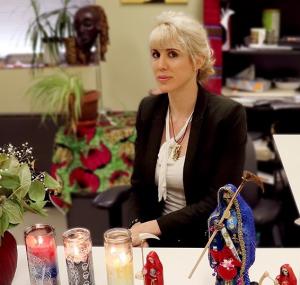
*Dr. Kate Kingsbury obtained her doctorate in anthropology at the University of Oxford and is author of the forthcoming “Daughters of Death: The Female Followers of Santa Muerte” with Oxford University Press. Dr. Kingsbury is a lecturer and research associate at the University of British Columbia, Canada. Dr. Kingsbury is a staunch believer in equal rights and the power of education to ameliorate global disparities. She also works pro bono for a non profit organisation that aims to empower and educate girls in Uganda.

About Andrew Chesnut
Dr. R. Andrew Chesnut earned his Ph.D degree in Latin American History from the University of California, Los Angeles in 1995 and joined the History Department faculty at the University of Houston in 1997. He quickly became an internationally recognized expert on Latin American religious history Professor Chesnut was selected as the inaugural recipient of the Bishop Walter Sullivan Chair in Catholic Studies at VCU in 2008. The chair was established as the Most Rev. Walter F. Sullivan was nearing retirement as the 11th bishop of the Catholic Diocese of Richmond to honor his nearly thirty years of service. For Professor Chesnut the chair became a unique opportunity to develop Catholic studies in a global context and at a large public university. Professor Chesnut’s early work, Born Again in Brazil: The Pentecostal Boom and the Pathogens of Poverty (Rutgers University Press, 1997), traces the meteroric rise of Pentecostalism among the popular classes in Brazil following the disestablishment of the Roman Catholic Church. His second book, Competitive Spirits: Latin America’s New Religious Economy (Oxford University Press, 2003) focuses on the three groups that have prospered most in the region’s pluralist landscape, Protestant Pentecostalism, the Catholic Charismatic Renewal, and African disasporic religions (e.g., Brazilian Candomble and Haitian Vodou). Professor Chesnut's most recent book is Devoted to Death: Santa Muerte, the Skeleton Saint (Oxford University Press, 2025). It is the first in-depth study of the Mexican folk saint in English and has received widespread media coverage. You can read more about the author here.

Next Post

January 7, 2022 Death on the Road - A Vision of Santa Muerte in the American Heartland
Browse Our Archives
Select a Category Amazon Synod andrew chesnut Brazil Catholicism Christianity death Evangelical Exorcism kate kingsbury Mexico narcocult Orixas Our Lady of Aparecida Our lady of the Bullet Pentecostal Religion Rey Pascual Santa Muerte Uncategorized vodou
Select a Month October 2026 September 2026 August 2026 July 2026 June 2026 May 2026 April 2026 March 2026 February 2026 January 2026 December 2025 October 2025 September 2025 August 2025 June 2025 May 2025 April 2025 February 2025 January 2025 November 2024 October 2024 September 2024 July 2024 May 2024 April 2024 January 2024 December 2023 October 2023 July 2023 June 2023 April 2023 March 2023 January 2023 December 2022 November 2022 October 2022 September 2022 July 2022 June 2022 January 2022 October 2021 September 2021 August 2021 May 2021 March 2021 February 2021 October 2020 August 2020 July 2020 June 2020 May 2020 April 2020 March 2020 February 2020 November 2019 October 2019 August 2019 July 2019 June 2019 May 2019 April 2019 March 2019 February 2019 January 2019 December 2018 November 2018 October 2018 September 2018 August 2018 July 2018 June 2018 May 2018 April 2018 March 2018
Follow Us!
TAKE THE
Religious Wisdom Quiz
What does "Golgotha" mean?
Select your answer to see how you score.
House of Bread Place of the Skull Mountain of God Valley of Death
Related posts from The Global Catholic Review

Brazil’s Black Madonna as Political Football in Heated...

Brazil's Religious Revolution: What a Huge New Survey...

Trump's Catholic Problem Heading Into November Midterms

Did Pentecostalism Kill Brazilian Football's 'Jogo Bonito'?
TRENDING AT PATHEOS Catholic

The Sermon on the Mount, Part I: Matthew...
The Sermon on the Mount, Part I (Matthew 4:12-5:12) St. Matthew moves...

What's up from Crossway: Reviewing some of their latest A few weeks...

Janie Learns the Way of the Cross: A...
Teaching children about Jesus' Passion can be challenging. Many parents and educators...

Looking For Good Catholic Writing - October 2026
He alone extends the heavens, and he walks upon the waves of...

In "Irreplaceable," our book on vocation and technology, Trevor Sutton and I...

I was strolling through the top floor of the brand new Parthenon...
view all Catholic blogs
Ad-Free & Subscriber Log-In Subscription Support
- About Us
- 2026 Calendar
- Videos
- Podcasts
- Library of World Religions
- Faith In Media Tracker
- Advertise With Us
- Write for Us
- Privacy Policy
- Terms of Service
- Do Not Sell My Data
- Contact Us
- Radiant Digital
- Manage Newsletter Subscriptions
- Unsubscribe From Notifications
- Sitemap
Copyright 2008-2026, Patheos. All rights reserved.
Subscription Support Ad-Free & Subscriber Log-In
Follow Patheos