
BuddhistCatholicContemplativeEvangelicalGeneral ChristianHinduJewishLatter-day SaintMuslimNew VisionsProgressive Christian
Beliefs
- Buddhist
- Catholic
- Contemplative
- Evangelical
- General Christian
- Hindu
- Jewish
- Latter-day Saint
- More Voices
- Muslim
- New Visions
- Pagan
- Progressive Christian
Topics
- Religion News
- Food and Religion
- Sports and Religion
- Religious Art
- Religious Music and Entertainment
- Religious Events
- History and Religion
- Style and Religion
- Politics and Religion
- Women in Religion
- Recreation Outdoors and Religion
- Business Finance and Religion
- Careers Workplace and Religion
- Education and Religion
- Family Parenting and Religion
- Health Fitness and Religion
- Home and Religion
- Relationships and Religion
- Technology and Religion
- Travel and Religion
Columnists
- Buddhist Columnists
- Business Finance and Religion Columnists
- Careers Workplace and Religion Columnists
- Catholic Columnists
- Contemplative Columnists
- Education and Religion Columnists
- Evangelists Columnists
- Family Parenting and Religion Columnists
- General Christian Columnists
- Health Fitness and Religion Columnists
- Hindu Columnists
- History and Religion Columnists
- Home and Religion Columnists
- Jewish Columnists
- More Voices Columnists
- Latter Day Columnists
- Muslim Columnists
- New Visions Columnists
- Nonreligious Columnists
- Pagan Columnists
- Politics and Religion Columnists
- Progressive Columnists
- Recreation Outdoors and Religion Columnists
- Relationships and Religion Columnists
- Religion News Columnists
- Religious Art Columnists
- Religious Events Columnists
- Religious Music and Entertainment Columnists
- Sports and Religion Columnists
- Style and Religion Columnists
- Technology and Religion Columnists
- Travel and Religion Columnists
- Women in Religion Columnists
Resource Library
- 2026 Calendar
- Library of World Religions
- The 100 Most Holy Places on Earth
- Patheos Answers
- Podcasts
- Videos
- Faith Leaders Database
- Anglican Episcopalian
- Bahai
- Baptist
- Buddhism
- Christianity
- Confucianism
- Eastern Orthodoxy
- Hinduism
- Holiness and Pentecostal
- ISKCON
- Islam
- Judaism
- Lutheran
- Methodist
- The Church of Jesus Christ of Latter-day Saints
- New Age
- Paganism
- Presbytarian and Reformed
- Protestantism
- Religion Behind the Scenes
- Roman Catholic
- Scientology
- Shia Islam
- Sikhism
- Sufism
- Sunni Islam
- Taoism
- Zen
- See all religions
Research Tools
 Ad-Free & Subscriber Log-In Subscription Support
Ad-Free & Subscriber Log-In Subscription Support
Follow Patheos 

- Trending:
- Forgiveness
- |
- Marriage
- |
- Consciousness
- |
- Death Penalty
- |
- Election
- |
- Halloween

- Home
- Catholic
- Religion News
- The Good Death Resurrected – Memento Mori and Santa Muerte as Spirit of the Times
The Good Death Resurrected – Memento Mori and Santa Muerte as Spirit of the Times
Last updated on: September 3, 2021 at 6:38 pm by Andrew Chesnut
The Good Death Resurrected – Memento Mori and Santa Muerte as Spirit of the Times 2021-09-03T18:38:22-04:00 Andrew Chesnut
Patheos Explore the world's faith through different perspectives on religion and spirituality! Patheos has the views of the prevalent religions and spiritualities of the world.
Co-authored by Dr. Kate Kingsbury and Professor R. Andrew Chesnut*
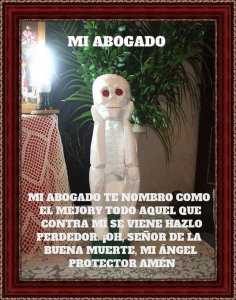
Having spent the past decade researching a Mexican folk saint whose name translates as both Holy Death and Saint Death, we have been compelled to grapple with the significance of the near universal desire for euthanasia whose original meaning derives from Greek. ‘Eu’ means ‘good’ and ‘thanatos’ means ‘death’, put together the term means ‘good death’. Euthanasia is thus defined as fast and peaceful death preventing further sufferings. One of the main appeals of the three Latin American folk saints of death, Santa Muerte, San la Muerte, and Rey Pascual is their reputation for granting devotees and their loved ones a relatively peaceful end of life. In a Mexico and Guatemala plagued by interminable drug wars and the Covid-19 epidemic there is no shortage of bad death in which lives are snuffed out prematurely and painfully by violence and more recently, virus. Of course devotees first beseech the death saints for protection and healing from such scourges, but in the event that their petitions fall on deaf bony ears believers can turn to Our Lord of the Good Death, one of the monikers for Argentine San la Muerte, and ask him or his fellow skeleton saints for euthanasia.
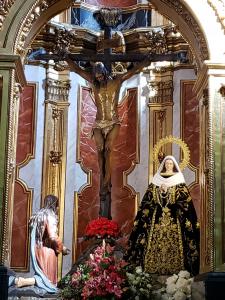
If the desire for a good death is so central to the mission of the skeleton saints that two of them bear it in their names, Holy Death, it’s also because the wish to die peacefully has been an important aspect of Christian, especially Catholic, belief and practice. The original holy death, of course, was Christ’s on the cross, which while anything but a peaceful end made possible the hope of eternal life for His followers. So significant was the idea of the holy death of Jesus that there are Iberian Catholic advocations of both Christ and Mary called Christ of the Good Death (Cristo de la Buena Muerte in Spanish) and Our Lady of the Good Death (Nossa Senhora da Boa Morte in Portuguese). Catholic brotherhoods in Spain and Portugal, and later in several Latin American nations, formed on the axis of these mortal manifestations of Jesus and Mary. Spanish confraternities -such as Cofradía de Penitencia de la Buena Muerte in Cadiz- would carry their exquisitely carved effigies of the Virgin and Christ of the Good Death on Good Friday as part of the famous Holy Week processions of southern Spain.
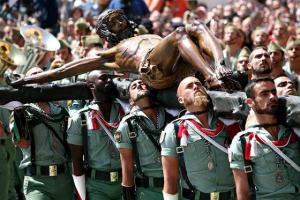
For Iberian and Latin American Catholics holy death wasn’t only about Christ’s monumental sacrifice on the cross but also about their own good death and that of their loved ones. This could only be guaranteed through piety and a life devoid of sin, as a good death also meant avoiding the fiery pits of hell and being granted entry through the pearly gates. Daily prayer, following the ten commandments, and confessing often –especially upon one’s death bed– would entail transgressions were forgiven. The good Christian must be prepared for the Last Judgment.
Ubiquitous memento mori imagery, especially skulls and skeletons, in Catholic Europe served as reminders to believers of their inevitable death, exhorting them to lead a Christian life free of mundane vanities which could only distract from the hope of eternal life in heaven. Indeed Vanitas paintings, pioneered by Dutch artists, are filled with skulls, withering flowers, and rotting fruit as lessons in the fleetingness of temporal pleasures. Poets also referred to man as a bubble in the maxim “homo bulla est”. This was popularised by Erasmus, the Dutch Catholic theologian and became a leitmotif in Christian paintings. Homo bulla est, just like the withering flowers of memento mori, served to remind Europeans of the brevity of life and arbitrary nature of death; humans might believe they are substantial, but like the ephemeral bubble that disappears with one prick, life is extinguished in the blink of an eye, often with no warning before our powerless hands.

Memento mori reminded Christians to stay on the straight and narrow, adopting the precepts extolled, such as prayer and a sin-free life, Catholics could then aspire to a good death in which their lives ended peacefully surrounded by loved ones and with Last Rites administered by a priest, allowing the dead to access heaven directly. However, just as the Black Death made euthanasia impossible for millions of Europeans seven centuries ago, Covid-19 is now denying a good death to hundreds of thousands across the globe who may die suddenly, alone and with little to ease their suffering. No wonder the fastest growing new religious movement in the West is centered on Holy Death (Santa Muerte).
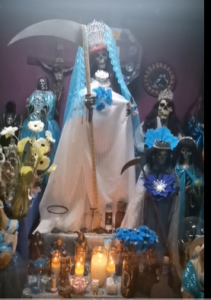
Prayer remains an essential coping strategy during times of Coronavirus, whether for faith healing or for preventing contagion. While many churches may be closed across the world, people continue to ask for divine intervention to avoid a bad death from Covid-19. In Mexico, many Santa Muerte temples remain open, such as that of Yuri Mendez in Cancun. Her latest rosary on the 2nd September 2021 focused on healing of Coronavirus, many prayers were offered to the folk saint of death that she might not only prevent sickness, cure the ailing but also end the pandemic and thereby end suffering and mala muerte (bad death) from the virus. Yuri Mendez’s shrine features many effigies of the folk saint of death, but her most beloved named Yuritzia was especially dressed for the occasion. Dressed as a frontline nurse in white and blue but with the lacey headdress often seen in Spanish depictions of the Virgin Mary the folk saint syncretically meshed secular and sacred methods of healing. Attendees chanted in unison as Yuri led them into prayer, “Santa Muerte save us and the entire world.” Santa Muerte, as the most recent manifestation of a good and holy death, continues to remind us of our fragility and the brevity of life on this earth.
*Dr. Kate Kingsbury earned her doctorate in anthropology at the University of Oxford and is author of numerous articles and book chapters on Santa Muerte and African Diasporan religion. She is writing the forthcoming “Daughters of Death: The Female Followers of Santa Muerte” for Oxford University Press. Dr. Kingsbury is a Research Associate of Anthropology at the University of British Columbia, Canada. Dr. Kingsbury is a staunch believer in equal rights and the power of education to ameliorate global disparities. She also works pro bono for a non profit organisation that aims to empower and educate girls in Uganda.

About Andrew Chesnut
Dr. R. Andrew Chesnut earned his Ph.D degree in Latin American History from the University of California, Los Angeles in 1995 and joined the History Department faculty at the University of Houston in 1997. He quickly became an internationally recognized expert on Latin American religious history Professor Chesnut was selected as the inaugural recipient of the Bishop Walter Sullivan Chair in Catholic Studies at VCU in 2008. The chair was established as the Most Rev. Walter F. Sullivan was nearing retirement as the 11th bishop of the Catholic Diocese of Richmond to honor his nearly thirty years of service. For Professor Chesnut the chair became a unique opportunity to develop Catholic studies in a global context and at a large public university. Professor Chesnut’s early work, Born Again in Brazil: The Pentecostal Boom and the Pathogens of Poverty (Rutgers University Press, 1997), traces the meteroric rise of Pentecostalism among the popular classes in Brazil following the disestablishment of the Roman Catholic Church. His second book, Competitive Spirits: Latin America’s New Religious Economy (Oxford University Press, 2003) focuses on the three groups that have prospered most in the region’s pluralist landscape, Protestant Pentecostalism, the Catholic Charismatic Renewal, and African disasporic religions (e.g., Brazilian Candomble and Haitian Vodou). Professor Chesnut's most recent book is Devoted to Death: Santa Muerte, the Skeleton Saint (Oxford University Press, 2025). It is the first in-depth study of the Mexican folk saint in English and has received widespread media coverage. You can read more about the author here.
Previous Post
August 18, 2021
Holy Hellraisers - Meet the Thug Saints of Venezuela

Browse Our Archives
Select a Category Amazon Synod andrew chesnut Brazil Catholicism Christianity death Evangelical Exorcism kate kingsbury Mexico narcocult Orixas Our Lady of Aparecida Our lady of the Bullet Pentecostal Religion Rey Pascual Santa Muerte Uncategorized vodou
Select a Month October 2026 September 2026 August 2026 July 2026 June 2026 May 2026 April 2026 March 2026 February 2026 January 2026 December 2025 October 2025 September 2025 August 2025 June 2025 May 2025 April 2025 February 2025 January 2025 November 2024 October 2024 September 2024 July 2024 May 2024 April 2024 January 2024 December 2023 October 2023 July 2023 June 2023 April 2023 March 2023 January 2023 December 2022 November 2022 October 2022 September 2022 July 2022 June 2022 January 2022 October 2021 September 2021 August 2021 May 2021 March 2021 February 2021 October 2020 August 2020 July 2020 June 2020 May 2020 April 2020 March 2020 February 2020 November 2019 October 2019 August 2019 July 2019 June 2019 May 2019 April 2019 March 2019 February 2019 January 2019 December 2018 November 2018 October 2018 September 2018 August 2018 July 2018 June 2018 May 2018 April 2018 March 2018
Follow Us!
TAKE THE
Religious Wisdom Quiz
What does "Golgotha" mean?
Select your answer to see how you score.
House of Bread Place of the Skull Mountain of God Valley of Death
Related posts from The Global Catholic Review

Brazil’s Black Madonna as Political Football in Heated...

Brazil's Religious Revolution: What a Huge New Survey...

Trump's Catholic Problem Heading Into November Midterms

Did Pentecostalism Kill Brazilian Football's 'Jogo Bonito'?
TRENDING AT PATHEOS Catholic

The Sermon on the Mount, Part I: Matthew...
The Sermon on the Mount, Part I (Matthew 4:12-5:12) St. Matthew moves...

What's up from Crossway: Reviewing some of their latest A few weeks...

Janie Learns the Way of the Cross: A...
Teaching children about Jesus' Passion can be challenging. Many parents and educators...

Looking For Good Catholic Writing - October 2026
He alone extends the heavens, and he walks upon the waves of...

In "Irreplaceable," our book on vocation and technology, Trevor Sutton and I...

I was strolling through the top floor of the brand new Parthenon...
view all Catholic blogs
Ad-Free & Subscriber Log-In Subscription Support
- About Us
- 2026 Calendar
- Videos
- Podcasts
- Library of World Religions
- Faith In Media Tracker
- Advertise With Us
- Write for Us
- Privacy Policy
- Terms of Service
- Do Not Sell My Data
- Contact Us
- Radiant Digital
- Manage Newsletter Subscriptions
- Unsubscribe From Notifications
- Sitemap
Copyright 2008-2026, Patheos. All rights reserved.
Subscription Support Ad-Free & Subscriber Log-In
Follow Patheos