
BuddhistCatholicContemplativeEvangelicalGeneral ChristianHinduJewishLatter-day SaintMuslimNew VisionsProgressive Christian
Beliefs
- Buddhist
- Catholic
- Contemplative
- Evangelical
- General Christian
- Hindu
- Jewish
- Latter-day Saint
- More Voices
- Muslim
- New Visions
- Pagan
- Progressive Christian
Topics
- Religion News
- Food and Religion
- Sports and Religion
- Religious Art
- Religious Music and Entertainment
- Religious Events
- History and Religion
- Style and Religion
- Politics and Religion
- Women in Religion
- Recreation Outdoors and Religion
- Business Finance and Religion
- Careers Workplace and Religion
- Education and Religion
- Family Parenting and Religion
- Health Fitness and Religion
- Home and Religion
- Relationships and Religion
- Technology and Religion
- Travel and Religion
Columnists
- Buddhist Columnists
- Business Finance and Religion Columnists
- Careers Workplace and Religion Columnists
- Catholic Columnists
- Contemplative Columnists
- Education and Religion Columnists
- Evangelists Columnists
- Family Parenting and Religion Columnists
- General Christian Columnists
- Health Fitness and Religion Columnists
- Hindu Columnists
- History and Religion Columnists
- Home and Religion Columnists
- Jewish Columnists
- More Voices Columnists
- Latter Day Columnists
- Muslim Columnists
- New Visions Columnists
- Nonreligious Columnists
- Pagan Columnists
- Politics and Religion Columnists
- Progressive Columnists
- Recreation Outdoors and Religion Columnists
- Relationships and Religion Columnists
- Religion News Columnists
- Religious Art Columnists
- Religious Events Columnists
- Religious Music and Entertainment Columnists
- Sports and Religion Columnists
- Style and Religion Columnists
- Technology and Religion Columnists
- Travel and Religion Columnists
- Women in Religion Columnists
Resource Library
- 2026 Calendar
- Library of World Religions
- The 100 Most Holy Places on Earth
- Patheos Answers
- Podcasts
- Videos
- Faith Leaders Database
- Anglican Episcopalian
- Bahai
- Baptist
- Buddhism
- Christianity
- Confucianism
- Eastern Orthodoxy
- Hinduism
- Holiness and Pentecostal
- ISKCON
- Islam
- Judaism
- Lutheran
- Methodist
- The Church of Jesus Christ of Latter-day Saints
- New Age
- Paganism
- Presbytarian and Reformed
- Protestantism
- Religion Behind the Scenes
- Roman Catholic
- Scientology
- Shia Islam
- Sikhism
- Sufism
- Sunni Islam
- Taoism
- Zen
- See all religions
Research Tools
 Ad-Free & Subscriber Log-In Subscription Support
Ad-Free & Subscriber Log-In Subscription Support
Follow Patheos 

- Trending:
- Forgiveness
- |
- Marriage
- |
- Consciousness
- |
- Death Penalty
- |
- Election
- |
- Halloween

- Home
- Catholic
- Religion News
- Is There a “Francis Effect” in the United States?
Is There a “Francis Effect” in the United States?
Last updated on: April 12, 2018 at 10:27 am by Andrew Chesnut
Is There a “Francis Effect” in the United States? 2018-04-12T10:27:50-04:00 Andrew Chesnut
Patheos Explore the world's faith through different perspectives on religion and spirituality! Patheos has the views of the prevalent religions and spiritualities of the world.
A new poll by Gallup reveals that it is not only the pope’s native Latin America that has not experienced a “Francis effect” but also the U.S., home to the world’s fourth largest Catholic population. During the first couple years of his controversial papacy there were many anecdotal reports of his charisma and popularity leading to greater mass attendance in parishes across the globe, especially in the Americas. However the new Gallup survey shows that if there is any Francis effect at all it’s a negative one. Weekly church attendance among American Catholics has dropped 6 points during a three-year span of Francis’s papacy. Between 2014 and 2017 39% of Catholics reported weekly church attendance while from 2005 to 2008 45% did.
Lest conservative critics of Francis’s pioneering papacy use the Gallup survey as new ammunition against him, declining church attendance among American Catholics is a long-term trend that has developed over the past six decades. In 1955 approximately three-quarters of parishioners reported weekly church attendance. Unfortunately the Gallup poll does not include data on different ethnic and racial groups within American Catholicism, but it does contain intriguing statistics on church attendance by age groups.
The biggest takeaway is that among the five different age groups none contains a majority, more than 50%, that attend church on a weekly basis. While older American Catholics still are the most regular churchgoers, a slight majority, 51%, of those age sixty and over do not attend church on a weekly basis. Even more worrying for the Church is the continuing decline of weekly church attendance among the youngest cohort, age 21 to 29. Since the mid-1950s church attendance among Catholics in their twenties has plummeted from 73% to 25% with also a slight drop during the papacy of Francis.
For a church that has avoided the type of precipitous decline experienced by mainline American Protestantism, such as Presbyterians and Methodists, the falling attendance rates among twenty-something Catholics does not bode well for the future. The one bright spot among the five age groups are parishioners in their thirties who as a group actually increased their attendance at weekly services over the past decade from 40% between 2005 and 2008 to 43% from 2014 to 2017.
Beyond church attendance, Catholicism in the U.S. is in better shape than both mainline American Protestantism and the Church in Latin America, which has continued to lose members under Pope Francis’s watch. From 1955 to the present, the percentage of Americans identifying as Catholic has dropped only 2 points, from 24% to 22%. However, the relative stability of the Church compared to its competitors isn’t due to more effective strategies of pastoral outreach and retention but rather rather the rapid growth of the Latinx population, 55% of whom are Catholic.
Latinx currently constitute 34% of Church membership in the U.S., a figure that will only increase in the near future. But like their African-American and Euro-American peers, Millennial Latinx are in significant numbers opting out of organized religion. While 35% of all American Millennials are religious nones, 31% of Latinx are religiously unaffiliated. For the Church in the U.S. to remain relevant and avoid the type of decline taking place in Latin America and Europe, it will need to develop strategies that go beyond relying on papal charisma and popularity.

About Andrew Chesnut
Dr. R. Andrew Chesnut earned his Ph.D degree in Latin American History from the University of California, Los Angeles in 1995 and joined the History Department faculty at the University of Houston in 1997. He quickly became an internationally recognized expert on Latin American religious history Professor Chesnut was selected as the inaugural recipient of the Bishop Walter Sullivan Chair in Catholic Studies at VCU in 2008. The chair was established as the Most Rev. Walter F. Sullivan was nearing retirement as the 11th bishop of the Catholic Diocese of Richmond to honor his nearly thirty years of service. For Professor Chesnut the chair became a unique opportunity to develop Catholic studies in a global context and at a large public university. Professor Chesnut’s early work, Born Again in Brazil: The Pentecostal Boom and the Pathogens of Poverty (Rutgers University Press, 1997), traces the meteroric rise of Pentecostalism among the popular classes in Brazil following the disestablishment of the Roman Catholic Church. His second book, Competitive Spirits: Latin America’s New Religious Economy (Oxford University Press, 2003) focuses on the three groups that have prospered most in the region’s pluralist landscape, Protestant Pentecostalism, the Catholic Charismatic Renewal, and African disasporic religions (e.g., Brazilian Candomble and Haitian Vodou). Professor Chesnut's most recent book is Devoted to Death: Santa Muerte, the Skeleton Saint (Oxford University Press, 2025). It is the first in-depth study of the Mexican folk saint in English and has received widespread media coverage. You can read more about the author here.

Next Post

April 19, 2018 Exorcising the Demons of Africa
Browse Our Archives
Select a Category Amazon Synod andrew chesnut Brazil Catholicism Christianity death Evangelical Exorcism kate kingsbury Mexico narcocult Orixas Our Lady of Aparecida Our lady of the Bullet Pentecostal Religion Rey Pascual Santa Muerte Uncategorized vodou
Select a Month October 2026 September 2026 August 2026 July 2026 June 2026 May 2026 April 2026 March 2026 February 2026 January 2026 December 2025 October 2025 September 2025 August 2025 June 2025 May 2025 April 2025 February 2025 January 2025 November 2024 October 2024 September 2024 July 2024 May 2024 April 2024 January 2024 December 2023 October 2023 July 2023 June 2023 April 2023 March 2023 January 2023 December 2022 November 2022 October 2022 September 2022 July 2022 June 2022 January 2022 October 2021 September 2021 August 2021 May 2021 March 2021 February 2021 October 2020 August 2020 July 2020 June 2020 May 2020 April 2020 March 2020 February 2020 November 2019 October 2019 August 2019 July 2019 June 2019 May 2019 April 2019 March 2019 February 2019 January 2019 December 2018 November 2018 October 2018 September 2018 August 2018 July 2018 June 2018 May 2018 April 2018 March 2018
Follow Us!
TAKE THE
Religious Wisdom Quiz
Who said, "You intended to harm me, but God intended it for good"?
Select your answer to see how you score.
Joseph David Job Solomon
Related posts from The Global Catholic Review
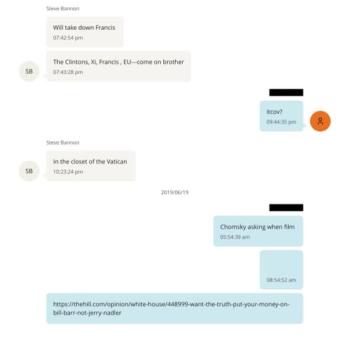
“Will Take Down Francis”: Bannon and Epstein vs...

Ongoing Catholic Decline in Latin America Under Pope...
Pope Leo, The Liberation Theologian?

Pope Bob - Why a Progressive American Pontiff...
TRENDING AT PATHEOS Catholic

How to Make a Decision When You Can't...
Main point: It’s much more valuable to stay close to God so...

Archdiocese Hosts Military Marriage Retreat in Germany
RASTATT, Germany — The transient military lifestyle, with its frequent deployments and...

Nearly every morning, I make the drive to Detroit with my high-school-age...

The Real AI Story Is Adoption Without Trust
Artificial intelligence has crossed a political threshold. It is no longer a...

A new article, written by Jeff Lindsay and Gale L. Pooley,...

Swimfan: Forgotten Aughts Pleasures
This is a recovery effort. In 2002, My Big Fat Greek Wedding...
view all Catholic blogs
Ad-Free & Subscriber Log-In Subscription Support
- About Us
- 2026 Calendar
- Videos
- Podcasts
- Library of World Religions
- Faith In Media Tracker
- Advertise With Us
- Write for Us
- Privacy Policy
- Terms of Service
- Do Not Sell My Data
- Contact Us
- Radiant Digital
- Manage Newsletter Subscriptions
- Unsubscribe From Notifications
- Sitemap
Copyright 2008-2026, Patheos. All rights reserved.
Subscription Support Ad-Free & Subscriber Log-In
Follow Patheos