
BuddhistCatholicContemplativeEvangelicalGeneral ChristianHinduJewishLatter-day SaintMuslimNew VisionsProgressive Christian
Beliefs
- Buddhist
- Catholic
- Contemplative
- Evangelical
- General Christian
- Hindu
- Jewish
- Latter-day Saint
- More Voices
- Muslim
- New Visions
- Pagan
- Progressive Christian
Topics
- Religion News
- Food and Religion
- Sports and Religion
- Religious Art
- Religious Music and Entertainment
- Religious Events
- History and Religion
- Style and Religion
- Politics and Religion
- Women in Religion
- Recreation Outdoors and Religion
- Business Finance and Religion
- Careers Workplace and Religion
- Education and Religion
- Family Parenting and Religion
- Health Fitness and Religion
- Home and Religion
- Relationships and Religion
- Technology and Religion
- Travel and Religion
Columnists
- Buddhist Columnists
- Business Finance and Religion Columnists
- Careers Workplace and Religion Columnists
- Catholic Columnists
- Contemplative Columnists
- Education and Religion Columnists
- Evangelists Columnists
- Family Parenting and Religion Columnists
- General Christian Columnists
- Health Fitness and Religion Columnists
- Hindu Columnists
- History and Religion Columnists
- Home and Religion Columnists
- Jewish Columnists
- More Voices Columnists
- Latter Day Columnists
- Muslim Columnists
- New Visions Columnists
- Nonreligious Columnists
- Pagan Columnists
- Politics and Religion Columnists
- Progressive Columnists
- Recreation Outdoors and Religion Columnists
- Relationships and Religion Columnists
- Religion News Columnists
- Religious Art Columnists
- Religious Events Columnists
- Religious Music and Entertainment Columnists
- Sports and Religion Columnists
- Style and Religion Columnists
- Technology and Religion Columnists
- Travel and Religion Columnists
- Women in Religion Columnists
Resource Library
- 2026 Calendar
- Library of World Religions
- The 100 Most Holy Places on Earth
- Patheos Answers
- Podcasts
- Videos
- Faith Leaders Database
- Anglican Episcopalian
- Bahai
- Baptist
- Buddhism
- Christianity
- Confucianism
- Eastern Orthodoxy
- Hinduism
- Holiness and Pentecostal
- ISKCON
- Islam
- Judaism
- Lutheran
- Methodist
- The Church of Jesus Christ of Latter-day Saints
- New Age
- Paganism
- Presbytarian and Reformed
- Protestantism
- Religion Behind the Scenes
- Roman Catholic
- Scientology
- Shia Islam
- Sikhism
- Sufism
- Sunni Islam
- Taoism
- Zen
- See all religions
Research Tools
 Ad-Free & Subscriber Log-In Subscription Support
Ad-Free & Subscriber Log-In Subscription Support
Follow Patheos 

- Trending:
- Forgiveness
- |
- Marriage
- |
- Consciousness
- |
- Death Penalty
- |
- Election
- |
- Halloween

- Home
- General Christian
- Family, Parenting and Religion
- This Is Your Question: Can God Fix Your Trauma
This Is Your Question: Can God Fix Your Trauma
Last updated on: November 19, 2024 at 3:01 pm by Ken Shelton
This Is Your Question: Can God Fix Your Trauma 2024-11-19T15:01:28-05:00 Ken Shelton
Patheos Explore the world's faith through different perspectives on religion and spirituality! Patheos has the views of the prevalent religions and spiritualities of the world.

Can God fix your trauma? If so, how does that work? Inquiring minds want to know! I certainly did. When I was about 10 years old, a friend from church said he had a question for me. It was a riddle of sorts. I nodded for him to proceed and he asked me this question: “Can God make a rock so big that he cannot move it? I answered, “Yes!” Then, “No?” Then, “Maybe.” Finally, “I don’t know.” I had come up against my first paradox. A paradox is something that seems to be self-contradictory and also true. This question falls into a category called, the omnipotence paradox. At first, these hypothetical situations seem childish, almost foolish. However, they have been the preoccupation of logicians and philosophers for centuries. In Christianity, Judaism, and Islam, the need to believe in an almighty God is a primary tenet. Otherwise, if God exists but is not almighty, what exactly are the boundaries of his power? Personally, I trust in God Almighty.
Where was he when I needed him?
A close relative to the omnipotence paradox are questions about God and suffering, or the fate of people who have never heard of Jesus. These are if questions; If God is almighty, then why did he allow a particular tragedy to occur? It concedes that God may very well be almighty, but where was he when I needed him? This is the question that is usually asked when we deal with trauma; Why did it happen to me?

The Unstoppable Force Paradox
Another paradox that is often pondered is the unstoppable force paradox which asks, What happens when an unstoppable force meets an immovable object? Is the force stronger, or is the object able to resist the force? Let’s assume that the unstoppable force is God and the immovable object is your trauma.
Faith is a fundamental step in our recovery
When we face a traumatic situation, it is common to wonder why it happened. Even if we know the human answer, we wonder why God, or the universe, or whatever, allowed this painful and unfortunate event to occur. In times of need, sooner or later, most of us pray. We start to look for that place inside of us that believes. Some people might think prayer is a foolish waste of time. I believe it is the irreplaceable process of opening our hearts to God. The simple act of asking God for help is proof that you have faith, and faith is a fundamental step in recovery. It can help us find the courage to deal with our trauma, and also our misconceptions about God. There need not be a constant collision between your trauma and God. You are of tremendous value to God. The Bible is full of reminders that He cares for us like a shepherd cares for his flock. Certainly God has the power to conquer trauma and fear, but there’s usually more to it than that. Healing trauma takes time and trust. So instead of a collision, God often works through a third agent; a professional therapist or a pastoral counselor.
First, though, it’s necessary to understand what is meant by the terms trauma and PTSD:
- Trauma is an emotional response to a negative event while PTSD is a mental health disorder resulting from trauma.
- Not all trauma develops into PTSD, but people with PTSD experience trauma.
- There are several treatment options for both trauma and PTSD
In addition, there are three main types of trauma: Acute, Chronic, or Complex
- Acute trauma results from a single incident.
- Chronic trauma is repeated and prolonged such as domestic violence or abuse.
- Complex trauma is exposure to varied and multiple traumatic events, often of an invasive, interpersonal nature.
The urge to understand God’s responses to our trauma is very real. If we know God’s will in a matter, then perhaps we can hold onto our faith a little longer until his answer manifests; until we find healing. We are, after all, both spiritual and rational beings.
My Trauma
When I was a happy 5-year-old boy, our family lived in a tiny home on a canal that led to one of Michigan’s many beautiful lakes. My hard-working father and caring mother provided a wonderful life for my sister and me. Our church was like an extended family in many ways. My parents were raised in southeast Kentucky during the Great Depression. In WW2, Dad joined the Navy and fought at the battles of Normandy and Iwo Jima among others. After the war, they settled in Michigan where my father landed a good job as a skilled tradesman for Pontiac Motors. However, not all of my parents’ siblings had it so well.
He made me promise not to tell anyone what had happened
A few of my uncles liked the moonshine a little too much and some became alcoholics. One of my mother’s older brothers and his wife died from alcoholism while they were still young parents. Questions arose regarding the care of their 5 children. As a result, other relatives took them in. My caring parents gladly made space for their 18-year-old nephew. There were only 3 small bedrooms in our tiny house, so our new houseguest stayed in my room. One night during a storm, I grew fearful of the lightning and the thunder. I asked my cousin if he would hold my hand. We each slept in separate twin beds but they were pretty close since the room was small. He agreed to hold my hand, but then he wanted more, and he sexually abused me. He was 18. I was 5. He made me promise not to tell anyone what had happened,

Fear
Credit: KenShelton
Years later, I shared this story with my pastor and then with my wife during pre-marital counseling. They were very understanding and helpful. What I couldn’t tell them was that the abuse affected me in overwhelming ways. In my book, Covenant Talk – Words That Set Us Free (2005 AuthorHouse), I describe the trauma’s impact on my soul. I developed an eating disorder. I lived with depression and anxiety throughout my life. Finally, I worked up the courage to tell my parents when I was 35 years old after I had been in full-time ministry for 12 years.
Freezing makes you believe that help is going to hurt, so you think it’s better to stay where you are.
I was afraid and too young to understand that I was grieving the loss of innocence. C.S. Lewis, under the name N.W. Clerk, wrote the book A Grief Observed (Lewis, 1961). In it, he reflected, “No one ever told me that grief felt so like fear.” In a few weeks, I’ll be 70 years old and I’m still in therapy. I almost didn’t write these articles about trauma. Writing the first one triggered me and I froze. We hear a lot about fight or flight. But seldom about the third reaction, freeze. I used to fight or run, but now I freeze. Therapy essentially helps me thaw out so I can move forward. Freezing stops you in place. It hinders creativity and ambition. Freezing also makes you think that help is going to hurt, so maybe it’s better to stay where you are; but it’s not.
Do you have the courage to trust God with your trauma?
Can God make a rock so big that He can’t move it? That’s too big a discussion today. Instead, I would like you to consider these two questions: First, do you have the courage to trust God with your trauma? Next, do you believe that God can provide the right third agent – a pastoral counselor or a therapist – to help you lift the rock of your trauma that you’ve been carrying around every day?
Be gentle with yourself. Help is near.
Progressive Christian
Evangelical
About Ken Shelton
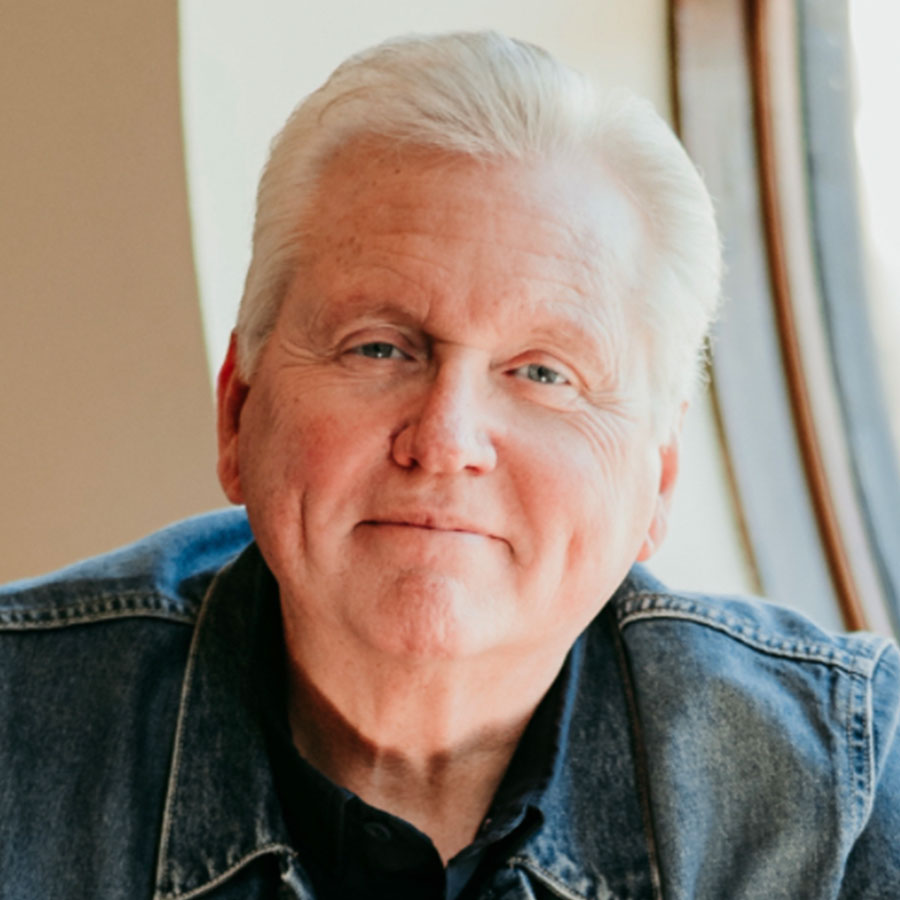
Ken and his wife Kitty were married on May 4, 1974. They have 3 daughters, ten grandchildren, and a 13-year-old Maltese/Poodle named Aspen. He is a songwriter, recording artist, writer, and planted several churches from his primary pastorate in Brighton, MI. He has been appointed to the Council of Bishops of Evangel Association of Churches and Ministries. More information is available at kenshelton.info and kensheltonmusic.com. (This article is for informational purposes only and is not intended as medical or psychological advice). You can read more about the author here.
Previous Post

April 13, 2023
Is Trauma An Emotional Pandemic
Next Post

April 14, 2023 3 Things Jesus Said About Trauma That You Should Know
Recent Comments
"I really appreciated the point you made of God wasting nothing in his lordship over ..."
A Pastor’s Stage IV Prostate Cancer ..."
"Trump has proven to be above the law.If the law was blind then Trump should ..."
Searching For Justice in the 2024 ..."
"Amen!"
"Im not against the Church being active in social justice, but we cant make it ..."
Searching For Justice in the 2024 ..."
Browse Our Archives
Select a Category Art Art and Faith Artists Betrayal Bible stories Celebrarions Celebrations Children's Future Christmas Christmas hope Church Counseling culture Current Affairs Death penalty Depression Devotional Discouragement Encouragement End times Endurance equality family traditions Fasting Fat Tuesday Finances Healthy Relationships Human Rights Humanity Inhumane justice Lent Mardi Gras Marriage Mental Illness Money Movies Music New Year's Day New Year's Eve Overcoming Parables of Jesus Personalities Politics Popular Musicians Prayer Prayer and Fasting religious nones Sanctity of Life society speeches Spiritual Life Spiritual Victory Spirituality technology tests Trauma Travel trials tribulation True Life Story Uncategorized Victory Worship Writers Writing
Select a Month April 2026 February 2025 January 2025 December 2024 November 2024 October 2024 July 2024 April 2024 February 2024 January 2024 December 2023 November 2023 October 2023 September 2023 August 2023 May 2023 April 2023
Follow Us!
TAKE THE
Religious Wisdom Quiz
What language was the New Testament originally written in?
Select your answer to see how you score.
Latin Greek Hebrew Syriac
Related posts from The Gathering Place

A Pastor's Stage IV Prostate Cancer Journey of...

Political Signs & The End of The World

Why the Death Penalty is Wrong
TRENDING AT PATHEOS General Christian

A Biblical Vision of Success in Christian Life...
The Concern and Quest Recent trends and tendencies I note around me...

Indigenous Peoples’ Day and the Church
Indigenous' Peoples Day or Columbus Day? Depending on where you live...

When Spiritual Growth Looks Like Losing Ground
Four Passive Spiritual Disciplines: An Introduction When I was a college freshman,...

Faith and Finding Your Current Season
“To everything there is a season,” Ecclesiastes tells us, “and a time...

Did Jesus Fear God's Wrath in Gethsemane?
That Time Jesus Was Terrified Before we begin, let me say at...

A Generation Searching for God in All the...
Revival Begins With God’s People! Holidays Are Upon Us! Welcome to October!...
view all General Christian blogs
What Are Your Thoughts?leave a comment
Ad-Free & Subscriber Log-In Subscription Support
- About Us
- 2026 Calendar
- Videos
- Podcasts
- Library of World Religions
- Faith In Media Tracker
- Advertise With Us
- Write for Us
- Privacy Policy
- Terms of Service
- Do Not Sell My Data
- Contact Us
- Radiant Digital
- Manage Newsletter Subscriptions
- Unsubscribe From Notifications
- Sitemap
Copyright 2008-2026, Patheos. All rights reserved.
Subscription Support Ad-Free & Subscriber Log-In
Follow Patheos