
BuddhistCatholicContemplativeEvangelicalGeneral ChristianHinduJewishLatter-day SaintMuslimNew VisionsProgressive Christian
Beliefs
- Buddhist
- Catholic
- Contemplative
- Evangelical
- General Christian
- Hindu
- Jewish
- Latter-day Saint
- More Voices
- Muslim
- New Visions
- Pagan
- Progressive Christian
Topics
- Religion News
- Food and Religion
- Sports and Religion
- Religious Art
- Religious Music and Entertainment
- Religious Events
- History and Religion
- Style and Religion
- Politics and Religion
- Women in Religion
- Recreation Outdoors and Religion
- Business Finance and Religion
- Careers Workplace and Religion
- Education and Religion
- Family Parenting and Religion
- Health Fitness and Religion
- Home and Religion
- Relationships and Religion
- Technology and Religion
- Travel and Religion
Columnists
- Buddhist Columnists
- Business Finance and Religion Columnists
- Careers Workplace and Religion Columnists
- Catholic Columnists
- Contemplative Columnists
- Education and Religion Columnists
- Evangelists Columnists
- Family Parenting and Religion Columnists
- General Christian Columnists
- Health Fitness and Religion Columnists
- Hindu Columnists
- History and Religion Columnists
- Home and Religion Columnists
- Jewish Columnists
- More Voices Columnists
- Latter Day Columnists
- Muslim Columnists
- New Visions Columnists
- Nonreligious Columnists
- Pagan Columnists
- Politics and Religion Columnists
- Progressive Columnists
- Recreation Outdoors and Religion Columnists
- Relationships and Religion Columnists
- Religion News Columnists
- Religious Art Columnists
- Religious Events Columnists
- Religious Music and Entertainment Columnists
- Sports and Religion Columnists
- Style and Religion Columnists
- Technology and Religion Columnists
- Travel and Religion Columnists
- Women in Religion Columnists
Resource Library
- 2026 Calendar
- Library of World Religions
- The 100 Most Holy Places on Earth
- Patheos Answers
- Podcasts
- Videos
- Faith Leaders Database
- Anglican Episcopalian
- Bahai
- Baptist
- Buddhism
- Christianity
- Confucianism
- Eastern Orthodoxy
- Hinduism
- Holiness and Pentecostal
- ISKCON
- Islam
- Judaism
- Lutheran
- Methodist
- The Church of Jesus Christ of Latter-day Saints
- New Age
- Paganism
- Presbytarian and Reformed
- Protestantism
- Religion Behind the Scenes
- Roman Catholic
- Scientology
- Shia Islam
- Sikhism
- Sufism
- Sunni Islam
- Taoism
- Zen
- See all religions
Research Tools
 Ad-Free & Subscriber Log-In Subscription Support
Ad-Free & Subscriber Log-In Subscription Support
Follow Patheos 

- Trending:
- Forgiveness
- |
- Marriage
- |
- Consciousness
- |
- Death Penalty
- |
- Election
- |
- Halloween

- Home
- Pagan
- Researching Your Witchy Interests: 3 Quick Tips
Researching Your Witchy Interests: 3 Quick Tips
Last updated on: January 12, 2021 at 10:00 am by Ash
Researching Your Witchy Interests: 3 Quick Tips 2020-12-28T11:06:39-05:00 Ash
Patheos Explore the world's faith through different perspectives on religion and spirituality! Patheos has the views of the prevalent religions and spiritualities of the world.
I’m sure I’m not the only person to have struggled with this, but sometimes I find it difficult to articulate myself. “But, Ash, your 5 billion word blog posts suggest otherwise!” Damn right they do. My posts suggest that I can babble like a brook if I’m not careful. I find that in an attempt to make myself understood I can over explain a topic or point ad nauseam. There are better ways to not only talk about your witchy interests but also research them. Below, I list three quick and easy tools that may help you get your research back on track. Leave the Crazy Train to Ozzy Osbourne.
Tip 1: Concept Map
Concept mapping is one seriously legit way to simplify your research. Hell yes! Let us hearken back to the days of grade school when our teachers taught us this tool for our essay papers.

When you ball so hard at being a witch that even your Scrabble game is bloody. Photo by MaddiesCreation on Unsplash.
Concept maps help us break a topic down by its parts. Concept maps also help us see the connections between topics we may have otherwise thought unrelated. Have you ever heard of the Six Degrees of Separation? A Hungarian author named Frigyes Karinthy theorized in 1929 that, on average, all people are only six or fewer social connections away from one another. Rad. I bet that bro was a pro at concept mapping.
Concept maps are like the Six Degrees of Separation in that they can show us a similar connection between two topics. We can begin with a singular topic, which is usually pretty broad. From there, we begin “mapping” out as many similar topics or sub-topics that relate to that first one. For example, let’s map out Wicca. “Wicca” is a broad topic that I can connect with well-known traditions, influential people, and common practices. Did you know there’s a tiny connection between Wicca and Russia? I’ll show you where in my own crappily-drawn concept map:
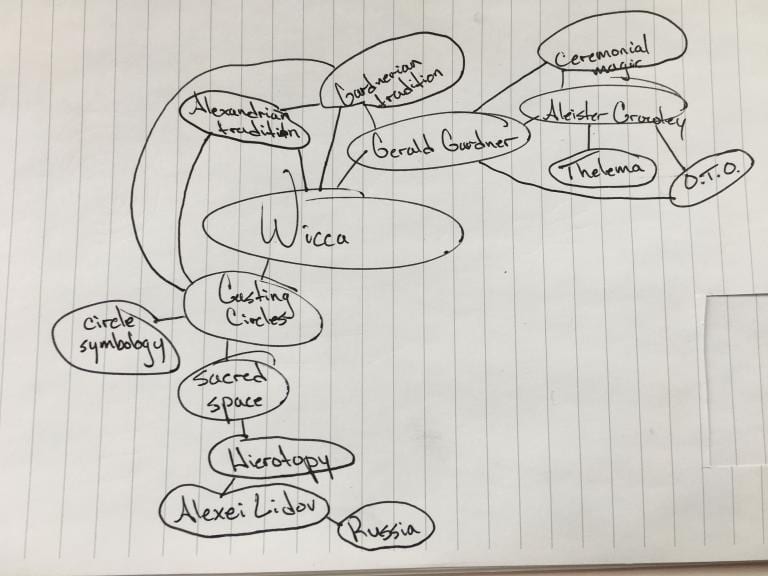
Photo by Ash.
So, after doing all that you might wonder why it matters to connect Russia and Wicca together. The point is that you’re first trying to broadly cover as many bases as you can while doing research on a topic. Those bases include: the topic itself, related topics, issues surrounding that topic, and current scholarship on the topic. The concept map serves as a visual tool for quickly observing those connections and helping you choose which route(s) you want to take in your research.
Lastly, the concept map can keep your research focused if you keep it brief. The pitfall is that it can also send you down a research rabbithole if you make your map too large. In the example above, by the time we get to “Russia” as a connection to “Wicca”, we’re already five steps away from my original topic. In my opinion, it’s too far from where my focus should be and therefore unhelpful.
My tip: don’t pull a Karinthy and map out topics or subjects that are too far from the center of your original topic. Stick to four or fewer connections, if possible.
Tip 2: Keyword-smithing
AKA “How to Tubal Cain the shit out of some witchy words”
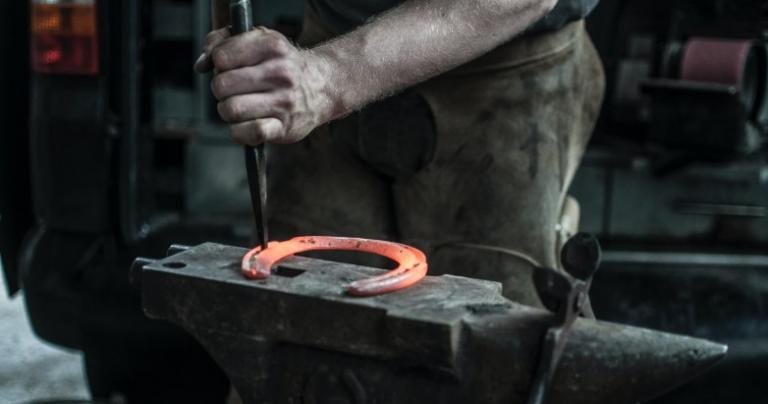
Photo by Jonathan Bean on Unsplash
The key to any successful Internet search is damn good keywords. Keywords unlock online doors, my friends. The difference between using “firetruck” OR “a large red vehicle that carries a shitton of water and dalmatians” is huge. Here are some tips for creating good search engine keywords:
- Create succinct word combos for more relevant search results. The fewer words you use in a search, the better.
- Steer clear of using questions in the search box. Search engines like Google aren’t designed to give answers but relevant results to the words typed in a search box. Search engines will take every word that you entered and crawl webpages for those exact words. The websites that get returned to you may or may not be what you’re looking for, but the search engine performed its duty correctly. You have to be smarter than the search engine or database that you’re using, though.
- Use a thesaurus for synonyms. There may be terms you haven’t considered being related to your original word(s).
- Nouns and verbs make the best keywords. Leave out prepositions and conjunctions, if you can.
- If you started with a concept map, consider using the words from the map in your searches.
- If there’s an exact phrase with words that have a specific spelling, consider using quotation marks around the search phrase. Quotation marks, if needed, are only useful for two or more keywords in a search. “Besom, Stang, and Sword” will return more precise results, for example, than that phrase without the quotation marks. That’s not to say you won’t get what you’re looking for without the quotation marks. However, you’ll get more precise results if you use them when they’re most needed. Use them for book titles, author names, and passage quotes for A+ search results.
Tip 3: Narrow Your Topic
Let’s imagine we’re doing research on magical texts. “Magical texts” is a super broad topic and it’ll return a ton of online results, so it might be worth narrowing the topic a bit. Here are some questions you can ask yourself to help narrow your topic. I like to use the 5 W’s and H (Who, What, When, Where, Why and How), for starters:
- Who are you researching? A magical author or culture that has magical texts? Example: Heinrich Cornelius Agrippa or Ancient Egypt.
- What/Which text are you researching? Example: The Book of the Dead or Greek Magical Papyri.
- When was this text published? Or, is there a specific time period of magical texts you’d like to research? This helps with historical context.
- Where was this text written or published? Knowing the location can help you understand its cultural context.
- Why was this text written? What purpose did/does it serve?
- How was it written? By hand? In another language? Digitally?
Asking the above questions will assist you in focusing on the important details of your topic. From there, you can head off in numerous directions but your basis of understanding will be set.
I hope you found the above tips helpful! For more tips like these and more:
Follow me on Instagram @thegardnerianlibrarian

Logo created by The Gardnerian Librarian using Canva.
Previous Post

January 4, 2021
Book Review: Do I Have to Wear Black? by Mortellus
Next Post

January 19, 2021 Librarians: Humanity's Soul Collectors
Browse Our Archives
Select a Category CRAAP Gardnerian Horsa Librarianship Pagan Book Reviews Paganism Sacred Pentagraph Uncategorized Wicca Witchcraft
Select a Month November 2025 May 2025 December 2024 September 2024 August 2024 February 2024 November 2023 May 2023 February 2023 December 2022 October 2022 August 2022 July 2022 May 2022 April 2022 February 2022 January 2022 December 2021 November 2021 September 2021 July 2021 June 2021 May 2021 March 2021 February 2021 January 2021 December 2020 November 2020
TAKE THE
Religious Wisdom Quiz
"Those who wait on the Lord will renew their strength. They will soar with wings like ____ ..."
Select your answer to see how you score.
Hawks Angels Raptors Eagles
Related posts from The Gardnerian Librarian

Handcopying: A Threshold Guardian of Knowledge
Pagans Do Theology: Why Do We Practice by...
Beltane: Initiation Things and Faerie Wings!

Books & Broomsticks: A List of Favorite Podcasts...
TRENDING AT PATHEOS Pagan

I was recently chatting with someone on Instagram. She asked me what...

While there are many people who share their results, the end of...

On July 23, I saw Christopher Nolan's The Odyssey which is Homer’s...

As I write this two big events have just finished up. One...

Restoring the Watershed of Divine Love
Perhaps cooperation is not something we manufacture through legislation, ideology, or moral...

Many UUs don’t pray because of bad experiences in a previous religion,...
view all Pagan blogs
Ad-Free & Subscriber Log-In Subscription Support
- About Us
- 2026 Calendar
- Videos
- Podcasts
- Library of World Religions
- Faith In Media Tracker
- Advertise With Us
- Write for Us
- Privacy Policy
- Terms of Service
- Do Not Sell My Data
- Contact Us
- Radiant Digital
- Manage Newsletter Subscriptions
- Unsubscribe From Notifications
- Sitemap
Copyright 2008-2026, Patheos. All rights reserved.
Subscription Support Ad-Free & Subscriber Log-In
Follow Patheos