
BuddhistCatholicContemplativeEvangelicalGeneral ChristianHinduJewishLatter-day SaintMuslimNew VisionsProgressive Christian
Beliefs
- Buddhist
- Catholic
- Contemplative
- Evangelical
- General Christian
- Hindu
- Jewish
- Latter-day Saint
- More Voices
- Muslim
- New Visions
- Pagan
- Progressive Christian
Topics
- Religion News
- Food and Religion
- Sports and Religion
- Religious Art
- Religious Music and Entertainment
- Religious Events
- History and Religion
- Style and Religion
- Politics and Religion
- Women in Religion
- Recreation Outdoors and Religion
- Business Finance and Religion
- Careers Workplace and Religion
- Education and Religion
- Family Parenting and Religion
- Health Fitness and Religion
- Home and Religion
- Relationships and Religion
- Technology and Religion
- Travel and Religion
Columnists
- Buddhist Columnists
- Business Finance and Religion Columnists
- Careers Workplace and Religion Columnists
- Catholic Columnists
- Contemplative Columnists
- Education and Religion Columnists
- Evangelists Columnists
- Family Parenting and Religion Columnists
- General Christian Columnists
- Health Fitness and Religion Columnists
- Hindu Columnists
- History and Religion Columnists
- Home and Religion Columnists
- Jewish Columnists
- More Voices Columnists
- Latter Day Columnists
- Muslim Columnists
- New Visions Columnists
- Nonreligious Columnists
- Pagan Columnists
- Politics and Religion Columnists
- Progressive Columnists
- Recreation Outdoors and Religion Columnists
- Relationships and Religion Columnists
- Religion News Columnists
- Religious Art Columnists
- Religious Events Columnists
- Religious Music and Entertainment Columnists
- Sports and Religion Columnists
- Style and Religion Columnists
- Technology and Religion Columnists
- Travel and Religion Columnists
- Women in Religion Columnists
Resource Library
- 2026 Calendar
- Library of World Religions
- The 100 Most Holy Places on Earth
- Patheos Answers
- Podcasts
- Videos
- Faith Leaders Database
- Anglican Episcopalian
- Bahai
- Baptist
- Buddhism
- Christianity
- Confucianism
- Eastern Orthodoxy
- Hinduism
- Holiness and Pentecostal
- ISKCON
- Islam
- Judaism
- Lutheran
- Methodist
- The Church of Jesus Christ of Latter-day Saints
- New Age
- Paganism
- Presbytarian and Reformed
- Protestantism
- Religion Behind the Scenes
- Roman Catholic
- Scientology
- Shia Islam
- Sikhism
- Sufism
- Sunni Islam
- Taoism
- Zen
- See all religions
Research Tools
 Ad-Free & Subscriber Log-In Subscription Support
Ad-Free & Subscriber Log-In Subscription Support
Follow Patheos 

- Trending:
- Forgiveness
- |
- Marriage
- |
- Consciousness
- |
- Death Penalty
- |
- Election
- |
- Halloween

- Home
- Pagan
- Librarians: Humanity’s Soul Collectors
Librarians: Humanity’s Soul Collectors
Last updated on: January 22, 2021 at 9:28 am by Ash
Librarians: Humanity’s Soul Collectors 2021-01-22T09:28:41-05:00 Ash
Patheos Explore the world's faith through different perspectives on religion and spirituality! Patheos has the views of the prevalent religions and spiritualities of the world.
Recently, I researched patron deities of libraries and librarians and happened upon an encyclopedic article on Seshat written by Joshua J. Mark in 2016. Seshat was the Egyptian goddess of the written word and the consort of Thoth, the god of wisdom and writing. What connects Seshat to libraries is that she is in charge of the Per-Ankh, the House of Life, “a combination library, scriptorium, institute of higher learning, writer’s workshop, print shop/copy center, publisher, and distributor” (Mark, 2016). Sounds like my kind of place!
Myth says that Seshat places a copy of every book ever published by mortals and immortals alike into the House of Life. As a librarian, I am naturally intrigued by Seshat’s duties. In fact, I can’t help but wonder if we librarians are a bit like soul collectors. Didn’t someone somewhere say that we leave a bit of ourselves in everything we create? Kind of like a horcrux or something. Each book in my collection might hold a piece of an author’s soul. Delicious. Hades might be the big soul collector in the Underworld but we librarians are holding down the Middle World.
Soul Collection
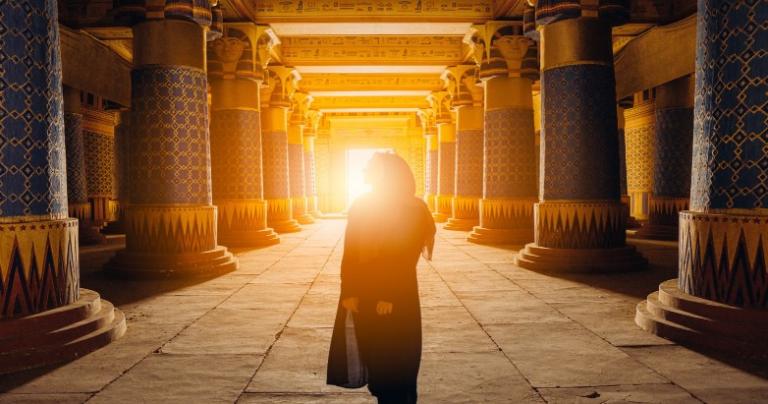
Photo by Hassan OUAJBIR on Unsplash.
Librarians collect hundreds to thousands of books and materials per year, steadily adding to the accumulated knowledge in our libraries. In some ways, being a librarian is like being a hoarder but with $40,000 organizational skills (avg cost of a Master’s in Library Science). We organize them using a complex classification system, such as the Dewey Decimal System or Library of Congress. Every physical item cataloged in a library has its own unique call number, which is made up of a combination of letters, numbers, and decimal points. We generally think of the call number as an “address” that helps people locate the title on the shelf. However, librarians use call numbers to quickly gain information about books, like their classes and sub-classes. Think of classes and sub-classes as being similar to genres and sub-genres.
Cocktail Conversational Knowledge: Most academic institutions of higher learning in the US use Library of Congress (LC). On the other hand, grade schools and public libraries commonly use Dewey Decimal (DD). However, Library of Congress allows for many more sub-classifications of materials than DD. There are so many fields and sub-fields of research, with new fields being discovered all the time. LC is designed to accommodate the sub-classes of research out there, which is why LC is used in research institutions. Today, LC is widely used across the world.
I try to imagine how Seshat would classify and catalog our books and materials. By mortals and immortals? By our thoughts, words, and accomplishments (or lack thereof)? For whom or what is Seshat ultimately collecting all that information? Inquiring minds want to know!
Soul Preservation
Librarians have a duty to actively collect new souls books and also preserve them. There are entire careers, like museum curatorship, centered around the preservation of artifacts and materials. My own schooling included a general course in materials preservation. We learned about preventing mold and mildew damage, conserving the integrity of the book structure, and temperature recommendations for storage. Libraries were first built to store mass volumes of materials for elite classes. It was only within the past one hundred years or so that they became public places for sharing knowledge. I wonder who gets to have access to Seshat’s library — only the gods? Any immortal being?
For example, there are differences in how one should store hardbacks versus paperbacks for longevity. Book bindings also play a key part in determining how a book should be stored. Also, did you know that book glue attracts silverfish, which like to eat said glue? Did you know that there’s a such thing as “book lice?” I’ve dealt with both, and more, and it sucks to know the integrity of your collection is at the mercy of some shitty little bugs. Read this article from Purdue University to learn more, if you’re curious.
The real experts on preservation are the curators and archivists, though. These people take really old shit and help keep it intact for much longer than they’ll ever be alive to appreciate. Hades is like the Master Archivist, preserving souls for longer than any of us will ever know. Seshat is the Master Librarian, preserving fragments of our human creativity for all of eternity. Today’s librarians wear a similar mantle. Between all the public, academic, private, and special libraries out there is the aggregation of most of humanity’s thoughts and thus our very souls.
Immortality & the Written Word
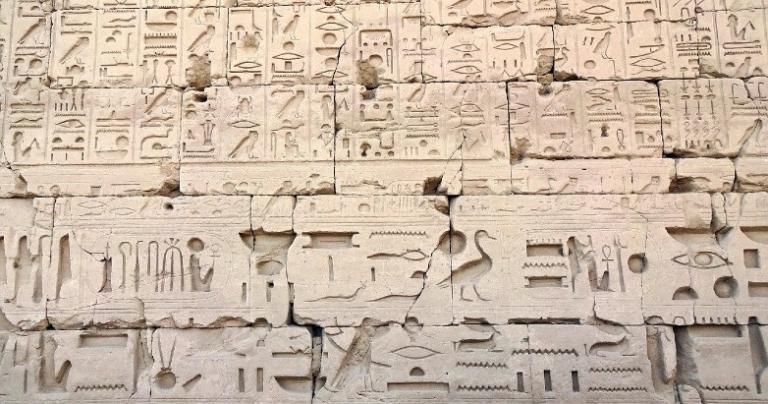
Image via Pixabay.
Ancient Egyptians were mega obsessed with achieving immortality, as evidenced by their writings and burial sites. Stone construction was desired for its durability, which is why it was used in building tombs and pyramids. The Egyptians also believed that writing was an invention of the gods, which is why ‘hieroglyph’ translates to ‘holy writing.’ Notice that their tombs are etched from top to bottom in hieroglyphs. If it’s true that writing is holy then every word any of us have ever written may be sacred. Those shitty book reports you did in grade school? Blesséd. Those passive aggressive Post-It notes you left your coworkers asking them to please stop eating your lunch from the office fridge? Divinely-inspired.
Imagine that every word we’ve ever written actually is godly. We can create and destroy one another’s dreams with our words. We can create entire fictional worlds, dwell in our sorrow, and uplift our friends. Our words, especially written, have impact. Sometimes, like in the case of our shitty book reports, our words impact our grades. Admittedly, book reports aren’t as earth-shattering as using the written word to provide us spells and guidance to navigate the Afterlife, like the Egyptian Book of the Dead. But our written words prove that we were once alive, right?
Many of us have left a paper trail we’ve since we etched our first letter. All of those words spanning our entire lives are evidence that we once existed on Earth, somewhat immortalizing us. Nowadays, we write the majority of our words online or in texts, which leaves no tangible evidence of our very tangible existence. Not all of us can, want, or will write books, though. Not all of us can be you, Jason Mankey! Though we, like myself, may aspire to be. We may never have our shelf space in Seshat’s library, but someone on this planet will know something about us after we’re gone…even if it’s just reading the words on our book spines and gravestones.
“This chick used the word ‘shit’ a lot in her blog.” – future words probably said about me. Rad.
Follow me on Instagram @thegardnerianlibrarian !
Logo created using Canva.
Previous Post

January 12, 2021
Researching Your Witchy Interests: 3 Quick Tips
Next Post

January 26, 2021 My 3 Favorite Craft Tools
Browse Our Archives
Select a Category CRAAP Gardnerian Horsa Librarianship Pagan Book Reviews Paganism Sacred Pentagraph Uncategorized Wicca Witchcraft
Select a Month November 2025 May 2025 December 2024 September 2024 August 2024 February 2024 November 2023 May 2023 February 2023 December 2022 October 2022 August 2022 July 2022 May 2022 April 2022 February 2022 January 2022 December 2021 November 2021 September 2021 July 2021 June 2021 May 2021 March 2021 February 2021 January 2021 December 2020 November 2020
TAKE THE
Religious Wisdom Quiz
According to Isaiah 53, how would the Messiah be treated by people?
Select your answer to see how you score.
Worshiped and adored Feared and honored Ignored and forgotten Despised and rejected
Related posts from The Gardnerian Librarian
Pagans Do Theology: Why Do We Practice by...


Organizing the Magical Library
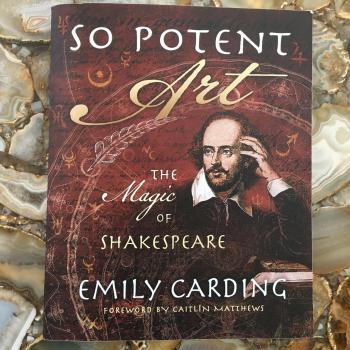
Book Review: So Potent Art by Emily Carding
TRENDING AT PATHEOS Pagan

I was recently chatting with someone on Instagram. She asked me what...

While there are many people who share their results, the end of...

On July 23, I saw Christopher Nolan's The Odyssey which is Homer’s...

As I write this two big events have just finished up. One...

Restoring the Watershed of Divine Love
Perhaps cooperation is not something we manufacture through legislation, ideology, or moral...

Many UUs don’t pray because of bad experiences in a previous religion,...
view all Pagan blogs
Ad-Free & Subscriber Log-In Subscription Support
- About Us
- 2026 Calendar
- Videos
- Podcasts
- Library of World Religions
- Faith In Media Tracker
- Advertise With Us
- Write for Us
- Privacy Policy
- Terms of Service
- Do Not Sell My Data
- Contact Us
- Radiant Digital
- Manage Newsletter Subscriptions
- Unsubscribe From Notifications
- Sitemap
Copyright 2008-2026, Patheos. All rights reserved.
Subscription Support Ad-Free & Subscriber Log-In
Follow Patheos