
BuddhistCatholicContemplativeEvangelicalGeneral ChristianHinduJewishLatter-day SaintMuslimNew VisionsProgressive Christian
Beliefs
- Buddhist
- Catholic
- Contemplative
- Evangelical
- General Christian
- Hindu
- Jewish
- Latter-day Saint
- More Voices
- Muslim
- New Visions
- Pagan
- Progressive Christian
Topics
- Religion News
- Food and Religion
- Sports and Religion
- Religious Art
- Religious Music and Entertainment
- Religious Events
- History and Religion
- Style and Religion
- Politics and Religion
- Women in Religion
- Recreation Outdoors and Religion
- Business Finance and Religion
- Careers Workplace and Religion
- Education and Religion
- Family Parenting and Religion
- Health Fitness and Religion
- Home and Religion
- Relationships and Religion
- Technology and Religion
- Travel and Religion
Columnists
- Buddhist Columnists
- Business Finance and Religion Columnists
- Careers Workplace and Religion Columnists
- Catholic Columnists
- Contemplative Columnists
- Education and Religion Columnists
- Evangelists Columnists
- Family Parenting and Religion Columnists
- General Christian Columnists
- Health Fitness and Religion Columnists
- Hindu Columnists
- History and Religion Columnists
- Home and Religion Columnists
- Jewish Columnists
- More Voices Columnists
- Latter Day Columnists
- Muslim Columnists
- New Visions Columnists
- Nonreligious Columnists
- Pagan Columnists
- Politics and Religion Columnists
- Progressive Columnists
- Recreation Outdoors and Religion Columnists
- Relationships and Religion Columnists
- Religion News Columnists
- Religious Art Columnists
- Religious Events Columnists
- Religious Music and Entertainment Columnists
- Sports and Religion Columnists
- Style and Religion Columnists
- Technology and Religion Columnists
- Travel and Religion Columnists
- Women in Religion Columnists
Resource Library
- 2026 Calendar
- Library of World Religions
- The 100 Most Holy Places on Earth
- Patheos Answers
- Podcasts
- Videos
- Faith Leaders Database
- Anglican Episcopalian
- Bahai
- Baptist
- Buddhism
- Christianity
- Confucianism
- Eastern Orthodoxy
- Hinduism
- Holiness and Pentecostal
- ISKCON
- Islam
- Judaism
- Lutheran
- Methodist
- The Church of Jesus Christ of Latter-day Saints
- New Age
- Paganism
- Presbytarian and Reformed
- Protestantism
- Religion Behind the Scenes
- Roman Catholic
- Scientology
- Shia Islam
- Sikhism
- Sufism
- Sunni Islam
- Taoism
- Zen
- See all religions
Research Tools
 Ad-Free & Subscriber Log-In Subscription Support
Ad-Free & Subscriber Log-In Subscription Support
Follow Patheos 

- Trending:
- Forgiveness
- |
- Marriage
- |
- Consciousness
- |
- Death Penalty
- |
- Election
- |
- Halloween

- Home
- Pagan
- Authority and Bias in the Pagan Community
Authority and Bias in the Pagan Community
Last updated on: November 17, 2020 at 11:30 am by Ash
Authority and Bias in the Pagan Community 2020-11-12T20:44:17-05:00 Ash
Patheos Explore the world's faith through different perspectives on religion and spirituality! Patheos has the views of the prevalent religions and spiritualities of the world.
Information bias in the pagan community is real, whether we admit it or not. The proof is in how we hold certain authors in higher esteem than others, including specific publishers, social media influencers, and websites. For some individuals, information outside of a prescribed list of sources is out of the question. The issue with bias is that it can prevent us from broadening our horizons in terms of experiential knowledge. It can also lock us into one mode of thinking when it comes to our traditions and practices. Bias can make us feel that any idea that deviates from our internalized, accepted beliefs isn’t one worth considering.
When we are victims of our own biases, we create an environment in which we surround ourselves with people and ideas that mirror our own. Social media feeds are excellent examples of biases at work because we can customize and curate nearly everything that shows up in them according to our likes and dislikes. Don’t like Donald Trump fans and what they stand for? Block ’em.
Every single one of us has, at some point in our lives, created a vacuum in which we only interact with people just like us. It’s normal to seek experiences and people that validate our biases because it’s simpler to do than challenge our beliefs. Our brains are wired to work off biases, which can either be positive or negative, according to an article in Psychology Today. Cognitive biases, defined as “repeated patterns of thinking that can lead to inaccurate or unreasonable conclusions”, are particularly difficult to break (Psychology Today, “Bias”).
Pagan Authority & Heroes
Certain individuals, dubbed “Big Name Pagans” by some, have been given preferential treatment on pagan podcasts, in books, on pagan websites, and on social media. They’re viewed as authorities in paganism, whether they accept it or not. Often, their word is construed to be final on many matters in our communities, particularly social issues. Many pagans, especially newbs, have adopted the biases of their pagan heroes because they’ve placed our trust in them. We view them as reliable sources of information and authorities in their field. Is there anything wrong with that? Yes and no.
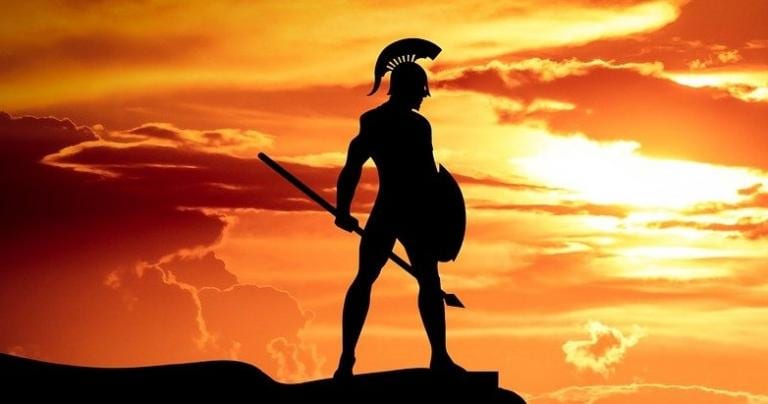
Image via Pixabay
Some pagan heroes mistakenly use their position to influence their followers’ feelings towards certain individuals, traditions, and opinions. Let’s consider the Traditional Witchcraft vs. Traditional Wicca debate. There are some Big Name Pagans who choose to rail on Wicca like it’s their job, desiring to draw as many differences between what they do and what Wiccans do. The reason behind the railing is understandable — they’re tired of being lumped in with Wicca – but they’re using their public platforms to create stereotypes and biases in a big way. Newbs won’t understand the nuances, though, and neither will people looking to validate their own biases against Wicca.
Paganism Has No Rulers

Image via Pixabay.
Shouldn’t we trust in those individuals who’ve earned authority in their field? In matters related to scholarship, yes. In matters related to personal opinions, no. Just because a person holds authority in one aspect does not give them authority in everything. Paganism is not a kingdom to be ruled by a select few. I may be a High Priestess in the Gardnerian Wicca but I don’t use my position to speak for all Gardnerians (not that I could – Gardnerians are an opinionated bunch).
Pagan celebrities are somewhat unofficially vetted by our community as being less crazy than the rest of us. Many of them give validity to and humanize the pagan community for outsiders. We should want people out there representing our community in positive ways, and most Big Name Pagans do just that. They’re brave enough to put their faces out there for the rest of the world to see. We should commend them for that but not hero-worship them because of it.
Peer Review and Pagan Publishing
Academic publishers require certain hoops to be jumped through before you can get your shit published. As an author, you need to have a degree in the field in which you’re researching and publishing. You also need to find peer-reviewed journals that will accept your work. “Peer review” is a process whereby academics get their research reviewed by a body of their peers. “Peers” in this case are other, vetted scholars in the same field as the author. To get published in a peer-reviewed journal is important, as it means that other academics found your research valuable to your shared field.

“It says right here that you’re full of shit, Chad.” Image via Pixabay.
While there isn’t a peer-review process for publishing pagan books, publishing companies do have their own standards for accepting and publishing new works. The process may not be as rigorous as peer review, but it’s nothing at which to snub our noses. For pagan authors, their “review process” really comes after their books are published. Readers essentially take on the roles of a pagan author’s “peers”, whether that’s a good thing or a bad thing.
Academic journals allow authors to edit and resubmit their research if it didn’t quite make the cut the first time. Traditional book publishing follows an editing process, but the editors are rarely fellow scholars. Pagan authors, on the other hand, are at the mercy of their readers. These readers claim all sorts of authority on any number of subjects, eliciting quite a few groans and eyerolls from the rest of us.
Performative Paganism
There’s no singular solution for curbing the information biases many of us hold in this community. Perhaps we could work on a culture that encourages diversity in opinions and desires to hear more from “regular” people. Some of us need to get away from this idea that only a few speak for us all. Diversity in practice and opinion would deliver a more rounded understanding of modern paganism, too. We could also achieve a better understanding of our complex community through better representation of Black, Indigenous and People of Color (BIPOC).

A snapshot of our lives outside of social media: empty and with the curtains drawn. Image via Pixabay.
There seems to be this unspoken desire to obtain the coveted “influencer” status on the Internet, though. People get paid for that shit. I get it. Pagan influencers showcase just how much of their time they’ve given to being pagan with their carefully-edited photos of piles of books, altars and tools, and spell candles. That it’s all been worth it in some regard. The Internet is something like a digital gravestone where we hope to highlight our greatest achievements for all to see, long after we’re gone. In the pagan world, we utilize our social media accounts to prove how much magic we’re doing, how many books we’re reading, and all the pagan celebs we know.
A friend and I talked about how we wish certain pagan podcasts would do more than just interview pagan celebrities. If our creative content is centered around pagan celebs then what does it say about that content? What does it say about our community? It says, “we’re only concerned with who and what we know in this community and not what we do.”
Similar Thoughts from Other Patheos Authors
There have been several other Patheos bloggers who have written on the damaging aspects of bias in the pagan community, including:
Thorn Mooney: “Don’t Put Other Witches on Pedestals”
Mortellus: “Psst… I’m an impostor”
Jason Mankey: “Big Name Pagans”
John Beckett: “What They Don’t Want You To Know”
Speaking of Influencers…
Follow me on Instagram @thegardnerianlibrarian !

Created by The Gardnerian Librarian using Canva.
Previous Post

November 12, 2020
Information Overwhelm and How to Cope With It
Next Post

November 24, 2020 Gardnerian Wicca: Outdated and Debunked?
Browse Our Archives
Select a Category CRAAP Gardnerian Horsa Librarianship Pagan Book Reviews Paganism Sacred Pentagraph Uncategorized Wicca Witchcraft
Select a Month November 2025 May 2025 December 2024 September 2024 August 2024 February 2024 November 2023 May 2023 February 2023 December 2022 October 2022 August 2022 July 2022 May 2022 April 2022 February 2022 January 2022 December 2021 November 2021 September 2021 July 2021 June 2021 May 2021 March 2021 February 2021 January 2021 December 2020 November 2020
TAKE THE
Religious Wisdom Quiz
"Those who wait on the Lord will renew their strength. They will soar with wings like ____ ..."
Select your answer to see how you score.
Hawks Angels Raptors Eagles
Related posts from The Gardnerian Librarian

Handcopying: A Threshold Guardian of Knowledge
Beltane: Initiation Things and Faerie Wings!


Books & Broomsticks: A List of Favorite Podcasts...
TRENDING AT PATHEOS Pagan

I was recently chatting with someone on Instagram. She asked me what...

While there are many people who share their results, the end of...

On July 23, I saw Christopher Nolan's The Odyssey which is Homer’s...

As I write this two big events have just finished up. One...

Restoring the Watershed of Divine Love
Perhaps cooperation is not something we manufacture through legislation, ideology, or moral...

Many UUs don’t pray because of bad experiences in a previous religion,...
view all Pagan blogs
Ad-Free & Subscriber Log-In Subscription Support
- About Us
- 2026 Calendar
- Videos
- Podcasts
- Library of World Religions
- Faith In Media Tracker
- Advertise With Us
- Write for Us
- Privacy Policy
- Terms of Service
- Do Not Sell My Data
- Contact Us
- Radiant Digital
- Manage Newsletter Subscriptions
- Unsubscribe From Notifications
- Sitemap
Copyright 2008-2026, Patheos. All rights reserved.
Subscription Support Ad-Free & Subscriber Log-In
Follow Patheos