
BuddhistCatholicContemplativeEvangelicalGeneral ChristianHinduJewishLatter-day SaintMuslimNew VisionsProgressive Christian
Beliefs
- Buddhist
- Catholic
- Contemplative
- Evangelical
- General Christian
- Hindu
- Jewish
- Latter-day Saint
- More Voices
- Muslim
- New Visions
- Pagan
- Progressive Christian
Topics
- Religion News
- Food and Religion
- Sports and Religion
- Religious Art
- Religious Music and Entertainment
- Religious Events
- History and Religion
- Style and Religion
- Politics and Religion
- Women in Religion
- Recreation Outdoors and Religion
- Business Finance and Religion
- Careers Workplace and Religion
- Education and Religion
- Family Parenting and Religion
- Health Fitness and Religion
- Home and Religion
- Relationships and Religion
- Technology and Religion
- Travel and Religion
Columnists
- Buddhist Columnists
- Business Finance and Religion Columnists
- Careers Workplace and Religion Columnists
- Catholic Columnists
- Contemplative Columnists
- Education and Religion Columnists
- Evangelists Columnists
- Family Parenting and Religion Columnists
- General Christian Columnists
- Health Fitness and Religion Columnists
- Hindu Columnists
- History and Religion Columnists
- Home and Religion Columnists
- Jewish Columnists
- More Voices Columnists
- Latter Day Columnists
- Muslim Columnists
- New Visions Columnists
- Nonreligious Columnists
- Pagan Columnists
- Politics and Religion Columnists
- Progressive Columnists
- Recreation Outdoors and Religion Columnists
- Relationships and Religion Columnists
- Religion News Columnists
- Religious Art Columnists
- Religious Events Columnists
- Religious Music and Entertainment Columnists
- Sports and Religion Columnists
- Style and Religion Columnists
- Technology and Religion Columnists
- Travel and Religion Columnists
- Women in Religion Columnists
Resource Library
- 2026 Calendar
- Library of World Religions
- The 100 Most Holy Places on Earth
- Patheos Answers
- Podcasts
- Videos
- Faith Leaders Database
- Anglican Episcopalian
- Bahai
- Baptist
- Buddhism
- Christianity
- Confucianism
- Eastern Orthodoxy
- Hinduism
- Holiness and Pentecostal
- ISKCON
- Islam
- Judaism
- Lutheran
- Methodist
- The Church of Jesus Christ of Latter-day Saints
- New Age
- Paganism
- Presbytarian and Reformed
- Protestantism
- Religion Behind the Scenes
- Roman Catholic
- Scientology
- Shia Islam
- Sikhism
- Sufism
- Sunni Islam
- Taoism
- Zen
- See all religions
Research Tools
 Ad-Free & Subscriber Log-In Subscription Support
Ad-Free & Subscriber Log-In Subscription Support
Follow Patheos 

- Trending:
- Forgiveness
- |
- Marriage
- |
- Consciousness
- |
- Death Penalty
- |
- Election
- |
- Halloween

- Home
- Catholic
- Pastoral Zeal as Priestly Identity
Pastoral Zeal as Priestly Identity
Last updated on: September 7, 2021 at 2:12 pm by Guest Contributor
Pastoral Zeal as Priestly Identity 2021-09-07T14:12:50-05:00 Guest Contributor
Patheos Explore the world's faith through different perspectives on religion and spirituality! Patheos has the views of the prevalent religions and spiritualities of the world.
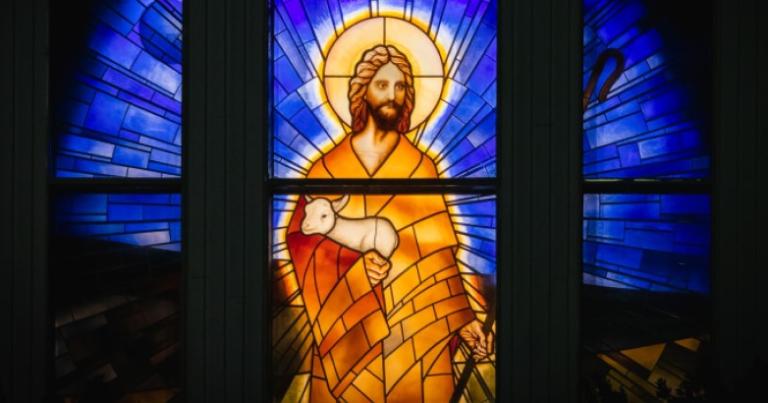
Greg Rosenke / Unsplash
By Father Lazar Arasu SDB
The concept of priest is easily understood in relation to the Levitical priesthood as shown in the Old Testament. Their primary responsibility was to offer sacrifice according to the Mosaic Law. In the New Testament, the priests are more identified with their pastoral ministry, the supervisory role as elders and being a “servant” to the community. They were rightly called presbyters or elders, who are more of administrators, leaders and assembly elders.
The Letter to the Hebrews written in the first century by an elder of the church looks at the salvific activity of Jesus as priestly and high-priestly, this in relation to Christ’s sacrifice of himself on the cross. But still the epistle places a great emphasis on the aspects of His work.
It should be noted that the priesthood of Jesus is declared to be in line with the order of Melchizedek, and consequently radically unlike that of the Levitical priests. It is interesting to note that during his ministry, Jesus never gave any hint that he is a priest or doing any priestly duties. But he called disciples to share his mission and be apostles, servants and ministers of the Word.
The office of priest developed gradually in the early Christian church as first bishops and then elders, or “presbyters,” began to exercise certain priestly functions, mainly in connection with celebration of the Eucharist. By the end of the 2nd century, the church’s bishops were called priests, (in Latin, sacerdos). But we are certain that priests of the church are primarily identified with their pastoral activity, which is their primary activity.
The noun “pastor” means “shepherd,” and “pastoral” means the activity of shepherding: leading the flock and caring for the flock. In his preaching Jesus gives vivid description of a good shepherd who loves and cares for his sheep with utmost concern and is ready even to give his life. The Gospels speak of the urgency of the pastoral mission and call for zealous activity. Pastoral zeal is the hallmark and identity of the priesthood.
“The harvest is plentiful, but the laborers are few.” (Matthew 9:37)
“Let us go on to the next town, where I may preach there …” (Mark 1:38)
“I have come to set the earth on fire, and how I wish it were already blazing!” (Luke 12:49)
“For zeal for your house has consumed me.” (John 2:17)
The Gospels are full of statements that highlight Jesus’ pastoral zeal—to reach Father’s love for humanity. Jesus was filled with pastoral zeal from the moment he realized his vocation, even as a little child in Nazareth. Indeed, it was his childhood desire to do his Father’s desire. At the temple in Jerusalem, he said to his parents, “Don’t you know that I have to be busy with my Father’s business?” (Luke 2:49)
Pastoral zeal is the realization and fruitful living of one’s vocation. It is the best way of furthering the Kingdom of God. And it is a hallmark of religious life.
Priesthood and pastoral ministry grow and find deeper meaning in and with pastoral zeal. It defines the life and mission of church leaders, largely assumed by the ordained ministers—the priests. Certainly it is also shared by the laity, who also shares the common priesthood in virtue of baptism they have received.
They are vowed religious of both sexes who have deepened their baptismal life through their evangelical vows and other pastoral agents such as catechists. The vows of poverty, chastity and obedience are geared to strengthen the pastoral zeal. The religious, just like the ordained ministers are expected to strengthen their consecrated life through their pastoral zeal. The vowed life would become shaky or diminished without pastoral zeal.
What is Pastoral Zeal? It is pasturing the flock with wholehearted love and commitment. It is commitment that makes a difference in our life. Synonyms of the word “zeal” explains it all. Zeal is enthusiasm, passion, fervor, keenness, eagerness, devotion, wholeheartedness, vehemence and the like. These synonyms are virtues, characteristics, qualities and descriptions of a dedicated worker in the vineyard of the Lord. These are human qualities coated with religious motivations.
Pastoral zeal is the fruit of one’s inner happiness and contentment in vocation. Vocation is a task, assumed responsibility and a way of life someone has chosen for oneself. Something becomes a vocation only when it is assumed with joy after a well thought out discernment. When it is a fruit of discernment it will create a passion in the individual to assume the responsibility with joy. Then it becomes bliss for oneself and others who are the beneficiaries of the pastoral activities. For Jesus said, “I know my sheep and they know me. And I am willing to die for them.” (John 10:14) It is a blessing to the ordained priest, who is the chief pastoral agent of the community and in turn he becomes a blessing for others.
Pastoral zeal also improves the relationship of the priest with the flock he serves. The zeal that generates love for the flock brings the shepherd close to the sheep. Pope Francis, who had been a pastor of a large urban flock in Argentina, would say, “The pastors should know the smell of the flock and the sheep should know the smell of their shepherd.” We cannot serve and love the flock that we do not know. St. John Bosco who worked for the young would tell his spiritual sons, “It is not enough to love the young, they must know that they are loved.”
Throughout her history the church has seen numerous dedicated pastors, who were holy priests. Their words and actions remain a perennial source of inspiration for us to follow. On his commitment to evangelization of Africa, St. Daniel Comboni would say, “Africa, or death.”
When St. John Bosco came forward to work for abandoned young people he said, “For you I study, for you work, for you I live, for you I am ready to give my life.”
The patron of priests, St. John Mary Vianney would pray, “Lord grant me the conversion of my parish; I am willing to suffer whatever you wish, for my entire life.” Their commitment is in line with the words of St. Paul, “Woe to me if I do not preach the gospel.” (1 Corinthians 9:16)
Oftentimes these saintly pastors were so immersed in their pastoral care that they cared little for their health and personal well-being. Pastoral zeal gave them enormous courage and strength to carry on the task they assumed on themselves. They understood clearly that it is what the Lord wanted them to do.
Pastoral zeal gives meaning to their priesthood and the pastoral ministry they have assumed on themselves. It is a concrete way of practicing the gospel values and evangelical counsels (more pertaining to the priests of the Religious Orders). Poverty through its counsel of detachment from earthly things helps the religious to concentrate on pastoral responsibilities. Chastity helps to renounce exclusive human affections to love the flock entrusted to the pastoral agent with single mindedness. Vow of obedience helps them to be available for the flock away from their own attachment to place and earthly desires.
Pastoral zeal makes priests to be effective in their ministry and helps them to achieve more for the Lord. It is reaching out to the flock more frequently and more meaningfully. It makes the priests in parishes make “safari” to meet the flocks often and administer sacraments frequently not expecting monetary benefits. It inspires a religious health worker to dedicate more time and be more patient. It motivates the religious in schools to reach out to the poor more often and find more opportunities for catechesis and evangelization within school context.
Pastoral zeal persuades the priests involved in secular activities of the world to go out to catechize, offer sacramental assistance, make pastoral visits to Christian homes, and be close to the poor. Pastoral zeal makes us better priests, better priests and more holy. It helps them to serve the Lord and His people without counting the cost; only the Lord and his flock that counts.
Pastoral zeal challenges the priests to give witness in personal and community living—with his brother-priests and the ecclesial community to which he is committed. It makes the inculturation process easier and enjoyable. It helps the 0rdained minister to love the people to whom he is sent.
It brings the shepherds close to the people and people close to the shepherd by sharing life together. It is indeed a sure way to find holiness and makes religious life a joyful enterprising for the Lord. Pastoral zeal is a practical way of extending the Kingdom of God and being the leaven in the world.
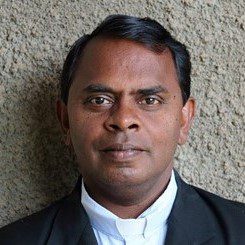
About Father Lazar Arasu SDB
Fr. Lazar Arasu is a Salesian missionary who has worked in Uganda and other East African countries for over 30 years. Originally from Tamil Nadu, South India, he has been founding and managing schools for over 20 years in Uganda. Currently he works in a large refugee camp close to South Sudan, a challenging ministry in Africa. You can read more about the author here.

Next Post

August 11, 2021 Prioritizing the Interior Life with Dorothy Day
Browse Our Archives
Select a Category abortion abuse art and culture Books Catholic and Gay Catholic identity Catholic Laity Catholic Vocations Catholic Youth Catholicity Cinema clergy scandal Community of Sant’Egidio Culture of Life Editorial Faith Family Father Robert Barron Guest Post In Defense of Christians Marriage Mary Middle East New Evangelization Parenthood Patheos Catholic Poetry politics Pope Poverty Prayer Priesthood Race in America Sacred Art Saints Series sexuality Shaw Synod Uncategorized
Select a Month August 2023 February 2022 January 2022 December 2021 October 2021 September 2021 August 2021 February 2021 January 2021 December 2020 October 2020 August 2020 June 2020 May 2020 April 2020 November 2019 June 2019 May 2019 March 2019 December 2018 October 2018 September 2018 August 2017 July 2017 October 2016 August 2016 July 2016 June 2016 December 2015 September 2015 August 2015 July 2015 June 2015 May 2015 April 2015 March 2015 February 2015 January 2015 December 2014 November 2014 October 2014 September 2014
TAKE THE
Religious Wisdom Quiz
What did Jesus say would happen if you build your house on the rock?
Select your answer to see how you score.
It would sink It would get destroyed It would be fancy It would stand through storms
Related posts from The Font

Making a Difference: Let Us Venture Together from...
Christianity, an Image of the Social and Political...

Making a Difference: Slavery in the 21st Century
Is Jesus the Essence and Center of Christianity?
TRENDING AT PATHEOS Catholic

Rejecting Doom: Christian Hope And Human Action
Christianity is a religion of hope. We are to have hope and...

It’s What Comes From Within Which Matters
One of the most difficult things for us to understand is why...

Why I Choose the Eucharist Over the Sermon
Choose the Eucharist, Not the Sermon What are we supposed to get...

5 Design Elements Found in Spiritually Rooted Homes
Putting Spirituality Into Home Decor Our homes are more than our living...

Credo: A Story of God Told with the...
About 10 years ago, I began to imagine a personal "Credo" that...

The Anatomy of Divine Revelation in Catholic Thought
The claim that God has made Himself known to human beings is...
view all Catholic blogs
Ad-Free & Subscriber Log-In Subscription Support
- About Us
- 2026 Calendar
- Videos
- Podcasts
- Library of World Religions
- Faith In Media Tracker
- Advertise With Us
- Write for Us
- Privacy Policy
- Terms of Service
- Do Not Sell My Data
- Contact Us
- Radiant Digital
- Manage Newsletter Subscriptions
- Unsubscribe From Notifications
- Sitemap
Copyright 2008-2026, Patheos. All rights reserved.
Subscription Support Ad-Free & Subscriber Log-In
Follow Patheos