
BuddhistCatholicContemplativeEvangelicalGeneral ChristianHinduJewishLatter-day SaintMuslimNew VisionsProgressive Christian
Beliefs
- Buddhist
- Catholic
- Contemplative
- Evangelical
- General Christian
- Hindu
- Jewish
- Latter-day Saint
- More Voices
- Muslim
- New Visions
- Pagan
- Progressive Christian
Topics
- Religion News
- Food and Religion
- Sports and Religion
- Religious Art
- Religious Music and Entertainment
- Religious Events
- History and Religion
- Style and Religion
- Politics and Religion
- Women in Religion
- Recreation Outdoors and Religion
- Business Finance and Religion
- Careers Workplace and Religion
- Education and Religion
- Family Parenting and Religion
- Health Fitness and Religion
- Home and Religion
- Relationships and Religion
- Technology and Religion
- Travel and Religion
Columnists
- Buddhist Columnists
- Business Finance and Religion Columnists
- Careers Workplace and Religion Columnists
- Catholic Columnists
- Contemplative Columnists
- Education and Religion Columnists
- Evangelists Columnists
- Family Parenting and Religion Columnists
- General Christian Columnists
- Health Fitness and Religion Columnists
- Hindu Columnists
- History and Religion Columnists
- Home and Religion Columnists
- Jewish Columnists
- More Voices Columnists
- Latter Day Columnists
- Muslim Columnists
- New Visions Columnists
- Nonreligious Columnists
- Pagan Columnists
- Politics and Religion Columnists
- Progressive Columnists
- Recreation Outdoors and Religion Columnists
- Relationships and Religion Columnists
- Religion News Columnists
- Religious Art Columnists
- Religious Events Columnists
- Religious Music and Entertainment Columnists
- Sports and Religion Columnists
- Style and Religion Columnists
- Technology and Religion Columnists
- Travel and Religion Columnists
- Women in Religion Columnists
Resource Library
- 2026 Calendar
- Library of World Religions
- The 100 Most Holy Places on Earth
- Patheos Answers
- Podcasts
- Videos
- Faith Leaders Database
- Anglican Episcopalian
- Bahai
- Baptist
- Buddhism
- Christianity
- Confucianism
- Eastern Orthodoxy
- Hinduism
- Holiness and Pentecostal
- ISKCON
- Islam
- Judaism
- Lutheran
- Methodist
- The Church of Jesus Christ of Latter-day Saints
- New Age
- Paganism
- Presbytarian and Reformed
- Protestantism
- Religion Behind the Scenes
- Roman Catholic
- Scientology
- Shia Islam
- Sikhism
- Sufism
- Sunni Islam
- Taoism
- Zen
- See all religions
Research Tools
 Ad-Free & Subscriber Log-In Subscription Support
Ad-Free & Subscriber Log-In Subscription Support
Follow Patheos 

- Trending:
- Forgiveness
- |
- Marriage
- |
- Consciousness
- |
- Death Penalty
- |
- Election
- |
- Halloween

- Home
- Catholic
- Christianity, an Image of the Social and Political Society
Christianity, an Image of the Social and Political Society
Last updated on: February 6, 2021 at 4:21 pm by guest writer
Christianity, an Image of the Social and Political Society 2021-02-06T16:21:05-05:00 guest writer
Patheos Explore the world's faith through different perspectives on religion and spirituality! Patheos has the views of the prevalent religions and spiritualities of the world.
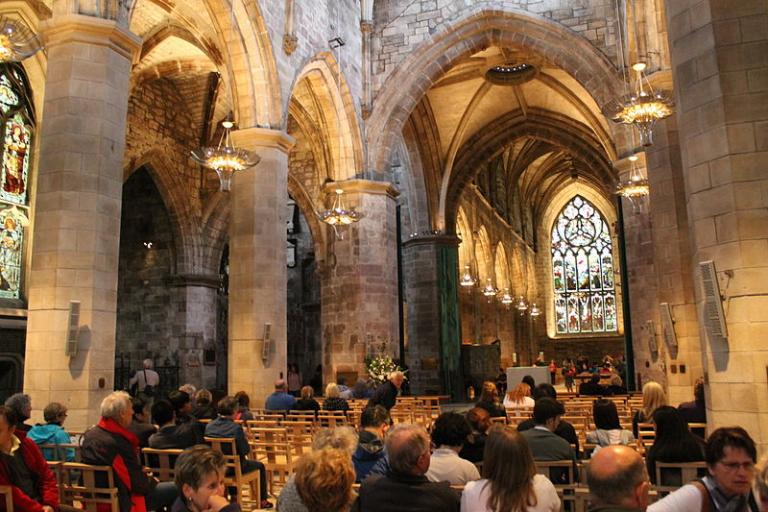
by guest writer Gavril Andreicut, Ph.D.
Christianity has always been influenced by history, by the political and social character of society. Consequently, since Christianity has changed according to the political and social circumstances of society, it is an image of the world and less of God’s kingdom. The sacred—that is, the church—and the secular are two distinct spheres and there is not much relationship between the two. But a person who claims to be Christian, saved, and God’s child strives to change society according to God’s kingdom. A light cannot be hidden and considering that Christians are not a light and a positive influence on people—this was the argument of a student of mine, a mature lady, who decided to return to Buddhism, after many years of Christian experience—Christianity does not influence society; indeed, Christianity adapts to the changes of society.
Jesus and the state.
While He taught people to acquit themselves of their dues to the state, Jesus distanced Himself from it. In fact, the difference between Jesus’s teachings and the state’s principles was so incompatible that He ended up being killed by it. According to Jesus, it is impossible to love and/or obey two masters equally, for people change themselves according to the most profitable winds and cannot be trusted. There is no compatibility between Jesus and the state. Since God’s Kingdom functions on a total allegiance to God—on love, justice and unity—the state, which is the antithesis of God’s Kingdom due to its false pretense of justice and love, must be criticized and converted to Jesus. They both desire unity, but their premises are different; while Jesus’s teaches people to love God and the neighbor, history teaches us that these principles have been foreign to the state.
With Paul, this changed. Although Paul firmly disagreed with teachings which had opposed his own teachings, confronted with the state, he was less daring. For the sake of success of his mission, Paul states that the state is God’s appointed authority, entrusted with the maintenance of order. Christians are supposed to accept the evil structures of the empire and injustice—slavery was supposed to continue—for the sake of safety and unity. He was aware that any unpleasant confrontation with the state could be fatal to the small and fragile communities of Christians. It is odd that Paul endorses social injustice and the evil of slavery, considering his teachings on being a Christian and on love; he emphasizes Jesus’s two most important commandments, that a Christian sees the world through Christ, and that there is no difference between people who are in Christ. How is it practically relevant—who would allow a person whom she/he loves to be her/his slave? —we must ask ourselves, but Paul was a practical man and aware that any unpleasant confrontation with the state could be fatal to the small and fragile communities of Christians.
Paul’s policy continues, with some exceptions, in the first three centuries.
There were Christians who had opposed the Roman Empire, but in principle and for the sake of peace, the Church had tried not to come across the interests of the state. The acts of martyrdom and strong faith, which we like to use in our sermons and writings, were not the norm in early and historical Christianity. It is, however, the period when Christians most firmly refused to give up their beliefs for the sake of an honorable name/status and peace.
With Constantine the Great, the church was brought in line with the state.
Of course, there were tensions between church and state, but almost always the state had the upper hand. They helped each other, and the church saw in the state, quite erroneously, a support in advancing Christianity throughout the whole civilized world. Peter Brown points out this very well: “It [the church] was not the old church of Cyprian, it was the new, expanding church of Ambrose, rising above the Roman world like ‘a moon waxing in its brightness’, it was a confident, international body, established in the respect of Christian Emperors.” (Augustine of Hippo) After a period of enthusiastic support of the state, Augustine realized its futility. The state has a neutral role in God’s economy.
Medieval Christianity was characterized by a strong fusion between church and state.
Augustine was the main intellectual reference in the Middle Ages, but the leaders used him selectively and according to their needs: his view on the use of force and on the importance and authority of the church were of great importance. Christianity, the religious and intellectual glue that gave meaning to society, was supported by the state, but they did not get along regarding authority and power: while the church claimed greater authority than the state, the latter claimed greater authority for itself. The church was part of the feudal system that had promoted people based on their status at birth. People were not equal before God; they were seen in the light of the social and political system of that time. A rigid hierarchical system placed the laity at the bottom of social and religious life.
During the Reformation, Luther was supported by the social and political developments in Europe and Germany. Luther’s success was the success of the German princes who had supported Luther, much driven by economic and political reasons: they wanted a week Papacy and religious authority. Luther’s religious reform advocated an individualism which was in line with the growing individualism of the time. Not the church but God’s grace is what matters, according to Luther. But Luther’s statements must be read carefully, because he was opposing the Catholic Church. In fact, he was more concerned about his church than about grace – grace works in any Christian community, regardless of its name, but he was not kind with those whose ideas differed from his. Luther was lenient in the case of the bigamous marriage of Phillip of Hesse but very demanding in the case of Anabaptists’ teachings, which had threatened the social and political status quo.
Christianity developed depending on the particular social and political circumstances of each political entity.
While in European countries less influenced by the Reformation, especially Eastern Europe, Christianity continued to remain the same, that is, united and Orthodox, in the West and the United States, where the ideas and teachings of the Protestant Reformation were strong, we have a fragmented and divided Protestant Christianity. It is also interesting to notice that Eastern Europe and Orthodox countries were influenced by the socialist economic system, which emphasized unity, while the West has been characterized by capitalism and individualism. Unlike socialism, which emphasizes unity but does NOT need God, capitalism is individualistic and fragmented, but it DOES speak of God.
In Eastern Europe, we have one God, that of the Orthodox Christians. Although God does not mean much practically—people do not make decisions based on their belief in God—it is a more viable form of Christianity because it is related to one tradition, which is part of the intimate fabric of society. I can speak of Romania, where Orthodox Christianity is still strong. The revolution of 1989 brought the West in Romania and with it came division, fragmentation, and liberal ideas that question God and the Christian tradition. However, although Orthodox Christianity remains relatively strong—it is the spiritual tradition of the country—both Christianities, Orthodox and Protestant/evangelical, have been affected by the West and its ideas that push God out of the social and political life.
In the West, the story is different. The views regarding God in America are so diverse as its social and political system, but a God in the image of people, confuses people who honestly search for God. What Christian groups/denominations worship God meaningfully and properly? Christianity in the U.S. is a less viable form because it is not related firmly to anything—not even to God; if it were, we would have a different society, one that would include God in its life—and the more individualistic it becomes, the more fragmented and meaningless it becomes. It is meaningless because, due to its fragmented and divisive spirit, it has lost its power and vitality and form – Christianity has become whatever people want it to be, mainly in the name of grace and love.
At the end of the nineteenth century, Nietzsche diagnosed capitalist Christianity quite pertinently. His evaluation of Christianity was based on the reality of the individualistic and competitive character of capitalism. “God is dead” and “we have killed God” imply that the marketplace of capitalism has no place for God. He refers to God’s death not literally, but to the fact that God has become irrelevant to people. The Christians were so much preoccupied with themselves and their affairs that were not even able to see that God was not anymore among their hypothesis/premises of life. Later, Bonhoeffer suggested that the ‘God hypothesis’ must be given up because it does not work; Christians keep pushing God out of their lives.
We are what we do, and the community we live in, our society and the world are the result of who we are. The fact that we do not criticize the parties of our political life tells us that Christians are not changing the world, but that they are adapting to it. Since no political party is perfect, they must be criticized and converted to Jesus. In addition, the fact that Christians fight against each other as Democrats and Republicans tells us that they are more attached to the promises of the political parties than to Christianity. Since no political party is biblical and attached to Christian values, no Christian should support these parties wholeheartedly.
History tells us that the Church has adapted to the social and political circumstances of society and it is very likely that she will continue to do the same until she will reach “our Sabbath … that kingdom which has no end.” (Augustine, The City of God) The Church is universal/catholic, as the Nicene Creed tells us, because it extends throughout the earth, but it also seems to be small, as Augustine said, and made up of people who put God first and all the other things second. “In the city of the world both the rulers themselves and the people they dominate are dominated by the lust for domination; whereas in the City of God all citizens serve one another in charity, whether they serve by the responsibility of office or by the duties of obedience.” (The City of God)
Chicago, February 1, 2021
Previous Post

February 4, 2021
Making a Difference: Slavery in the 21st Century

Browse Our Archives
Select a Category abortion abuse art and culture Books Catholic and Gay Catholic identity Catholic Laity Catholic Vocations Catholic Youth Catholicity Cinema clergy scandal Community of Sant’Egidio Culture of Life Editorial Faith Family Father Robert Barron Guest Post In Defense of Christians Marriage Mary Middle East New Evangelization Parenthood Patheos Catholic Poetry politics Pope Poverty Prayer Priesthood Race in America Sacred Art Saints Series sexuality Shaw Synod Uncategorized
Select a Month August 2023 February 2022 January 2022 December 2021 October 2021 September 2021 August 2021 February 2021 January 2021 December 2020 October 2020 August 2020 June 2020 May 2020 April 2020 November 2019 June 2019 May 2019 March 2019 December 2018 October 2018 September 2018 August 2017 July 2017 October 2016 August 2016 July 2016 June 2016 December 2015 September 2015 August 2015 July 2015 June 2015 May 2015 April 2015 March 2015 February 2015 January 2015 December 2014 November 2014 October 2014 September 2014
TAKE THE
Religious Wisdom Quiz
Where did Jesus spend forty days being tempted by the devil?
Select your answer to see how you score.
Sea of Galilee The wilderness Jerusalem Nazareth
Related posts from The Font
Pastoral Zeal as Priestly Identity

Making a Difference: Let Us Venture Together from...
Is Jesus the Essence and Center of Christianity?

Making a Difference - President Biden: ‘Build Back...
TRENDING AT PATHEOS Catholic

Rejecting Doom: Christian Hope And Human Action
Christianity is a religion of hope. We are to have hope and...

It’s What Comes From Within Which Matters
One of the most difficult things for us to understand is why...

Why I Choose the Eucharist Over the Sermon
Choose the Eucharist, Not the Sermon What are we supposed to get...

5 Design Elements Found in Spiritually Rooted Homes
Putting Spirituality Into Home Decor Our homes are more than our living...

Credo: A Story of God Told with the...
About 10 years ago, I began to imagine a personal "Credo" that...

The Anatomy of Divine Revelation in Catholic Thought
The claim that God has made Himself known to human beings is...
view all Catholic blogs
Ad-Free & Subscriber Log-In Subscription Support
- About Us
- 2026 Calendar
- Videos
- Podcasts
- Library of World Religions
- Faith In Media Tracker
- Advertise With Us
- Write for Us
- Privacy Policy
- Terms of Service
- Do Not Sell My Data
- Contact Us
- Radiant Digital
- Manage Newsletter Subscriptions
- Unsubscribe From Notifications
- Sitemap
Copyright 2008-2026, Patheos. All rights reserved.
Subscription Support Ad-Free & Subscriber Log-In
Follow Patheos