
BuddhistCatholicContemplativeEvangelicalGeneral ChristianHinduJewishLatter-day SaintMuslimNew VisionsProgressive Christian
Beliefs
- Buddhist
- Catholic
- Contemplative
- Evangelical
- General Christian
- Hindu
- Jewish
- Latter-day Saint
- More Voices
- Muslim
- New Visions
- Pagan
- Progressive Christian
Topics
- Religion News
- Food and Religion
- Sports and Religion
- Religious Art
- Religious Music and Entertainment
- Religious Events
- History and Religion
- Style and Religion
- Politics and Religion
- Women in Religion
- Recreation Outdoors and Religion
- Business Finance and Religion
- Careers Workplace and Religion
- Education and Religion
- Family Parenting and Religion
- Health Fitness and Religion
- Home and Religion
- Relationships and Religion
- Technology and Religion
- Travel and Religion
Columnists
- Buddhist Columnists
- Business Finance and Religion Columnists
- Careers Workplace and Religion Columnists
- Catholic Columnists
- Contemplative Columnists
- Education and Religion Columnists
- Evangelists Columnists
- Family Parenting and Religion Columnists
- General Christian Columnists
- Health Fitness and Religion Columnists
- Hindu Columnists
- History and Religion Columnists
- Home and Religion Columnists
- Jewish Columnists
- More Voices Columnists
- Latter Day Columnists
- Muslim Columnists
- New Visions Columnists
- Nonreligious Columnists
- Pagan Columnists
- Politics and Religion Columnists
- Progressive Columnists
- Recreation Outdoors and Religion Columnists
- Relationships and Religion Columnists
- Religion News Columnists
- Religious Art Columnists
- Religious Events Columnists
- Religious Music and Entertainment Columnists
- Sports and Religion Columnists
- Style and Religion Columnists
- Technology and Religion Columnists
- Travel and Religion Columnists
- Women in Religion Columnists
Resource Library
- 2026 Calendar
- Library of World Religions
- The 100 Most Holy Places on Earth
- Patheos Answers
- Podcasts
- Videos
- Faith Leaders Database
- Anglican Episcopalian
- Bahai
- Baptist
- Buddhism
- Christianity
- Confucianism
- Eastern Orthodoxy
- Hinduism
- Holiness and Pentecostal
- ISKCON
- Islam
- Judaism
- Lutheran
- Methodist
- The Church of Jesus Christ of Latter-day Saints
- New Age
- Paganism
- Presbytarian and Reformed
- Protestantism
- Religion Behind the Scenes
- Roman Catholic
- Scientology
- Shia Islam
- Sikhism
- Sufism
- Sunni Islam
- Taoism
- Zen
- See all religions
Research Tools
 Ad-Free & Subscriber Log-In Subscription Support
Ad-Free & Subscriber Log-In Subscription Support
Follow Patheos 

- Trending:
- Forgiveness
- |
- Marriage
- |
- Consciousness
- |
- Death Penalty
- |
- Election
- |
- Halloween

- Home
- Catholic
- Under What Flag Do You Serve?
Under What Flag Do You Serve?
Last updated on: January 21, 2021 at 10:27 pm by guest writer
Under What Flag Do You Serve? 2021-01-21T22:27:15-05:00 guest writer
Patheos Explore the world's faith through different perspectives on religion and spirituality! Patheos has the views of the prevalent religions and spiritualities of the world.

by guest writer Gavril Andreicut
The topic of freedom is often discussed by both religious and secular people. Due to the nature of society, people have to serve under a certain flag and/or authority and are not wholly free. This reality is as old as civilization. And although the concept of freedom has evolved according to the particularities of time and history, the reality is the same: people are not free, cannot be free, and sometimes do not want to be free.
Man is a social animal, according to Aristotle. In his The Politics, Aristotle argues that community precedes the individual: “The state is by nature clearly prior … to the individual.” Of course, it does not make sense according to the natural order of things. But Aristotle has a very good and practical point: a person becomes whole within a community of people. The community, by its civilizing norms and rules, gives meaning to a person. When separated from it, a person is “either a beast or a god.” Shortly, society, which ties a person to its rules and laws, makes a person not free; instead of following her/his desires, a person must submit to the laws of society.
No man is free. In his Discourses, the Stoic Epictetus ridiculed a Roman officer for believing that he was a free man. Although a consul, he was not free because he was subordinated to the authority of the emperor. In addition, referring to an officer who blindly loved a slave girl, he asked, “Why do you call yourself free anymore?… How can we call him free when he has not learnt to give up desire and fear?… He is free, whom none can hinder, the man who can deal with things as he wishes.” But who can do that?
Conventions and necessity. History tells us that no one is free in the absolute way and that people have been always acting according to certain conventions of society. Failing to do that has often been a costly enterprise. Throughout history, liberty has been an unwritten and conventional contract between people, each knowing his/her duties and liberties. No one is free, even a powerful lord or a king, because life is like a circle in which everyone is accountable to someone else. And that model, in different ways, has been the main characteristic of society.
All political and religious systems are hostile to opposition. The Roman Empire was quite liberal religiously and open to new religious groups, but it expected them to function and serve under its flag/authority. Early Christianity, reluctant to do that, was considered a dubious sect and a potential threat to the unity of the empire. When Christianity became legalized and then the official religion of the Roman Empire in the fourth century, its mission began to interweave with that of the empire – it functioned under the Roman flag, whose main interest was order and unity.
Eusebius of Caesarea praised Constantine and the new establishment in an almost idolater way: Constantine was a “almost new Christ,” a savior. Indeed, in a way, he was – he ushered Christianity into an unprecedented and new era of legal status and privilege. And from a persecuted religious group, Christianity became a persecutor. Augustine, at the end of the fourth century, praised the state for bringing people within the communion of the church by the use of force. But the sack of Rome in 410 by Alaric and the moral issues within the church determined Augustine to change his view: the state has a neutral role, and it often constitutes a false hope and a temptation without a spiritual warranty.
A person who fights for no flag and is not loyal to a religious and political group is a pariah of society, a marginalized person without a clear perspective and future. Control has been a strong characteristic of society. The Donatists, a Christian movement in North Africa, were persecuted by the state and outlawed in 411 for refusing to join the official church. While some became Catholics for the sake of staying alive and family, some preferred to die and never joined the church. Martin of Braga, Procopius, Einhard, Bernard Gui, Thomas Aquinas, to mention just a few, tell us how people were forced by political and religious leaders to submit to the religious and political establishment. Jan Hus was convicted of heresy at the Council of Constance in 1415 and burned at the stake. Martin Luther was protected from a similar fate by the political power in Germany, which was reluctant to support a money-hungry papacy. The Anabaptists were persecuted by both Catholic and Protestant states because their religious views did not align with those of other Christian groups and political establishments. Cuius regio, eius religio principle (“whose realm, their religion”) of the Peace of Augsburg in 1555 tells us that religion was controlled by the power of the state. Those unwilling to submit to the religion of the political ruler were supposed to move to a more welcoming land. More recently, Communism and Capitalism have sought to control people and nations.
The political life in the last years and on January 6 tell us about the radical nature of political life in the U.S. Democracy is a meaningless word when the interest of a political party is at stake. And although both parties preach about consensus and unity, they have little or no tolerance for each other. Indeed, it could be dangerous for a Republican, for instance, to admit it openly in an institution which upholds the values of the Democratic party. This is also true for a Democrat in an institution preponderantly Republican. And someone who, like myself, is neither Democrat nor Republican is despised by both.
I admit, I was not always brave enough to share my views and principles in all circumstances and as I would have wanted because I did not want to jeopardize our fragile situation here. I came to the U.S. from a Communist country, but I have never felt the pressure to be as politically correct as I do feel it here. Expressing your view and being politically incorrect in the U.S. may have grave consequences. Therefore, many people, afraid not to lose their advantages, positions, and jobs, say only what is politically correct. In addition, someone’s view, perceived by some too strong and political inadequate, could get s/he in a court of law, fined, and with traumas for life. Do we live is a free world? Can people afford to be free?
Can people follow Jesus honestly? As long as we live in a corrupt society and struggle for the needs of life, we do not serve God honestly. Regardless of who we are, we all can identify with Judas, in word or/and action. Long time ago, an important person asked me a few questions. The first question was about my view regarding the Baptist seminary from Bucharest and Oradea, both Romanian schools. I was supposed to support one seminary wholeheartedly and to disagree with the other. The second was whether I could be other Christian then a Baptist?
Regarding the second question, Baptist Christianity in Romania was both theologically and practically different from contemporary Baptists in the U.S. Theologically, as a religious minority, they emphasized the need of being light and salt in society, not grace, which usually is a characteristic of a large Protestant and evangelical establishment. Practically, they were much more conscious of the name “Christian” than Baptists in the U.S.
This example expresses a common truth: working under a certain flag (often) means to deliberately agree with its rules and principles. To be a good Christian is simply not enough; what matters is your connections and institutional affiliation. It also means less sincerity, and a person who is not sincere is not free. Belonging to a church and working in a religious institution, college, university, church, or seminary means agreeing with a statement of doctrine. Theology—faith seeking understanding—is vitally important in the life of faith. So, a statement of teachings is necessary, but a theology that requires a rigid intellectual agreement is a cause of sin, that is, a cause of insincerity and hypocrisy. It is impossible for a person not to have doubts and questions regarding topics which are not answered univocally and clearly by the Bible and tradition. If we have no doubts, we could hardly be good Christians – we are either superficial and indifferent toward Scripture and Christianity or dishonest and self-interested people. The intellectual life is as sensitive and fluctuating as our spiritual and moral life. And is there anyone who would call himself spiritually and morally perfect? Faith makes theology convincing, not reason, and faith makes Christianity meaningful, not our institutional rules and theologies. Of course, theology is very important—it is the intellectual tradition of Christianity, which we must appreciate and cherish—but it must always direct us to Scripture and graciously bring people close to God.
In some regards, all people are playing double roles and are not free, but for Christians, double mindedness should be a reason for great concern. It poses the question, what does it mean to be a Christian? Jesus was especially critical of double-minded people, that is, false people who are not what they appeared to be, and taught people to focus their attention on God’s will and kingdom. And according to Paul, to be free means to see the world through Jesus, especially through his death and resurrection. If we were free and obeying Jesus’s and Paul’s teachings, we would live in a different and much better world today.
Gavril Andreicut
January 17, Chicago
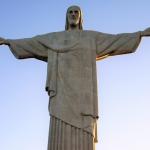
image credit: Pixabay.com

Browse Our Archives
Select a Category abortion abuse art and culture Books Catholic and Gay Catholic identity Catholic Laity Catholic Vocations Catholic Youth Catholicity Cinema clergy scandal Community of Sant’Egidio Culture of Life Editorial Faith Family Father Robert Barron Guest Post In Defense of Christians Marriage Mary Middle East New Evangelization Parenthood Patheos Catholic Poetry politics Pope Poverty Prayer Priesthood Race in America Sacred Art Saints Series sexuality Shaw Synod Uncategorized
Select a Month August 2023 February 2022 January 2022 December 2021 October 2021 September 2021 August 2021 February 2021 January 2021 December 2020 October 2020 August 2020 June 2020 May 2020 April 2020 November 2019 June 2019 May 2019 March 2019 December 2018 October 2018 September 2018 August 2017 July 2017 October 2016 August 2016 July 2016 June 2016 December 2015 September 2015 August 2015 July 2015 June 2015 May 2015 April 2015 March 2015 February 2015 January 2015 December 2014 November 2014 October 2014 September 2014
TAKE THE
Religious Wisdom Quiz
Where did David hide from Saul for many years?
Select your answer to see how you score.
Jericho The wilderness Jerusalem Philistine camp
Related posts from The Font
Our Lady of the Heights: Commemorating the Tulsa...
Choosing to Live a Virtuous Life

Prioritizing the Interior Life with Dorothy Day
Pastoral Zeal as Priestly Identity
TRENDING AT PATHEOS Catholic

Rejecting Doom: Christian Hope And Human Action
Christianity is a religion of hope. We are to have hope and...

It’s What Comes From Within Which Matters
One of the most difficult things for us to understand is why...

Why I Choose the Eucharist Over the Sermon
Choose the Eucharist, Not the Sermon What are we supposed to get...

5 Design Elements Found in Spiritually Rooted Homes
Putting Spirituality Into Home Decor Our homes are more than our living...

Credo: A Story of God Told with the...
About 10 years ago, I began to imagine a personal "Credo" that...

The Anatomy of Divine Revelation in Catholic Thought
The claim that God has made Himself known to human beings is...
view all Catholic blogs
Ad-Free & Subscriber Log-In Subscription Support
- About Us
- 2026 Calendar
- Videos
- Podcasts
- Library of World Religions
- Faith In Media Tracker
- Advertise With Us
- Write for Us
- Privacy Policy
- Terms of Service
- Do Not Sell My Data
- Contact Us
- Radiant Digital
- Manage Newsletter Subscriptions
- Unsubscribe From Notifications
- Sitemap
Copyright 2008-2026, Patheos. All rights reserved.
Subscription Support Ad-Free & Subscriber Log-In
Follow Patheos