
BuddhistCatholicContemplativeEvangelicalGeneral ChristianHinduJewishLatter-day SaintMuslimNew VisionsProgressive Christian
Beliefs
- Buddhist
- Catholic
- Contemplative
- Evangelical
- General Christian
- Hindu
- Jewish
- Latter-day Saint
- More Voices
- Muslim
- New Visions
- Pagan
- Progressive Christian
Topics
- Religion News
- Food and Religion
- Sports and Religion
- Religious Art
- Religious Music and Entertainment
- Religious Events
- History and Religion
- Style and Religion
- Politics and Religion
- Women in Religion
- Recreation Outdoors and Religion
- Business Finance and Religion
- Careers Workplace and Religion
- Education and Religion
- Family Parenting and Religion
- Health Fitness and Religion
- Home and Religion
- Relationships and Religion
- Technology and Religion
- Travel and Religion
Columnists
- Buddhist Columnists
- Business Finance and Religion Columnists
- Careers Workplace and Religion Columnists
- Catholic Columnists
- Contemplative Columnists
- Education and Religion Columnists
- Evangelists Columnists
- Family Parenting and Religion Columnists
- General Christian Columnists
- Health Fitness and Religion Columnists
- Hindu Columnists
- History and Religion Columnists
- Home and Religion Columnists
- Jewish Columnists
- More Voices Columnists
- Latter Day Columnists
- Muslim Columnists
- New Visions Columnists
- Nonreligious Columnists
- Pagan Columnists
- Politics and Religion Columnists
- Progressive Columnists
- Recreation Outdoors and Religion Columnists
- Relationships and Religion Columnists
- Religion News Columnists
- Religious Art Columnists
- Religious Events Columnists
- Religious Music and Entertainment Columnists
- Sports and Religion Columnists
- Style and Religion Columnists
- Technology and Religion Columnists
- Travel and Religion Columnists
- Women in Religion Columnists
Resource Library
- 2026 Calendar
- Library of World Religions
- The 100 Most Holy Places on Earth
- Patheos Answers
- Podcasts
- Videos
- Faith Leaders Database
- Anglican Episcopalian
- Bahai
- Baptist
- Buddhism
- Christianity
- Confucianism
- Eastern Orthodoxy
- Hinduism
- Holiness and Pentecostal
- ISKCON
- Islam
- Judaism
- Lutheran
- Methodist
- The Church of Jesus Christ of Latter-day Saints
- New Age
- Paganism
- Presbytarian and Reformed
- Protestantism
- Religion Behind the Scenes
- Roman Catholic
- Scientology
- Shia Islam
- Sikhism
- Sufism
- Sunni Islam
- Taoism
- Zen
- See all religions
Research Tools
 Ad-Free & Subscriber Log-In Subscription Support
Ad-Free & Subscriber Log-In Subscription Support
Follow Patheos 

- Trending:
- Forgiveness
- |
- Marriage
- |
- Consciousness
- |
- Death Penalty
- |
- Election
- |
- Halloween

- Home
- Catholic
- Abortion, Personhood, and the Principle of Double Effect
Abortion, Personhood, and the Principle of Double Effect
Last updated on: May 15, 2019 at 11:34 am by guest writer
Abortion, Personhood, and the Principle of Double Effect 2019-05-15T11:34:08-05:00 guest writer
Patheos Explore the world's faith through different perspectives on religion and spirituality! Patheos has the views of the prevalent religions and spiritualities of the world.
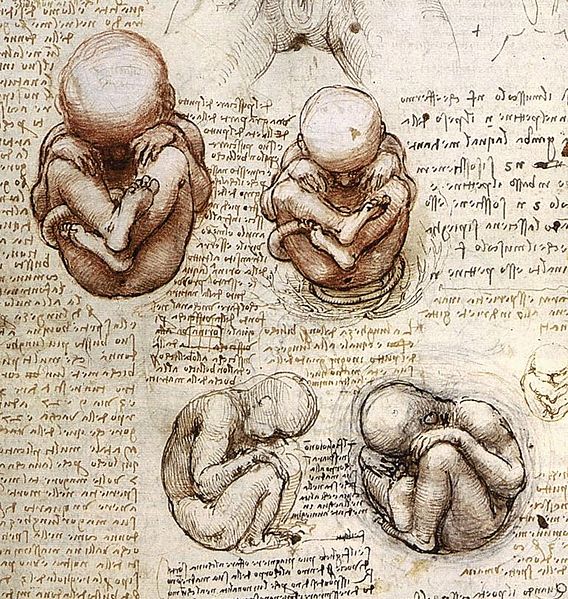
by guest writer Alex Erickson
Anyone who has followed Donald Trump’s rhetoric since he entered the presidential race in 2016 knows he loves hyperbole and his recent comments calling all abortions “executions” are no exception. Whatever the instance, Trump’s rhetoric does presumably what he wants it to do: stir up conversation. This is certainly the case with Theresa Brown’s latest article for CNN, where she sets out to “explore the misapprehensions” that Trump’s statement is based on. Unfortunately for her, she falls into misapprehensions of her own.
Brown’s two main misapprehensions regarding personhood stem from biology and physiology. On biological grounds she claims that unborn exist in a symbiotic relationship with their mother, and are hence not “unique biological entities”. However, according to the definition of symbiosis, this relationship is “a long-term relationship between individuals belonging to two different species.” So, on purely definitional grounds, Brown’s argument falls flat. When two organisms of the same species reproduce, they produce an offspring of the same species, hence why humans do not (to my knowledge) give birth to pythons when they mate. Brown’s criticism that a fetus is not a “unique biological entity” also falls flat on this definition. On physiological grounds, Brown claims the unborn aren’t people because they “cannot live independently of their mothers.” Now, Brown writes this with reference to the fetus, but it seems to me this is equally true of post-natal children. A newborn infant is constantly relying on its mother for nourishment, which it would not be able to acquire itself if left alone. So, if Brown wants to be consistent, then newborn infants are not people either, and women should have just as much right to kill them as they would an unborn fetus. A similar argument could be made of the aged as well. There are many elderly people who for various reasons are dependent on others for their continued survival, hence why there are so many nursing homes. On Brown’s reasoning, it seems that they too should be eligible to “termination”.
Personhood, then, would seem to be independent of either biological or physiological dependence and instead depends on philosophy to be correctly understood. A human person has classically been defined as an individual human substance with a rational nature. What this means is that a human person is an individually existing entity which either is rational (meaning capable of self-reflection and abstract thought) or, more importantly, has the potentiality (meaning an inherent ability which will be realized if nothing impedes) to be so. This is certainly the case with the unborn. As established above, the fetus is certainly an individually existing entity, and certainly has the potential to be rational, which it will do given uninterrupted development. If this is the case, then it should be obvious that Brown’s assertion that “only a pregnant woman can determine” whether abortion is the correct choice is false. Because the unborn fetus is a person, and because the killing of any innocent person is inherently wrong, abortion is inherently wrong.
Brown’s errors on personhood cause her to misapply the Principle of Double Effect as well. She begins with framing the discussion in relation to end of life issues, but this comparison is wrong-headed. As Brown correctly notes, the Principle of Double Effect states that a morally good or neutral action that has the side effect of causing some harm may be done if the harm is not directly intended. The stock example for this is ectopic pregnancies, where the good action of removing a woman’s fallopian tube to save her life has the good effect of saving her life, while having the negative side-effect of killing the embryo. The key thing to note, however, is that the action must be morally good or neutral. Of course, I’ve attempted to show above that the unborn are persons, and innocent, and so Double Effect would not apply here because the act of killing this innocent person is not morally good or neutral. Brown also shows her misunderstanding of Double Effect when she notes that “abortion could be considered an interesting variant of Double Effect because the harm of it is intended…but the harmful effect is also the good effect.” But, according to the definition of Double Effect from the Stanford Encyclopedia of Philosophy, which ironically Brown herself cites, the harm flowing as a side effect from the action cannot be intended. Hence, Double Effect cannot apply to Abortion.
Here, then, are the important things Brown misapprehends: an unborn fetus is indeed a person, and any definition of personhood which is based on dependence can be used to strip the personhood of born people as well; because the unborn are people and are innocent, abortion is murder; Double Effect does not apply to abortion. True, not all abortions are executions, but that doesn’t take away from their moral badness. The case of Theresa Brown illustrates why the pro-life debate is fundamentally a philosophical one, as any purely biological or physiological definitions of personhood are ultimately built on sand. One hopes that Brown’s article will continue to spur the conversation, and ultimately show how the pro-abortion position is one big misapprehension.
image credit: https://commons.wikimedia.org/wiki/File:Views_of_a_Foetus_in_the_Womb.jpg

Next Post
May 20, 2019 On the Ethics of Abortion After Rape
Browse Our Archives
Select a Category abortion abuse art and culture Books Catholic and Gay Catholic identity Catholic Laity Catholic Vocations Catholic Youth Catholicity Cinema clergy scandal Community of Sant’Egidio Culture of Life Editorial Faith Family Father Robert Barron Guest Post In Defense of Christians Marriage Mary Middle East New Evangelization Parenthood Patheos Catholic Poetry politics Pope Poverty Prayer Priesthood Race in America Sacred Art Saints Series sexuality Shaw Synod Uncategorized
Select a Month August 2023 February 2022 January 2022 December 2021 October 2021 September 2021 August 2021 February 2021 January 2021 December 2020 October 2020 August 2020 June 2020 May 2020 April 2020 November 2019 June 2019 May 2019 March 2019 December 2018 October 2018 September 2018 August 2017 July 2017 October 2016 August 2016 July 2016 June 2016 December 2015 September 2015 August 2015 July 2015 June 2015 May 2015 April 2015 March 2015 February 2015 January 2015 December 2014 November 2014 October 2014 September 2014
TAKE THE
Religious Wisdom Quiz
What was the occupation of Lydia, the first European convert in Acts?
Select your answer to see how you score.
Tentmaker Fisherwoman Seller of purple cloth Baker
Related posts from The Font

Prioritizing the Interior Life with Dorothy Day
Pastoral Zeal as Priestly Identity

Making a Difference: Let Us Venture Together from...

Making a Difference: Slavery in the 21st Century
TRENDING AT PATHEOS Catholic

Rejecting Doom: Christian Hope And Human Action
Christianity is a religion of hope. We are to have hope and...

It’s What Comes From Within Which Matters
One of the most difficult things for us to understand is why...

Why I Choose the Eucharist Over the Sermon
Choose the Eucharist, Not the Sermon What are we supposed to get...

5 Design Elements Found in Spiritually Rooted Homes
Putting Spirituality Into Home Decor Our homes are more than our living...

Credo: A Story of God Told with the...
About 10 years ago, I began to imagine a personal "Credo" that...

The Anatomy of Divine Revelation in Catholic Thought
The claim that God has made Himself known to human beings is...
view all Catholic blogs
Ad-Free & Subscriber Log-In Subscription Support
- About Us
- 2026 Calendar
- Videos
- Podcasts
- Library of World Religions
- Faith In Media Tracker
- Advertise With Us
- Write for Us
- Privacy Policy
- Terms of Service
- Do Not Sell My Data
- Contact Us
- Radiant Digital
- Manage Newsletter Subscriptions
- Unsubscribe From Notifications
- Sitemap
Copyright 2008-2026, Patheos. All rights reserved.
Subscription Support Ad-Free & Subscriber Log-In
Follow Patheos