
BuddhistCatholicContemplativeEvangelicalGeneral ChristianHinduJewishLatter-day SaintMuslimNew VisionsProgressive Christian
Beliefs
- Buddhist
- Catholic
- Contemplative
- Evangelical
- General Christian
- Hindu
- Jewish
- Latter-day Saint
- More Voices
- Muslim
- New Visions
- Pagan
- Progressive Christian
Topics
- Religion News
- Food and Religion
- Sports and Religion
- Religious Art
- Religious Music and Entertainment
- Religious Events
- History and Religion
- Style and Religion
- Politics and Religion
- Women in Religion
- Recreation Outdoors and Religion
- Business Finance and Religion
- Careers Workplace and Religion
- Education and Religion
- Family Parenting and Religion
- Health Fitness and Religion
- Home and Religion
- Relationships and Religion
- Technology and Religion
- Travel and Religion
Columnists
- Buddhist Columnists
- Business Finance and Religion Columnists
- Careers Workplace and Religion Columnists
- Catholic Columnists
- Contemplative Columnists
- Education and Religion Columnists
- Evangelists Columnists
- Family Parenting and Religion Columnists
- General Christian Columnists
- Health Fitness and Religion Columnists
- Hindu Columnists
- History and Religion Columnists
- Home and Religion Columnists
- Jewish Columnists
- More Voices Columnists
- Latter Day Columnists
- Muslim Columnists
- New Visions Columnists
- Nonreligious Columnists
- Pagan Columnists
- Politics and Religion Columnists
- Progressive Columnists
- Recreation Outdoors and Religion Columnists
- Relationships and Religion Columnists
- Religion News Columnists
- Religious Art Columnists
- Religious Events Columnists
- Religious Music and Entertainment Columnists
- Sports and Religion Columnists
- Style and Religion Columnists
- Technology and Religion Columnists
- Travel and Religion Columnists
- Women in Religion Columnists
Resource Library
- 2026 Calendar
- Library of World Religions
- The 100 Most Holy Places on Earth
- Patheos Answers
- Podcasts
- Videos
- Faith Leaders Database
- Anglican Episcopalian
- Bahai
- Baptist
- Buddhism
- Christianity
- Confucianism
- Eastern Orthodoxy
- Hinduism
- Holiness and Pentecostal
- ISKCON
- Islam
- Judaism
- Lutheran
- Methodist
- The Church of Jesus Christ of Latter-day Saints
- New Age
- Paganism
- Presbytarian and Reformed
- Protestantism
- Religion Behind the Scenes
- Roman Catholic
- Scientology
- Shia Islam
- Sikhism
- Sufism
- Sunni Islam
- Taoism
- Zen
- See all religions
Research Tools
 Ad-Free & Subscriber Log-In Subscription Support
Ad-Free & Subscriber Log-In Subscription Support
Follow Patheos 

- Trending:
- Forgiveness
- |
- Marriage
- |
- Consciousness
- |
- Death Penalty
- |
- Election
- |
- Halloween

- Home
- Catholic
- Mary of Nazareth and #MeToo
Mary of Nazareth and #MeToo
Last updated on: December 18, 2018 at 8:46 pm by guest writer
Mary of Nazareth and #MeToo 2018-12-18T20:46:26-05:00 guest writer
Patheos Explore the world's faith through different perspectives on religion and spirituality! Patheos has the views of the prevalent religions and spiritualities of the world.
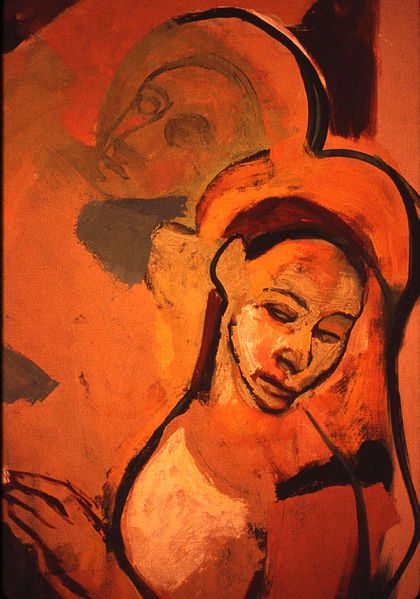
By guest writer Angela Himsel
Every woman I know, including me, can legitimately say: “Me, Too.” But maybe the most famous of the “Me, Too” women couldn’t come forward and admit that she’d been sexually harassed or touched against her will. Instead, men wrote her narrative. They decided she wasn’t a victim of non-consensual sex; rather, she had been chosen for the most important job ever: to carry in her womb the Savior of mankind. And how could Mary say otherwise?
The book of Mark, which scholars believe is the oldest of the four gospels, does not offer Jesus’ birth story at all, nor does it name a birth father. Instead, Jesus is simply “the son of Mary.” He doesn’t become God’s “son” until John the Baptist baptizes him. So no Holy Spirit father. Just an absentee father.
Only the books of Matthew and Luke claim that Jesus had no earthly father, but was conceived of the Holy Spirit to a virgin. The books of John and Joseph refer to him as the “son of Joseph,” but most people believe that Joseph was recognized as Jesus’ adopted, but not biological, father.
Growing up Christian, I took it for granted that Jesus was not conceived of a human father, but rather of the Holy Spirit. But after a personal religious quest, I found that this explanation didn’t do it for me. Like many people throughout the ages, including early Church fathers, I had a problem believing that the Holy Spirit impregnated Mary. So if it wasn’t the Holy Spirit, then who was Jesus’ baby daddy, I wondered, and what was that person’s relationship to Mary?
Texts other than the Bible make mention of Jesus, and what they have to say about his paternity is intriguing in light of the present moment we find ourselves in in relation to sexual politics.
The third century church father, Origen, quotes the 2nd century Greek philosopher, Celsus, who recounts that a Jew told him that
. .[Jesus] came from a Jewish village and from a poor country woman who earned her living by spinning. He says that she was driven out by her husband, who was a carpenter by trade, as she was convicted of adultery. Then he says that after she had been driven out by her husband and while she was wandering about in a disgraceful way she secretly gave birth to Jesus.”
The Jewish Talmud makes a number of references to Jesus, and refers to him as “son of Pantera.” The Greek name “Pantera” is attested to in the first century C.E. and was in use amongst Roman soldiers. The 20th century writer Thomas Hardy wrote about Pantera in a lengthy poem. In part, he imagined Pantera meeting Mary:
“Well, I was young, and hot, and readily stirred
To quick desire. ‘Twas tedious timing out
The convalescence of the soldiery;
And I beguiled the long and empty days
By blissful yieldance to her sweet allure…
We met, and met, and under the winking stars
That passed which peoples earth – true union, yea,
To the pure eye of her simplicity….
Given that the Pantera rumor had been bandied about for two millennia, it was of great interest when, in 1859 a tombstone of a first century Roman soldier was found in Bingerbruck Germany. The inscription reads:
Tiberius Julius Abdes Pantera from Sidon, aged 62 years served 40 years, former standard bearer(?) of the first cohort of archers lies here.
Turns out, the soldier who was buried in Germany had belonged to a unit that was stationed in the Galilee and sacked Sephhoris, a town just a few miles from Nazareth in 4 BCE. This Roman unit remained in Palestine until 6 CE. It was then sent to Dalmatia and finally to Germany in 9 CE. Taking into account that Tiberius reigned from 14-37 CE, and Pantera would have taken on Julius Tiberius’ name, as did other Roman soldiers, then he would have been of age, and in the region, when Jesus was conceived.
What to make of all of this? Obviously, for those who believe Jesus arrived on earth without a human father’s help, none of this matters. But if, like me, you find it difficult to imagine that Jesus could have a biological mother but not a biological father, then this conjecture, that Jesus was the biological son of the Roman soldier Pantera, might fill in the blank.
Beyond the question of Jesus’ paternity, which is interesting in its own right, is another question: was the teenage Mary a willing participant in communing with either Pantera – or a spirit god? Perhaps Mary, too, could have hashtagged, “Me too,” if she’d been allowed to write her own story.
image credit: https://commons.wikimedia.org/wiki/File:Oratory_Mural_-_detail_Annunciation_with_Angel_above_Mary_1966.jpg

About Angela Himsel
Angela Himsel grew up in Jasper, IN, as a member of the doomsday Christian faith, the Worldwide Church of God, now a mainstream evangelical church known as Grace Communion International. Her lifelong search for salvation and understanding led her across the globe, ultimately bringing her to a very unexpected place: as a practicing Jew on Manhattan's Upper West Side. Angela's memoir, A River Could Be a Tree, recounts that journey. For more, visit angelahimsel.com or figtreebooks.net. You can read more about the author here.
Previous Post

October 21, 2018
To Believe or Not To Believe? Part 2: Faith vs. Knowledge
Next Post

March 3, 2019 St. Katharine Drexel’s Life Teaches Us That Philanthropy is a Sacred Call
Browse Our Archives
Select a Category abortion abuse art and culture Books Catholic and Gay Catholic identity Catholic Laity Catholic Vocations Catholic Youth Catholicity Cinema clergy scandal Community of Sant’Egidio Culture of Life Editorial Faith Family Father Robert Barron Guest Post In Defense of Christians Marriage Mary Middle East New Evangelization Parenthood Patheos Catholic Poetry politics Pope Poverty Prayer Priesthood Race in America Sacred Art Saints Series sexuality Shaw Synod Uncategorized
Select a Month August 2023 February 2022 January 2022 December 2021 October 2021 September 2021 August 2021 February 2021 January 2021 December 2020 October 2020 August 2020 June 2020 May 2020 April 2020 November 2019 June 2019 May 2019 March 2019 December 2018 October 2018 September 2018 August 2017 July 2017 October 2016 August 2016 July 2016 June 2016 December 2015 September 2015 August 2015 July 2015 June 2015 May 2015 April 2015 March 2015 February 2015 January 2015 December 2014 November 2014 October 2014 September 2014
TAKE THE
Religious Wisdom Quiz
What was the name of the King who made Esther his queen?
Select your answer to see how you score.
Hezekiah Ahasuerus Barnabas Jeremiah
Related posts from The Font
Pastoral Zeal as Priestly Identity

Making a Difference: Let Us Venture Together from...
Christianity, an Image of the Social and Political...

Making a Difference: Slavery in the 21st Century
TRENDING AT PATHEOS Catholic

Rejecting Doom: Christian Hope And Human Action
Christianity is a religion of hope. We are to have hope and...

It’s What Comes From Within Which Matters
One of the most difficult things for us to understand is why...

Why I Choose the Eucharist Over the Sermon
Choose the Eucharist, Not the Sermon What are we supposed to get...

5 Design Elements Found in Spiritually Rooted Homes
Putting Spirituality Into Home Decor Our homes are more than our living...

Credo: A Story of God Told with the...
About 10 years ago, I began to imagine a personal "Credo" that...

The Anatomy of Divine Revelation in Catholic Thought
The claim that God has made Himself known to human beings is...
view all Catholic blogs
Ad-Free & Subscriber Log-In Subscription Support
- About Us
- 2026 Calendar
- Videos
- Podcasts
- Library of World Religions
- Faith In Media Tracker
- Advertise With Us
- Write for Us
- Privacy Policy
- Terms of Service
- Do Not Sell My Data
- Contact Us
- Radiant Digital
- Manage Newsletter Subscriptions
- Unsubscribe From Notifications
- Sitemap
Copyright 2008-2026, Patheos. All rights reserved.
Subscription Support Ad-Free & Subscriber Log-In
Follow Patheos