
BuddhistCatholicContemplativeEvangelicalGeneral ChristianHinduJewishLatter-day SaintMuslimNew VisionsProgressive Christian
Beliefs
- Buddhist
- Catholic
- Contemplative
- Evangelical
- General Christian
- Hindu
- Jewish
- Latter-day Saint
- More Voices
- Muslim
- New Visions
- Pagan
- Progressive Christian
Topics
- Religion News
- Food and Religion
- Sports and Religion
- Religious Art
- Religious Music and Entertainment
- Religious Events
- History and Religion
- Style and Religion
- Politics and Religion
- Women in Religion
- Recreation Outdoors and Religion
- Business Finance and Religion
- Careers Workplace and Religion
- Education and Religion
- Family Parenting and Religion
- Health Fitness and Religion
- Home and Religion
- Relationships and Religion
- Technology and Religion
- Travel and Religion
Columnists
- Buddhist Columnists
- Business Finance and Religion Columnists
- Careers Workplace and Religion Columnists
- Catholic Columnists
- Contemplative Columnists
- Education and Religion Columnists
- Evangelists Columnists
- Family Parenting and Religion Columnists
- General Christian Columnists
- Health Fitness and Religion Columnists
- Hindu Columnists
- History and Religion Columnists
- Home and Religion Columnists
- Jewish Columnists
- More Voices Columnists
- Latter Day Columnists
- Muslim Columnists
- New Visions Columnists
- Nonreligious Columnists
- Pagan Columnists
- Politics and Religion Columnists
- Progressive Columnists
- Recreation Outdoors and Religion Columnists
- Relationships and Religion Columnists
- Religion News Columnists
- Religious Art Columnists
- Religious Events Columnists
- Religious Music and Entertainment Columnists
- Sports and Religion Columnists
- Style and Religion Columnists
- Technology and Religion Columnists
- Travel and Religion Columnists
- Women in Religion Columnists
Resource Library
- 2026 Calendar
- Library of World Religions
- The 100 Most Holy Places on Earth
- Patheos Answers
- Podcasts
- Videos
- Faith Leaders Database
- Anglican Episcopalian
- Bahai
- Baptist
- Buddhism
- Christianity
- Confucianism
- Eastern Orthodoxy
- Hinduism
- Holiness and Pentecostal
- ISKCON
- Islam
- Judaism
- Lutheran
- Methodist
- The Church of Jesus Christ of Latter-day Saints
- New Age
- Paganism
- Presbytarian and Reformed
- Protestantism
- Religion Behind the Scenes
- Roman Catholic
- Scientology
- Shia Islam
- Sikhism
- Sufism
- Sunni Islam
- Taoism
- Zen
- See all religions
Research Tools
 Ad-Free & Subscriber Log-In Subscription Support
Ad-Free & Subscriber Log-In Subscription Support
Follow Patheos 

- Trending:
- Forgiveness
- |
- Marriage
- |
- Consciousness
- |
- Death Penalty
- |
- Election
- |
- Halloween

- Home
- Catholic
- Touching God’s Wilder Side
Touching God’s Wilder Side
Last updated on: August 22, 2015 at 12:52 pm by Guest Contributor
Touching God’s Wilder Side 2015-08-22T12:52:14-05:00 Guest Contributor
Patheos Explore the world's faith through different perspectives on religion and spirituality! Patheos has the views of the prevalent religions and spiritualities of the world.

Plains Zebra with foal by Geoff Gallice/Creative Commons licensing

The wilder side of God refuses all our attempts at predictability and containment
by Joe McHugh
God and I are infuriatingly slow learners. I’m slow to let God convince me to move in the general direction of virtue, and God still struggles to remember I’m a visual learner. I need a compelling story or an arresting image just to get me interested in what God might bring to the table. Gospel stories, however, can often chip away at my spiritual stand-offishness, because they’re fleshy enough that I can picture them. In other words, they show rather than just tell me how God loves and heals.
Either by accident or by grace, I’ve also recently started seeing startling images of God’s saving side by watching nature documentaries on television. They’re also concrete and visual enough that they can touch my personal and religious imagination with instinctive power. That’s why they can transform, not just inform.
For example, I learned to grieve watching a mother leopard mourn the sudden loss of its cub, and seeing a father zebra coax its foal away from its dead mother and back to protection of the herd showed me how hard God begs us to abandon death and isolation in favor of life and community.
Even the way I pray got a makeover when I watched an orphaned white rhino learn to escape disease-carrying insects and scorching sun by taking time to wallow in cooling mud and water, a habit that turns out to be both refreshing a life-saving. Real prayer, I’ve learned, also does it share of wallowing.
Most recently, a PBS documentary, “Touching the Wild,” with wildlife biologist Joe Hutto, gave me a new image of God’s relentless passion to comfort and challenge us. The program documents Hutto’s six-year stint with a herd of wild mule deer in Wyoming’s mountainous wilderness. He didn’t just observe the deer while there; instead, he lived with them, the result of an irresistible urge to “truly see the world through a wild creature’s eyes.” As he slowly entered into their world, he started seeing his own with fresh eyes, a kind of converted vision that turned his world upside down.
Not only did something compel him to head “out there” into the wilderness, something equally compelling led him back to civilization six years later, enriched and changed, or, as religious folks would put it, permanently converted and eager to engage the world with the deepened creativity he received when he let the unruly and uncharted touch his soul.
What happened to Hutto sounds like what happened to Jesus when he was driven “out there” into the wilderness to be tempted and changed while living with wild beasts. While there, he may have become intimate with God’s wilder side, something that turned his religious vision on its head. It could have led him — compelled him, really — to shake up the religious niceties of his contemporaries by insisting that God was just as present “out there” among the outsiders in the streets as in their staid houses of worship. Read the gospel stories closely and we see a side of God that comes with an insistent, wild ferocity that turns on its head everything we take for granted about what’s holy and full of grace.
We’ve also got something of Jesus and Joe Hutto in us. Doesn’t our faith regularly drive us out into lonely places in the wilderness of our hearts to find new places of grace? If God helps us out there to navigate successfully past temptation just like Jesus, don’t we also run the risk of having our expertly tamed religious world transformed when we start seeing it through the wilder eyes of grace? The wilder side of God refuses all our attempts at predictability and containment, preferring, instead, to goad us into a faith that harbors an impolite edge and resists being domesticated or turned into a cold, controlling dogmatism.
Hutto spent six years in the wilderness, and Jesus was there for a symbolic forty days. For our conversion to take root, we need to put in time out there as semi-permanent residents rather than occasional sightseers. To adapt Hutto language, we need move from being near God to being close to God. Another apt description, I think, of prayer.
Prayer is required if we choose to live in those wild places between the merely natural and the naturally graceful. It’s then that our prayer takes on a discerning quality as we learn to navigate the often-confusing boundary between what we need to fear and resist and what we need to greet and embrace.
We learn these differences the more time we spend exposed to God’s wilder side being tutored on what to keep close and what we need to abandon in favor of faith’s more impolite invitation to let creative grace have its way with us. After all, God is always coming to us as fresh possibility for the future—God’s future and our own.
Toward the end of “Touching the Wild,” Hutto shows his viewers the well-worn paths mule deer have travelled for hundreds of years, full of confidence that they would once again lead them to food and life. But there comes a time, Hutto insists, that these paths turn into dead ends, and the deer know instinctively that they need abandon past habits and take chance on new paths to possible sustenance, a wonderful image, let me suggest, of how faith is always on the lookout for more obedient commitment.
Our “out there” turns out to be that place of possibility between our past and God’s future, and moving forward with God requires a certain comfort with living in the wilderness of Christian hope, the fertile in-between places in which grace takes root in us—the mysterious Holy Saturdays of our souls.
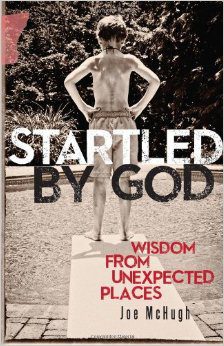 Joe McHugh is a spiritual director, retreat leader, teacher and freelance writer living in St. Paul, MN. He writes regularly for a variety of religious publications and his book, Startled by God: Wisdom from Unexpected Places was published in 2013. He can be contacted at [email protected].
Previous Post

July 21, 2015
Tweeting With God: Essential Text for RCIA and More
Next Post
August 30, 2015 Living in-between seed and shrub
Browse Our Archives
Select a Category abortion abuse art and culture Books Catholic and Gay Catholic identity Catholic Laity Catholic Vocations Catholic Youth Catholicity Cinema clergy scandal Community of Sant’Egidio Culture of Life Editorial Faith Family Father Robert Barron Guest Post In Defense of Christians Marriage Mary Middle East New Evangelization Parenthood Patheos Catholic Poetry politics Pope Poverty Prayer Priesthood Race in America Sacred Art Saints Series sexuality Shaw Synod Uncategorized
Select a Month August 2023 February 2022 January 2022 December 2021 October 2021 September 2021 August 2021 February 2021 January 2021 December 2020 October 2020 August 2020 June 2020 May 2020 April 2020 November 2019 June 2019 May 2019 March 2019 December 2018 October 2018 September 2018 August 2017 July 2017 October 2016 August 2016 July 2016 June 2016 December 2015 September 2015 August 2015 July 2015 June 2015 May 2015 April 2015 March 2015 February 2015 January 2015 December 2014 November 2014 October 2014 September 2014
TAKE THE
Religious Wisdom Quiz
What language was the New Testament originally written in?
Select your answer to see how you score.
Greek Hebrew Syriac Latin
Related posts from The Font

Restoring Christian Culture Brick by Brick
Our Lady of the Heights: Commemorating the Tulsa...

Finding New Life in Memento Mori

TRENDING AT PATHEOS Catholic

Rejecting Doom: Christian Hope And Human Action
Christianity is a religion of hope. We are to have hope and...

It’s What Comes From Within Which Matters
One of the most difficult things for us to understand is why...

Why I Choose the Eucharist Over the Sermon
Choose the Eucharist, Not the Sermon What are we supposed to get...

5 Design Elements Found in Spiritually Rooted Homes
Putting Spirituality Into Home Decor Our homes are more than our living...

Credo: A Story of God Told with the...
About 10 years ago, I began to imagine a personal "Credo" that...

The Anatomy of Divine Revelation in Catholic Thought
The claim that God has made Himself known to human beings is...
view all Catholic blogs
Ad-Free & Subscriber Log-In Subscription Support
- About Us
- 2026 Calendar
- Videos
- Podcasts
- Library of World Religions
- Faith In Media Tracker
- Advertise With Us
- Write for Us
- Privacy Policy
- Terms of Service
- Do Not Sell My Data
- Contact Us
- Radiant Digital
- Manage Newsletter Subscriptions
- Unsubscribe From Notifications
- Sitemap
Copyright 2008-2026, Patheos. All rights reserved.
Subscription Support Ad-Free & Subscriber Log-In
Follow Patheos