
BuddhistCatholicContemplativeEvangelicalGeneral ChristianHinduJewishLatter-day SaintMuslimNew VisionsProgressive Christian
Beliefs
- Buddhist
- Catholic
- Contemplative
- Evangelical
- General Christian
- Hindu
- Jewish
- Latter-day Saint
- More Voices
- Muslim
- New Visions
- Pagan
- Progressive Christian
Topics
- Religion News
- Food and Religion
- Sports and Religion
- Religious Art
- Religious Music and Entertainment
- Religious Events
- History and Religion
- Style and Religion
- Politics and Religion
- Women in Religion
- Recreation Outdoors and Religion
- Business Finance and Religion
- Careers Workplace and Religion
- Education and Religion
- Family Parenting and Religion
- Health Fitness and Religion
- Home and Religion
- Relationships and Religion
- Technology and Religion
- Travel and Religion
Columnists
- Buddhist Columnists
- Business Finance and Religion Columnists
- Careers Workplace and Religion Columnists
- Catholic Columnists
- Contemplative Columnists
- Education and Religion Columnists
- Evangelists Columnists
- Family Parenting and Religion Columnists
- General Christian Columnists
- Health Fitness and Religion Columnists
- Hindu Columnists
- History and Religion Columnists
- Home and Religion Columnists
- Jewish Columnists
- More Voices Columnists
- Latter Day Columnists
- Muslim Columnists
- New Visions Columnists
- Nonreligious Columnists
- Pagan Columnists
- Politics and Religion Columnists
- Progressive Columnists
- Recreation Outdoors and Religion Columnists
- Relationships and Religion Columnists
- Religion News Columnists
- Religious Art Columnists
- Religious Events Columnists
- Religious Music and Entertainment Columnists
- Sports and Religion Columnists
- Style and Religion Columnists
- Technology and Religion Columnists
- Travel and Religion Columnists
- Women in Religion Columnists
Resource Library
- 2026 Calendar
- Library of World Religions
- The 100 Most Holy Places on Earth
- Patheos Answers
- Podcasts
- Videos
- Faith Leaders Database
- Anglican Episcopalian
- Bahai
- Baptist
- Buddhism
- Christianity
- Confucianism
- Eastern Orthodoxy
- Hinduism
- Holiness and Pentecostal
- ISKCON
- Islam
- Judaism
- Lutheran
- Methodist
- The Church of Jesus Christ of Latter-day Saints
- New Age
- Paganism
- Presbytarian and Reformed
- Protestantism
- Religion Behind the Scenes
- Roman Catholic
- Scientology
- Shia Islam
- Sikhism
- Sufism
- Sunni Islam
- Taoism
- Zen
- See all religions
Research Tools
 Ad-Free & Subscriber Log-In Subscription Support
Ad-Free & Subscriber Log-In Subscription Support
Follow Patheos 

- Trending:
- Forgiveness
- |
- Marriage
- |
- Consciousness
- |
- Death Penalty
- |
- Election
- |
- Halloween

- Home
- Catholic
- Living in-between seed and shrub
Living in-between seed and shrub
Last updated on: August 30, 2015 at 10:58 pm by Elizabeth Scalia
Living in-between seed and shrub 2015-08-30T22:58:00-05:00 Elizabeth Scalia
Patheos Explore the world's faith through different perspectives on religion and spirituality! Patheos has the views of the prevalent religions and spiritualities of the world.

by Joe McHugh
In Memory of Thomas E. Porter
1927—2015
Tom Porter was a brash, street-smart Irish kid from Cleveland’s west side who was as good at acting and translating Latin as he was at playing baseball. Graduation from high school came with a choice between going to college on a baseball scholarship or taking the road less travelled by joining the Jesuits. He opted for the Jesuits.
I met Tom when I was a college kid in Detroit and he had just started teaching American literature there armed with a fresh doctorate. He seemed larger than life back then; his teaching was brilliant, provocative, dramatic. He could talk about puritanism and have us sitting on the edge of our chairs, attentive and curious.
I got to know Tom better when I joined the Jesuits, and although I still found him intellectually intimidating, I was also intrigued by the passion and integrity of his religious fervor. He thought hard about his faith, and although he could give the impression of being dismissive of many time-honored religious practices, his devotion was both convincing and attractive.
Just before I started graduate school, I asked Tom to give me my annual eight-day directed retreat. The director and retreatant met each day during them to talk about what did or didn’t happen during that day’s prayer. It was also when the director typically gave the retreatant scriptural passages to think and pray about the next day.
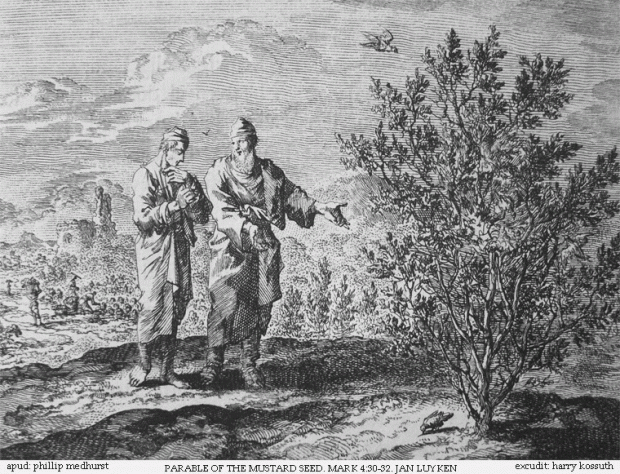
The first couple of days of the retreat happened according to plan, although today I smile thinking how hard I worked on the scripture passages, determined to figure out how they fit together and what they were supposed to mean to me. Tom probably got bored with my pious babble and finally said, “Why don’t you spend tomorrow on the parable of the mustard seed? Look at Mark 4:30-32.” “OK,” I responded, “but what else should I read?”
“Just stick with the parable; it’s enough” he said as he walked about the door. “That’s it,” I thought to myself, “ a whole day with two lines about a seed?”
The next day I read the parable over an over, tried to pray about it, and finally read explanations of it, all in an effort to figure out what it meant and, even more, what I was going to tell Tom during our meeting. I learned a lot about the parable that day, but when it came to finding the story’s heart and then letting it transform my own, I came up empty.
Later that day, when Tom asked about how things went with the mustard seed, I made a couple of vain attempts at devotion but had to admit that I didn’t get very far. Then, with a loving compassion I hadn’t seen in him before, Tom leaned toward me and said, “Joseph, did you ever think that life in God’s reign isn’t about the seed at the beginning of the story or the shrub at the end, but what happens in-between? God comes alive in growth, change, conversion, and love. It’s the in-between time that really counts.”
Parables attack our literalist tendencies head on, and, instead of telling us about God, they show us what God is like. They grab our imagination and take us inside God’s reign with a startling directness that turns our preconceptions of their heads. Even more than that, they let us peek into the religious imagination of Jesus.
Sometimes I wish God would directly intervene in my life, knock me off my horse like Paul the Apostle, and just tell me what to do, where to go, and what to think.
Don’t get me wrong: most of us have cherished moments of intuitive grace when we just know that God has come close to us, but, most of the time, we slog out our lives day-by-day, moment-by-moment, person-by-person, failure-by-failure, grace-by-grace, all the while looking for traces of God. Another way, perhaps, to describe life in-between seed and shrub, those living places where God’s reign appears in the mystery of growth and grace, death and resurrection.
As it turns out, the parables are remarkably secular stories: God is nowhere to be found in them. Although overtly absent, God is suggested and pointed to amid seeds, lost coins, unjust bosses, and wayward kids. God, it seems, also has a habit of showing up with almost undetected in the day-to-day struggles we too often pass over as unworthy of God’s attention. These are the religious moments without drama, when God work slowly yet steadily in the silent passions of growth and setback. It’s only then that our lives themselves become parables of God’s reign.
Most of us can remember turning points in our lives, times when we had to relearn how to love and be loved. We often learn that hard way that without ill will or personal deficit, things sometimes just don’t work out the way we had hoped or planned. We outgrow long-held images we have of ourselves, get divorced, leave the priesthood or religious life, support kids even when they disappoint us, or find that far too little meaning have comes from a career that once seemed to promising.
When this happens, we’re face a decision of far-reaching importance: either we stand still and retire from life or we take a chance and step into the whirlwind of in-between grace, into the process of death and resurrection we see in the parable of the mustard seed. We do so with the faith’s assurance that we won’t be done in or defeated, knowing all too well that suffering is a precondition for love.
We all face decisive moments when we are called to be different, but most of the time we’re called to ongoing conversion, to live differently. We can either imagine ourselves differently in grace and take a chance of being fully alive in God, or we can choose to stay as we are, not out of fidelity, but, rather, out of fear.
Tom and I eventually left the Jesuits, another way, I think, in which the two of us learned to trust the process of grace even more deeply as we were retaught what fidelity really means, how to be different and live differently with the Lord. I’m lucky to have had Tom Porter help me see this early on in my life, and I’m eternally in his debt for putting the challenge of the mustard seed in front of me forty years ago.
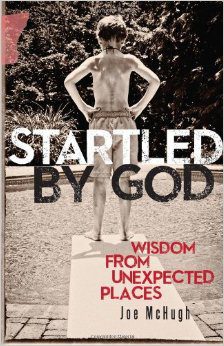 Joe McHugh is a spiritual director, retreat leader, teacher and freelance writer living in St. Paul, MN. He writes regularly for a variety of religious publications and his book, Startled by God: Wisdom from Unexpected Places was published in 2013. He can be contacted at [email protected].
Previous Post

August 21, 2015
Touching God's Wilder Side
Next Post

September 16, 2015 The Road to Sainthood Infographic
Browse Our Archives
Select a Category abortion abuse art and culture Books Catholic and Gay Catholic identity Catholic Laity Catholic Vocations Catholic Youth Catholicity Cinema clergy scandal Community of Sant’Egidio Culture of Life Editorial Faith Family Father Robert Barron Guest Post In Defense of Christians Marriage Mary Middle East New Evangelization Parenthood Patheos Catholic Poetry politics Pope Poverty Prayer Priesthood Race in America Sacred Art Saints Series sexuality Shaw Synod Uncategorized
Select a Month August 2023 February 2022 January 2022 December 2021 October 2021 September 2021 August 2021 February 2021 January 2021 December 2020 October 2020 August 2020 June 2020 May 2020 April 2020 November 2019 June 2019 May 2019 March 2019 December 2018 October 2018 September 2018 August 2017 July 2017 October 2016 August 2016 July 2016 June 2016 December 2015 September 2015 August 2015 July 2015 June 2015 May 2015 April 2015 March 2015 February 2015 January 2015 December 2014 November 2014 October 2014 September 2014
TAKE THE
Religious Wisdom Quiz
Who was Jude?
Select your answer to see how you score.
Brother of Peter The apostle who replaced Judas Brother of Jesus The first martyred apostle
Related posts from The Font

Restoring Christian Culture Brick by Brick
Our Lady of the Heights: Commemorating the Tulsa...
Finding New Life in Memento Mori

TRENDING AT PATHEOS Catholic

Rejecting Doom: Christian Hope And Human Action
Christianity is a religion of hope. We are to have hope and...

It’s What Comes From Within Which Matters
One of the most difficult things for us to understand is why...

Why I Choose the Eucharist Over the Sermon
Choose the Eucharist, Not the Sermon What are we supposed to get...

5 Design Elements Found in Spiritually Rooted Homes
Putting Spirituality Into Home Decor Our homes are more than our living...

Credo: A Story of God Told with the...
About 10 years ago, I began to imagine a personal "Credo" that...

The Anatomy of Divine Revelation in Catholic Thought
The claim that God has made Himself known to human beings is...
view all Catholic blogs
Ad-Free & Subscriber Log-In Subscription Support
- About Us
- 2026 Calendar
- Videos
- Podcasts
- Library of World Religions
- Faith In Media Tracker
- Advertise With Us
- Write for Us
- Privacy Policy
- Terms of Service
- Do Not Sell My Data
- Contact Us
- Radiant Digital
- Manage Newsletter Subscriptions
- Unsubscribe From Notifications
- Sitemap
Copyright 2008-2026, Patheos. All rights reserved.
Subscription Support Ad-Free & Subscriber Log-In
Follow Patheos