
BuddhistCatholicContemplativeEvangelicalGeneral ChristianHinduJewishLatter-day SaintMuslimNew VisionsProgressive Christian
Beliefs
- Buddhist
- Catholic
- Contemplative
- Evangelical
- General Christian
- Hindu
- Jewish
- Latter-day Saint
- More Voices
- Muslim
- New Visions
- Pagan
- Progressive Christian
Topics
- Religion News
- Food and Religion
- Sports and Religion
- Religious Art
- Religious Music and Entertainment
- Religious Events
- History and Religion
- Style and Religion
- Politics and Religion
- Women in Religion
- Recreation Outdoors and Religion
- Business Finance and Religion
- Careers Workplace and Religion
- Education and Religion
- Family Parenting and Religion
- Health Fitness and Religion
- Home and Religion
- Relationships and Religion
- Technology and Religion
- Travel and Religion
Columnists
- Buddhist Columnists
- Business Finance and Religion Columnists
- Careers Workplace and Religion Columnists
- Catholic Columnists
- Contemplative Columnists
- Education and Religion Columnists
- Evangelists Columnists
- Family Parenting and Religion Columnists
- General Christian Columnists
- Health Fitness and Religion Columnists
- Hindu Columnists
- History and Religion Columnists
- Home and Religion Columnists
- Jewish Columnists
- More Voices Columnists
- Latter Day Columnists
- Muslim Columnists
- New Visions Columnists
- Nonreligious Columnists
- Pagan Columnists
- Politics and Religion Columnists
- Progressive Columnists
- Recreation Outdoors and Religion Columnists
- Relationships and Religion Columnists
- Religion News Columnists
- Religious Art Columnists
- Religious Events Columnists
- Religious Music and Entertainment Columnists
- Sports and Religion Columnists
- Style and Religion Columnists
- Technology and Religion Columnists
- Travel and Religion Columnists
- Women in Religion Columnists
Resource Library
- 2026 Calendar
- Library of World Religions
- The 100 Most Holy Places on Earth
- Patheos Answers
- Podcasts
- Videos
- Faith Leaders Database
- Anglican Episcopalian
- Bahai
- Baptist
- Buddhism
- Christianity
- Confucianism
- Eastern Orthodoxy
- Hinduism
- Holiness and Pentecostal
- ISKCON
- Islam
- Judaism
- Lutheran
- Methodist
- The Church of Jesus Christ of Latter-day Saints
- New Age
- Paganism
- Presbytarian and Reformed
- Protestantism
- Religion Behind the Scenes
- Roman Catholic
- Scientology
- Shia Islam
- Sikhism
- Sufism
- Sunni Islam
- Taoism
- Zen
- See all religions
Research Tools
 Ad-Free & Subscriber Log-In Subscription Support
Ad-Free & Subscriber Log-In Subscription Support
Follow Patheos 

- Trending:
- Forgiveness
- |
- Marriage
- |
- Consciousness
- |
- Death Penalty
- |
- Election
- |
- Halloween

- Home
- Catholic
- Finding Galilee, and Prophecy, on the Periphery with the Poor
Finding Galilee, and Prophecy, on the Periphery with the Poor
Last updated on: April 24, 2015 at 8:41 am by Zeger Polhuijs
Finding Galilee, and Prophecy, on the Periphery with the Poor 2015-04-24T08:41:28-05:00 Zeger Polhuijs
Patheos Explore the world's faith through different perspectives on religion and spirituality! Patheos has the views of the prevalent religions and spiritualities of the world.
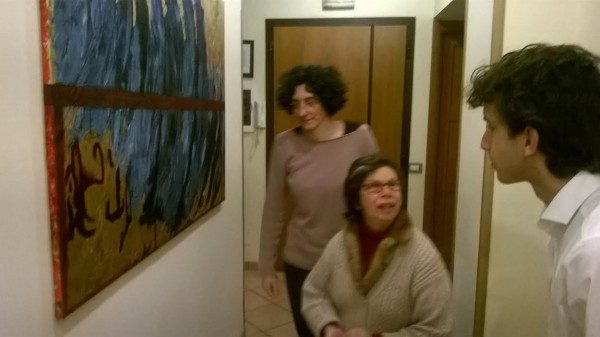
Image via Zeger Polhuijs
by Zeger Polhuijs
This Easter, I celebrated Holy Week with the Community of Sant’Egidio in Rome. During the Easter vigil, the basilica of Santa Maria in Trastevere was packed. As the crowd joyfully sang, the procession entered the church, with priests and acolytes carrying a number of large icons as well as a procession cross and a Bible.
The liturgy was celebrated with much solemn attention to detail, and ended with exuberant clapping and singing. In addition, a message was shared by founder Andrea Riccardi: the message that Easter carries a sense of urgency — urgency, because we are expected in Galilee. What does Galilee, what do the peripheries look like in our societies? Has the Church itself not a marginal subsociety in Western Europe, a Galilee out of which nothing good can come (John 1:46)?
In the Netherlands, as in Rome, the re-opening of the Moses and Aaron church in Amsterdam has been understood as a sign of new hope, and perhaps a turning of the tide of secularization — the closing of churches, and the painful reorganization of parishes.
It may very well be a sign of hope for the remaining faithful, but it seems unlikely that it will turn the tide. The parish, the priesthood, and the religious life are going through a serious crisis the end of which is not nearly to be seen. In addition, a sudden increase of conversions is sociologically unlikely, according to British sociologist Steve Bruce. What are Catholic communities, be they parishes or ecclesial lay movements, to do in such an environment? What does hope look like in such a sociological reality?
A turning of the tide in terms of numbers of affiliation or attendance might be sociologically unlikely, and the Church might indeed become severely marginalized (although sociologists have proven to be dramatically wrong before in their analyses and predictions about religion and modernity). However, a turning of the tide in terms of successfully engaging with society is, I think, a very real possibility, and a movement toward which the Community of Sant’Egidio might be able to contribute significantly, in response to some of the challenges of our time
In this light, numbers and conversions are insufficient measures of success. The ability to bring hope, even while being a small and marginalized community, might turn out to be a sociolical reality. Though difficult to operationalize, it can prove to be a concept which severly challenges established sociological perspectives.
What hope did I find in the sociological reality of the periphery? During a visit to the house of the ‘amici’, the mentally handicapped friends of the Community, I was surprised by the rich spiritual life and social awareness of its residents. Some of these people, after having been in extremely undignified conditions elsewhere as they existed on the margins of our success-oriented and fast-paced societies, had really come to life again in the friendly environment of this house.
Their paintings –– which can be seen throughout the house but also in various exhibitions in Rome –– are amazing works of art as well as testimonies to their profound social awareness and inner life. One painting testified to an informed and empathic insight into the Community’s HIV/AIDS projects in Africa. Another painting expressed the theme of ‘spiritual crisis’ with a powerful, abstract use of colour.
As the resident who painted the latter explained to me its meaning, in terms of hope, crisis and seperation, I could not help but think that she was describing the spiritual condition of the Netherlands. I shared this with her and asked her how she thinks hope can be found. Referring to the Moses and Aaronchurch in Amsterdam, she said with a sudden burst of joy that she had found hope in the Community, that all the churches should be re-opened, and that with Jesus and the Community, everything is possible!
Now again, this is not sociologically likely. But I strongly felt that her painting was prophetic, and her exclamation as well, prophetic in the sense of announcing Gods intentions that are still unseen.
The sociological questions of the state of parish communities in Western Europe — and the meaning of the rise of the lay movements and their implications for the life of the faithful in the local Church — remain difficult. But theologically speaking, I think hope will play a crucial role in the near future of Europe, and it can be found in the periphery.
When we are willing to go to the periphery and listen to the poor, we might yet be surprised by prophecy.
 Zeger Polhuijs is a Dutch student and Catholic blogger, and involved with the Community of Sant’Egidio in Amsterdam. Over the next months he will conduct fieldwork in the Sant’Egidio Communities in Rome, Antwerp and Amsterdam for his thesis research.

Next Post
May 5, 2015 "The Avengers" and Friedrich Nietzsche
Browse Our Archives
Select a Category abortion abuse art and culture Books Catholic and Gay Catholic identity Catholic Laity Catholic Vocations Catholic Youth Catholicity Cinema clergy scandal Community of Sant’Egidio Culture of Life Editorial Faith Family Father Robert Barron Guest Post In Defense of Christians Marriage Mary Middle East New Evangelization Parenthood Patheos Catholic Poetry politics Pope Poverty Prayer Priesthood Race in America Sacred Art Saints Series sexuality Shaw Synod Uncategorized
Select a Month August 2023 February 2022 January 2022 December 2021 October 2021 September 2021 August 2021 February 2021 January 2021 December 2020 October 2020 August 2020 June 2020 May 2020 April 2020 November 2019 June 2019 May 2019 March 2019 December 2018 October 2018 September 2018 August 2017 July 2017 October 2016 August 2016 July 2016 June 2016 December 2015 September 2015 August 2015 July 2015 June 2015 May 2015 April 2015 March 2015 February 2015 January 2015 December 2014 November 2014 October 2014 September 2014
TAKE THE
Religious Wisdom Quiz
True or False: Jeremiah was known as the weeping prophet.
Select your answer to see how you score.
FALSE TRUE
Related posts from The Font
Bernstein's Mass: Not Just Liturgy, But Cultural and...

Six Practical Ideas for Integrating Faith and Work

What I Saw from the Rope Lines at...
The Poor on the Periphery, the Treasure of...
TRENDING AT PATHEOS Catholic

Creation, Preservation, and Teleology in Catholic Theology
As I write this, it is very early Monday morning. Like millions...

The Parable Of The Sower And The Word...
One of Christ’s most famous parables is that of the sower who...

Rejecting Doom: Christian Hope And Human Action
Christianity is a religion of hope. We are to have hope and...

Why I Choose the Eucharist Over the Sermon
Choose the Eucharist, Not the Sermon What are we supposed to get...

5 Design Elements Found in Spiritually Rooted Homes
Putting Spirituality Into Home Decor Our homes are more than our living...

Credo: A Story of God Told with the...
About 10 years ago, I began to imagine a personal "Credo" that...
view all Catholic blogs
Ad-Free & Subscriber Log-In Subscription Support
- About Us
- 2026 Calendar
- Videos
- Podcasts
- Library of World Religions
- Faith In Media Tracker
- Advertise With Us
- Write for Us
- Privacy Policy
- Terms of Service
- Do Not Sell My Data
- Contact Us
- Radiant Digital
- Manage Newsletter Subscriptions
- Unsubscribe From Notifications
- Sitemap
Copyright 2008-2026, Patheos. All rights reserved.
Subscription Support Ad-Free & Subscriber Log-In
Follow Patheos