
BuddhistCatholicContemplativeEvangelicalGeneral ChristianHinduJewishLatter-day SaintMuslimNew VisionsProgressive Christian
Beliefs
- Buddhist
- Catholic
- Contemplative
- Evangelical
- General Christian
- Hindu
- Jewish
- Latter-day Saint
- More Voices
- Muslim
- New Visions
- Pagan
- Progressive Christian
Topics
- Religion News
- Food and Religion
- Sports and Religion
- Religious Art
- Religious Music and Entertainment
- Religious Events
- History and Religion
- Style and Religion
- Politics and Religion
- Women in Religion
- Recreation Outdoors and Religion
- Business Finance and Religion
- Careers Workplace and Religion
- Education and Religion
- Family Parenting and Religion
- Health Fitness and Religion
- Home and Religion
- Relationships and Religion
- Technology and Religion
- Travel and Religion
Columnists
- Buddhist Columnists
- Business Finance and Religion Columnists
- Careers Workplace and Religion Columnists
- Catholic Columnists
- Contemplative Columnists
- Education and Religion Columnists
- Evangelists Columnists
- Family Parenting and Religion Columnists
- General Christian Columnists
- Health Fitness and Religion Columnists
- Hindu Columnists
- History and Religion Columnists
- Home and Religion Columnists
- Jewish Columnists
- More Voices Columnists
- Latter Day Columnists
- Muslim Columnists
- New Visions Columnists
- Nonreligious Columnists
- Pagan Columnists
- Politics and Religion Columnists
- Progressive Columnists
- Recreation Outdoors and Religion Columnists
- Relationships and Religion Columnists
- Religion News Columnists
- Religious Art Columnists
- Religious Events Columnists
- Religious Music and Entertainment Columnists
- Sports and Religion Columnists
- Style and Religion Columnists
- Technology and Religion Columnists
- Travel and Religion Columnists
- Women in Religion Columnists
Resource Library
- 2026 Calendar
- Library of World Religions
- The 100 Most Holy Places on Earth
- Patheos Answers
- Podcasts
- Videos
- Faith Leaders Database
- Anglican Episcopalian
- Bahai
- Baptist
- Buddhism
- Christianity
- Confucianism
- Eastern Orthodoxy
- Hinduism
- Holiness and Pentecostal
- ISKCON
- Islam
- Judaism
- Lutheran
- Methodist
- The Church of Jesus Christ of Latter-day Saints
- New Age
- Paganism
- Presbytarian and Reformed
- Protestantism
- Religion Behind the Scenes
- Roman Catholic
- Scientology
- Shia Islam
- Sikhism
- Sufism
- Sunni Islam
- Taoism
- Zen
- See all religions
Research Tools
 Ad-Free & Subscriber Log-In Subscription Support
Ad-Free & Subscriber Log-In Subscription Support
Follow Patheos 

- Trending:
- Forgiveness
- |
- Marriage
- |
- Consciousness
- |
- Death Penalty
- |
- Election
- |
- Halloween

- Home
- Catholic
- Kenneth Branagh’s Very Christian Cinderella
Kenneth Branagh’s Very Christian Cinderella
Last updated on: March 19, 2015 at 9:31 am by Fr. Robert Barron
Kenneth Branagh’s Very Christian Cinderella 2015-03-19T09:31:08-05:00 Fr. Robert Barron
Patheos Explore the world's faith through different perspectives on religion and spirituality! Patheos has the views of the prevalent religions and spiritualities of the world.
By Very Rev. Robert Barron
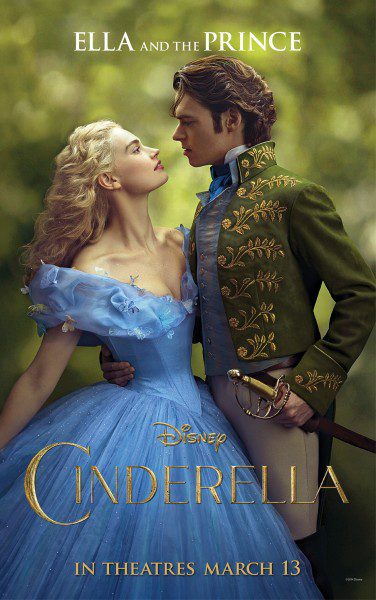
Kenneth Branagh’s “Cinderella” is the most surprising Hollywood movie of the year so far. I say this because the director manages to tells the familiar fairy tale without irony, hyper-feminist sub-plots, Marxist insinuations, deconstructionist cynicism, or arch condescension. In so doing, he actually allows the spiritual, indeed specifically Christian, character of the tale to emerge. I realize that it probably strikes a contemporary audience as odd that Cinderella might be a Christian allegory, but keep in mind that most of the fairy stories and children’s tales compiled by the Brothers Grimm and later adapted by Walt Disney found their roots in the decidedly Christian culture of late medieval and early modern Europe.
In Branagh’s telling, Ella is the daughter of wonderful parents, both of whom instill in her a keen sense of moral virtue and joie de vivre. The girl’s idyllic childhood was interrupted by the sudden illness of her mother, who, while on her death-bed, delivered to Ella the injunction always to be “kind and courageous.” Her father then remarried and brought his new wife and her two daughters to live with him and Ella. Some years later, Ella’s father left on a lengthy business trip. Before he set out, she enjoined him to send back to her the first branch that his shoulder would brush while on the journey. A few weeks later, a servant arrived with the branch in his hand and the dreadful news that Ella’s father had become sick and had died. The now utterly isolated Ella became the victim of her wicked stepmother (played by the always compelling Cate Blanchett) and her obnoxious stepsisters, who visit upon her every type of cruelty and injustice. They even take away her bedroom, forcing her to sleep by the dying embers of the fire to keep warm. The ashes that stain her face give rise to the cruel nickname her stepsisters assign to her. Significantly, the cat belonging to Ella’s stepfamily is called Lucifer.
So we have a beautiful, vivacious, and morally upright young lady whose life becomes a nightmare through the intervention of untimely death and wicked oppression. So thorough was her loss of dignity that she finds herself covered in dust, her beauty obscured. It does not require a huge leap of imagination to see this as an allegory of the fall of the human race. God created us as beautiful, indeed in his own image and likeness, but through sin and the ministrations of the devil, we descended into dysfunction, and our beauty was covered over. In the technical language of the theologians, though we had kept the image of God, we had lost our likeness to him.
To return to Branagh’s traditional telling of the tale: while out riding in the country, Cinderella encountered a magnificent stag that was being pursued by a hunting party. Subsequently, she met the leader of the hunting brigade, a handsome young prince, the son of the King. The two almost immediately fell in love. Because she returned home without identifying herself, the prince called for a ball and invited all of the young women of the realm to come, hoping to lure his mysterious beloved. Though her stepfamily tried desperately to prevent her from attending, Cinderella, through the ministrations of her fairy godmother, managed to get to the ball, where she, of course, entranced the prince. Once again, she was compelled to return early, and the lovesick prince sought her desperately until he found her and married her.
We are tempted, no doubt, to see all of this as the stuff of ordinary romance, but we should look more deeply. First, the stag is a traditional sign of Christ and thus his presence as the object of the hunt is meant to signal his presence at the symbolic level of the narrative. Moreover, the prince, the son of the King, who falls in love with a woman despite her lowliness, is an obvious evocation of Jesus, the Son of God, who was sent to become the bridegroom of the human race, whose spiritual beauty had been covered over by sin. The prophet Isaiah predicted that the “builder of the human race” would come one day to marry his people, and the motif of the sacrum connubium, the sacred marriage, runs right through the New Testament. Indeed, the fathers of the Church took particular delight in ringing the changes on this theme, emphasizing that the Prince of Peace, the Son of God, in marrying the human race, lifted us up out of our lowliness and bestowed upon us all of his own benefits and dignity. This is precisely why the early theologians of the Church specified that the sacrum connubium involved an admirabile commercium (a wonderful exchange), God taking our sin from us and giving us his grace. In the symbolic language of our story, the unmerited love of the prince indeed transformed Cinderella into a princess.
The surest sign that this transformation has occurred—and it is one of my favorite elements in Branagh’s telling—is that Cinderella, upon escaping from the cruel oppression of her stepmother, turned to the wicked woman, not to curse her, but to offer a word of forgiveness. There could be no more compelling proof that she had thoroughly taken on the character of the bridegroom.
When you see this film, I would invite you, even as you take in the fantasy and romance of it, to appreciate it too as a deeply Christian story.
 Father Robert Barron is the founder of the global ministry, Word on Fire, and the Rector/President of Mundelein Seminary. He is the creator of the award winning documentary series, “Catholicism” and “Catholicism:The New Evangelization.” Learn more at www.WordonFire.org
Previous Post
March 15, 2015
What "Gifts" are Found in the Visitation of Mary to Elizabeth?
Next Post
March 19, 2015 Embracing Death: When we Can't Face Life but Won't Take the Cross
Recent Comments
Browse Our Archives
Select a Category abortion abuse art and culture Books Catholic and Gay Catholic identity Catholic Laity Catholic Vocations Catholic Youth Catholicity Cinema clergy scandal Community of Sant’Egidio Culture of Life Editorial Faith Family Father Robert Barron Guest Post In Defense of Christians Marriage Mary Middle East New Evangelization Parenthood Patheos Catholic Poetry politics Pope Poverty Prayer Priesthood Race in America Sacred Art Saints Series sexuality Shaw Synod Uncategorized
Select a Month August 2023 February 2022 January 2022 December 2021 October 2021 September 2021 August 2021 February 2021 January 2021 December 2020 October 2020 August 2020 June 2020 May 2020 April 2020 November 2019 June 2019 May 2019 March 2019 December 2018 October 2018 September 2018 August 2017 July 2017 October 2016 August 2016 July 2016 June 2016 December 2015 September 2015 August 2015 July 2015 June 2015 May 2015 April 2015 March 2015 February 2015 January 2015 December 2014 November 2014 October 2014 September 2014
TAKE THE
Religious Wisdom Quiz
Who was known for his great strength and long hair?
Select your answer to see how you score.
Elijah David Peter Samson
Related posts from The Font


Restoring Christian Culture Brick by Brick
Our Lady of the Heights: Commemorating the Tulsa...
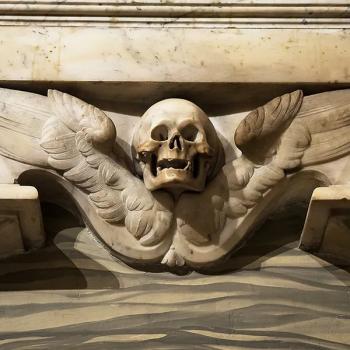
Finding New Life in Memento Mori
TRENDING AT PATHEOS Catholic

Rejecting Doom: Christian Hope And Human Action
Christianity is a religion of hope. We are to have hope and...

It’s What Comes From Within Which Matters
One of the most difficult things for us to understand is why...

Why I Choose the Eucharist Over the Sermon
Choose the Eucharist, Not the Sermon What are we supposed to get...

5 Design Elements Found in Spiritually Rooted Homes
Putting Spirituality Into Home Decor Our homes are more than our living...

Credo: A Story of God Told with the...
About 10 years ago, I began to imagine a personal "Credo" that...

The Anatomy of Divine Revelation in Catholic Thought
The claim that God has made Himself known to human beings is...
view all Catholic blogs
Ad-Free & Subscriber Log-In Subscription Support
- About Us
- 2026 Calendar
- Videos
- Podcasts
- Library of World Religions
- Faith In Media Tracker
- Advertise With Us
- Write for Us
- Privacy Policy
- Terms of Service
- Do Not Sell My Data
- Contact Us
- Radiant Digital
- Manage Newsletter Subscriptions
- Unsubscribe From Notifications
- Sitemap
Copyright 2008-2026, Patheos. All rights reserved.
Subscription Support Ad-Free & Subscriber Log-In
Follow Patheos