
BuddhistCatholicContemplativeEvangelicalGeneral ChristianHinduJewishLatter-day SaintMuslimNew VisionsProgressive Christian
Beliefs
- Buddhist
- Catholic
- Contemplative
- Evangelical
- General Christian
- Hindu
- Jewish
- Latter-day Saint
- More Voices
- Muslim
- New Visions
- Pagan
- Progressive Christian
Topics
- Religion News
- Food and Religion
- Sports and Religion
- Religious Art
- Religious Music and Entertainment
- Religious Events
- History and Religion
- Style and Religion
- Politics and Religion
- Women in Religion
- Recreation Outdoors and Religion
- Business Finance and Religion
- Careers Workplace and Religion
- Education and Religion
- Family Parenting and Religion
- Health Fitness and Religion
- Home and Religion
- Relationships and Religion
- Technology and Religion
- Travel and Religion
Columnists
- Buddhist Columnists
- Business Finance and Religion Columnists
- Careers Workplace and Religion Columnists
- Catholic Columnists
- Contemplative Columnists
- Education and Religion Columnists
- Evangelists Columnists
- Family Parenting and Religion Columnists
- General Christian Columnists
- Health Fitness and Religion Columnists
- Hindu Columnists
- History and Religion Columnists
- Home and Religion Columnists
- Jewish Columnists
- More Voices Columnists
- Latter Day Columnists
- Muslim Columnists
- New Visions Columnists
- Nonreligious Columnists
- Pagan Columnists
- Politics and Religion Columnists
- Progressive Columnists
- Recreation Outdoors and Religion Columnists
- Relationships and Religion Columnists
- Religion News Columnists
- Religious Art Columnists
- Religious Events Columnists
- Religious Music and Entertainment Columnists
- Sports and Religion Columnists
- Style and Religion Columnists
- Technology and Religion Columnists
- Travel and Religion Columnists
- Women in Religion Columnists
Resource Library
- 2026 Calendar
- Library of World Religions
- The 100 Most Holy Places on Earth
- Patheos Answers
- Podcasts
- Videos
- Faith Leaders Database
- Anglican Episcopalian
- Bahai
- Baptist
- Buddhism
- Christianity
- Confucianism
- Eastern Orthodoxy
- Hinduism
- Holiness and Pentecostal
- ISKCON
- Islam
- Judaism
- Lutheran
- Methodist
- The Church of Jesus Christ of Latter-day Saints
- New Age
- Paganism
- Presbytarian and Reformed
- Protestantism
- Religion Behind the Scenes
- Roman Catholic
- Scientology
- Shia Islam
- Sikhism
- Sufism
- Sunni Islam
- Taoism
- Zen
- See all religions
Research Tools
 Ad-Free & Subscriber Log-In Subscription Support
Ad-Free & Subscriber Log-In Subscription Support
Follow Patheos 

- Trending:
- Forgiveness
- |
- Marriage
- |
- Consciousness
- |
- Death Penalty
- |
- Election
- |
- Halloween

- Home
- Catholic
- “Calvary” and a Portrait of a Real Priest
“Calvary” and a Portrait of a Real Priest
Last updated on: September 11, 2014 at 1:44 pm by Elizabeth Scalia
“Calvary” and a Portrait of a Real Priest 2014-09-11T13:44:11-05:00 Elizabeth Scalia
Patheos Explore the world's faith through different perspectives on religion and spirituality! Patheos has the views of the prevalent religions and spiritualities of the world.
By Very Rev. Robert Barron
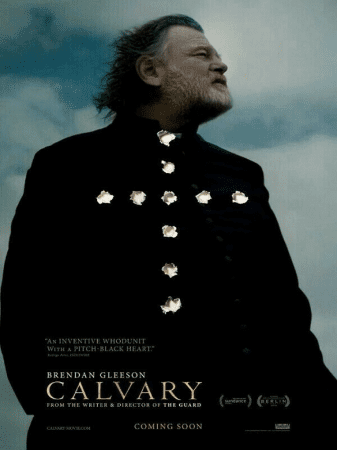
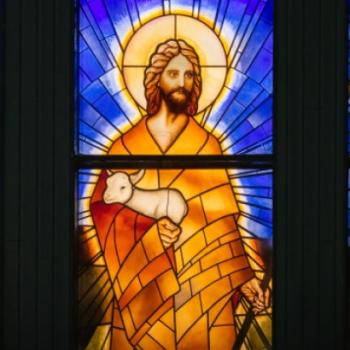
Saint Pope John Paul II said that a priest should have the heart of Christ the Good Shepherd. Far too many saccharine paintings of effeminate Jesuses in the midst of delicate lambs have conduced toward a misconstrual of this image as something sentimental and harmless. But shepherds not only had the smell of their sheep (to use Pope Francis’s language), but they also wielded a stick, meant to bring back strays and to fend off threats. Real shepherding was, and is, a dirty and hard-edged business.
John Michael McDonagh’s film “Calvary” shows, with extraordinary vividness, what authentic spiritual shepherding looks like and how it feels for a priest to have a shepherd’s heart. The movie opens in the quiet of the confessional, where Fr. James, played by the always-compelling Brendan Gleeson, waits to receive the confession of a penitent. What he hears, however, is not a list of sins, but a brutal threat: “I will kill you Sunday next. Say we meet on the beach?” The awful words are coming from a man who had been sexually abused, across many years, by a priest and who now wants to seek his revenge by eliminating a man he admits is a good priest. The story then unfolds as Fr. James’s passion week, the stations of the cross, as he makes his way to his own Calvary.
We see immediately that he is a pastor who knows his people and their struggles. And we also see that this knowledge is not abstract or distant, but rather is born of very close and sympathetic contact with them. By foot, by boat, or by car, he visits the homes of his parishioners and addresses their practical and spiritual needs. Moreover, he is not afraid to take them to task when he sees them walking on an errant path. The people to whom he ministers—a sexually promiscuous woman, a suicidal old writer, a young man caught up in all forms of pornography, a deeply embittered and corrupt financier, an atheist doctor more cynical than Richard Dawkins, and even an imprisoned serial killer—represent the spiritual wasteland that has emerged in Ireland in the wake of the clergy sex scandals and under the influence of postmodern indifferentism. In his dealings with these people, Fr. James is unfailingly simple, direct, and spiritually incisive, but he is met, over and over, with mockery, condescension, even contempt. And yet, wearing the soutane and collar that unmistakably mark him as a priest, he soldiers on.
Any suspicion that the man in the confessional was only making an idle threat is eliminated when Fr. James’s church is burned to the ground, in an obvious act of arson, and when his beloved dog is found with his throat cut. Understandably enough, the frightened priest, as the fateful Sunday approaches, books passage on a flight to Dublin. The only time that we see him out of his soutane and in civilian clothes is as he makes his way to the airport to escape his fate. But as he is about to board the plane, the priest decides to return to his parish, to his people, and to the encounter with his killer on the seashore. On Sunday morning, Fr. James has a telephone conversation with this daughter Fiona (he had been married and had lost his wife prior to entering the seminary). In the course of their exchange, he says, “I think there’s been too much talk about sin and not enough talk about virtue.” “What is the greatest virtue?” Fiona asks, and her father responds, “I think forgiveness has been quite underrated.”
On the strand, an angry young man, whom we have seen throughout the film, comes striding toward the priest, gun in hand, and with astonishing courage, Fr. James meets him face to face. The tortured man spits out his bitterness toward the church and then breaks into sobs expressive of anger, regret, and deep pain. All this time, Fr. James holds his ground, offering simple words of forgiveness and hope. Finally, the man presses the gun to priest’s forehead and fires.
It seems to be the grimmest possible ending, a confirmation of the worldview of the most nihilist and despairing of Fr. James’s parishioners. But then we remember that the movie is entitled “Calvary” and that a good priest, by definition, is an alter Christus, another Christ. Jesus’ shepherding ministry came to its climax on a squalid hill outside of Jerusalem, when he stood his ground as the darkness and dysfunction of the world swept over him. The crucified Jesus did not battle evil on its own terms, but rather swallowed it up in the divine mercy: “Father, forgive them, for they know not what they do.” Fr. James, though tempted to avoid his awful confrontation with wickedness, walked all the way up his own Calvary, and dealt with sin precisely as Jesus had.
The final scene of the film is filled with Christian hope. Fr. James’s daughter comes to the prison where her father’s killer is incarcerated. Through the glass partition that separates them, he looks at her with anguish, but she looks back at him with a smile. Though no words are exchanged, it is clear that Fr. James’s heroic witness to the most underrated of virtues has had its effect. Through the ministrations of a real priest, a green shoot appears in a spiritual wasteland; Calvary is followed by resurrection.
 Father Robert Barron is the founder of the global ministry, Word on Fire, and the Rector/President of Mundelein Seminary. He is the creator of the award winning documentary series, “Catholicism” and “Catholicism:The New Evangelization.” Learn more at www.WordonFire.org
Related, by Father Barron:
Priesthood as Balm: Seize This Chance to Heal
Previous Post

August 2, 2023
Restoring Christian Culture Brick by Brick
Next Post

September 11, 2014 As Hard as it Looks: On Parish Assists to Caregivers
Browse Our Archives
Select a Category abortion abuse art and culture Books Catholic and Gay Catholic identity Catholic Laity Catholic Vocations Catholic Youth Catholicity Cinema clergy scandal Community of Sant’Egidio Culture of Life Editorial Faith Family Father Robert Barron Guest Post In Defense of Christians Marriage Mary Middle East New Evangelization Parenthood Patheos Catholic Poetry politics Pope Poverty Prayer Priesthood Race in America Sacred Art Saints Series sexuality Shaw Synod Uncategorized
Select a Month August 2023 February 2022 January 2022 December 2021 October 2021 September 2021 August 2021 February 2021 January 2021 December 2020 October 2020 August 2020 June 2020 May 2020 April 2020 November 2019 June 2019 May 2019 March 2019 December 2018 October 2018 September 2018 August 2017 July 2017 October 2016 August 2016 July 2016 June 2016 December 2015 September 2015 August 2015 July 2015 June 2015 May 2015 April 2015 March 2015 February 2015 January 2015 December 2014 November 2014 October 2014 September 2014
TAKE THE
Religious Wisdom Quiz
Who passed by in the Parable of the Good Samaritan before the Samaritan helped?
Select your answer to see how you score.
Two robbers Rich man and Lazarus Soldier and merchant Priest and Levite
Related posts from The Font
Pastoral Zeal as Priestly Identity
Has Pope Francis Betrayed His Supporters By Failing...
Is Pope Francis Blocking Women's Progress In the...

Jenner's Gnosticism, the “Shadow Council,” and St. Irenaeus
TRENDING AT PATHEOS Catholic

The Parable Of The Sower And The Word...
One of Christ’s most famous parables is that of the sower who...

Rejecting Doom: Christian Hope And Human Action
Christianity is a religion of hope. We are to have hope and...

Why I Choose the Eucharist Over the Sermon
Choose the Eucharist, Not the Sermon What are we supposed to get...

5 Design Elements Found in Spiritually Rooted Homes
Putting Spirituality Into Home Decor Our homes are more than our living...

Credo: A Story of God Told with the...
About 10 years ago, I began to imagine a personal "Credo" that...

The Anatomy of Divine Revelation in Catholic Thought
The claim that God has made Himself known to human beings is...
view all Catholic blogs
Ad-Free & Subscriber Log-In Subscription Support
- About Us
- 2026 Calendar
- Videos
- Podcasts
- Library of World Religions
- Faith In Media Tracker
- Advertise With Us
- Write for Us
- Privacy Policy
- Terms of Service
- Do Not Sell My Data
- Contact Us
- Radiant Digital
- Manage Newsletter Subscriptions
- Unsubscribe From Notifications
- Sitemap
Copyright 2008-2026, Patheos. All rights reserved.
Subscription Support Ad-Free & Subscriber Log-In
Follow Patheos