
BuddhistCatholicContemplativeEvangelicalGeneral ChristianHinduJewishLatter-day SaintMuslimNew VisionsProgressive Christian
Beliefs
- Buddhist
- Catholic
- Contemplative
- Evangelical
- General Christian
- Hindu
- Jewish
- Latter-day Saint
- More Voices
- Muslim
- New Visions
- Pagan
- Progressive Christian
Topics
- Religion News
- Food and Religion
- Sports and Religion
- Religious Art
- Religious Music and Entertainment
- Religious Events
- History and Religion
- Style and Religion
- Politics and Religion
- Women in Religion
- Recreation Outdoors and Religion
- Business Finance and Religion
- Careers Workplace and Religion
- Education and Religion
- Family Parenting and Religion
- Health Fitness and Religion
- Home and Religion
- Relationships and Religion
- Technology and Religion
- Travel and Religion
Columnists
- Buddhist Columnists
- Business Finance and Religion Columnists
- Careers Workplace and Religion Columnists
- Catholic Columnists
- Contemplative Columnists
- Education and Religion Columnists
- Evangelists Columnists
- Family Parenting and Religion Columnists
- General Christian Columnists
- Health Fitness and Religion Columnists
- Hindu Columnists
- History and Religion Columnists
- Home and Religion Columnists
- Jewish Columnists
- More Voices Columnists
- Latter Day Columnists
- Muslim Columnists
- New Visions Columnists
- Nonreligious Columnists
- Pagan Columnists
- Politics and Religion Columnists
- Progressive Columnists
- Recreation Outdoors and Religion Columnists
- Relationships and Religion Columnists
- Religion News Columnists
- Religious Art Columnists
- Religious Events Columnists
- Religious Music and Entertainment Columnists
- Sports and Religion Columnists
- Style and Religion Columnists
- Technology and Religion Columnists
- Travel and Religion Columnists
- Women in Religion Columnists
Resource Library
- 2026 Calendar
- Library of World Religions
- The 100 Most Holy Places on Earth
- Patheos Answers
- Podcasts
- Videos
- Faith Leaders Database
- Anglican Episcopalian
- Bahai
- Baptist
- Buddhism
- Christianity
- Confucianism
- Eastern Orthodoxy
- Hinduism
- Holiness and Pentecostal
- ISKCON
- Islam
- Judaism
- Lutheran
- Methodist
- The Church of Jesus Christ of Latter-day Saints
- New Age
- Paganism
- Presbytarian and Reformed
- Protestantism
- Religion Behind the Scenes
- Roman Catholic
- Scientology
- Shia Islam
- Sikhism
- Sufism
- Sunni Islam
- Taoism
- Zen
- See all religions
Research Tools
 Ad-Free & Subscriber Log-In Subscription Support
Ad-Free & Subscriber Log-In Subscription Support
Follow Patheos 

- Trending:
- Forgiveness
- |
- Marriage
- |
- Consciousness
- |
- Death Penalty
- |
- Election
- |
- Halloween
 The Dorothy Option
- Home
- Catholic
- Two Roads to Gigantism
Two Roads to Gigantism
Last updated on: February 18, 2016 at 8:47 am by Daniel Schwindt
Two Roads to Gigantism 2016-02-18T08:47:03-05:00 Daniel Schwindt
Patheos Explore the world's faith through different perspectives on religion and spirituality! Patheos has the views of the prevalent religions and spiritualities of the world.
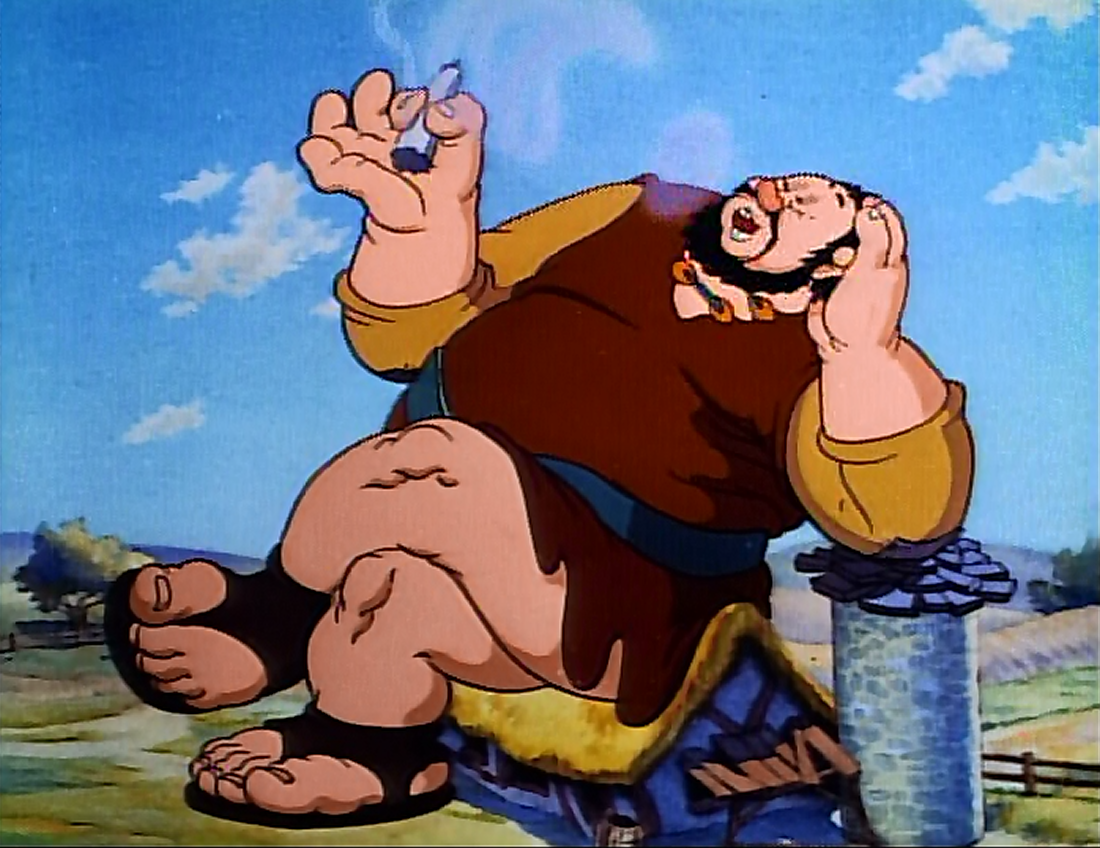
Gigantism is a condition characterized by excessive growth. In the human body, it is caused by a pituitary gland that doesn’t understand the concept of moderation. In a human society, it is caused by a social philosophy that suffers from the same conceptual ignorance. We have it, and we have it badly.
For evidence, we need look no further than the political rhetoric, from either team, which revolves almost entirely around the necessity of growth. Growth (more production and consumption) is the highest good; stagnation is the greatest sin. I will point out in passing that an economy which requires maximized consumption also excludes the possibility of what religious people call “material contentment”, both in theory and practice. But that is a digression.
Both parties, on this point of necessary economic growth, agree. It never seems to occur to them, as it would occur to the man with the over-active pituitary gland, that there might be such a thing as “bad growth”; that it is possible for the body to grow quantitatively while the life decays qualitatively.
As mentioned, both political parties agree that this indiscriminate growth is unconditionally the key to our success. Why, then, is one party appalled at the “expansive” ideology of the other? They are both wringing every last bit of growth hormone out of the metaphorical gland, yet the left arm complains when the right arm (business) becomes gigantic; and likewise, the right arm is terrified when the left appendage (government) shows the same inordinate increase.
They grow and grow, the left seeking to offset that greedy immoderation of the right wing corporations; the right seeking to free the market from the left’s government encroachments. They are both enamored of enlargement, they simply differ on which social appendage should receive the bulk: big government, or big business.
At this point, I am not going to suggest that either of these ideas is more correct than the other, mainly because it is my opinion that they are both absurd. Right now, however, there is a more interesting point to be made. Both parties actually foster both excesses. They cause what they hate in the group they oppose. The tendencies they loathe in the other party are actually present in their own basic premises, but they refuse to see them there, and so they lash out in a fit of projected self-hate.
They suffer from a vision of complementary half-truths, in which they hate the half that they don’t see.
The left has understood that excessive concentrations of wealth will destroy democracy, because political power concentrates with economic power. If it requires a million dollars to get on the ballot, the man who has a million dollars will decide who gets on the ballot; and if he gets to decide what the choices are, it is a mere flattering formality when the poor man goes to vote on which choice. This is practical plutocracy.
The right has understood the exact same truth in its complementary manifestation: concentrating political power into the hands of the government will bring economic concentration right along with it. Through taxation and government programs, big government destroys democracy and freedom just as effectively as big business, and fosters a servile dependence.
The idea that Liberal policy will leave us with a massive government, dealing “handouts” to those who haven’t earned them, is generally accepted, because it is true, and so I will leave that alone.
What is less accepted, but equally true, is the fact that Conservative policy has and will result in the exact same thing. The difference being that the undeserved handouts will not go from the wealthy to the poor, but from the poor to the wealthy. In essence, the handouts will be much, much larger.
As evidence I simply offer the following testimony from former secretary of the Treasury, William Simon:
I watched with incredulity as businessmen ran to the government in every crisis, whining for handouts or protection from the very competition that has made this system productive.” He saw “giant milk cooperatives lobbying for higher price supports; major airlines fighting deregulation to preserve their monopoly status; giant companies like Lockheed seeking federal assistance to rescue them from sheer inefficiency; bankers, like David Rockefeller, demanding government bailouts to protect them from their ill-conceived investments.
He finally observes that “such gentlemen proclaimed their devotion to free enterprise and their opposition to the arbitrary intervention into our economic life by the state. Except, of course, for their own case, which was always unique and which was justified by their immense concern for the public interest.”
As we have seen during our recent financial troubles, things have not changed much, and massive financial institutions are just as ready to accept government handouts as “those lazy good-for-nothing welfare recipients.”
Right now the United States, as a political animal, must be a curious vision to behold: a noble and unique creature, for it will always be “America the Beautiful”; but it is stumbling. It is stumbling under the weight of its two colossal arms—left and right—flailing about at war against each other. It will be the body—the common man—that gives the most blood in this battle of absurdity; whether it is by a wealth-transfusion from the working classes into the corporate bloodstream via bailout and legislative bias, or into the government bloodstream via taxation and dependence.
The body of our nation is not doomed, but it will become ever more clumsy and inept until it adopts a more reasonable ideology; an ideology that arranges itself less around material growth and more around Man, for “Man is small, and, therefore, small is beautiful.”
Previous Post

February 17, 2016
Gar Alperovitz on the Next System (Interview)
Next Post

February 18, 2016 Now that's more like it...
Browse Our Archives
Select a Category Alternative economics, worker and family empowerment, the spirituality of work, the economy of sharing Art Care for Our Common Home Catholic imagination Catholic Social Teaching Christian Friendship Christian Persecution Community building, models or forms of community, radical hospitality Corporal & Spiritual Works of Mercy Daniel Schwindt Dorothy Day, Peter Maurin, CW aims and means, spirituality Elias Crim Grace Potts Greg Guest Josh Brumfield Mark Gordon Matthew Cooper Mercy Michael Stafford Paul Grenier Peace, nonviolent resistance, conscience and conscientious objection Pope Francis Poverty, economic inequality, consumerism, unemployment, underemployment, living wage Racial Reconciliation Radical Christianity Stan Goff Uncategorized
Select a Month October 2020 September 2020 August 2020 June 2020 May 2020 April 2020 March 2020 February 2020 January 2020 December 2019 November 2019 October 2019 September 2019 June 2018 May 2018 April 2018 October 2017 August 2017 July 2017 May 2017 April 2017 March 2017 January 2017 December 2016 November 2016 October 2016 September 2016 August 2016 July 2016 June 2016 May 2016 April 2016 March 2016 February 2016 January 2016
Follow Us!
TAKE THE
Religious Wisdom Quiz
Which chapter of Genesis recounts the genealogy from Adam to Noah?
Select your answer to see how you score.
Genesis 2 Genesis 5 Genesis 10 Genesis 7
Related posts from The Dorothy Option

Arizmendi's Big House: Mondragón and the Culture of...

What is Catholic Economics? An Upcoming Conversation with...

Remembering a Black Catholic Cooperativist: Fr. Albert McKnight
TRENDING AT PATHEOS Catholic

Rejecting Doom: Christian Hope And Human Action
Christianity is a religion of hope. We are to have hope and...

It’s What Comes From Within Which Matters
One of the most difficult things for us to understand is why...

Why I Choose the Eucharist Over the Sermon
Choose the Eucharist, Not the Sermon What are we supposed to get...

5 Design Elements Found in Spiritually Rooted Homes
Putting Spirituality Into Home Decor Our homes are more than our living...

Credo: A Story of God Told with the...
About 10 years ago, I began to imagine a personal "Credo" that...

The Anatomy of Divine Revelation in Catholic Thought
The claim that God has made Himself known to human beings is...
view all Catholic blogs
Ad-Free & Subscriber Log-In Subscription Support
- About Us
- 2026 Calendar
- Videos
- Podcasts
- Library of World Religions
- Faith In Media Tracker
- Advertise With Us
- Write for Us
- Privacy Policy
- Terms of Service
- Do Not Sell My Data
- Contact Us
- Radiant Digital
- Manage Newsletter Subscriptions
- Unsubscribe From Notifications
- Sitemap
Copyright 2008-2026, Patheos. All rights reserved.
Subscription Support Ad-Free & Subscriber Log-In
Follow Patheos