
BuddhistCatholicContemplativeEvangelicalGeneral ChristianHinduJewishLatter-day SaintMuslimNew VisionsProgressive Christian
Beliefs
- Buddhist
- Catholic
- Contemplative
- Evangelical
- General Christian
- Hindu
- Jewish
- Latter-day Saint
- More Voices
- Muslim
- New Visions
- Pagan
- Progressive Christian
Topics
- Religion News
- Food and Religion
- Sports and Religion
- Religious Art
- Religious Music and Entertainment
- Religious Events
- History and Religion
- Style and Religion
- Politics and Religion
- Women in Religion
- Recreation Outdoors and Religion
- Business Finance and Religion
- Careers Workplace and Religion
- Education and Religion
- Family Parenting and Religion
- Health Fitness and Religion
- Home and Religion
- Relationships and Religion
- Technology and Religion
- Travel and Religion
Columnists
- Buddhist Columnists
- Business Finance and Religion Columnists
- Careers Workplace and Religion Columnists
- Catholic Columnists
- Contemplative Columnists
- Education and Religion Columnists
- Evangelists Columnists
- Family Parenting and Religion Columnists
- General Christian Columnists
- Health Fitness and Religion Columnists
- Hindu Columnists
- History and Religion Columnists
- Home and Religion Columnists
- Jewish Columnists
- More Voices Columnists
- Latter Day Columnists
- Muslim Columnists
- New Visions Columnists
- Nonreligious Columnists
- Pagan Columnists
- Politics and Religion Columnists
- Progressive Columnists
- Recreation Outdoors and Religion Columnists
- Relationships and Religion Columnists
- Religion News Columnists
- Religious Art Columnists
- Religious Events Columnists
- Religious Music and Entertainment Columnists
- Sports and Religion Columnists
- Style and Religion Columnists
- Technology and Religion Columnists
- Travel and Religion Columnists
- Women in Religion Columnists
Resource Library
- 2026 Calendar
- Library of World Religions
- The 100 Most Holy Places on Earth
- Patheos Answers
- Podcasts
- Videos
- Faith Leaders Database
- Anglican Episcopalian
- Bahai
- Baptist
- Buddhism
- Christianity
- Confucianism
- Eastern Orthodoxy
- Hinduism
- Holiness and Pentecostal
- ISKCON
- Islam
- Judaism
- Lutheran
- Methodist
- The Church of Jesus Christ of Latter-day Saints
- New Age
- Paganism
- Presbytarian and Reformed
- Protestantism
- Religion Behind the Scenes
- Roman Catholic
- Scientology
- Shia Islam
- Sikhism
- Sufism
- Sunni Islam
- Taoism
- Zen
- See all religions
Research Tools
 Ad-Free & Subscriber Log-In Subscription Support
Ad-Free & Subscriber Log-In Subscription Support
Follow Patheos 

- Trending:
- Forgiveness
- |
- Marriage
- |
- Consciousness
- |
- Death Penalty
- |
- Election
- |
- Halloween
 The Dorothy Option
- Home
- Catholic
- The Useless People
The Useless People
Last updated on: February 19, 2016 at 8:08 am by Daniel Schwindt
The Useless People 2016-02-19T08:08:40-05:00 Daniel Schwindt
Patheos Explore the world's faith through different perspectives on religion and spirituality! Patheos has the views of the prevalent religions and spiritualities of the world.
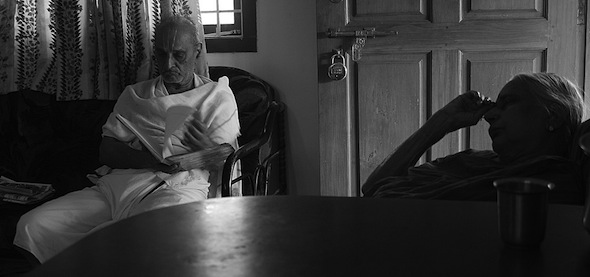
The useless people in our society are not the poor or the unemployed. Most economic theories and capitalism in particular have taken great pains to account for those who should be working, but aren’t; and such theories have, in their greatness, adjusted themselves for such variables—taking them into account. No, the useless people in our system are of three types: women, children, and the elderly. These are the people whom terms like “productivity” and “full employment” cannot account for—cannot plan for—and therefore cannot care for. And so the theories move about as if they didn’t exist.
The result, for women and children, has been a sort of “conversion” from useless to something more economically productive. This means that women have left the home and entered the workforce. This is not bad in itself, but wages within our system regulate themselves down to subsistence level fairly quickly. Long story short, this has resulted not in more women “having the option” to go to work, but rather in more women “having no other option but” to go to work. Women entering the workforce because they want to is one thing, entering the workforce because they must is something else.
The children have it a bit worse. Their “conversion” has been from a child to a consumer item, as in daycare. When the mothers were drawn into the economy, the children followed, for a decent market price. But will the price of childcare dictated by the market give us the same quality of product that mothers would? As one writer put it, “there simply isn’t enough money to replace what mothers do.” When we try, by converting children to consumer items, we will undoubtedly end up with an inferior “product”.
After daycare the children proceed directly into public school, where the structure mimics the production line. Each class (mine was the “Class of ‘04”) represents a new batch and date of manufacture, each child being conformed as much to the standard of uniformity as possible.
That is the state of the young, but the state of the old still needs comment. With the failing appreciation for wisdom, in favor of information (for it is easier to understand quantity than quality), we have also seen the failing appreciation for the elderly. This has had two effects: first, it has isolated and neutralized an extremely valuable segment of our society; and second, it has smothered the remaining potential of that segment simply by their isolation, because wisdom cannot thrive in isolation. Therefore, it is certainly not the fault of our elderly if their minds cease to grow, which is the same as to decay, when they reach the age of economic uselessness. In fact, this is the age when the human mind could be reaching its highest potential, but only if it has the opportunity.
These observations are simply three of the many that reveal the greatest poverty of our economic system: that it does not function for the sake of people, but for the sake of production—of things. If the good of the person comes into conflict with the good of production, then the good of the person is the good that is sacrificed. This is why the elderly have moved from care in the home to care in the institution, and have decayed as a group. This is why children have moved from care in the home, also called education, to care in the institution, also called public school, and have decayed as a group.
The reasons are not complicated. Loving relationship is the primary element required to maintain vigor in human beings, whether the human being is near the start of life or near the end of it. And love, being such an intimately human thing, cannot be supplied by any institution, public or private. Only a human family can provide this.
Thus is the fate of the economically useless individuals, in a social structure in which “productivity” gains the status of an end in itself rather than a means to an end, that end being mankind.
Community building, models or forms of community, radical hospitality
Previous Post

February 18, 2016
Now that's more like it...
Next Post

February 22, 2016 The Bright Side of Dark Times
Browse Our Archives
Select a Category Alternative economics, worker and family empowerment, the spirituality of work, the economy of sharing Art Care for Our Common Home Catholic imagination Catholic Social Teaching Christian Friendship Christian Persecution Community building, models or forms of community, radical hospitality Corporal & Spiritual Works of Mercy Daniel Schwindt Dorothy Day, Peter Maurin, CW aims and means, spirituality Elias Crim Grace Potts Greg Guest Josh Brumfield Mark Gordon Matthew Cooper Mercy Michael Stafford Paul Grenier Peace, nonviolent resistance, conscience and conscientious objection Pope Francis Poverty, economic inequality, consumerism, unemployment, underemployment, living wage Racial Reconciliation Radical Christianity Stan Goff Uncategorized
Select a Month October 2020 September 2020 August 2020 June 2020 May 2020 April 2020 March 2020 February 2020 January 2020 December 2019 November 2019 October 2019 September 2019 June 2018 May 2018 April 2018 October 2017 August 2017 July 2017 May 2017 April 2017 March 2017 January 2017 December 2016 November 2016 October 2016 September 2016 August 2016 July 2016 June 2016 May 2016 April 2016 March 2016 February 2016 January 2016
Follow Us!
TAKE THE
Religious Wisdom Quiz
Who saw a vision of a flying scroll with curses written on it?
Select your answer to see how you score.
Ezekiel Micah Daniel Zechariah
Related posts from The Dorothy Option

A Beautiful Memoir of Waging Peace
Shalom versus Pax: On Recovering Ivan Illich

Arizmendi's Big House: Mondragón and the Culture of...
When Dorothy Day Met Hannah Arendt
TRENDING AT PATHEOS Catholic

Rejecting Doom: Christian Hope And Human Action
Christianity is a religion of hope. We are to have hope and...

It’s What Comes From Within Which Matters
One of the most difficult things for us to understand is why...

Why I Choose the Eucharist Over the Sermon
Choose the Eucharist, Not the Sermon What are we supposed to get...

5 Design Elements Found in Spiritually Rooted Homes
Putting Spirituality Into Home Decor Our homes are more than our living...

Credo: A Story of God Told with the...
About 10 years ago, I began to imagine a personal "Credo" that...

The Anatomy of Divine Revelation in Catholic Thought
The claim that God has made Himself known to human beings is...
view all Catholic blogs
Ad-Free & Subscriber Log-In Subscription Support
- About Us
- 2026 Calendar
- Videos
- Podcasts
- Library of World Religions
- Faith In Media Tracker
- Advertise With Us
- Write for Us
- Privacy Policy
- Terms of Service
- Do Not Sell My Data
- Contact Us
- Radiant Digital
- Manage Newsletter Subscriptions
- Unsubscribe From Notifications
- Sitemap
Copyright 2008-2026, Patheos. All rights reserved.
Subscription Support Ad-Free & Subscriber Log-In
Follow Patheos