
BuddhistCatholicContemplativeEvangelicalGeneral ChristianHinduJewishLatter-day SaintMuslimNew VisionsProgressive Christian
Beliefs
- Buddhist
- Catholic
- Contemplative
- Evangelical
- General Christian
- Hindu
- Jewish
- Latter-day Saint
- More Voices
- Muslim
- New Visions
- Pagan
- Progressive Christian
Topics
- Religion News
- Food and Religion
- Sports and Religion
- Religious Art
- Religious Music and Entertainment
- Religious Events
- History and Religion
- Style and Religion
- Politics and Religion
- Women in Religion
- Recreation Outdoors and Religion
- Business Finance and Religion
- Careers Workplace and Religion
- Education and Religion
- Family Parenting and Religion
- Health Fitness and Religion
- Home and Religion
- Relationships and Religion
- Technology and Religion
- Travel and Religion
Columnists
- Buddhist Columnists
- Business Finance and Religion Columnists
- Careers Workplace and Religion Columnists
- Catholic Columnists
- Contemplative Columnists
- Education and Religion Columnists
- Evangelists Columnists
- Family Parenting and Religion Columnists
- General Christian Columnists
- Health Fitness and Religion Columnists
- Hindu Columnists
- History and Religion Columnists
- Home and Religion Columnists
- Jewish Columnists
- More Voices Columnists
- Latter Day Columnists
- Muslim Columnists
- New Visions Columnists
- Nonreligious Columnists
- Pagan Columnists
- Politics and Religion Columnists
- Progressive Columnists
- Recreation Outdoors and Religion Columnists
- Relationships and Religion Columnists
- Religion News Columnists
- Religious Art Columnists
- Religious Events Columnists
- Religious Music and Entertainment Columnists
- Sports and Religion Columnists
- Style and Religion Columnists
- Technology and Religion Columnists
- Travel and Religion Columnists
- Women in Religion Columnists
Resource Library
- 2026 Calendar
- Library of World Religions
- The 100 Most Holy Places on Earth
- Patheos Answers
- Podcasts
- Videos
- Faith Leaders Database
- Anglican Episcopalian
- Bahai
- Baptist
- Buddhism
- Christianity
- Confucianism
- Eastern Orthodoxy
- Hinduism
- Holiness and Pentecostal
- ISKCON
- Islam
- Judaism
- Lutheran
- Methodist
- The Church of Jesus Christ of Latter-day Saints
- New Age
- Paganism
- Presbytarian and Reformed
- Protestantism
- Religion Behind the Scenes
- Roman Catholic
- Scientology
- Shia Islam
- Sikhism
- Sufism
- Sunni Islam
- Taoism
- Zen
- See all religions
Research Tools
 Ad-Free & Subscriber Log-In Subscription Support
Ad-Free & Subscriber Log-In Subscription Support
Follow Patheos 

- Trending:
- Forgiveness
- |
- Marriage
- |
- Consciousness
- |
- Death Penalty
- |
- Election
- |
- Halloween
 The Dorothy Option
- Home
- Catholic
- Richard Rodriguez and the Browning of America
Richard Rodriguez and the Browning of America
Last updated on: December 12, 2019 at 11:38 am by Elias Crim
Richard Rodriguez and the Browning of America 2019-12-12T11:38:36-05:00 Elias Crim
Patheos Explore the world's faith through different perspectives on religion and spirituality! Patheos has the views of the prevalent religions and spiritualities of the world.
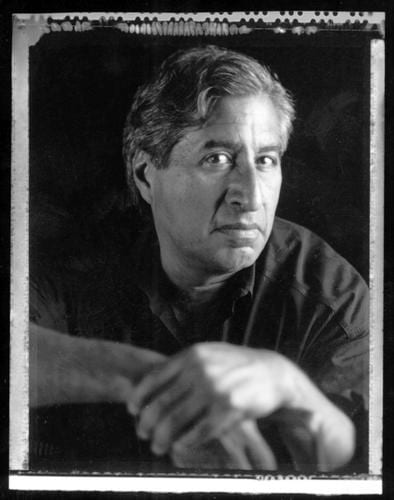
Image via Carlton College
“I write about race,” states Richard Rodriguez, author of the extraordinary Brown, the Last Discovery of America, “in hopes of undermining the notion of race in America.”
He recalls the meeting of the Indian, the African, and the European in colonial America: “Red. Black. White. The founding palette.”
But now projections are for one in every three Americans to be Hispanic by 2040. Indeed, according to the U.S. Census Bureau, we are already one of the largest Latin American nations in the world.
For this author, brown, the new color in our national palette, is “not a singular color, not a strict recipe, not an expected result, but a color produced by careless desire, even by accident; by two or several. I write of blood that is blended. I write of brown as complete freedom of substance and narrative. I extol impurity.”
North of the U.S.-Mexico border, “brown appears as the color of the future. The adjective accelerates, becomes a verb: ‘America is browning.’ South of the border, brown sinks back into time. Brown is time.”
Who is Richard Rodriguez? “My mestizo boast: as a queer Catholic Indian Spaniard at home in a temperate Chinese city [San Francisco] in a fading blond state in a post-Protestant nation ….”
Putting it another way, the voice here is that of an older Mexican-American gay Catholic man with advanced degrees in English literature and one of the most elegant writing styles available anywhere. Rodriguez, in short, is an essayist whose observations are a mix of vivid memoir and high comedy. And what he has to say has great implications for both the American Catholic church and the U.S. in general.
One of Rodriguez’s scholarly interests at one time was Puritanism and the culture around it: its exaltation of purity, its fear of inauthenticity, its “prohibition of impersonation.” However libertine some may imagine American life today, Rodriguez finds this deep Puritan streak re-emerging in diverse places and times. Notably, in today’s identitarian movement (the origins of which he knew as an Affirmative Action student in the 1970s) but also in the “sixties” (wire-rimmed glasses, unshaved legs, bra burnings, campus witch trials, the rejection of “role-playing” and the rejection of authority, tradition).
After a typical poetic musing on the way Los Angeles “took its reflection from the sea, rather than the desert, imagining itself a Riviera,” Rodriguez continues, his Catholicism coming out:
More than aridity, America fears fecundity. Perhaps as early as the 1950’s film Invasion of the Body Snatchers, nightmare images of pregnant pods and displacing aliens converge. Fecundity is death. (To manufacture life is to proliferate death.) Who’s going to pay for fecundity? The question reminds us all of scarcity, for we live at the edge of the sea. What is scarce is water. Metaphors Californians summon today to describe the fear of the South are, appropriately, fluid. Waves of people coming. Tides of immigrants. Floods of illegals. Sand, the primordial image of barrenness, uncivilization, becomes an image of unchecked fertility.
Like all very fine writers, Rodriguez is inimitable: he reminds you of nobody else. He gave the keynote talk a few months ago at Loyola University’s conference on “the Catholic Imagination” (watch it here). In his talks, Rodriguez is generally funnier than in his books, as well as more poignant at moments. In this talk he speaks directly and powerfully to his sense of himself as both gay and a Catholic, among other topics.
In an earlier work, Days of Obligation: An Argument with My Mexican Father, his chapter (“Victorian Ladies”) on the decorator culture of gay San Franciscans and their chic houses amidst the growing catastrophe of the 1980s AIDS epidemic is an affecting picture of a subculture still little known, especially by Catholics.
Where are the great Catholic writers today?, people sometimes ask. I’m coming to decide: here’s one.
Previous Post

December 2, 2019
Friendship with the Poor
Next Post

December 18, 2019 A New Catholic Voice for a New Economy
Browse Our Archives
Select a Category Alternative economics, worker and family empowerment, the spirituality of work, the economy of sharing Art Care for Our Common Home Catholic imagination Catholic Social Teaching Christian Friendship Christian Persecution Community building, models or forms of community, radical hospitality Corporal & Spiritual Works of Mercy Daniel Schwindt Dorothy Day, Peter Maurin, CW aims and means, spirituality Elias Crim Grace Potts Greg Guest Josh Brumfield Mark Gordon Matthew Cooper Mercy Michael Stafford Paul Grenier Peace, nonviolent resistance, conscience and conscientious objection Pope Francis Poverty, economic inequality, consumerism, unemployment, underemployment, living wage Racial Reconciliation Radical Christianity Stan Goff Uncategorized
Select a Month October 2020 September 2020 August 2020 June 2020 May 2020 April 2020 March 2020 February 2020 January 2020 December 2019 November 2019 October 2019 September 2019 June 2018 May 2018 April 2018 October 2017 August 2017 July 2017 May 2017 April 2017 March 2017 January 2017 December 2016 November 2016 October 2016 September 2016 August 2016 July 2016 June 2016 May 2016 April 2016 March 2016 February 2016 January 2016
Follow Us!
TAKE THE
Religious Wisdom Quiz
Which New Testament book has the most Old Testament quotes?
Select your answer to see how you score.
Matthew Romans Revelation Hebrews
Related posts from The Dorothy Option

A Beautiful Memoir of Waging Peace

Guest Post: A Letter from a TLM Catholic...


How to Understand the Great Silence We're In
TRENDING AT PATHEOS Catholic

Creation, Preservation, and Teleology in Catholic Theology
As I write this, it is very early Monday morning. Like millions...

The Parable Of The Sower And The Word...
One of Christ’s most famous parables is that of the sower who...

Rejecting Doom: Christian Hope And Human Action
Christianity is a religion of hope. We are to have hope and...

Why I Choose the Eucharist Over the Sermon
Choose the Eucharist, Not the Sermon What are we supposed to get...

5 Design Elements Found in Spiritually Rooted Homes
Putting Spirituality Into Home Decor Our homes are more than our living...

Credo: A Story of God Told with the...
About 10 years ago, I began to imagine a personal "Credo" that...
view all Catholic blogs
Ad-Free & Subscriber Log-In Subscription Support
- About Us
- 2026 Calendar
- Videos
- Podcasts
- Library of World Religions
- Faith In Media Tracker
- Advertise With Us
- Write for Us
- Privacy Policy
- Terms of Service
- Do Not Sell My Data
- Contact Us
- Radiant Digital
- Manage Newsletter Subscriptions
- Unsubscribe From Notifications
- Sitemap
Copyright 2008-2026, Patheos. All rights reserved.
Subscription Support Ad-Free & Subscriber Log-In
Follow Patheos