
BuddhistCatholicContemplativeEvangelicalGeneral ChristianHinduJewishLatter-day SaintMuslimNew VisionsProgressive Christian
Beliefs
- Buddhist
- Catholic
- Contemplative
- Evangelical
- General Christian
- Hindu
- Jewish
- Latter-day Saint
- More Voices
- Muslim
- New Visions
- Pagan
- Progressive Christian
Topics
- Religion News
- Food and Religion
- Sports and Religion
- Religious Art
- Religious Music and Entertainment
- Religious Events
- History and Religion
- Style and Religion
- Politics and Religion
- Women in Religion
- Recreation Outdoors and Religion
- Business Finance and Religion
- Careers Workplace and Religion
- Education and Religion
- Family Parenting and Religion
- Health Fitness and Religion
- Home and Religion
- Relationships and Religion
- Technology and Religion
- Travel and Religion
Columnists
- Buddhist Columnists
- Business Finance and Religion Columnists
- Careers Workplace and Religion Columnists
- Catholic Columnists
- Contemplative Columnists
- Education and Religion Columnists
- Evangelists Columnists
- Family Parenting and Religion Columnists
- General Christian Columnists
- Health Fitness and Religion Columnists
- Hindu Columnists
- History and Religion Columnists
- Home and Religion Columnists
- Jewish Columnists
- More Voices Columnists
- Latter Day Columnists
- Muslim Columnists
- New Visions Columnists
- Nonreligious Columnists
- Pagan Columnists
- Politics and Religion Columnists
- Progressive Columnists
- Recreation Outdoors and Religion Columnists
- Relationships and Religion Columnists
- Religion News Columnists
- Religious Art Columnists
- Religious Events Columnists
- Religious Music and Entertainment Columnists
- Sports and Religion Columnists
- Style and Religion Columnists
- Technology and Religion Columnists
- Travel and Religion Columnists
- Women in Religion Columnists
Resource Library
- 2026 Calendar
- Library of World Religions
- The 100 Most Holy Places on Earth
- Patheos Answers
- Podcasts
- Videos
- Faith Leaders Database
- Anglican Episcopalian
- Bahai
- Baptist
- Buddhism
- Christianity
- Confucianism
- Eastern Orthodoxy
- Hinduism
- Holiness and Pentecostal
- ISKCON
- Islam
- Judaism
- Lutheran
- Methodist
- The Church of Jesus Christ of Latter-day Saints
- New Age
- Paganism
- Presbytarian and Reformed
- Protestantism
- Religion Behind the Scenes
- Roman Catholic
- Scientology
- Shia Islam
- Sikhism
- Sufism
- Sunni Islam
- Taoism
- Zen
- See all religions
Research Tools
 Ad-Free & Subscriber Log-In Subscription Support
Ad-Free & Subscriber Log-In Subscription Support
Follow Patheos 

- Trending:
- Forgiveness
- |
- Marriage
- |
- Consciousness
- |
- Death Penalty
- |
- Election
- |
- Halloween
 The Dorothy Option
- Home
- Catholic
- Rediscovering the Golden String
Rediscovering the Golden String
Last updated on: July 6, 2016 at 1:49 pm by Elias Crim
Rediscovering the Golden String 2016-07-06T13:49:17-05:00 Elias Crim
Patheos Explore the world's faith through different perspectives on religion and spirituality! Patheos has the views of the prevalent religions and spiritualities of the world.
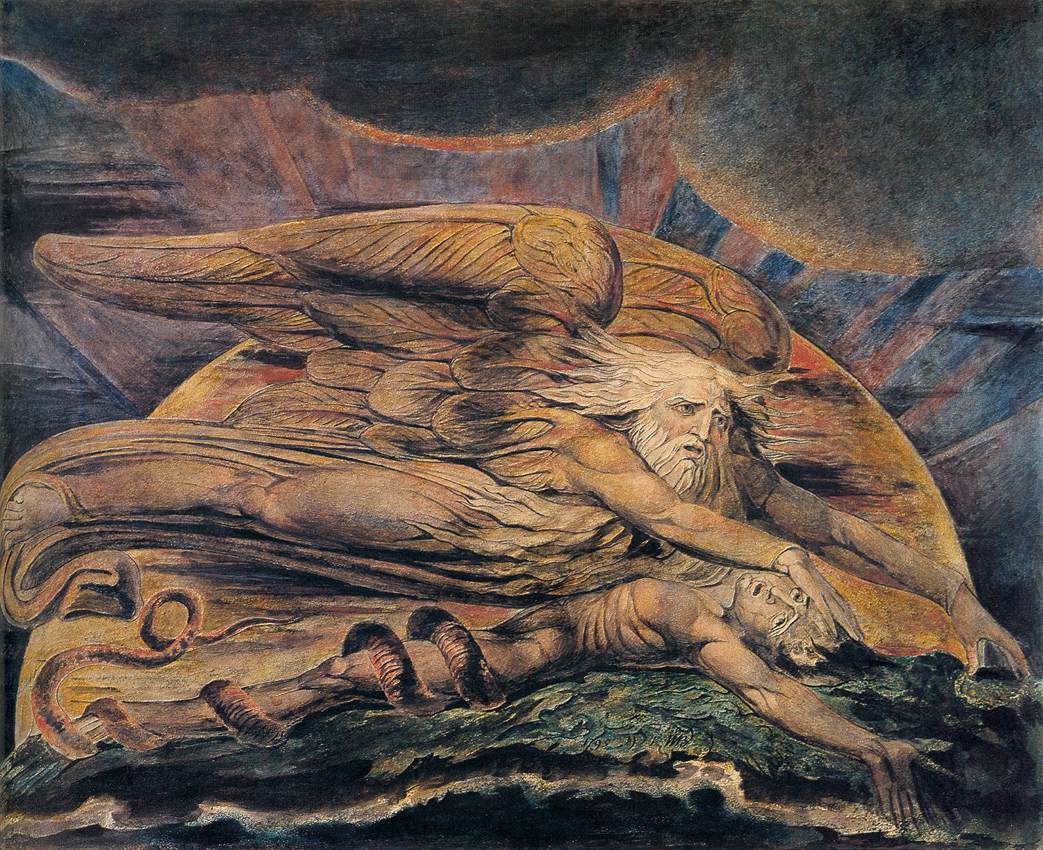
Elohim Creating Adam (William Blake)
Dear reader, be advised this will not be a standard book review. I have before me a review copy of Michael Martin’s new anthology, The Heavenly Country, An Anthology of Primary Sources, Poetry, and Critical Essays on Sophiology. I want to respond not in a scholarly fashion–I am not that much of a scholar–but in an amatory mode, i.e., that of the amateur of these ideas. And as to the relevance of this review to our mission here, I think Dorothy Day’s statements of her particular debt to Dostoyevsky (and to other Russians) give us license to proceed.
So let us speak of the way of sophia and my belief that our recognition of its power must be preceded by a kind of metanoia, a turning-around of the mind and spirit.
There was a moment in my undergraduate years at UT Austin when I first felt a sense of shock before something of great–indeed sophianic–beauty. I had chosen to live in an academic dormitory populated by a mix of hippies, radicals, Rhodes Scholars, and deep eccentrics of various flavors. Tim was an upperclassman and a classics major, a choice which struck me as agreeably impractical, especially for an aspiring Bertie Wooster such as I was at the time. Sitting around in his room, we were speaking of classical Greek and my growing interest in studying the subject. Rather than offering any prosaic endorsements, Tim simply began reciting, as mellifluously as might be imagined, Sappho’s famous Hymn to Aphrodite in the original Greek.
As the syllables poured over my ears, I sensed a new mental landscape opening up, one which has only grown in expanse and delight over the years. I felt like the rustic mountain dweller on his first visit to the city of Florence as described in Dante’s wonderful simile:
And as a mountain man stands overawed
And stares in speechless wonder all about
when, rough and rude, he comes to the big town…
(Purgatorio XXVI, 67-69, transl. Esolen)
As I proceeded in my studies, despite my growing sense of how the poetic imagination from Homer to Yeats was a certain way of knowing, I was not aware that underlying this tradition–which included the Wisdom Books, Christian Kabbalah, Thomas Traherne, William Blake, and much else–there was a submerged reality (as Martin entitled his earlier collection of essays), a hidden river of poetic metaphysics with numerous and luminous origins. These authors were up to something much more important than simply sharing “influences,” as the literary critics like to notice. The pursuit of a holy wisdom, even if sometimes issuing in somewhat fantastical and heterodox visions, is innately reconstructive of the world, bringing religion, science and art into fruitful relation, as Martin’s work is brilliantly demonstrating.
The voices in the poetry section of this book include St. Hildegard of Bingen, Dante, Herrick, Vaughan, Wordsworth, Holderlin, Novalis, MacDonald, Hopkins, Solovyov, Yeats, Claudel, Rilke, Blok, David Jones, and Thomas Merton. Reading them again, I note that Martin’s final essay states his belief that “poetry, the utterance of the poetic, is impervious to technological colonization.” I believe this is so and I rejoice that sophiology has now been so clearly named and celebrated. In gratitude, I could only think of the lines from Blake’s “Jerusalem”:
I give you the end of a golden string
Only wind it into a ball
It will lead you in at Heaven’s gate
Built in Jerusalem’s wall.
Previous Post

July 4, 2016
Turning America Around
Next Post

August 1, 2016 Praying for Miracles
Browse Our Archives
Select a Category Alternative economics, worker and family empowerment, the spirituality of work, the economy of sharing Art Care for Our Common Home Catholic imagination Catholic Social Teaching Christian Friendship Christian Persecution Community building, models or forms of community, radical hospitality Corporal & Spiritual Works of Mercy Daniel Schwindt Dorothy Day, Peter Maurin, CW aims and means, spirituality Elias Crim Grace Potts Greg Guest Josh Brumfield Mark Gordon Matthew Cooper Mercy Michael Stafford Paul Grenier Peace, nonviolent resistance, conscience and conscientious objection Pope Francis Poverty, economic inequality, consumerism, unemployment, underemployment, living wage Racial Reconciliation Radical Christianity Stan Goff Uncategorized
Select a Month October 2020 September 2020 August 2020 June 2020 May 2020 April 2020 March 2020 February 2020 January 2020 December 2019 November 2019 October 2019 September 2019 June 2018 May 2018 April 2018 October 2017 August 2017 July 2017 May 2017 April 2017 March 2017 January 2017 December 2016 November 2016 October 2016 September 2016 August 2016 July 2016 June 2016 May 2016 April 2016 March 2016 February 2016 January 2016
Follow Us!
TAKE THE
Religious Wisdom Quiz
What does "Sabbath" mean in Hebrew?
Select your answer to see how you score.
Holy Day Offering Rest Worship
Related posts from The Dorothy Option

A Catholic Mom's Response to Fr. Meeks

A Beautiful Memoir of Waging Peace

Guest Post: A Letter from a TLM Catholic...

TRENDING AT PATHEOS Catholic

Rejecting Doom: Christian Hope And Human Action
Christianity is a religion of hope. We are to have hope and...

It’s What Comes From Within Which Matters
One of the most difficult things for us to understand is why...

Why I Choose the Eucharist Over the Sermon
Choose the Eucharist, Not the Sermon What are we supposed to get...

5 Design Elements Found in Spiritually Rooted Homes
Putting Spirituality Into Home Decor Our homes are more than our living...

Credo: A Story of God Told with the...
About 10 years ago, I began to imagine a personal "Credo" that...

The Anatomy of Divine Revelation in Catholic Thought
The claim that God has made Himself known to human beings is...
view all Catholic blogs
Ad-Free & Subscriber Log-In Subscription Support
- About Us
- 2026 Calendar
- Videos
- Podcasts
- Library of World Religions
- Faith In Media Tracker
- Advertise With Us
- Write for Us
- Privacy Policy
- Terms of Service
- Do Not Sell My Data
- Contact Us
- Radiant Digital
- Manage Newsletter Subscriptions
- Unsubscribe From Notifications
- Sitemap
Copyright 2008-2026, Patheos. All rights reserved.
Subscription Support Ad-Free & Subscriber Log-In
Follow Patheos