
BuddhistCatholicContemplativeEvangelicalGeneral ChristianHinduJewishLatter-day SaintMuslimNew VisionsProgressive Christian
Beliefs
- Buddhist
- Catholic
- Contemplative
- Evangelical
- General Christian
- Hindu
- Jewish
- Latter-day Saint
- More Voices
- Muslim
- New Visions
- Pagan
- Progressive Christian
Topics
- Religion News
- Food and Religion
- Sports and Religion
- Religious Art
- Religious Music and Entertainment
- Religious Events
- History and Religion
- Style and Religion
- Politics and Religion
- Women in Religion
- Recreation Outdoors and Religion
- Business Finance and Religion
- Careers Workplace and Religion
- Education and Religion
- Family Parenting and Religion
- Health Fitness and Religion
- Home and Religion
- Relationships and Religion
- Technology and Religion
- Travel and Religion
Columnists
- Buddhist Columnists
- Business Finance and Religion Columnists
- Careers Workplace and Religion Columnists
- Catholic Columnists
- Contemplative Columnists
- Education and Religion Columnists
- Evangelists Columnists
- Family Parenting and Religion Columnists
- General Christian Columnists
- Health Fitness and Religion Columnists
- Hindu Columnists
- History and Religion Columnists
- Home and Religion Columnists
- Jewish Columnists
- More Voices Columnists
- Latter Day Columnists
- Muslim Columnists
- New Visions Columnists
- Nonreligious Columnists
- Pagan Columnists
- Politics and Religion Columnists
- Progressive Columnists
- Recreation Outdoors and Religion Columnists
- Relationships and Religion Columnists
- Religion News Columnists
- Religious Art Columnists
- Religious Events Columnists
- Religious Music and Entertainment Columnists
- Sports and Religion Columnists
- Style and Religion Columnists
- Technology and Religion Columnists
- Travel and Religion Columnists
- Women in Religion Columnists
Resource Library
- 2026 Calendar
- Library of World Religions
- The 100 Most Holy Places on Earth
- Patheos Answers
- Podcasts
- Videos
- Faith Leaders Database
- Anglican Episcopalian
- Bahai
- Baptist
- Buddhism
- Christianity
- Confucianism
- Eastern Orthodoxy
- Hinduism
- Holiness and Pentecostal
- ISKCON
- Islam
- Judaism
- Lutheran
- Methodist
- The Church of Jesus Christ of Latter-day Saints
- New Age
- Paganism
- Presbytarian and Reformed
- Protestantism
- Religion Behind the Scenes
- Roman Catholic
- Scientology
- Shia Islam
- Sikhism
- Sufism
- Sunni Islam
- Taoism
- Zen
- See all religions
Research Tools
 Ad-Free & Subscriber Log-In Subscription Support
Ad-Free & Subscriber Log-In Subscription Support
Follow Patheos 

- Trending:
- Forgiveness
- |
- Marriage
- |
- Consciousness
- |
- Death Penalty
- |
- Election
- |
- Halloween
 The Dorothy Option
- Home
- Catholic
- Insanity and Alienation in America: Revisited
Insanity and Alienation in America: Revisited
Last updated on: March 14, 2016 at 5:00 am by Daniel Schwindt
Insanity and Alienation in America: Revisited 2016-03-13T11:17:25-05:00 Daniel Schwindt
Patheos Explore the world's faith through different perspectives on religion and spirituality! Patheos has the views of the prevalent religions and spiritualities of the world.
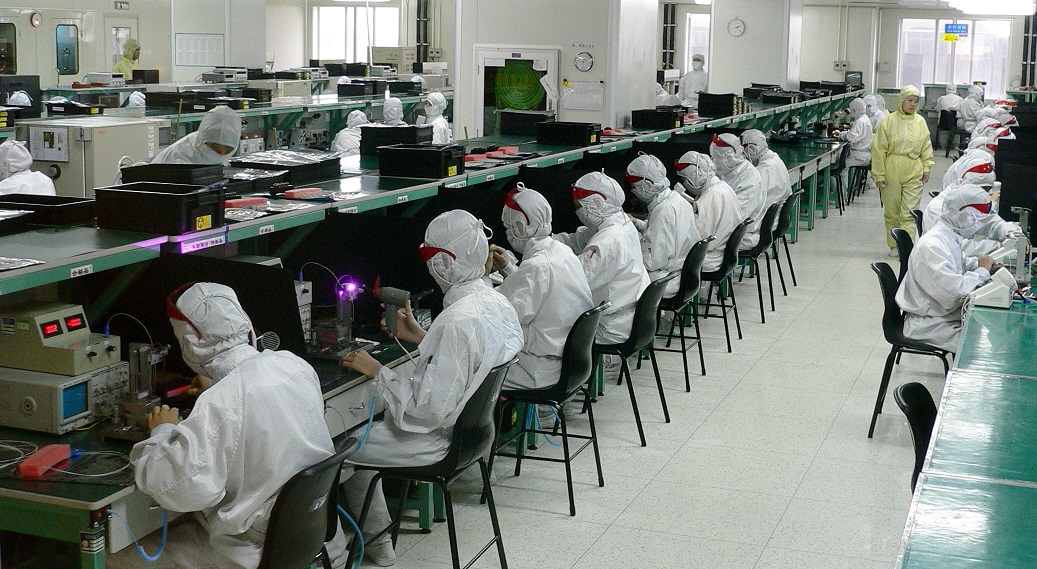
Source: Wikimedia Commons
On February 25th there was another “mass shooting,” this time in Hesston, Kansas, just down the road from where I live. In this light, I was reminded of some things I wrote after the school shooting in Newtown, Connecticut, and I thought it a good time to revisit the theme of insanity and alienation in our society:
Insanity is understandable. I can, in a sense, walk a certain distance in the shoes of the phobic who fears open spaces…All that I know of the tragedy in Connecticut is that it is entirely incomprehensible. We could call this insanity, but I think we are dealing with something of a different order entirely. Anyone brave enough to make the terrifying attempt at identification with this man will return from the exercise with a brand new horror: this is not some new extreme of evil, this is something altogether alien. There are no marks of humanity on it.
We cannot mourn, shrug our shoulders, and move on. At some point, we have to ask the uncomfortable questions: How could this happen? Why are we the world leader in this particular brand of horror? When we seek answers to such questions we are reaching into the alien darkness, because again the act was not a human one…It is nameless and faceless…it deteriorates our humanity. It is like a process of reverse refinement: it disintegrates the diamond and saves the rough. It acts as a solvent to the human soul.
Because I have spent some time previously here at The Dorothy Option reflecting on the nature of work, and because this shooting took place in a “production environment,” I was reminded in particular of the demonic nature of this kind of work. And when it is a question of demonic work, how could we possibly be surprised when we conjure up demons?
Anyone who has labored on an assembly line for very long knows the numbing monotony of acting as a cog in a machine. Less than a cog, really, because the cog is a part of a whole, while the machine attendant is merely the watcher of the cogs–he is alienated not only from the work, but from the machine doing the work. He is as far removed from the process of creation as possible without ceasing to exist.
Pope Pius XI observed that ‘from the factory dead matter goes out improved, whereas men there are corrupted and degraded.’ Work was ordained for the good of man, but our technique (as men like Jacques Ellul came to call it) has turned the concept of work upside-down. We actively try to minimize the ‘human factor.’ We make it merely mechanical, which makes man a perversion of the creative being that he is. Not everyone works in a factory, of course, but the trend of mechanization is characteristic. Is it not odd that many of us must interrupt our daily labor in order to stretch so that the repetition does not injure us?
Just this morning I was re-reading Thomas Merton’s Raids on the Unspeakable, and chose, by chance, one of his eschatological essays. Since these dark themes were already in the back of my mind, my interpretation was naturally biased, but it seemed that he was speaking directly to the problems I was grappling with:
The time of the end is the time of demons who occupy the heart…so that man himself finds no room for himself in himself. He finds no space to rest in his own heart, not because it is full, but because it is void…In the time of the end there is no longer room for the desire to go on living. The time of the end is the time when men call upon the mountains to fall upon them, because they wish they did not exist.
Why? Because they are part of a proliferation of life that is not fully alive, it is programmed for death. A life that has not been chosen, and can hardly be accepted, has no more room for hope. Yet it must pretend to go on hoping. It is haunted by the demon of emptiness.
And then he closes with a note on pessimism:
Is this pessimism? Is this the unforgivable sin of admitting what everybody really feels? Is it pessimism to diagnose cancer as cancer? Or should one simply go on pretending that everything is getting better every day, because the time of the end is also–for some at any rate–the time of great prosperity? “The Kings of the earth have joined in her idolatry and the traders of the earth have grown rich from her excessive luxury” (Revelations 18:3).
Sometimes I wonder if pessimism–a healthy, honest, invigorating pessimism–is not the only thing that can save a man in the modern world. I mean the kind of pessimism that allows a person to admit to himself that his work is a kind of living hell, that he is lonely, that he is losing his mind, that something isn’t right and something ought to change. Even if nothing changes, at least he remains alive and aware of his reality, and insofar as he remains conscious he retains his humanity, and so long as he retains some shred of humanity, the demons cannot occupy the heart completely.
But if we keep telling ourselves that everything is fine–or is going to be fine if “our guy” wins the election, which is a form of “hope” I have learned to interpret as just another method of avoiding the problem–then we have chosen surrender. And then, eventually, the disintegration of society at large is bound to complete its work in the occasional, unfortunate individual, leaving them utterly thwarted, insecure, confused, and estranged—but of course functional, always functional–on the surface. Like the imagery of Luke 11:25, the inner chamber is “swept clean and put in order,” and then left as such—as a tidy inner void. And the human heart, like nature, abhors a vacuum. If we neglect to fill it with human goodness, it will be filled with something else, not by chance but as a matter of necessity.
Previous Post

March 8, 2016
Life, Death, and Community in Lockeland Springs
Next Post
March 16, 2016 The Next Church and How to Get There
Browse Our Archives
Select a Category Alternative economics, worker and family empowerment, the spirituality of work, the economy of sharing Art Care for Our Common Home Catholic imagination Catholic Social Teaching Christian Friendship Christian Persecution Community building, models or forms of community, radical hospitality Corporal & Spiritual Works of Mercy Daniel Schwindt Dorothy Day, Peter Maurin, CW aims and means, spirituality Elias Crim Grace Potts Greg Guest Josh Brumfield Mark Gordon Matthew Cooper Mercy Michael Stafford Paul Grenier Peace, nonviolent resistance, conscience and conscientious objection Pope Francis Poverty, economic inequality, consumerism, unemployment, underemployment, living wage Racial Reconciliation Radical Christianity Stan Goff Uncategorized
Select a Month October 2020 September 2020 August 2020 June 2020 May 2020 April 2020 March 2020 February 2020 January 2020 December 2019 November 2019 October 2019 September 2019 June 2018 May 2018 April 2018 October 2017 August 2017 July 2017 May 2017 April 2017 March 2017 January 2017 December 2016 November 2016 October 2016 September 2016 August 2016 July 2016 June 2016 May 2016 April 2016 March 2016 February 2016 January 2016
Follow Us!
TAKE THE
Religious Wisdom Quiz
What famous basilica is in Vatican City?
Select your answer to see how you score.
St. Paul's St. Basil's Notre Dame St. Peter's Basilica
Related posts from The Dorothy Option

Arizmendi's Big House: Mondragón and the Culture of...

What is Catholic Economics? An Upcoming Conversation with...
Remembering a Black Catholic Cooperativist: Fr. Albert McKnight
TRENDING AT PATHEOS Catholic

Rejecting Doom: Christian Hope And Human Action
Christianity is a religion of hope. We are to have hope and...

It’s What Comes From Within Which Matters
One of the most difficult things for us to understand is why...

Why I Choose the Eucharist Over the Sermon
Choose the Eucharist, Not the Sermon What are we supposed to get...

5 Design Elements Found in Spiritually Rooted Homes
Putting Spirituality Into Home Decor Our homes are more than our living...

Credo: A Story of God Told with the...
About 10 years ago, I began to imagine a personal "Credo" that...

The Anatomy of Divine Revelation in Catholic Thought
The claim that God has made Himself known to human beings is...
view all Catholic blogs
Ad-Free & Subscriber Log-In Subscription Support
- About Us
- 2026 Calendar
- Videos
- Podcasts
- Library of World Religions
- Faith In Media Tracker
- Advertise With Us
- Write for Us
- Privacy Policy
- Terms of Service
- Do Not Sell My Data
- Contact Us
- Radiant Digital
- Manage Newsletter Subscriptions
- Unsubscribe From Notifications
- Sitemap
Copyright 2008-2026, Patheos. All rights reserved.
Subscription Support Ad-Free & Subscriber Log-In
Follow Patheos