
BuddhistCatholicContemplativeEvangelicalGeneral ChristianHinduJewishLatter-day SaintMuslimNew VisionsProgressive Christian
Beliefs
- Buddhist
- Catholic
- Contemplative
- Evangelical
- General Christian
- Hindu
- Jewish
- Latter-day Saint
- More Voices
- Muslim
- New Visions
- Pagan
- Progressive Christian
Topics
- Religion News
- Food and Religion
- Sports and Religion
- Religious Art
- Religious Music and Entertainment
- Religious Events
- History and Religion
- Style and Religion
- Politics and Religion
- Women in Religion
- Recreation Outdoors and Religion
- Business Finance and Religion
- Careers Workplace and Religion
- Education and Religion
- Family Parenting and Religion
- Health Fitness and Religion
- Home and Religion
- Relationships and Religion
- Technology and Religion
- Travel and Religion
Columnists
- Buddhist Columnists
- Business Finance and Religion Columnists
- Careers Workplace and Religion Columnists
- Catholic Columnists
- Contemplative Columnists
- Education and Religion Columnists
- Evangelists Columnists
- Family Parenting and Religion Columnists
- General Christian Columnists
- Health Fitness and Religion Columnists
- Hindu Columnists
- History and Religion Columnists
- Home and Religion Columnists
- Jewish Columnists
- More Voices Columnists
- Latter Day Columnists
- Muslim Columnists
- New Visions Columnists
- Nonreligious Columnists
- Pagan Columnists
- Politics and Religion Columnists
- Progressive Columnists
- Recreation Outdoors and Religion Columnists
- Relationships and Religion Columnists
- Religion News Columnists
- Religious Art Columnists
- Religious Events Columnists
- Religious Music and Entertainment Columnists
- Sports and Religion Columnists
- Style and Religion Columnists
- Technology and Religion Columnists
- Travel and Religion Columnists
- Women in Religion Columnists
Resource Library
- 2026 Calendar
- Library of World Religions
- The 100 Most Holy Places on Earth
- Patheos Answers
- Podcasts
- Videos
- Faith Leaders Database
- Anglican Episcopalian
- Bahai
- Baptist
- Buddhism
- Christianity
- Confucianism
- Eastern Orthodoxy
- Hinduism
- Holiness and Pentecostal
- ISKCON
- Islam
- Judaism
- Lutheran
- Methodist
- The Church of Jesus Christ of Latter-day Saints
- New Age
- Paganism
- Presbytarian and Reformed
- Protestantism
- Religion Behind the Scenes
- Roman Catholic
- Scientology
- Shia Islam
- Sikhism
- Sufism
- Sunni Islam
- Taoism
- Zen
- See all religions
Research Tools
 Ad-Free & Subscriber Log-In Subscription Support
Ad-Free & Subscriber Log-In Subscription Support
Follow Patheos 

- Trending:
- Forgiveness
- |
- Marriage
- |
- Consciousness
- |
- Death Penalty
- |
- Election
- |
- Halloween
 The Dorothy Option
- Home
- Catholic
- Encountering “the Other” on the Road
Encountering “the Other” on the Road
Last updated on: January 25, 2016 at 4:56 pm by Mike Stafford
Encountering “the Other” on the Road 2016-01-25T16:56:03-05:00 Mike Stafford
Patheos Explore the world's faith through different perspectives on religion and spirituality! Patheos has the views of the prevalent religions and spiritualities of the world.
Strange as it may seem, my own journey towards the Dorothy Option began with Cormac McCarthy’s dystopian novel The Road. Certainly, neither the author nor the work are known for their orthodox Christian sensibilities, and yet, reading the book led me to reflect more deeply on three of the most critical aspects of life for people of faith today- our own complicity in evil, the struggle to live a moral life- to, in the words of the book, “carry the fire”- in the midst of the cultural wreckage of modernity, and the way in which we encounter each other on this common journey.
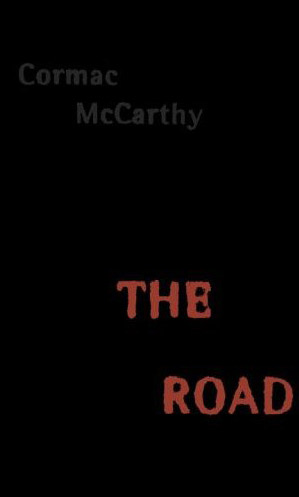
These questions are, for me at least, at the very heart of the Dorothy Option. And their answers are what distinguishes the Dorothy Option from the other “Options,” particularly Rod Dreher’s Benedict Option, currently on offer for orthodox Christians.
Fundamentally, Dreher’s Benedict Option suffers from three critical weaknesses.
First, he and his coterie seem to be oblivious to their own complicity in evil, or of the extent to which they themselves have been compromised through accommodations with the structures of sin within our society, and the underlying ideology and value-system that drives it. In particular, they appear to be blind to the link between our economic system and the social phenomenon they deplore. So too, they fail to recognize the extent to which their own participation in our economic system, particularly as consumers, and the benefits that they derive from, for a lack of a better term, the American imperium, implicates them in acts of dehumanizing violence against others. Instead, evil is pushed off on to the proverbial “other”- which in Dreher’s case usually means homosexuals, Black Lives Matter protesters, Muslims, the cultural Marxists of the liberal professoriate, and Cardinal Kasper. Regardless of the villain, the problem is always the same- “they,” presented as a demonically possessed undifferentiated mass, are an imminent threat bent on destroying our culture, our faith, and/or persecuting orthodox Christians. If this sounds like classic scapegoating in the Girardian sense, it’s because it is.
Second, the culture in need of saving, and the believers in need of protection, are unmistakably white and bourgeois. In this regard, it is important to note that the trigger for the Benedict Option is conservative defeat in the so-called Culture War, not the themes developed by Pope Francis during his papacy- economic and ecological violence, exclusion, and marginalization. Make no mistake, Obergefell and the extension of civil rights and protections to the gay community are behind this particular exodus, not Goldman-Sachs, the financial crash, or a broader concern with what Francis has correctly called “an economy that kills.” As a result, in practice the Benedict Option appears to be little more than certain elements of the American religious right in full retreat, resentfully withdrawing and disengaging from a political environment they can no longer dominate in what has become a more pluralistic society.
Last, but by no means least, there is also a heavy element of elitism in it- it is an Option open only, as a practical matter, to those with means that confer the power to make the sort of life choices that are, apparently, necessary for the Benedict Option to work. Put another way, a single mother working multiple low or minimum wage jobs to feed, clothe, and house her family probably has neither the time nor the means for Christian homeschooling.
In the end, the Benedict Option offers an exclusivist vision, available only to the few, premised on its adherents’ sense of their own moral superiority.
For my own part, when I was a child, I thought and spoke like a child. I believed the Culture of Death was something new and intrinsically different, a break from all that came before in our society, a cancerous mutation and, more importantly, that it was something alien to me in which I did not participate. I have come to understand, however, that ours is a Culture of Death, that this was so long before Roe v. Wade, and that the phenomenon we see today have very deep roots in our history. Moreover, I have come to recognize the depths of my own complicity in it, the extent to which I am personally implicated in, and benefit from, the structures of sin we have erected. This realization, however, is liberating- mentally, emotionally, and spiritually, it permits us to shake off the dust of sin, so to speak. And it is the key to a different sort of encounter with “the other.” Having become aware of my own sin, I no longer treat with “the other” from a position of lofty moral superiority- I recognize that we are both, so to speak, knee deep in the mire, albeit perhaps in different ways. This opens the door to real mercy, empathy, and fraternity, rather than condescension- and towards encountering “the other” as Christ encounters us.
Of course, “encounter” has emerged as one of the dominant themes in Pope Francis’s pontificate, and rightly so. At its heart, Francis’s vision of encounter is about meeting “the other” as a brother and as an equal, a fellow being made in God’s image vested with dignity and worthy of respect. And this brings me back to Cormac McCarthy, and The Road.
As I wrote in a prior article for ABC Religion & Ethics:
The book is about love in the midst of crushing adversity, but it can also be viewed as a kind of Christian allegory – and fittingly so, because religious themes and metaphors permeate the text.
Indeed, the references to “carrying the fire” call to mind the imagery of Pentecost, as well as the story of Prometheus and the dawn of human civilization.
At a fundamental level, The Road speaks to the dilemma faced by [all] people of good will, those of us trying to carry the fire, in modernity.
In a moral and cultural sense, we live in a blasted, darkening landscape that is growing progressively colder, where it is hard to find real sustenance – food for the soul…
Ours is a world seemingly devoid of the sacred, in which human dignity and solidarity are under constant assault. And as the culture becomes coarser, we seem to grow ever more brutalized and cruel…
[O]ur civilization is marked by increasing hopelessness, anomie and alienation. We live in a dark world where the light of the Son of God is obscured.
And yet, it is easy for a focus on keeping the fire lit to morph into the very error Matthew 5:15 warns of- that of putting the light under a basket, in this instance ostensibly for its own safekeeping. This is the error of the Benedict Option as it has been formulated by Dreher- of the elect, the righteous (this is how they see themselves), withdrawing like the Elves from Middle Earth to some sort of orthodox Christian Valinor. Instead, the fire we carry within us, the flame of Pentecost, is meant to be a beacon for all. And that beacon cannot function if we turn inward and away from the world, or retreat behind walls meant to exclude what is without, as much as to protect what is within.
But in our present darkness, how is this light to shine? Politics, and culture wars, are not the primary vehicles for making the Kingdom manifest in the world; Jesus certainly eschewed them. Moreover, as individuals “we have limited [political] power [as the world understands the term] to influence the direction of this world.”
The full might of mass culture is turned against us, negating the good, mocking the truth, demeaning the quest for knowledge and promoting a set of values and norms at odds with authentic human development. It erects false idols and summons us to worship. And to those it calls, it is as seductive as the Sirens.
Thus the fundamental question- how to live a moral life, and extend an invitation to others to do the same, in the midst of a fallen, and falling, world?
Under such circumstances, stepping out onto the road is an act of bravery, of real moral courage. But we are compelled to do it because the fire cannot be kept alight in isolation. It is a social thing. It requires community. And it must be lived.
So we have to venture out and find each other in this world. In a way, all people of good will are on the road, trying to find “the good guys” and struggling to keep the fire burning.
However, like the characters in McCarthy’s novel, we face a terrible dilemma. It is impossible to live in the modern world, to walk the road today, and not be morally compromised in some way.
It is difficult to keep our bearings, and to retain the ability to distinguish good from evil, right from wrong. In such circumstances, how can we live ethical lives and keep the fire alight? How can we be certain that we are still numbered among “the good guys” in the world?
The answer begins, I believe, with human dignity – the recognition of the sacredness, the intrinsic value, that each individual possesses. Consequently, the sacred isn’t hidden from us: we encounter the sacred in the concrete lives of our neighbours.
So, what shape [should] our lives take as we travel on this road?
We must seize every opportunity to affirm our common humanity and demonstrate our love of our brothers and sisters.
We must expose and denounce inhumanity wherever we find them. Accordingly, we must be generous and compassionate, ever mindful of the weak, the poor and the marginalized.
We must cultivate that most angelic of emotions – empathy – so that, like Lear on the barren heath, we are sensible to the sufferings of others and expose [ourselves] “to feel what wretches feel.”
We must refuse to be complicit in the debasement or degradation of others, and take no pleasure in such spectacles.
We must be good stewards of creation, and tend life’s common spaces. And we must learn to see through the images, the illusions, to the substance of things.
To this list, I would also add the need to seek reconciliation rather than vengeance at every opportunity, especially when confronted with violence (in whatever form), and the requirement to render effective material and spiritual aid to all those in distress. If Francis is correct that the Church is akin to a field hospital, then we must number among its lay orderlies, helping to bind up the wounds.
This, to me, is the Dorothy Option- a life lived with a heart on fire, filled with the love of the Lord, based on the Corporal and Spiritual Works of Mercy, which, in this context, means encountering “the other” as a brother, not as a scapegoat or a dehumanized object of fear; concern for, and service towards the most marginalized; and nonviolence. This is The Way in modernity; this is living Matthew 25.
If we do these things, then the truth will never be shorn of its referents in the world…
And the fire will warm our souls on this journey – reminding us that life has a purpose and meaning that transcends mere survival.
I’ll see you on the road.
Corporal & Spiritual Works of Mercy
Peace, nonviolent resistance, conscience and conscientious objection
Previous Post
January 23, 2016
A Better Paradigm for Class Analysis
Next Post

January 26, 2016 Hospitality, Smallness and the Butterfly Effect
Browse Our Archives
Select a Category Alternative economics, worker and family empowerment, the spirituality of work, the economy of sharing Art Care for Our Common Home Catholic imagination Catholic Social Teaching Christian Friendship Christian Persecution Community building, models or forms of community, radical hospitality Corporal & Spiritual Works of Mercy Daniel Schwindt Dorothy Day, Peter Maurin, CW aims and means, spirituality Elias Crim Grace Potts Greg Guest Josh Brumfield Mark Gordon Matthew Cooper Mercy Michael Stafford Paul Grenier Peace, nonviolent resistance, conscience and conscientious objection Pope Francis Poverty, economic inequality, consumerism, unemployment, underemployment, living wage Racial Reconciliation Radical Christianity Stan Goff Uncategorized
Select a Month October 2020 September 2020 August 2020 June 2020 May 2020 April 2020 March 2020 February 2020 January 2020 December 2019 November 2019 October 2019 September 2019 June 2018 May 2018 April 2018 October 2017 August 2017 July 2017 May 2017 April 2017 March 2017 January 2017 December 2016 November 2016 October 2016 September 2016 August 2016 July 2016 June 2016 May 2016 April 2016 March 2016 February 2016 January 2016
Follow Us!
TAKE THE
Religious Wisdom Quiz
I destroyed the world but saved eight people and many animals in a floating vessel. What am I?
Select your answer to see how you score.
A great storm God's judgment The flood The deluge
Related posts from The Dorothy Option

A Catholic Mom's Response to Fr. Meeks

A Beautiful Memoir of Waging Peace

Guest Post: A Letter from a TLM Catholic...

TRENDING AT PATHEOS Catholic

Rejecting Doom: Christian Hope And Human Action
Christianity is a religion of hope. We are to have hope and...

It’s What Comes From Within Which Matters
One of the most difficult things for us to understand is why...

Why I Choose the Eucharist Over the Sermon
Choose the Eucharist, Not the Sermon What are we supposed to get...

5 Design Elements Found in Spiritually Rooted Homes
Putting Spirituality Into Home Decor Our homes are more than our living...

Credo: A Story of God Told with the...
About 10 years ago, I began to imagine a personal "Credo" that...

The Anatomy of Divine Revelation in Catholic Thought
The claim that God has made Himself known to human beings is...
view all Catholic blogs
Ad-Free & Subscriber Log-In Subscription Support
- About Us
- 2026 Calendar
- Videos
- Podcasts
- Library of World Religions
- Faith In Media Tracker
- Advertise With Us
- Write for Us
- Privacy Policy
- Terms of Service
- Do Not Sell My Data
- Contact Us
- Radiant Digital
- Manage Newsletter Subscriptions
- Unsubscribe From Notifications
- Sitemap
Copyright 2008-2026, Patheos. All rights reserved.
Subscription Support Ad-Free & Subscriber Log-In
Follow Patheos