
BuddhistCatholicContemplativeEvangelicalGeneral ChristianHinduJewishLatter-day SaintMuslimNew VisionsProgressive Christian
Beliefs
- Buddhist
- Catholic
- Contemplative
- Evangelical
- General Christian
- Hindu
- Jewish
- Latter-day Saint
- More Voices
- Muslim
- New Visions
- Pagan
- Progressive Christian
Topics
- Religion News
- Food and Religion
- Sports and Religion
- Religious Art
- Religious Music and Entertainment
- Religious Events
- History and Religion
- Style and Religion
- Politics and Religion
- Women in Religion
- Recreation Outdoors and Religion
- Business Finance and Religion
- Careers Workplace and Religion
- Education and Religion
- Family Parenting and Religion
- Health Fitness and Religion
- Home and Religion
- Relationships and Religion
- Technology and Religion
- Travel and Religion
Columnists
- Buddhist Columnists
- Business Finance and Religion Columnists
- Careers Workplace and Religion Columnists
- Catholic Columnists
- Contemplative Columnists
- Education and Religion Columnists
- Evangelists Columnists
- Family Parenting and Religion Columnists
- General Christian Columnists
- Health Fitness and Religion Columnists
- Hindu Columnists
- History and Religion Columnists
- Home and Religion Columnists
- Jewish Columnists
- More Voices Columnists
- Latter Day Columnists
- Muslim Columnists
- New Visions Columnists
- Nonreligious Columnists
- Pagan Columnists
- Politics and Religion Columnists
- Progressive Columnists
- Recreation Outdoors and Religion Columnists
- Relationships and Religion Columnists
- Religion News Columnists
- Religious Art Columnists
- Religious Events Columnists
- Religious Music and Entertainment Columnists
- Sports and Religion Columnists
- Style and Religion Columnists
- Technology and Religion Columnists
- Travel and Religion Columnists
- Women in Religion Columnists
Resource Library
- 2026 Calendar
- Library of World Religions
- The 100 Most Holy Places on Earth
- Patheos Answers
- Podcasts
- Videos
- Faith Leaders Database
- Anglican Episcopalian
- Bahai
- Baptist
- Buddhism
- Christianity
- Confucianism
- Eastern Orthodoxy
- Hinduism
- Holiness and Pentecostal
- ISKCON
- Islam
- Judaism
- Lutheran
- Methodist
- The Church of Jesus Christ of Latter-day Saints
- New Age
- Paganism
- Presbytarian and Reformed
- Protestantism
- Religion Behind the Scenes
- Roman Catholic
- Scientology
- Shia Islam
- Sikhism
- Sufism
- Sunni Islam
- Taoism
- Zen
- See all religions
Research Tools
 Ad-Free & Subscriber Log-In Subscription Support
Ad-Free & Subscriber Log-In Subscription Support
Follow Patheos 

- Trending:
- Forgiveness
- |
- Marriage
- |
- Consciousness
- |
- Death Penalty
- |
- Election
- |
- Halloween
 The Dorothy Option
- Home
- Catholic
- Arizmendi’s Big House: Mondragón and the Culture of Cooperation
Arizmendi’s Big House: Mondragón and the Culture of Cooperation
Last updated on: February 20, 2020 at 3:39 pm by Elias Crim
Arizmendi’s Big House: Mondragón and the Culture of Cooperation 2020-02-20T15:39:50-05:00 Elias Crim
Patheos Explore the world's faith through different perspectives on religion and spirituality! Patheos has the views of the prevalent religions and spiritualities of the world.
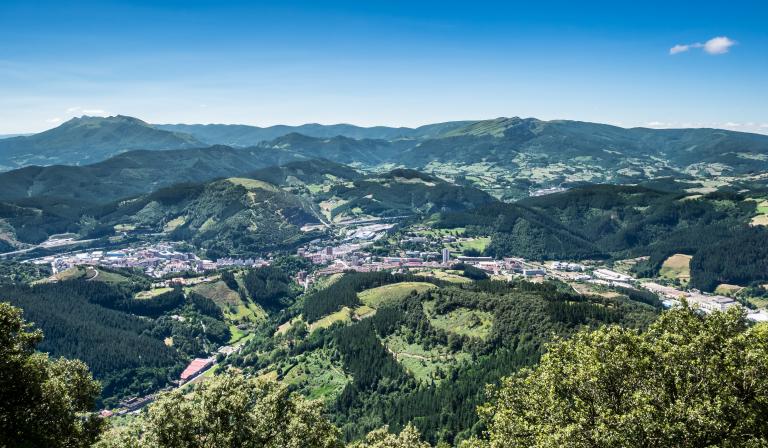
Image via Wikimedia Commons
“It’s like a big house. A big house that belongs to everybody.” (Comment by a Mondragón worker.)
Only recently I came across the marvelous German-language (with English subtitles: click the little CC button at lower right of screen) documentary, Mondragón: A Basque Cooperative, made in 2012 when the aftershocks of the 2008 financial collapse were still reverberating through Europe. It’s a revelation.
The German film crew had heard that this network of cooperative businesses were withstanding the economic shock: no layoffs, 10% lower unemployment in the region as compared with the rest of Spain, etc.
And they had likely noted that the U.N. had declared 2012 as the International Year of Cooperatives. The crew arrived in Mondragón on the day a group of French bankers from Credit Agricole were also touring various facilities in hopes of learning more about the “Mondragón miracle”: at this date, 85,000 employees globally, 120 separate cooperative enterprises, 87 of which are industrial, plus a bank / credit union, a consumer coop, several agricultural coops, eight educational coops (including Mondragón University), five social service coops, and no less than fourteen research and development centers. Not a coop, nor even a network of coops any longer, but a cooperative regional economy — and an ethos.
On this island in the midst of the rapacious global economy, there are no stockholders, no investors: just owners who have all agreed that 90% of profit must be reinvested in the company for wages, savings, and research.
An amusing scene early in the film features a little party of buttoned-up French bankers, led by a Mondragón worker-owner in shirtsleeves, strolling across a factory floor and snapping pictures of unremarkable equipment, as though the cooperative “secret” might perhaps be contained in the machinery.
Another striking scene is the monthly meeting for the Fagor unit which manufactures commercial and kitchen appliances. Seated at a table in front of about 50 worker-owners, the team leaders explain that the annual sales figures are bad — down about 15%, in fact. As is their practice, the group understands that their options are several: cut their own wages, abolish any extra dividends, moving workers from the struggling coop to another coop (based on “cooperative solidarity”). After a subdued but pointed presentation of the situation, one team leader ends the meeting by asking, “Any questions?” There are no questions. “That’s how a family works,” one fellow comments to the camera as everyone files out the door.
In this town of 24,000, even a local policeman echoes the solidarity. “People here don’t consider the police a threatening force,” he says, “relationships are different here. We all know each other.”
The mayor adds, “The Franco years forced us Basques into a kind of economic greenhouse within which we could grow these small coops into something stronger, so that when the country opened up again, we were able to compete successfully. We simply had to take our destinies into our own hands.”
At the Meal Club, a bar-restaurant collectively owned and with members who take turns playing waiter, maître d’, etc., an evening celebration ends with some Basque nationalist songs of struggle and independence. Happily, the bad times of the terroristic ETA violence (roughly between 1970 and 2000) ended in 2010 with the group’s self-dissolution. But the sense of Basque identity is surely part of the chemical mix in this story.
Where else have we seen, as the film asks, a group of blue-collar workers creating a successful socio-economic empire, born out of the ruins of war and rising amidst a hostile post-war environment of expanding global capitalism.
This achievement is also a Catholic story and it has a Catholic priest-hero — Mondragón founder Don Josemaría Arizmendi — about whom I’ll post more another time.
Community building, models or forms of community, radical hospitality
Next Post
February 28, 2020 We Drink from Our Own Wells
Browse Our Archives
Select a Category Alternative economics, worker and family empowerment, the spirituality of work, the economy of sharing Art Care for Our Common Home Catholic imagination Catholic Social Teaching Christian Friendship Christian Persecution Community building, models or forms of community, radical hospitality Corporal & Spiritual Works of Mercy Daniel Schwindt Dorothy Day, Peter Maurin, CW aims and means, spirituality Elias Crim Grace Potts Greg Guest Josh Brumfield Mark Gordon Matthew Cooper Mercy Michael Stafford Paul Grenier Peace, nonviolent resistance, conscience and conscientious objection Pope Francis Poverty, economic inequality, consumerism, unemployment, underemployment, living wage Racial Reconciliation Radical Christianity Stan Goff Uncategorized
Select a Month October 2020 September 2020 August 2020 June 2020 May 2020 April 2020 March 2020 February 2020 January 2020 December 2019 November 2019 October 2019 September 2019 June 2018 May 2018 April 2018 October 2017 August 2017 July 2017 May 2017 April 2017 March 2017 January 2017 December 2016 November 2016 October 2016 September 2016 August 2016 July 2016 June 2016 May 2016 April 2016 March 2016 February 2016 January 2016
Follow Us!
TAKE THE
Religious Wisdom Quiz
What does "Bethsaida" mean in Hebrew?
Select your answer to see how you score.
House of Fishing City of Refuge God’s Dwelling Place of Bread
Related posts from The Dorothy Option

A Catholic Mom's Response to Fr. Meeks

A Beautiful Memoir of Waging Peace

Guest Post: A Letter from a TLM Catholic...

TRENDING AT PATHEOS Catholic

Creation, Preservation, and Teleology in Catholic Theology
As I write this, it is very early Monday morning. Like millions...

The Parable Of The Sower And The Word...
One of Christ’s most famous parables is that of the sower who...

Rejecting Doom: Christian Hope And Human Action
Christianity is a religion of hope. We are to have hope and...

Why I Choose the Eucharist Over the Sermon
Choose the Eucharist, Not the Sermon What are we supposed to get...

5 Design Elements Found in Spiritually Rooted Homes
Putting Spirituality Into Home Decor Our homes are more than our living...

Credo: A Story of God Told with the...
About 10 years ago, I began to imagine a personal "Credo" that...
view all Catholic blogs
Ad-Free & Subscriber Log-In Subscription Support
- About Us
- 2026 Calendar
- Videos
- Podcasts
- Library of World Religions
- Faith In Media Tracker
- Advertise With Us
- Write for Us
- Privacy Policy
- Terms of Service
- Do Not Sell My Data
- Contact Us
- Radiant Digital
- Manage Newsletter Subscriptions
- Unsubscribe From Notifications
- Sitemap
Copyright 2008-2026, Patheos. All rights reserved.
Subscription Support Ad-Free & Subscriber Log-In
Follow Patheos