
BuddhistCatholicContemplativeEvangelicalGeneral ChristianHinduJewishLatter-day SaintMuslimNew VisionsProgressive Christian
Beliefs
- Buddhist
- Catholic
- Contemplative
- Evangelical
- General Christian
- Hindu
- Jewish
- Latter-day Saint
- More Voices
- Muslim
- New Visions
- Pagan
- Progressive Christian
Topics
- Religion News
- Food and Religion
- Sports and Religion
- Religious Art
- Religious Music and Entertainment
- Religious Events
- History and Religion
- Style and Religion
- Politics and Religion
- Women in Religion
- Recreation Outdoors and Religion
- Business Finance and Religion
- Careers Workplace and Religion
- Education and Religion
- Family Parenting and Religion
- Health Fitness and Religion
- Home and Religion
- Relationships and Religion
- Technology and Religion
- Travel and Religion
Columnists
- Buddhist Columnists
- Business Finance and Religion Columnists
- Careers Workplace and Religion Columnists
- Catholic Columnists
- Contemplative Columnists
- Education and Religion Columnists
- Evangelists Columnists
- Family Parenting and Religion Columnists
- General Christian Columnists
- Health Fitness and Religion Columnists
- Hindu Columnists
- History and Religion Columnists
- Home and Religion Columnists
- Jewish Columnists
- More Voices Columnists
- Latter Day Columnists
- Muslim Columnists
- New Visions Columnists
- Nonreligious Columnists
- Pagan Columnists
- Politics and Religion Columnists
- Progressive Columnists
- Recreation Outdoors and Religion Columnists
- Relationships and Religion Columnists
- Religion News Columnists
- Religious Art Columnists
- Religious Events Columnists
- Religious Music and Entertainment Columnists
- Sports and Religion Columnists
- Style and Religion Columnists
- Technology and Religion Columnists
- Travel and Religion Columnists
- Women in Religion Columnists
Resource Library
- 2026 Calendar
- Library of World Religions
- The 100 Most Holy Places on Earth
- Patheos Answers
- Podcasts
- Videos
- Faith Leaders Database
- Anglican Episcopalian
- Bahai
- Baptist
- Buddhism
- Christianity
- Confucianism
- Eastern Orthodoxy
- Hinduism
- Holiness and Pentecostal
- ISKCON
- Islam
- Judaism
- Lutheran
- Methodist
- The Church of Jesus Christ of Latter-day Saints
- New Age
- Paganism
- Presbytarian and Reformed
- Protestantism
- Religion Behind the Scenes
- Roman Catholic
- Scientology
- Shia Islam
- Sikhism
- Sufism
- Sunni Islam
- Taoism
- Zen
- See all religions
Research Tools
 Ad-Free & Subscriber Log-In Subscription Support
Ad-Free & Subscriber Log-In Subscription Support
Follow Patheos 

- Trending:
- Forgiveness
- |
- Marriage
- |
- Consciousness
- |
- Death Penalty
- |
- Election
- |
- Halloween
 The Dorothy Option
- Home
- Catholic
- A Conversation on War, Torture, and the Limits of Evil – Part 3
A Conversation on War, Torture, and the Limits of Evil – Part 3
Last updated on: April 18, 2016 at 6:00 am by Paul Grenier
A Conversation on War, Torture, and the Limits of Evil – Part 3 2016-04-17T17:37:32-05:00 Paul Grenier
Patheos Explore the world's faith through different perspectives on religion and spirituality! Patheos has the views of the prevalent religions and spiritualities of the world.
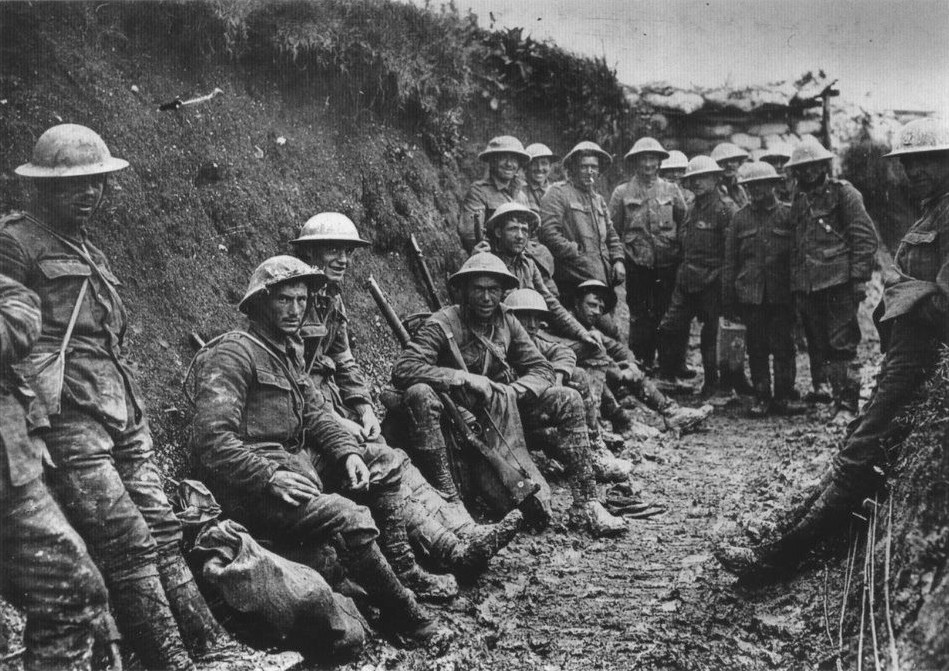
[This post is a continuation of Paul Grenier’s dialogue on torture and solidarity. The first part can be found HERE and the second HERE. In this third section, the Ambassador, continuing his argument with the Professor, resumes the debate.]
AMBASSADOR. You say that both sides must be at risk. Very well. In the case of the ticking time bomb, both sides are at risk. And unless the terrorist is tortured (if you insist on using that term), innocents, perhaps many thousands of them, will suffer death and dismemberment. Why shouldn’t we be just as concerned about their welfare as your Solovyov was with those Armenian villagers?
PROFESSOR. Are you talking about a ticking time bomb in the present, or in the future?
AMBASSADOR. What do you mean?
PROFESSOR. I’m simply asking whether this is the famous case of a ticking time bomb that we ‘know’ has been planted somewhere, and that we ‘know’ the captured terrorist can help us disarm, or are we talking about a theoretical bomb that might be acquired some years in the future unless we torture and kill people in order to prevent it?
AMBASSADOR. Well, both seem equally important in my opinion, but let’s start with the first.
PROFESSOR. The first question to ask is this: how do we know that this alleged terrorist has planted a bomb? Did we catch him in the act? And if so, why didn’t we stop him? And if we did not see him, how do we know we are torturing the right person? After all, perhaps there is no bomb, and it is just a hoax. But let us assume, as the T.V. shows like to do, that these problems are miraculously resolved and we know that there is a bomb, and what kind of bomb, and that our captured terrorist knows all about how to disarm it. How do we know torture will work better than the methods recommended by actual interrogators? It is not simply that all professional interrogators find that empathy, and not threats, is more effective, but that torture, in order even conceivably to be effective, must hold out the prospect of a prolonged duration. But this is precisely what the ticking time bomb scenario does not permit! In the moments during which torture might even theoretically be effective, the determined terrorist needs do nothing but tell a lie to start a wild goose chase that ends with a boom.
As for the bomb-that-might-blow-up-some-time-in-the-future scenario, is that even worth discussing? On that logic, there are no limits to torture at all! The folly of torturing on the basis of hypotheticals was already described by C.S. Lewis in his novel That Hideous Strength.
AMBASSADOR. I’ve been meaning to read that one. Unfortunately never got the chance …
PROFESSOR. No matter. The salient point will take just a moment. The hero of the novel – a sort of linguistics professor and Christ-figure rolled into one – says that we are not allowed to be too prudent, lest we become like our enemies. What is the distinguishing trait of those who do evil? According to Lewis, it is to do precisely what is being proposed by those who say ‘we have to torture to prevent a bomb at some point in the future.’ In other words, to insist on taking the most extreme measures even when the danger is not yet fully upon us – in fact, while it is still abstract.
And Solovyov makes the same point. His Cossacks went to battle with an enemy that was actively on the march against defenseless villagers in real time. This was no preventative war, nor one based on guesses about what might happen at some vague point in the future.
AMBASSADOR. For my part, it is your own argument that I find too abstract. What if a CIA agent is using your supposedly more effective, empathic methods to extract information from someone whom we have good reason to believe (even if we don’t know one hundred per cent) can help dismantle an atomic weapon. But let’s say that, in this particular instance, the empathy approach is not working. What then? If enhanced methods are used, they may work. Nothing else has, and time is running out! Would you throw such an agent in jail for acting in good conscience in such a situation? To my mind, he would be acting perfectly morally and patriotically. But by outlawing all uses of torture in advance you prevent him from acting in defense of an entire city!
TALK SHOW HOST. I’m glad you raised that question, because that is exactly what my callers would have asked. [turning to the Professor] What you said earlier about human solidarity is of course convincing, if you look at things from the spiritual perspective, as I do. But you know, not everyone shares the spiritual point of view. A lot of people are more interested in asking: what is going to work? Even Mark Danner, who was on my show once – and he has probably published more articles criticizing torture than anyone – admits that the argument about torture stands or falls on whether or not it works. If it turns out that torture truly does keep us safe, then most Americans are going to be for it. I’m sorry, but that’s the reality.
PROFESSOR. Whether torture works or not depends very strictly on the specifics of the situation, and in particular, on the specifics of what one is trying to achieve. The real question is not whether or not torture ‘works,’ but what it works for. But to return to our friend’s question: He has framed a situation where nothing else has yielded the necessary information, and torture is now being proposed in a last, desperate attempt to avert the explosion in a city of a bomb of frightening force. Should we still consider this torture an illegal act that must be punished criminally? Yes, indeed we must, and for two reasons. The first we have already discussed: to defend the very notion of ‘the human.’ The second reason is to defend the notion of the law. The problem with justifying torture even on the basis of the most extreme ticking time bomb scenario is that such justifications change the very meaning of the word ‘law.’ If torture is permissible, law disappears. It becomes simply ‘whatever the state declares necessary’ without any limit. Law by definition is a set of fixed and reliable norms, and a limit on the arbitrary power of the king or the executive. The modern state already is practically unlimited in its actions, given all the secrecy and extra-legal rights it demands in the name of ‘national security.’ Armed with torture, and torture’s ability to extract false confessions and to produce false trials, this lawlessness becomes even more extreme. A criminal trial no longer means anything if evidence gathered under torture becomes admissible, as the United States proposes with its prisoners at Guantanamo Bay.
What is more, an exclusive focus on one’s own security is ultimately self-defeating. It backfires even in utilitarian terms, because a country that abrogates to itself the right to commit the worst of crimes makes many enemies where formerly there were none, or only a few. That is why the War on Terror has become a self-fulfilling prophesy, as, perhaps, was always intended …
TALK SHOW HOST. Are you saying that you consider the act of the CIA agent – I mean his use of torture even in the case where he believes it might prevent an atomic bomb explosion – to be immoral?
PROFESSOR. I did not say so. In this case, as in certain others, what is moral before God and what is legal among men must be distinguished. This particular instance constitutes one of those tragic cases where what is moral may turn out to be in conflict with what is lawful. Or rather, and more to the point, it is a case where one absolute duty comes into conflict with another absolute duty. What are these absolutes? First, that one must protect innocents (in this case the residents of the city) if it is in one’s power to do so; and second, that one must not act cruelly to a defenseless person who is in one’s power.
Such tragic choices, when they do occur, are usually the product of a prior corruption of the political order. Be that as it may, torture, like rape, remains a crime of the first order and punishment of this crime should be welcomed by anyone concerned with justice. If Socrates is any guide in such matters, and I think he is, punishment for the crime of torture should be welcomed most particularly by the person who has carried it out. It is punishment, and punishment alone, that can allow the torturer to fully reenter human community. But the prospect of punishment is crucial for another reason as well. Those who contemplate committing torture should be aware in advance of the seriousness of the act, and its certain consequences. Those who intend to act, even if misguidedly, for the good of the city will not be deterred by such a prospect.
TALK SHOW HOST. Well, what a pleasure it is to speak with such intelligent people! I think we have covered the topic of torture quite thoroughly. In any case, it seems a shame to spend the whole day talking, even on such an important topic. I am a terrible tourist, I’m afraid, and I am dying to stroll about this beautiful place before it gets too dark to see anything… [To be concluded.]
Image Source: Wikimedia Commons
Peace, nonviolent resistance, conscience and conscientious objection


Next Post

April 19, 2016 "Running In and Out with a Flag" (the Distributist League)
Browse Our Archives
Select a Category Alternative economics, worker and family empowerment, the spirituality of work, the economy of sharing Art Care for Our Common Home Catholic imagination Catholic Social Teaching Christian Friendship Christian Persecution Community building, models or forms of community, radical hospitality Corporal & Spiritual Works of Mercy Daniel Schwindt Dorothy Day, Peter Maurin, CW aims and means, spirituality Elias Crim Grace Potts Greg Guest Josh Brumfield Mark Gordon Matthew Cooper Mercy Michael Stafford Paul Grenier Peace, nonviolent resistance, conscience and conscientious objection Pope Francis Poverty, economic inequality, consumerism, unemployment, underemployment, living wage Racial Reconciliation Radical Christianity Stan Goff Uncategorized
Select a Month October 2020 September 2020 August 2020 June 2020 May 2020 April 2020 March 2020 February 2020 January 2020 December 2019 November 2019 October 2019 September 2019 June 2018 May 2018 April 2018 October 2017 August 2017 July 2017 May 2017 April 2017 March 2017 January 2017 December 2016 November 2016 October 2016 September 2016 August 2016 July 2016 June 2016 May 2016 April 2016 March 2016 February 2016 January 2016
Follow Us!
TAKE THE
Religious Wisdom Quiz
Cast all your anxiety on him because he ____ for you.
Select your answer to see how you score.
Cares Provides Loves Watches
Related posts from The Dorothy Option

A Beautiful Memoir of Waging Peace

Guest Post: A Letter from a TLM Catholic...

"There is no such thing as just war."
TRENDING AT PATHEOS Catholic

Rejecting Doom: Christian Hope And Human Action
Christianity is a religion of hope. We are to have hope and...

It’s What Comes From Within Which Matters
One of the most difficult things for us to understand is why...

Why I Choose the Eucharist Over the Sermon
Choose the Eucharist, Not the Sermon What are we supposed to get...

5 Design Elements Found in Spiritually Rooted Homes
Putting Spirituality Into Home Decor Our homes are more than our living...

Credo: A Story of God Told with the...
About 10 years ago, I began to imagine a personal "Credo" that...

The Anatomy of Divine Revelation in Catholic Thought
The claim that God has made Himself known to human beings is...
view all Catholic blogs
Ad-Free & Subscriber Log-In Subscription Support
- About Us
- 2026 Calendar
- Videos
- Podcasts
- Library of World Religions
- Faith In Media Tracker
- Advertise With Us
- Write for Us
- Privacy Policy
- Terms of Service
- Do Not Sell My Data
- Contact Us
- Radiant Digital
- Manage Newsletter Subscriptions
- Unsubscribe From Notifications
- Sitemap
Copyright 2008-2026, Patheos. All rights reserved.
Subscription Support Ad-Free & Subscriber Log-In
Follow Patheos