
BuddhistCatholicContemplativeEvangelicalGeneral ChristianHinduJewishLatter-day SaintMuslimNew VisionsProgressive Christian
Beliefs
- Buddhist
- Catholic
- Contemplative
- Evangelical
- General Christian
- Hindu
- Jewish
- Latter-day Saint
- More Voices
- Muslim
- New Visions
- Pagan
- Progressive Christian
Topics
- Religion News
- Food and Religion
- Sports and Religion
- Religious Art
- Religious Music and Entertainment
- Religious Events
- History and Religion
- Style and Religion
- Politics and Religion
- Women in Religion
- Recreation Outdoors and Religion
- Business Finance and Religion
- Careers Workplace and Religion
- Education and Religion
- Family Parenting and Religion
- Health Fitness and Religion
- Home and Religion
- Relationships and Religion
- Technology and Religion
- Travel and Religion
Columnists
- Buddhist Columnists
- Business Finance and Religion Columnists
- Careers Workplace and Religion Columnists
- Catholic Columnists
- Contemplative Columnists
- Education and Religion Columnists
- Evangelists Columnists
- Family Parenting and Religion Columnists
- General Christian Columnists
- Health Fitness and Religion Columnists
- Hindu Columnists
- History and Religion Columnists
- Home and Religion Columnists
- Jewish Columnists
- More Voices Columnists
- Latter Day Columnists
- Muslim Columnists
- New Visions Columnists
- Nonreligious Columnists
- Pagan Columnists
- Politics and Religion Columnists
- Progressive Columnists
- Recreation Outdoors and Religion Columnists
- Relationships and Religion Columnists
- Religion News Columnists
- Religious Art Columnists
- Religious Events Columnists
- Religious Music and Entertainment Columnists
- Sports and Religion Columnists
- Style and Religion Columnists
- Technology and Religion Columnists
- Travel and Religion Columnists
- Women in Religion Columnists
Resource Library
- 2026 Calendar
- Library of World Religions
- The 100 Most Holy Places on Earth
- Patheos Answers
- Podcasts
- Videos
- Faith Leaders Database
- Anglican Episcopalian
- Bahai
- Baptist
- Buddhism
- Christianity
- Confucianism
- Eastern Orthodoxy
- Hinduism
- Holiness and Pentecostal
- ISKCON
- Islam
- Judaism
- Lutheran
- Methodist
- The Church of Jesus Christ of Latter-day Saints
- New Age
- Paganism
- Presbytarian and Reformed
- Protestantism
- Religion Behind the Scenes
- Roman Catholic
- Scientology
- Shia Islam
- Sikhism
- Sufism
- Sunni Islam
- Taoism
- Zen
- See all religions
Research Tools
 Ad-Free & Subscriber Log-In Subscription Support
Follow Patheos 

- Trending:
- Advent
- |
- Forgiveness
- |
- Thanksgiving
- |
- Election
- |
- Seasonal Holidays
- |
- Marriage
 The Diagonal Way
-
Category
- Home
- General Christian
- Advent Is When Christians Talk about Hope. But Is There Any?
Advent Is When Christians Talk about Hope. But Is There Any?
Last updated on: December 13, 2022 at 8:58 pm by Anthony D Baker
Advent Is When Christians Talk about Hope. But Is There Any? 2022-12-13T20:58:29-06:00 Anthony D Baker
Patheos Explore the world's faith through different perspectives on religion and spirituality! Patheos has the views of the prevalent religions and spiritualities of the world.
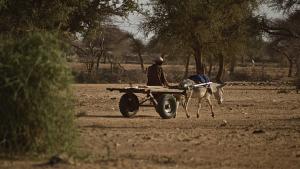
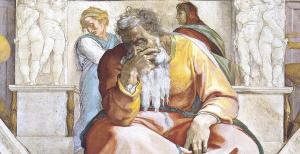
Photo by François.marsh, found at Wikimedia Commons
Advent, the Christian liturgical season leading up to Christmas, is the time when songs and sermons about hope fill churches of all denominations. We read prophecies about the beating of swords into plowshares. We sing “Come Thou Long Expected Jesus,” with confidence that his coming will “hope to all the world impart.” Sometimes we’re even more directive in our petitions. “Give them vict’ry o’er the grave;” “death’s dark shadow put to flight.” Those are but two of the hope-bathed lines of the seasonal favorite “O Come, O Come Emmanuel.”
Strange, though, to talk about hope when the world is demonstrably getting worse. When racism has become public discourse in liberal democracies. When a president of a world power uses military force to try and recreate the sort of empire most assumed was a relic of the old world. And over all, the great threat multiplier that is the climate emergency, likely now past the tipping-point according to the United Nations. Ours are not times that inspire hopefulness.
Avoiding Hopelessness
I felt the hope/hopeless tension while watching a recent episode of HBO’s White Lotus, released, as it happens, in the second week of Advent. “The world is falling apart,” one character says, rather puzzled that she even needs to say it out loud. It’s a theme, or at least a through line, of both seasons of the show: reality is hopelessness. But money–lots of it–can at least temporarily distract us from the real.
This tension is not lost on my colleagues in the world of theology. Some are suggesting that we abandon the language of hope altogether. It’s time for Christianity to embrace hopelessness: that’s the way Miguel de la Torre, professor at the Iliff School of Theology in Denver, puts it. It’s an impulse I understand, even if ultimately I disagree.
I understand the impulse because a certain kind of hope looks like the privilege of those insulated from the harshest of the world’s present realities. For White Lotus: vacationers at a Sicilian resort can be hopeful; prostitutes in a tanking economy have no such luxury. The “fat and sleek” of Jeremiah’s prophecies (eg. 5:28) can afford hope. The orphans and the hungry cannot. Communities who send their garbage far away have no motive to despair. Those who wake up every morning smelling it do.
Hope and Optimism
So a certain kind of hope can look like blind optimism, either naively or willfully acquired. Further, it keeps us from confronting with any true attentiveness the powers and principalities of this present darkness. If it’s all going to be ok, I am likely not going to change the way I eat or water my lawn. Let’s not despair. Instead, we’ll think positive thoughts.
Alternatively, some Christian theologies of the end times account for hope by giving up on creation entirely. Our hope is not in this earth at all, but in the new one that God will make after he destroys this one. But the idea that our world is not really what matters releases me from responsibility just as surely as the smiling assurance that all shall be well. Either way, hope looks like a half-interested patronizing assurance that there’s nothing to worry about, you’ll see. And this is not an attractive Christian posture. That is de la Torre’s point, and I think it’s a good one.
Advent is about Hope beyond Hope
Still, I am not ready to embrace hopelessness. That’s because I don’t actually think such leisurely positive thinking is what Christians have, since ancient times, meant by the word “hope.” Rather, hope is the coming–the advent–of God that none of us knows quite how to expect. Hope is precisely the arrival of the unhoped for, you might say. It’s the virtue that allows people of faith to confront the reality of looming disaster–war, famine, disease, mass extinction, loss of coastal lands–and still get out of bed the next morning. We are working alongside God, even if we have no idea what the final result will be.
This is why Jeremiah can speak of the mass destruction coming to Jerusalem, but then, in almost a different voice entirely, insist that the God of mercy will not make a full end of their lives. It’s not desolation or hope. It’s both.
Matthew’s parable of the bridesmaids–another of the Advent readings–is what hope looks like in the New Testament. Not an assurance that all will be fine, but the long and difficult habit of staying awake. Keep watch, so that you’re ready when the suprise of the groom’s arrival brings whatever unanticipated grace it brings.
I want to hang on to that sort of vigilant hope. Otherwise I’m forced to admit that hope is nothing more than the optimism of the distracted rich. And so embrace hopelessness.
It may not all turn out ok. It almost certainly won’t. And somehow that won’t count as evidence that God has forgotten us. That’s what Advent hope is all about.
Previous Post

November 23, 2022
A New Theology for Thanksgiving
Next Post
December 28, 2022 What I've Been Reading Lately: End of the Year Books (2022)
Browse Our Archives
Select a Category Church Fathers Doctrines for Various Occasions Ecotheology Eschatology Liturgical Seasons Prayer Theology and Literature Uncategorized
Select a Month October 2023 September 2023 August 2023 July 2023 June 2023 February 2023 January 2023 December 2022 November 2022 October 2022 September 2022 August 2022 July 2022 June 2022 May 2022 April 2022 March 2022 February 2022 January 2022 December 2021 November 2021 October 2021 September 2021
Follow Us!
TAKE THE
Religious Wisdom Quiz
What mountain was the site of Elijah's showdown with Baal's prophets?
Select your answer to see how you score.
Mount Hermon Mount Carmel Mount Sinai Mount Tabor
Related posts from The Diagonal Way
The Year of the Locust: A Sermon on...
Why do Christians say God is a Trinity?
The Flood: Our Gospel for an Age of...
TRENDING AT PATHEOS General Christian

How Thoughts Shape Our Lives - Even Lies
She wakes up with a familiar heaviness. Nothing troubling is happening yet,...

The Thanksgiving Hymn Born in a Plague-Ravaged Town
The Impossible Story of “Now Thank We All Our God" It’s an...
Does Islam Teach the Subjugation of Christians and...
“There is no compulsion in religion.” When discussions about Islam's relationship...

The Church calendar begins Advent this year on Sunday November 29....

Apples of Gold: Words Around the Thanksgiving Table
There is a verse in Proverbs that I think every mother should...

Why Jesus Shone on the Mountain and Moses...
The Divine Glory In all three of the synoptic gospels, Matthew, Mark,...
view all General Christian blogs
Ad-Free & Subscriber Log-In Subscription Support
- About Us
- 2026 Calendar
- Videos
- Podcasts
- Library of World Religions
- Faith In Media Tracker
- Advertise With Us
- Write for Us
- Privacy Policy
- Terms of Service
- Do Not Sell My Data
- Contact Us
- Radiant Digital
- Manage Newsletter Subscriptions
- Unsubscribe From Notifications
- Sitemap
Copyright 2008-2026, Patheos, part of the Radiant Digital network of media brands. All rights reserved.
Subscription Support Ad-Free & Subscriber Log-In
Follow Patheos