
BuddhistCatholicContemplativeEvangelicalGeneral ChristianHinduJewishLatter-day SaintMuslimNew VisionsProgressive Christian
Beliefs
- Buddhist
- Catholic
- Contemplative
- Evangelical
- General Christian
- Hindu
- Jewish
- Latter-day Saint
- More Voices
- Muslim
- New Visions
- Pagan
- Progressive Christian
Topics
- Religion News
- Food and Religion
- Sports and Religion
- Religious Art
- Religious Music and Entertainment
- Religious Events
- History and Religion
- Style and Religion
- Politics and Religion
- Women in Religion
- Recreation Outdoors and Religion
- Business Finance and Religion
- Careers Workplace and Religion
- Education and Religion
- Family Parenting and Religion
- Health Fitness and Religion
- Home and Religion
- Relationships and Religion
- Technology and Religion
- Travel and Religion
Columnists
- Buddhist Columnists
- Business Finance and Religion Columnists
- Careers Workplace and Religion Columnists
- Catholic Columnists
- Contemplative Columnists
- Education and Religion Columnists
- Evangelists Columnists
- Family Parenting and Religion Columnists
- General Christian Columnists
- Health Fitness and Religion Columnists
- Hindu Columnists
- History and Religion Columnists
- Home and Religion Columnists
- Jewish Columnists
- More Voices Columnists
- Latter Day Columnists
- Muslim Columnists
- New Visions Columnists
- Nonreligious Columnists
- Pagan Columnists
- Politics and Religion Columnists
- Progressive Columnists
- Recreation Outdoors and Religion Columnists
- Relationships and Religion Columnists
- Religion News Columnists
- Religious Art Columnists
- Religious Events Columnists
- Religious Music and Entertainment Columnists
- Sports and Religion Columnists
- Style and Religion Columnists
- Technology and Religion Columnists
- Travel and Religion Columnists
- Women in Religion Columnists
Resource Library
- 2026 Calendar
- Library of World Religions
- The 100 Most Holy Places on Earth
- Patheos Answers
- Podcasts
- Videos
- Faith Leaders Database
- Anglican Episcopalian
- Bahai
- Baptist
- Buddhism
- Christianity
- Confucianism
- Eastern Orthodoxy
- Hinduism
- Holiness and Pentecostal
- ISKCON
- Islam
- Judaism
- Lutheran
- Methodist
- The Church of Jesus Christ of Latter-day Saints
- New Age
- Paganism
- Presbytarian and Reformed
- Protestantism
- Religion Behind the Scenes
- Roman Catholic
- Scientology
- Shia Islam
- Sikhism
- Sufism
- Sunni Islam
- Taoism
- Zen
- See all religions
Research Tools
 Ad-Free & Subscriber Log-In Subscription Support
Ad-Free & Subscriber Log-In Subscription Support
Follow Patheos 

- Trending:
- Forgiveness
- |
- Marriage
- |
- Consciousness
- |
- Death Penalty
- |
- Election
- |
- Halloween
 The Diagonal Way
-
Category
- Home
- General Christian
- ROCOR: The (A) Russian Church Abroad
ROCOR: The (A) Russian Church Abroad
Last updated on: July 27, 2022 at 9:58 am by Anthony D Baker
ROCOR: The (A) Russian Church Abroad 2022-07-27T09:58:58-05:00 Anthony D Baker
Patheos Explore the world's faith through different perspectives on religion and spirituality! Patheos has the views of the prevalent religions and spiritualities of the world.

Two books that give context to ROCOR
This summer I’ve continued my life-long submersion into Russian theological and intellectual culture. I’ve written previously of the theological disaster that is Patriarch Kirill’s current political stance. A new book by Sarah Riccardi-Swartz, alongside a no longer new book by Lesley Chamberlain, has given me deeper insight into this disaster. Especially as it relates to the U.S.-based ROCOR, or the Russian Orthodox Church outside of Russia.
Orthodoxy in Appalachia
The Riccardi-Swartz book is currently stirring up controversy in the American Orthodox world. In it she, a practicing Orthodox Christian, studies a particular community of Russian Orthodox converts in Appalachia. There she spotlights some elements that many might have preferred to remain on the dark web. I came across the buzz on Twitter. Given my Appalachian family roots and 25 year fixation on Russia, I felt something close to a moral obligation to find out what the noise was about.
It reads like a limited-run Netflix docudrama, if that’s possible thing to say about a piece of religious ethnography published by a university press. Russia has been very much in the U.S. news cycle in the past six years, from election tampering to war-mongering. This book gives us a deeper context that few of us know. I’ll summarize.
The Philosophy Steamer
Shortly after the Bolshevik revolution in 1917, Lenin exiled long lists of intellectuals—philosophers, scientists, theologians, poets—from Russia. This is a story that Chamberlain tells suberbly in her book about the legendary “philosopher steamer.” The steamer was actually two rented German ships that bore professors and other thought leaders abroad.
My hero, Sergei Bulgakov, was among the exiles. He was not, that is, a passenger on either, as he was teaching in Odessa at the time. The secret police were not yet organized enough to track him down. But he and his family followed a couple months later, never to return.
The exiles made their way along the Baltic coastline to Germany. From there they scattered to Prague, Paris, and other cities of Europe and America.
Russians Abroad
Casting out the dissenting intellectuals had many of the effects that Lenin hoped it would. It consolidated the artistic, journalistic, ecclesiastical, and ideological cultures of the nascent Soviet Republics. It inspired fear among anyone tempted to dissension. After all, literary greats like Semyon Frank, Nikolai Berdayev, Andrei Bely, young Vladimir Nabakov, and Tolstoy’s daughter hadn’t withstood Bolshevik supression. Neither had priests and theologians like Georges Florovsky and the entire Lossky family. If all these were expendable, who was safe?
Lenin’s move also had unanticipated effects, however. These were powerful minds (and egos) that he shipped out across the globe. Groups and subgroups developed, intellectual think tanks devoted to preserving something of pre-revolutionary Russia, forming a kind of shadow Russia in anticipation of an eventual fall of the Soviets.
ROCOR
For Christianity, this culturally immigration involved the founding, in the United Staes, of ROCOR. Their clearly stated purpose, until 2007, was to practice an authentic Russian Orthodoxy, awaiting a time of re-evangelization of their post-atheist homeland. They conserved the old medieval idea of Holy Rus as the eternal Rome, the guardian of Christianity until the return of Christ. This political theology is still operative in Moscow’s invasion of Ukraine.
This is not the only organization of Russian Orthodox Churches in the U.S. The larger Orthodox Church in America (OCA) migrated into the lower 48 from Alaska generations before the Revolution. Tensions grew, and remain, between these two in particular, tensions based in part on their founding narratives. ROCOR was birthed in a crisis and more or less remained in that crisis, while OCA has had centuries to shape itself and adapt to a changing religious and geopolitical landscape.
Things changed in 2007. That’s the year that ROCOR consolidated with the Moscow Patriachate of Russian Orthodox Church. This, in effect, completed their mission, reconnecting them with the Russia that they were fighting to preserve. And of course it raised a pressing new identity question.
Who is ROCOR now?
At this point, as Riccardi-Swartz tells the story, ROCOR turned its attention to the U.S. Until then, the U.S. had been more or less a greenhouse, an environment to grow sprouts intended for transplanting back home. But if the Soviet crisis was over, the secularization crisis in America was not. Communities like the one she embedded herself in began to find their calling in bringing that same pre-revolutionary Rus nostalgia to America.
In its most extreme versions, this zeal is quite alarming. She cites prayers composed that look to Tsar Nicholas II as a messianic figure. Liturgical celebrations tell a warped history, whereby the Virgin Mary is holding back the apocaypse until Nicholas—posthumously— can spread Christianity around the world.
She even cites a popular belief that the Tsar’s mantle has fallen to Vladimir Putin. The monks at the West Virginia monastery celebrate Putin in iconography, and some even hope that he will invade the U.S. and bring an Orthodox dictatorship–or monarchy– to these shores. Opinions were divided on Donald Trump, but there was general agreement that his partnership with Putin was a step in a God-ordained direction.
Sources of ROCOR’s Political Theology
The sources of this poltical theology are various. The popular Californian monastic Seraphim Rose, about whom I first began hearing during my first stay in Russia in 1996, is a key figure in the theology and spirituality of ROCOR. Especially important is a speech he gave in 1982, suggesting Tsarist Russia as a model for world Christianity.
Another—and much more suprising— source is the ubiquitous Jordan Peterson. Peterson is a currently active Canadian psychologist who left the academy to become a far right Social Media influencer. So now black robed West Virginian monks, comprised largely of ex-evangelical men in their 20s and 30s, gather around one another’s phones to watch Peterson diatribe on Youtube against Communists, postmodernists, and transgendered persons.
Like I said: a world so weird it’s already Netflix-ready.
Sorting through the Fog
These scholars are helping us name and understand some of the more baffling aspects of this moment in world Christianity. Why have so many looked the other way, or even applauded, as the Kremlin manipulates elections around the globe? Why has a major body of Christianity perverted centuries of deep and scripturally-sound theology into a celebration of warmaking? What is happening in religiously conservative America, once so rabidly resistant to Russian influence, as it now seemingly welcomes the most nefarious in-reaches of Moscow?
None of these questions have simple answers. But these two books will definitely aid us in our moment of religious and political confusion.
Doctrines for Various Occasions
Previous Post

July 23, 2022
Hosea, The Diagonal Prophet
Next Post
August 3, 2022 Grief and Hope in a Suffering Creation
Browse Our Archives
Select a Category Church Fathers Doctrines for Various Occasions Ecotheology Eschatology Liturgical Seasons Prayer Theology and Literature Uncategorized
Select a Month October 2023 September 2023 August 2023 July 2023 June 2023 February 2023 January 2023 December 2022 November 2022 October 2022 September 2022 August 2022 July 2022 June 2022 May 2022 April 2022 March 2022 February 2022 January 2022 December 2021 November 2021 October 2021 September 2021
Follow Us!
TAKE THE
Religious Wisdom Quiz
Which prophet's book names the birthplace of the Messiah?
Select your answer to see how you score.
Obadiah Jonah Amos Micah
Related posts from The Diagonal Way

The Year of the Locust: A Sermon on...
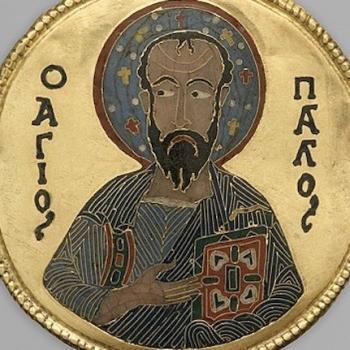
Does Saint Paul Believe in the Trinity?

TRENDING AT PATHEOS General Christian

Seventy and Five Years Old: God Still Starts...
There is a small detail tucked into Genesis 12 that I skipped...

A Biblical Vision of Success in Christian Life...
The Concern and Quest Recent trends and tendencies I note around me...

Indigenous Peoples’ Day and the Church
Indigenous' Peoples Day or Columbus Day? Depending on where you live...

When Spiritual Growth Looks Like Losing Ground
Four Passive Spiritual Disciplines: An Introduction When I was a college freshman,...

Faith and Finding Your Current Season
“To everything there is a season,” Ecclesiastes tells us, “and a time...

Did Jesus Fear God's Wrath in Gethsemane?
That Time Jesus Was Terrified Before we begin, let me say at...
view all General Christian blogs
Ad-Free & Subscriber Log-In Subscription Support
- About Us
- 2026 Calendar
- Videos
- Podcasts
- Library of World Religions
- Faith In Media Tracker
- Advertise With Us
- Write for Us
- Privacy Policy
- Terms of Service
- Do Not Sell My Data
- Contact Us
- Radiant Digital
- Manage Newsletter Subscriptions
- Unsubscribe From Notifications
- Sitemap
Copyright 2008-2026, Patheos. All rights reserved.
Subscription Support Ad-Free & Subscriber Log-In
Follow Patheos