
BuddhistCatholicContemplativeEvangelicalGeneral ChristianHinduJewishLatter-day SaintMuslimNew VisionsProgressive Christian
Beliefs
- Buddhist
- Catholic
- Contemplative
- Evangelical
- General Christian
- Hindu
- Jewish
- Latter-day Saint
- More Voices
- Muslim
- New Visions
- Pagan
- Progressive Christian
Topics
- Religion News
- Food and Religion
- Sports and Religion
- Religious Art
- Religious Music and Entertainment
- Religious Events
- History and Religion
- Style and Religion
- Politics and Religion
- Women in Religion
- Recreation Outdoors and Religion
- Business Finance and Religion
- Careers Workplace and Religion
- Education and Religion
- Family Parenting and Religion
- Health Fitness and Religion
- Home and Religion
- Relationships and Religion
- Technology and Religion
- Travel and Religion
Columnists
- Buddhist Columnists
- Business Finance and Religion Columnists
- Careers Workplace and Religion Columnists
- Catholic Columnists
- Contemplative Columnists
- Education and Religion Columnists
- Evangelists Columnists
- Family Parenting and Religion Columnists
- General Christian Columnists
- Health Fitness and Religion Columnists
- Hindu Columnists
- History and Religion Columnists
- Home and Religion Columnists
- Jewish Columnists
- More Voices Columnists
- Latter Day Columnists
- Muslim Columnists
- New Visions Columnists
- Nonreligious Columnists
- Pagan Columnists
- Politics and Religion Columnists
- Progressive Columnists
- Recreation Outdoors and Religion Columnists
- Relationships and Religion Columnists
- Religion News Columnists
- Religious Art Columnists
- Religious Events Columnists
- Religious Music and Entertainment Columnists
- Sports and Religion Columnists
- Style and Religion Columnists
- Technology and Religion Columnists
- Travel and Religion Columnists
- Women in Religion Columnists
Resource Library
- 2026 Calendar
- Library of World Religions
- The 100 Most Holy Places on Earth
- Patheos Answers
- Podcasts
- Videos
- Faith Leaders Database
- Anglican Episcopalian
- Bahai
- Baptist
- Buddhism
- Christianity
- Confucianism
- Eastern Orthodoxy
- Hinduism
- Holiness and Pentecostal
- ISKCON
- Islam
- Judaism
- Lutheran
- Methodist
- The Church of Jesus Christ of Latter-day Saints
- New Age
- Paganism
- Presbytarian and Reformed
- Protestantism
- Religion Behind the Scenes
- Roman Catholic
- Scientology
- Shia Islam
- Sikhism
- Sufism
- Sunni Islam
- Taoism
- Zen
- See all religions
Research Tools
 Ad-Free & Subscriber Log-In Subscription Support
Ad-Free & Subscriber Log-In Subscription Support
Follow Patheos 

- Trending:
- Forgiveness
- |
- Marriage
- |
- Consciousness
- |
- Death Penalty
- |
- Election
- |
- Halloween
 The Diagonal Way
-
Category
- Home
- General Christian
- Sacraments and Hospitality: Is the Table Open?
Sacraments and Hospitality: Is the Table Open?
Last updated on: June 8, 2022 at 8:10 am by Anthony D Baker
Sacraments and Hospitality: Is the Table Open? 2022-06-08T08:10:45-05:00 Anthony D Baker
Patheos Explore the world's faith through different perspectives on religion and spirituality! Patheos has the views of the prevalent religions and spiritualities of the world.
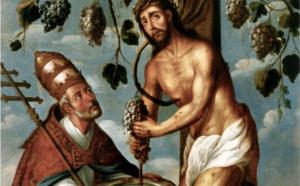
Allegory of the Eucharist, from Wikicommons
I offer today a thought or two about a theological controversy I’ve gotten myself involved in. They happen. This one involves the ordering of sacraments in the Episcopal Church.
Here’s the broad sketch. The Episcopal Church is gathering next month for its triennial General Convention. This has been called “Disney Land for Episcopalians,” which I’m afraid is misadvertised if you’re 7 years old and looking for princesses. On the other hand, if you’ve got lots of Episcopal friends around the country/world, or are deeply interested in minutia of church polity, it could just be your theme park! This year, sadly, as we navigate what—lips to God’s ears—all hope is the waning of the pandemic, the gathering will be a small affair in Baltimore. More or less invitation only. No princess photo-ops.
How Open Is the Table?
In the lead up to the gathering, a small group of folks wrote up a proposal to delete the canon, or governing rule, that states, “No unbaptized person shall be eligible to receive Holy Communion in this Church.” In response, a group of theologians from around TEC’s seminaries, led by my friend Rob in Tennessee, wrote a response. Our statement argued that we should not, in fact, remove that line. You can read more about the conversation, including our statement, here.
You can likely already imagine the controversy. We’re all—at least the many among that 22 that I know—friendly enough folk. Why would we want to keep insisting on a prohibition that limits invitations to the table? Would we have a dinner party and then decide, once we’re gathered, who gets to eat? Can’t communion become a way of inviting people to be baptized, rather than the other way around?
These are good questions, and I hope they can be part of a genuine conversation in the church in the weeks to come.
What Are the Sacraments Doing?
The key issue, for me, is the life of discipleship that all the sacraments call us into. Paul asks, “Do you not know that all of us who have been baptized into Christ Jesus were baptized into his death?” (Rom. 6:3). An offer of baptism that did not make this clear, either to the adult candidate or to the parents of a child candidate, would lack integrity. (“I’m sorry, what have I signed up for?!”)
Similarly with the Eucharist. “For as often as you eat this bread and drink the cup, you proclaim the Lord’s death until he comes” (1 Cor. 11:26). Paul says that we participate in the sacrificial death of Christ by becoming living sacrifices ourselves. I’ve written a bit about this here. Our self-involvement in and proclamation of Christ’s redeeming death is one we can offer once through water, and then can affirm habitually each time we consume bread and wine.
So churches need to be very clear about that, in the same way we are clear about the kind of commitment a marriage calls us to. These sacraments ask something of us.
Is There a Logical Order to the Sacraments?
There are lots of ways to show radical hospitality, to raise hight the roof beam, carpenters, and invite all into the life of the church. Meals, events, all the parts of worship prior to and following the actual reception of bread and wine. But the sacraments themselves are for those who are ready to offer their bodies as living sacrifices.
Roman Catholics link communion to, alternatively, baptism or confirmation. That is, a child baptized Catholic goes through preparation for first communion. An adult, who has been baptized in any Christian tradition, goes through preparation for confirmation, and then can commune. In both cases, the preparation is a way of clarifying what it is you’re signing up for.
Episcopalians used to link communion to confirmation as well, as my friend Dan (also a signatory on said letter) helped me understand. We no longer do, but instead link both to baptism. If you are baptized you are eligible for communion. And, with further study and guidance, you are eligible for confirmation as well. Both eucharist and confirmation, as we say, are rites that allow us to “remember our baptism.”
Should We Be Policing the Sacraments?
Hardly ever, I think, should this involve any actual gatekeeping. I wrote recently about marginal cases in which it is appropriate to uninvite someone to the table, to excommunicate. There are such occasions. I think pastors and presiders should go on saying “all are invited” as long as that is true. But a priest may find herself needing to go through the appropriate process to make a difficult decision. For instance, she may need to let an unreformed child abuser know that they will not be permitted to commune until they have made some significant amends. In that case, it’s time to be honest and change the invitation. All are no longer, at least for a time, invited.
Outside of those extreme cases, though, the sacraments offered on the table should have little or no policing. A robust eucharistic theology can handle a bit of porous application. A line written in a bulletin or spoken aloud that gives clarity to the order of sacraments—“we invite all baptized persons to the table,” say—is plenty. From there, folks can make their own decisions.
And in the end, of course, the table is open to all, because baptism is open to all, and because Christ’s saving death and life-bestowing resurrection is open to all. Clarifying the shape of that all-inclusive gift in our theology and liturgy is, I think, the more hospitable route.
Doctrines for Various Occasions
Previous Post

June 4, 2022
What Does Tragedy Do?
Next Post
June 12, 2022 Ecclesiality: A Gift from the Russian Church
Browse Our Archives
Select a Category Church Fathers Doctrines for Various Occasions Ecotheology Eschatology Liturgical Seasons Prayer Theology and Literature Uncategorized
Select a Month October 2023 September 2023 August 2023 July 2023 June 2023 February 2023 January 2023 December 2022 November 2022 October 2022 September 2022 August 2022 July 2022 June 2022 May 2022 April 2022 March 2022 February 2022 January 2022 December 2021 November 2021 October 2021 September 2021
Follow Us!
TAKE THE
Religious Wisdom Quiz
How many psalms are attributed to Moses?
Select your answer to see how you score.
Five One Ten Three
Related posts from The Diagonal Way

The Year of the Locust: A Sermon on...

Does Saint Paul Believe in the Trinity?

TRENDING AT PATHEOS General Christian

Seventy and Five Years Old: God Still Starts...
There is a small detail tucked into Genesis 12 that I skipped...

A Biblical Vision of Success in Christian Life...
The Concern and Quest Recent trends and tendencies I note around me...

Indigenous Peoples’ Day and the Church
Indigenous' Peoples Day or Columbus Day? Depending on where you live...

When Spiritual Growth Looks Like Losing Ground
Four Passive Spiritual Disciplines: An Introduction When I was a college freshman,...

Faith and Finding Your Current Season
“To everything there is a season,” Ecclesiastes tells us, “and a time...

Did Jesus Fear God's Wrath in Gethsemane?
That Time Jesus Was Terrified Before we begin, let me say at...
view all General Christian blogs
Ad-Free & Subscriber Log-In Subscription Support
- About Us
- 2026 Calendar
- Videos
- Podcasts
- Library of World Religions
- Faith In Media Tracker
- Advertise With Us
- Write for Us
- Privacy Policy
- Terms of Service
- Do Not Sell My Data
- Contact Us
- Radiant Digital
- Manage Newsletter Subscriptions
- Unsubscribe From Notifications
- Sitemap
Copyright 2008-2026, Patheos. All rights reserved.
Subscription Support Ad-Free & Subscriber Log-In
Follow Patheos