
BuddhistCatholicContemplativeEvangelicalGeneral ChristianHinduJewishLatter-day SaintMuslimNew VisionsProgressive Christian
Beliefs
- Buddhist
- Catholic
- Contemplative
- Evangelical
- General Christian
- Hindu
- Jewish
- Latter-day Saint
- More Voices
- Muslim
- New Visions
- Pagan
- Progressive Christian
Topics
- Religion News
- Food and Religion
- Sports and Religion
- Religious Art
- Religious Music and Entertainment
- Religious Events
- History and Religion
- Style and Religion
- Politics and Religion
- Women in Religion
- Recreation Outdoors and Religion
- Business Finance and Religion
- Careers Workplace and Religion
- Education and Religion
- Family Parenting and Religion
- Health Fitness and Religion
- Home and Religion
- Relationships and Religion
- Technology and Religion
- Travel and Religion
Columnists
- Buddhist Columnists
- Business Finance and Religion Columnists
- Careers Workplace and Religion Columnists
- Catholic Columnists
- Contemplative Columnists
- Education and Religion Columnists
- Evangelists Columnists
- Family Parenting and Religion Columnists
- General Christian Columnists
- Health Fitness and Religion Columnists
- Hindu Columnists
- History and Religion Columnists
- Home and Religion Columnists
- Jewish Columnists
- More Voices Columnists
- Latter Day Columnists
- Muslim Columnists
- New Visions Columnists
- Nonreligious Columnists
- Pagan Columnists
- Politics and Religion Columnists
- Progressive Columnists
- Recreation Outdoors and Religion Columnists
- Relationships and Religion Columnists
- Religion News Columnists
- Religious Art Columnists
- Religious Events Columnists
- Religious Music and Entertainment Columnists
- Sports and Religion Columnists
- Style and Religion Columnists
- Technology and Religion Columnists
- Travel and Religion Columnists
- Women in Religion Columnists
Resource Library
- 2026 Calendar
- Library of World Religions
- The 100 Most Holy Places on Earth
- Patheos Answers
- Podcasts
- Videos
- Faith Leaders Database
- Anglican Episcopalian
- Bahai
- Baptist
- Buddhism
- Christianity
- Confucianism
- Eastern Orthodoxy
- Hinduism
- Holiness and Pentecostal
- ISKCON
- Islam
- Judaism
- Lutheran
- Methodist
- The Church of Jesus Christ of Latter-day Saints
- New Age
- Paganism
- Presbytarian and Reformed
- Protestantism
- Religion Behind the Scenes
- Roman Catholic
- Scientology
- Shia Islam
- Sikhism
- Sufism
- Sunni Islam
- Taoism
- Zen
- See all religions
Research Tools
 Ad-Free & Subscriber Log-In Subscription Support
Ad-Free & Subscriber Log-In Subscription Support
Follow Patheos 

- Trending:
- Forgiveness
- |
- Marriage
- |
- Consciousness
- |
- Death Penalty
- |
- Election
- |
- Halloween
 The Diagonal Way
-
Category
- Home
- General Christian
- The Family-Making Mystery of Christ
The Family-Making Mystery of Christ
Last updated on: April 2, 2022 at 1:28 pm by Anthony D Baker
The Family-Making Mystery of Christ 2022-04-02T13:28:48-05:00 Anthony D Baker
Patheos Explore the world's faith through different perspectives on religion and spirituality! Patheos has the views of the prevalent religions and spiritualities of the world.

Photo by Rich Potts
To be a believer, for Saint Paul, is to be part of a family formed by a trust in the mystery that lies at the heart of all things.
Church as Extended Family
In his pastoral epistles to Timothy, Paul shows that he only barely intends us to think of “family” as a metaphor. The second letter opens with a recollection of his own ancestors who served God, and of the faithful service of Timothy’s mother and grandmother.
I say “barely,” because alongside these references to actual family members, Paul speaks of metaphorical bonds as well. He addresses Timothy as “my beloved Child,” and offers him “grace, mercy, and peace from God the Father.” Remember what your grandma taught you, recall what I taught you, and remember what our Father gives us all.
This “extended family” is what Paul means by “church.” That word is his name for a human society formed not by the social bonds that weddings and births generate. Instead, it is formed by trust in a mystery. “Without any doubt,” he says, “the mystery of our religion is great.” And then he quotes what appears to be one of the many early Creeds:
He was revealed in flesh,
vindicated in spirit, seen by angels,
proclaimed among Gentiles,
believed in throughout the world,
taken up in glory (1 Tim 3:16).
A great mystery indeed. All who saw the risen and ascending Jesus, and/or heard him proclaimed, belong to this new family. This community includes, in these letters, angels, widows, and human slaves. That suggests that this new family is clearly socially and ontological diverse in a way that the biological family never could be. To “believe in”—or “on” as the ESV has it—this mystery is to participate in the ethical formation of this new family.
Christian Ethics 101
You might think a Christian lifestyle would look totally unique. How bizarre, to be formed on a faith in a Jewish Messiah whose resurrection was seen only by angels. But what I find remarkable about these Epistles is the way the actual family remains at the center of the ethic of extended one.
If a widow is in need, for instance, the first stop is her children or grandchildren. They “show godliness”—or trust in the mystery—by caring for her (1 Tim 5:4). If they neglect her, they have denied the faith (5:8).
Young people—like Timothy himself—need from the elderly a chance to try out their gifts, and discover their own voices. Old people require respect and care from the young. They can teach young people how to use those gifts well, and how to keep trusting even when trust gets difficult. Remember what Grandma Lois taught you: that God did not give us a spirit of fear, but of “power, love, and self-control” (2 Tim 1:7).
Think too of how we learn to manage money in the microeconomies of our homes. Lust for money, Paul says several times, is a social problem. And its roots are in mis-perception. That is to say, true wealth is generosity, not accumulation. To be “rich in this present age” (6:17) without generosity is to be driven by the fear that our grandmothers warn us against. So a Christian ethic of money is not unlike learning to be good at negotiating money with our siblings and parents.
How We Live at Home
Deacons and bishops are those servants of the mystery who will guide a church, teach the gospel, and oversee the finances. How does someone qualify for these roles? Well, Paul says, it begins with what kind of person one is at home. Are they faithful spouses and parents? Are they skilled at guiding their own children toward wisdom, respect, and courage (1 Tim 3)?
The same habits that make one a faithful family member can equip a person to be a leader in the extended family of faith.
Many aspects of Paul’s vision seem obvious to us. Some seem offensive. Both kinds suggest significant things about the Ephesian community to whom he writes. So, for the obvious sort of ethic: men should be but the husband of one wife (1 Tim 3). That suggests that not all were. An offensive bit of instruction: women should not have authority over men (1 Tim 2). That suggests that some did.
The instructions to slaves (1 Tim 6:1-2) are particularly hard to read. Paul doesn’t seem to have imagined a society without at least bond-enslavement. Here he speaks to slaves, as members of the Christian family, and tells them to respect and even love their baptized masters. Your masters are, in the church, your brothers and sisters; but that doesn’t make you equals at home. Rather, it calls you to serve them as both masters and beloved children of God. Your membership in their household structures your relationship to them. At the same time, your membership in the church challenges that social structure.
The Family-Making Mystery
What I notice about all this is, first, that I’m not interested in rebooting Paul’s 1st Century Mediterranean ethic. Even some ancient Christians 200 years after Paul were ready to have women in leadership. Some (Gregory of Nyssa, eg) were also ready to argue that all slavery is evidence of sin. They were working out the implications of Christian freedom in a way that Paul’s limited horizons did not allow.
Secondly, I notice that, for the Apostle, the mystery of all things lives very close to the ground. We Christians are people who see and proclaim strange things. Christ has dies, risen and ascended. And yet we show our faith in this gospel in the same way that we show our faithfulness to the people we share a house with. Listening, encouraging, guiding, being generous with our time and money.
Angels and gossipy old people and intelligent young women all witnessed these mysteries alongside Paul and Timothy. So did charismatic slaves, bigamous husbands, and teenagers who didn’t want to visit Grandma.
This messy world of human families is precisely where we learn to practice our faith. Our strange faith in the “great mystery” of God’s loving generosity toward us. It’s where our trust bodies forth as godliness. The mystery itself is beyond all words. But the life it calls us to is no more mysterious than the common miracle of emerging from the wilds of family life as courageous and generous human beings.
Doctrines for Various Occasions
Previous Post

March 30, 2022
Heaven for Animals?
Next Post
April 6, 2022 Denys and the Unknown God
Browse Our Archives
Select a Category Church Fathers Doctrines for Various Occasions Ecotheology Eschatology Liturgical Seasons Prayer Theology and Literature Uncategorized
Select a Month October 2023 September 2023 August 2023 July 2023 June 2023 February 2023 January 2023 December 2022 November 2022 October 2022 September 2022 August 2022 July 2022 June 2022 May 2022 April 2022 March 2022 February 2022 January 2022 December 2021 November 2021 October 2021 September 2021
Follow Us!
TAKE THE
Religious Wisdom Quiz
What was a biblical measurement of a span?
Select your answer to see how you score.
Half a cubit Full cubit Third of a cubit Quarter cubit
Related posts from The Diagonal Way

The Year of the Locust: A Sermon on...
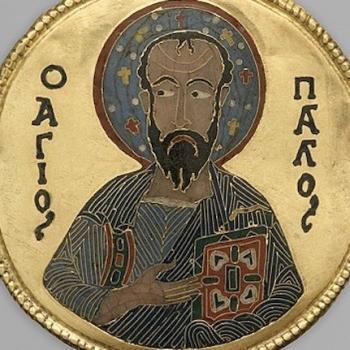
Does Saint Paul Believe in the Trinity?
TRENDING AT PATHEOS General Christian

Seventy and Five Years Old: God Still Starts...
There is a small detail tucked into Genesis 12 that I skipped...

A Biblical Vision of Success in Christian Life...
The Concern and Quest Recent trends and tendencies I note around me...

Indigenous Peoples’ Day and the Church
Indigenous' Peoples Day or Columbus Day? Depending on where you live...

When Spiritual Growth Looks Like Losing Ground
Four Passive Spiritual Disciplines: An Introduction When I was a college freshman,...

Faith and Finding Your Current Season
“To everything there is a season,” Ecclesiastes tells us, “and a time...

Did Jesus Fear God's Wrath in Gethsemane?
That Time Jesus Was Terrified Before we begin, let me say at...
view all General Christian blogs
Ad-Free & Subscriber Log-In Subscription Support
- About Us
- 2026 Calendar
- Videos
- Podcasts
- Library of World Religions
- Faith In Media Tracker
- Advertise With Us
- Write for Us
- Privacy Policy
- Terms of Service
- Do Not Sell My Data
- Contact Us
- Radiant Digital
- Manage Newsletter Subscriptions
- Unsubscribe From Notifications
- Sitemap
Copyright 2008-2026, Patheos. All rights reserved.
Subscription Support Ad-Free & Subscriber Log-In
Follow Patheos