
BuddhistCatholicContemplativeEvangelicalGeneral ChristianHinduJewishLatter-day SaintMuslimNew VisionsProgressive Christian
Beliefs
- Buddhist
- Catholic
- Contemplative
- Evangelical
- General Christian
- Hindu
- Jewish
- Latter-day Saint
- More Voices
- Muslim
- New Visions
- Pagan
- Progressive Christian
Topics
- Religion News
- Food and Religion
- Sports and Religion
- Religious Art
- Religious Music and Entertainment
- Religious Events
- History and Religion
- Style and Religion
- Politics and Religion
- Women in Religion
- Recreation Outdoors and Religion
- Business Finance and Religion
- Careers Workplace and Religion
- Education and Religion
- Family Parenting and Religion
- Health Fitness and Religion
- Home and Religion
- Relationships and Religion
- Technology and Religion
- Travel and Religion
Columnists
- Buddhist Columnists
- Business Finance and Religion Columnists
- Careers Workplace and Religion Columnists
- Catholic Columnists
- Contemplative Columnists
- Education and Religion Columnists
- Evangelists Columnists
- Family Parenting and Religion Columnists
- General Christian Columnists
- Health Fitness and Religion Columnists
- Hindu Columnists
- History and Religion Columnists
- Home and Religion Columnists
- Jewish Columnists
- More Voices Columnists
- Latter Day Columnists
- Muslim Columnists
- New Visions Columnists
- Nonreligious Columnists
- Pagan Columnists
- Politics and Religion Columnists
- Progressive Columnists
- Recreation Outdoors and Religion Columnists
- Relationships and Religion Columnists
- Religion News Columnists
- Religious Art Columnists
- Religious Events Columnists
- Religious Music and Entertainment Columnists
- Sports and Religion Columnists
- Style and Religion Columnists
- Technology and Religion Columnists
- Travel and Religion Columnists
- Women in Religion Columnists
Resource Library
- 2026 Calendar
- Library of World Religions
- The 100 Most Holy Places on Earth
- Patheos Answers
- Podcasts
- Videos
- Faith Leaders Database
- Anglican Episcopalian
- Bahai
- Baptist
- Buddhism
- Christianity
- Confucianism
- Eastern Orthodoxy
- Hinduism
- Holiness and Pentecostal
- ISKCON
- Islam
- Judaism
- Lutheran
- Methodist
- The Church of Jesus Christ of Latter-day Saints
- New Age
- Paganism
- Presbytarian and Reformed
- Protestantism
- Religion Behind the Scenes
- Roman Catholic
- Scientology
- Shia Islam
- Sikhism
- Sufism
- Sunni Islam
- Taoism
- Zen
- See all religions
Research Tools
 Ad-Free & Subscriber Log-In Subscription Support
Ad-Free & Subscriber Log-In Subscription Support
Follow Patheos 

- Trending:
- Forgiveness
- |
- Marriage
- |
- Consciousness
- |
- Death Penalty
- |
- Election
- |
- Halloween
 The Diagonal Way
-
Category
- Home
- General Christian
- The Mystery of God, or, When Bad Theology is Good Theology
The Mystery of God, or, When Bad Theology is Good Theology
Last updated on: February 5, 2022 at 7:11 am by Anthony D Baker
The Mystery of God, or, When Bad Theology is Good Theology 2022-02-05T07:11:51-06:00 Anthony D Baker
Patheos Explore the world's faith through different perspectives on religion and spirituality! Patheos has the views of the prevalent religions and spiritualities of the world.

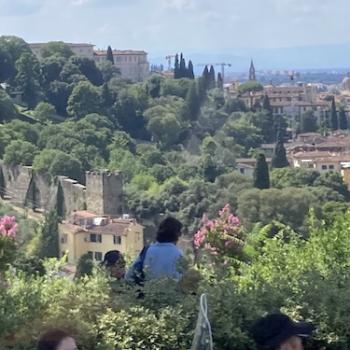
Photo by Scott Greer at gixieroad.com
“Our great mystery is in danger of being made a thing of little moment.” -Gregory of Nazianzus
One of the pivotal moments in the history of theology comes in 381, from a villa in Constantinople. There, at the heart of the empire, the long battle for the Nicene faith had come to a head. Within a few months the second great Ecumenical Council would gather. Gregory of Nazianzus had a unique opportunity to lay the case for the Incarnate God before the masses. It seemed a moment for clarity and purpose, with so much hanging in the balance. That makes it all the more remarkable, to me, that Gregory opens his orations by invoking the mystery of God.
The Theologian in the City
According to an excellent biography, Gregory of Nazianzus was there following through on a dying wish of his friend Basil. The nearly sixty years since the Council of Nicaea had been a roller coaster for the newly legalized churches. The key question continued to be the identity of Jesus. Was he divine? Nearly divine? Or a creature, totally separate in essence from God? Liturgies and catechisms changed nearly as often as bishops.
Conscious of the inhospitable environment this created for a life of faith, Basil had the idea of a preaching campaign. If a skilled orator could lay the case before the people, perhaps a faith could grow irrespective of the political weather. He saw the possibility of a hope in the divinity of Christ catching on among hoi polloi in the capital. And he wanted his old friend Gregory to be the preacher.
The city offered Gregory a villa for his residence, and he immediately turned it into an outdoor chapel. He called it Anastasia, “Resurrection,” as a way of signifying his dream of bringing the dying Nicene tradition back to life. His orations were powerful, and they make plenty of assertions. They lay out a case for a Christ who can speak both as a fully human companion and as identical in essence to the Father. They conclude with the innovative insistence that the Spirit is also of the same essence as the Father and Son. This last move was anticipated by Basil. Still, it was a bold new way of speaking of God’s presence among us after the Ascension.
Getting Ready to Rumble
But Gregory doesn’t open his orations with those assertions. He names the conflict not, first, as one about the right way of speaking of the Incarnation. Instead, he says that “our great mystery is in danger of being made a thing of little moment.” He compares the theologians of the day to athletes in what sounds remarkably like a WWE of the ancient world. They are like wrestlers who forgo honest grappling in order to entertain by deception.
Again, the mystery he is trying to safeguard is the mystery of a God who dwells among us, first as Jesus and then as the Spirit. It matters a great deal to Gregory that we speak well of these divine companions. But he wants those crowds gathered in his open air nave to know, first, that getting the formula right isn’t the point. He’s hoping that the days of basing the faith of churches on the next episcopal proclamation are over.
There’s a pretty remarkable faith underlying that strategy. If it truly is the mysterious God who dwelt among us in Jesus, and who dwells among us now in the Spirit, then formulas can only ever be approximations. Before we discuss the appropriateness of the iota (i) in the Creed, we need to do some soul-searching. Are we engaging in theology like it’s “pleasant gossip,” best done through “idle jests and petty contradictions?” Or is our intention to carefully craft our faith language so that it can bring supernatural hope to a suffering creation?
The Mystery and the Mistakes
Any honest attempt to do the latter, Gregory thinks, is a good place to start. And he really does seem to mean this. John’s Gospel tells us there are many mansions in heaven, he reminds the Constantinopolitan crowd. And if Matthew says the road there is singular and narrow, we should not hear in this that our theological convictions ought to be uniform. Rather, the Spirit of our baptism is one and distinct, and can make one narrow path of the various routes to these many mansions.
Again: are we trying to tell the truth about God? That’s the only good beginning to theology. We may be babbling, but couldn’t a divine Spirit interpret all our words, to the Father’s ear, as the only-begotten Word?
Gregory ends this first of his orations in the city by reiterating his thesis in even clearer terms.
To hit the mark is not useless, and to miss it is not dangerous. With God we shall have converse in this life only in small degree; but a little later, it may be, more perfectly…
The point of theology is conversation with God. You can see where he’s going to take this: if that’s the point of theology, then all the more reason to say that it’s God we are conversing with in Christ and the Spirit.
But that’s for later. Now he wants us to know that theological errors, just like successes, are welcome. We’re all only ever failing, in the power of the Spirit, to speak of the Word with our human voices. Good theology marks this mystery. Sometimes by saying things well, more often by our glorious failures.
Previous Post

February 2, 2022
Is God Perfect?
Next Post
February 9, 2022 The Easter Faith of Stephen Colbert
Browse Our Archives
Select a Category Church Fathers Doctrines for Various Occasions Ecotheology Eschatology Liturgical Seasons Prayer Theology and Literature Uncategorized
Select a Month October 2023 September 2023 August 2023 July 2023 June 2023 February 2023 January 2023 December 2022 November 2022 October 2022 September 2022 August 2022 July 2022 June 2022 May 2022 April 2022 March 2022 February 2022 January 2022 December 2021 November 2021 October 2021 September 2021
Follow Us!
TAKE THE
Religious Wisdom Quiz
What is the Christian response to being wronged?
Select your answer to see how you score.
Gossip Forgive Revenge Hold a grudge
Related posts from The Diagonal Way

What I've Been Reading Lately: End of the...

Why I Am Not (Quite) a Universalist

TRENDING AT PATHEOS General Christian

Mixing Tourism and Faith - The Monastic Site...
Traveling abroad offers the opportunity to multitask by combining tourism with learning...

Seventy and Five Years Old: God Still Starts...
There is a small detail tucked into Genesis 12 that I skipped...

A Biblical Vision of Success in Christian Life...
The Concern and Quest Recent trends and tendencies I note around me...

Indigenous Peoples’ Day and the Church
Indigenous' Peoples Day or Columbus Day? Depending on where you live...

When Spiritual Growth Looks Like Losing Ground
Four Passive Spiritual Disciplines: An Introduction When I was a college freshman,...

Faith and Finding Your Current Season
“To everything there is a season,” Ecclesiastes tells us, “and a time...
view all General Christian blogs
Ad-Free & Subscriber Log-In Subscription Support
- About Us
- 2026 Calendar
- Videos
- Podcasts
- Library of World Religions
- Faith In Media Tracker
- Advertise With Us
- Write for Us
- Privacy Policy
- Terms of Service
- Do Not Sell My Data
- Contact Us
- Radiant Digital
- Manage Newsletter Subscriptions
- Unsubscribe From Notifications
- Sitemap
Copyright 2008-2026, Patheos. All rights reserved.
Subscription Support Ad-Free & Subscriber Log-In
Follow Patheos