
BuddhistCatholicContemplativeEvangelicalGeneral ChristianHinduJewishLatter-day SaintMuslimNew VisionsProgressive Christian
Beliefs
- Buddhist
- Catholic
- Contemplative
- Evangelical
- General Christian
- Hindu
- Jewish
- Latter-day Saint
- More Voices
- Muslim
- New Visions
- Pagan
- Progressive Christian
Topics
- Religion News
- Food and Religion
- Sports and Religion
- Religious Art
- Religious Music and Entertainment
- Religious Events
- History and Religion
- Style and Religion
- Politics and Religion
- Women in Religion
- Recreation Outdoors and Religion
- Business Finance and Religion
- Careers Workplace and Religion
- Education and Religion
- Family Parenting and Religion
- Health Fitness and Religion
- Home and Religion
- Relationships and Religion
- Technology and Religion
- Travel and Religion
Columnists
- Buddhist Columnists
- Business Finance and Religion Columnists
- Careers Workplace and Religion Columnists
- Catholic Columnists
- Contemplative Columnists
- Education and Religion Columnists
- Evangelists Columnists
- Family Parenting and Religion Columnists
- General Christian Columnists
- Health Fitness and Religion Columnists
- Hindu Columnists
- History and Religion Columnists
- Home and Religion Columnists
- Jewish Columnists
- More Voices Columnists
- Latter Day Columnists
- Muslim Columnists
- New Visions Columnists
- Nonreligious Columnists
- Pagan Columnists
- Politics and Religion Columnists
- Progressive Columnists
- Recreation Outdoors and Religion Columnists
- Relationships and Religion Columnists
- Religion News Columnists
- Religious Art Columnists
- Religious Events Columnists
- Religious Music and Entertainment Columnists
- Sports and Religion Columnists
- Style and Religion Columnists
- Technology and Religion Columnists
- Travel and Religion Columnists
- Women in Religion Columnists
Resource Library
- 2026 Calendar
- Library of World Religions
- The 100 Most Holy Places on Earth
- Patheos Answers
- Podcasts
- Videos
- Faith Leaders Database
- Anglican Episcopalian
- Bahai
- Baptist
- Buddhism
- Christianity
- Confucianism
- Eastern Orthodoxy
- Hinduism
- Holiness and Pentecostal
- ISKCON
- Islam
- Judaism
- Lutheran
- Methodist
- The Church of Jesus Christ of Latter-day Saints
- New Age
- Paganism
- Presbytarian and Reformed
- Protestantism
- Religion Behind the Scenes
- Roman Catholic
- Scientology
- Shia Islam
- Sikhism
- Sufism
- Sunni Islam
- Taoism
- Zen
- See all religions
Research Tools
 Ad-Free & Subscriber Log-In Subscription Support
Ad-Free & Subscriber Log-In Subscription Support
Follow Patheos 

- Trending:
- Forgiveness
- |
- Marriage
- |
- Consciousness
- |
- Death Penalty
- |
- Election
- |
- Halloween
 The Diagonal Way
-
Category
- Home
- General Christian
- What Is Heaven? Part 2
What Is Heaven? Part 2
Last updated on: January 12, 2022 at 11:30 am by Anthony D Baker
What Is Heaven? Part 2 2022-01-12T11:30:10-06:00 Anthony D Baker
Patheos Explore the world's faith through different perspectives on religion and spirituality! Patheos has the views of the prevalent religions and spiritualities of the world.
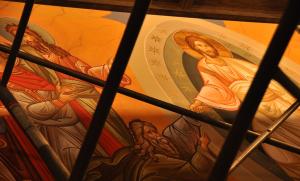 I wrote in my last column about heaven. Specifically, the idea of heaven as the true divine gift present in any object or moment of time. I got there by reading Maximus the Confessor and Ta-Nehesi Coates. But now I’m reading on in Coates’s Between the World and Me, and that faith gets a little more difficult to maintain.
Heaven and the Value of a Life
Coates writes of the deep effect that the murder of his Howard classmate Prince Jones had on him. Jones was an example, for Coates, of a Black man “twice as good” as everyone else, referring to the advice many Black parents give their children. He was a model student, a kind and quiet presence, a born-again Christian. He was killed by a Black police officer from the infamously brutal P.D. of Prince George County, outside of Washington, D. C. The investigation was half-hearted, and the officer returned to work. This, the author tells us, is among the ugliest faces of a political history built on the subjugation of dark-skinned people. Black cops conscripted into the work of reminding America that free Black men are a threat to white supremacy.
Coates attended the funeral, which featured luminaries from the Black church such as Cornel West. He writes that he respects their faith, but knows it is not his. For him, hoping for a heaven for Prince Jones is a way of avoiding the tragedy. “I have no praise anthems, no negro spirituals. The spirit and soul are the body and brain, which are destructible —that is precisely why they are so precious. And the soul did not escape. The spirit did not steal away on gospel wings.”
The book, a long letter to his son, is Coates’s attempt to speak honestly about the injustices of racialized life in the United States. For him, any talk of an afterlife distracts from this reality, and so becomes less than honest. Every slave who died with her body owned by another lost the one shot she had at her own life. “When she dies, the world—which is really the only world she can ever know —ends.” Her slavery was her damnation. Something similar can be said of every lynching victim, every Prince Jones.
Can Dust Praise?
Now, Mr. Coates never asked for the opinion of a white theologian about that day at his friend’s funeral. His experience is not one I can relate to, let alone critique. Still, my theory of publishing is that an author submits her or his account of things for public conversation. What he has to say about life and death is part of a conversation about life and death now. And I will take those words as an invitation to offer an honest and difficult response.
First, I want to say that his challenge makes a lot of sense to me. His book pulses with a celebration of life, and rejects anything that makes life–and death–seem like not such a big deal. It reminds me of several refrains from the Psalms, in fact. “Who can praise you from the grave?” asks Psalm 6. Or:
What profit is there in my death,
if I go down to the Pit?
Will the dust praise you?
Will it tell of your faithfulness?
Hear, O Lord, and be gracious to me!
O Lord, be my helper! (Ps 30)
These are difficult, honest verses that seek a way to trust God without any clear faith in an afterlife. C.S. Lewis wrote about the dense courage of Psalms like this.
So I’d like to say to Mr. Coates, and here I differ somewhat from Lewis’s theology, that I agree. Heaven, conceived as an “afterlife,” can cheapen our value of this life. Christians have a responsibility to challenge anything that cheapens the value of life, from police brutality to easy dismissals of suffering. I might also include a prison system that disregards the one shot a person has at life. Or on-demand abortion pressures that admirably challenge a patriarchy that devalues a woman’s life, but sometimes do so at the expense of any hard public conversations about the life of a fetus.
Heaven as the Abundance of this Life
For that reason, it seems to me that we make a mistake if we go too far with the analogy of heaven as an afterlife. It’s an analogy because it works from something we know, this life, to something we don’t: what lies beyond death. Christian eschatology, the study of such questions, can get obsessed with futurism, as if hope were only about an imagined time that lies ahead.
What if instead hope were about the fullness of the present? Let’s take that terrible moment when the cop shot Mr. Jones. That’s a moment full of fear, desire, anger, and likely other elevated emotions. And for us—for Jones, for the officer—that moment is over. But maybe it’s not for God. Can God receive that moment in its fullness? Can God bless it and invite it to become the burst of life and love and joy that is truly want we want, even if we often want it so poorly?
I’d like to imagine God answering the Psalmist’s prayer something like this:
“No, your body, once it is dust, will not tell of my faithfulness. At least not as fully as it does now, while you are alive to love and laugh and imagine. So I will let this moment of your duress tell, more fully than it knows how, of my faithfulness. I will love this moment as my own creation, and summon it to come close to me. All the hate and fear and violence will burn away, like space junk when it approaches the surface of the sun. And only what I love will come near to greet me. For this is why I made you: so that you might have your one precious life, and have it abundantly. All that is beautiful and good in your irreplaceable existence will have everlasting life in me.”
This is, I think, what Ezekiel learns, when he asks if dry bones can live. If everlasting life means a second chance, and so a relativizing of the hopes and tragedies of this one, then no. But if it means God’s yes overwhelms all the no’s of the world—of the Prince George P. D, of the southern Senators who spent decades protecting the right to lynch Black people? I still have faith in that sort of heaven.
This is something I’ve learned from thoughtfully considering books like James Cone’s The Spirituals and the Blues, Augustine’s Confessions, Kathryn Tanner’s Jesus, Humanity, and the Trinity, and Marilynne Robinson’s heavy and beautiful novel Housekeeping. I discuss all this a bit more in my own most recent book. And my students in Hope for Creation–my class at Seminary of the Southwest— helped me think through these questions more clearly.
Previous Post

December 4, 2021
What is Heaven?
Next Post
December 11, 2021 What is Hell?
Browse Our Archives
Select a Category Church Fathers Doctrines for Various Occasions Ecotheology Eschatology Liturgical Seasons Prayer Theology and Literature Uncategorized
Select a Month October 2023 September 2023 August 2023 July 2023 June 2023 February 2023 January 2023 December 2022 November 2022 October 2022 September 2022 August 2022 July 2022 June 2022 May 2022 April 2022 March 2022 February 2022 January 2022 December 2021 November 2021 October 2021 September 2021
Follow Us!
TAKE THE
Religious Wisdom Quiz
What city was Jesus born in?
Select your answer to see how you score.
Nazareth Jerusalem Bethlehem Capernaum
Related posts from The Diagonal Way

The Year of the Locust: A Sermon on...
The Flood: Our Gospel for an Age of...

Advent Is When Christians Talk about Hope. But...

Resonating the Mountain: Some Good Ecotheology in The...
TRENDING AT PATHEOS General Christian

Seventy and Five Years Old: God Still Starts...
There is a small detail tucked into Genesis 12 that I skipped...

A Biblical Vision of Success in Christian Life...
The Concern and Quest Recent trends and tendencies I note around me...

Indigenous Peoples’ Day and the Church
Indigenous' Peoples Day or Columbus Day? Depending on where you live...

When Spiritual Growth Looks Like Losing Ground
Four Passive Spiritual Disciplines: An Introduction When I was a college freshman,...

Faith and Finding Your Current Season
“To everything there is a season,” Ecclesiastes tells us, “and a time...

Did Jesus Fear God's Wrath in Gethsemane?
That Time Jesus Was Terrified Before we begin, let me say at...
view all General Christian blogs
Ad-Free & Subscriber Log-In Subscription Support
- About Us
- 2026 Calendar
- Videos
- Podcasts
- Library of World Religions
- Faith In Media Tracker
- Advertise With Us
- Write for Us
- Privacy Policy
- Terms of Service
- Do Not Sell My Data
- Contact Us
- Radiant Digital
- Manage Newsletter Subscriptions
- Unsubscribe From Notifications
- Sitemap
Copyright 2008-2026, Patheos. All rights reserved.
Subscription Support Ad-Free & Subscriber Log-In
Follow Patheos