
BuddhistCatholicContemplativeEvangelicalGeneral ChristianHinduJewishLatter-day SaintMuslimNew VisionsProgressive Christian
Beliefs
- Buddhist
- Catholic
- Contemplative
- Evangelical
- General Christian
- Hindu
- Jewish
- Latter-day Saint
- More Voices
- Muslim
- New Visions
- Pagan
- Progressive Christian
Topics
- Religion News
- Food and Religion
- Sports and Religion
- Religious Art
- Religious Music and Entertainment
- Religious Events
- History and Religion
- Style and Religion
- Politics and Religion
- Women in Religion
- Recreation Outdoors and Religion
- Business Finance and Religion
- Careers Workplace and Religion
- Education and Religion
- Family Parenting and Religion
- Health Fitness and Religion
- Home and Religion
- Relationships and Religion
- Technology and Religion
- Travel and Religion
Columnists
- Buddhist Columnists
- Business Finance and Religion Columnists
- Careers Workplace and Religion Columnists
- Catholic Columnists
- Contemplative Columnists
- Education and Religion Columnists
- Evangelists Columnists
- Family Parenting and Religion Columnists
- General Christian Columnists
- Health Fitness and Religion Columnists
- Hindu Columnists
- History and Religion Columnists
- Home and Religion Columnists
- Jewish Columnists
- More Voices Columnists
- Latter Day Columnists
- Muslim Columnists
- New Visions Columnists
- Nonreligious Columnists
- Pagan Columnists
- Politics and Religion Columnists
- Progressive Columnists
- Recreation Outdoors and Religion Columnists
- Relationships and Religion Columnists
- Religion News Columnists
- Religious Art Columnists
- Religious Events Columnists
- Religious Music and Entertainment Columnists
- Sports and Religion Columnists
- Style and Religion Columnists
- Technology and Religion Columnists
- Travel and Religion Columnists
- Women in Religion Columnists
Resource Library
- 2026 Calendar
- Library of World Religions
- The 100 Most Holy Places on Earth
- Patheos Answers
- Podcasts
- Videos
- Faith Leaders Database
- Anglican Episcopalian
- Bahai
- Baptist
- Buddhism
- Christianity
- Confucianism
- Eastern Orthodoxy
- Hinduism
- Holiness and Pentecostal
- ISKCON
- Islam
- Judaism
- Lutheran
- Methodist
- The Church of Jesus Christ of Latter-day Saints
- New Age
- Paganism
- Presbytarian and Reformed
- Protestantism
- Religion Behind the Scenes
- Roman Catholic
- Scientology
- Shia Islam
- Sikhism
- Sufism
- Sunni Islam
- Taoism
- Zen
- See all religions
Research Tools
 Ad-Free & Subscriber Log-In Subscription Support
Ad-Free & Subscriber Log-In Subscription Support
Follow Patheos 

- Trending:
- Forgiveness
- |
- Marriage
- |
- Consciousness
- |
- Death Penalty
- |
- Election
- |
- Halloween
 The Diagonal Way
-
Category
- Home
- General Christian
- Can a Place Make Us Holy?
Can a Place Make Us Holy?
Last updated on: January 12, 2022 at 11:38 am by Anthony D Baker
Can a Place Make Us Holy? 2022-01-12T11:38:14-06:00 Anthony D Baker
Patheos Explore the world's faith through different perspectives on religion and spirituality! Patheos has the views of the prevalent religions and spiritualities of the world.
Is there theological significance to belonging to a place? This question is on my mind today, since my wife and I closed on a house–and the earth it sits on–yesterday. Is that place holy? Can we become holier by living there?
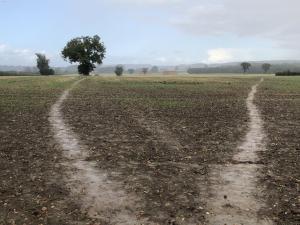
Photo by John Milbank
Land ownership in the U.S. is random. I was born and grew into sufficient privilege to convince banks that my income is reliable. My ancestors won a generations-long war with various Native tribes. Socialism never took hold as a competitive economic option here. The car I drive seems able to handle the commute out of a glutted Austin real estate market. Because of all that, I own earth. It doesn’t seem to mean much, by all those standards. But what could it mean to me as a theologian and Christian?
What Does the Land Want to Teach?
When God made a covenant with Abraham’s children, God brought them to a place and gave them a land. That’s a central piece of the biblical story, but a difficult one. It’s difficult especially in light of the contemporary politics of Israel, which often leave me feeling that many Jews and Christians are missing something important in the narrative of landed-covenant.
The land of Israel will not be like the vegetable gardens of Egypt, Moses tells the runaway slaves in Deuteronomy 11. They watered Egyptian gardens with their feet. I’m not sure what that means, except that maybe it involved no back bending. Maybe the Nile was always ready to rush through the gardens, so that the Israelites simply had to kick away a clod of dirt and the water would flow.
Their own land will be different. “Blessed precisely in the fragility that necessitates and therefore guarantees God’s unwavering attention.” That’s how Ellen Davis puts it in her remarkable book. The land will teach them particular practices of waiting on that blessing. God can make deserts bloom and barren land places of plenty. The manna of the exodus began to teach them that. The promised land will continue the lesson. It will teach them to wait on the holy God to bring rains and food.
How is a Farmer Like a Farm?
That’s Davis’s delightful question about Leviticus. It makes me think of the Mad Hatter’s question to Alice: “Why is a raven like a writing desk?” For the Hatter the question is answerless. It’s part of the nonsense world that Alice has fallen into.
But Israel’s Torah, with its complex of overlapping laws, only seems random and nonsensical. Do not harvest to the edge of your fields. Or shave the corners of your beards. Or mix meat and dairy on your plates. Be holy as I, your God, am holy.
You can’t learn God’s holiness in a land of foot irrigation, when you’re standing straight up. You need to get intimate with the land. This land is, as Moses warned them, “a land of hills and valleys” (Deut 11:11). So the hunters and tillers will need to know the rises and falls of the earth. The places where water runs. The little caves where creatures live.
In addition, farmers must become like the lands they farm. Their shaving practices will remind them of their harvest commitments: leave the edges. Those commitments will remind them that God provides, without our anxious maximizing of productivity. In fact, the unharvested edges of fields will provide for hungry people who do not own arable land. So their shaving makes their bodies like their fields, and their fields make them holy providers like God.
Similarly, kosher laws remind Israel how God separated them out from anxiety-driven economies. Sabbath laws remind them that they are no longer slaves, foot-watering and brick-making with no rest. This then transfers to jubilee laws, when along with those suffering from debt, Israel also liberates the hard-working land itself. The land gets a sabbath. Tired land teaches us what it means to rest from our labor like the holy God rested.
How do we Dwell in a Place?
Israel is called to dwell in a land. Norman Wirzba says that we tend to think of a dwelling as something we make. But the biblical language is clear: God makes dwellings, and we get to dwell there. There is an element of risk here that both we and Israel have to confront: God’s land will spit out the gardeners if they do not learn the holiness that the land is trying to teach.
What would change if we understood our own places of dwelling—homes, offices, churches—this way? As one of my students put it, what if purchasing a piece of land didn’t mean we own it, but that we now belong to it, and are responsible for it?
We would have a hard time, for instance, justifying practices like mountaintop removal. Or industrial farming with little concern for its carbon release. Or our sprawling urban spaces that remake landscapes in our own image. We would be too busy bending over the hills and rises, noticing what lives there, what grows and interacts there.
Can A Place Make Us Holy?
Most of all, we would come to see land as a gift: a gift given with a purpose. If God gave my family that bit of land yesterday, it’s so that we can learn to be holy as God is holy. To dwell, to pay attention, and see what blessings come.
Israel was always meant to share that gift of healing holiness. That’s why, by my reckoning, the militarized wall-building of contemporary Israel is far from the vision of the Law and Prophets. As is most construction in urban sprawl zones. Including the land I just purchased.
Land isn’t real estate, and it’s not price. Wendell Berry keeps trying to tell us that. It’s gift. A place to pay attention. To bless, offer blessing, and let God’s holiness run its course.
Previous Post

October 9, 2021
The Cross as the Meaning of Suffering
Next Post
October 16, 2021 Faith as Affection
Browse Our Archives
Select a Category Church Fathers Doctrines for Various Occasions Ecotheology Eschatology Liturgical Seasons Prayer Theology and Literature Uncategorized
Select a Month October 2023 September 2023 August 2023 July 2023 June 2023 February 2023 January 2023 December 2022 November 2022 October 2022 September 2022 August 2022 July 2022 June 2022 May 2022 April 2022 March 2022 February 2022 January 2022 December 2021 November 2021 October 2021 September 2021
Follow Us!
TAKE THE
Religious Wisdom Quiz
What holiday celebrates Jesus’ birth?
Select your answer to see how you score.
Ascension Day Christmas Easter Good Friday
Related posts from The Diagonal Way

The Year of the Locust: A Sermon on...
Truth's Diagonal Dance (a reflection on Catherine Pickstock)
The Flood: Our Gospel for an Age of...
TRENDING AT PATHEOS General Christian

Seventy and Five Years Old: God Still Starts...
There is a small detail tucked into Genesis 12 that I skipped...

A Biblical Vision of Success in Christian Life...
The Concern and Quest Recent trends and tendencies I note around me...

Indigenous Peoples’ Day and the Church
Indigenous' Peoples Day or Columbus Day? Depending on where you live...

When Spiritual Growth Looks Like Losing Ground
Four Passive Spiritual Disciplines: An Introduction When I was a college freshman,...

Faith and Finding Your Current Season
“To everything there is a season,” Ecclesiastes tells us, “and a time...

Did Jesus Fear God's Wrath in Gethsemane?
That Time Jesus Was Terrified Before we begin, let me say at...
view all General Christian blogs
Ad-Free & Subscriber Log-In Subscription Support
- About Us
- 2026 Calendar
- Videos
- Podcasts
- Library of World Religions
- Faith In Media Tracker
- Advertise With Us
- Write for Us
- Privacy Policy
- Terms of Service
- Do Not Sell My Data
- Contact Us
- Radiant Digital
- Manage Newsletter Subscriptions
- Unsubscribe From Notifications
- Sitemap
Copyright 2008-2026, Patheos. All rights reserved.
Subscription Support Ad-Free & Subscriber Log-In
Follow Patheos