
BuddhistCatholicContemplativeEvangelicalGeneral ChristianHinduJewishLatter-day SaintMuslimNew VisionsProgressive Christian
Beliefs
- Buddhist
- Catholic
- Contemplative
- Evangelical
- General Christian
- Hindu
- Jewish
- Latter-day Saint
- More Voices
- Muslim
- New Visions
- Pagan
- Progressive Christian
Topics
- Religion News
- Food and Religion
- Sports and Religion
- Religious Art
- Religious Music and Entertainment
- Religious Events
- History and Religion
- Style and Religion
- Politics and Religion
- Women in Religion
- Recreation Outdoors and Religion
- Business Finance and Religion
- Careers Workplace and Religion
- Education and Religion
- Family Parenting and Religion
- Health Fitness and Religion
- Home and Religion
- Relationships and Religion
- Technology and Religion
- Travel and Religion
Columnists
- Buddhist Columnists
- Business Finance and Religion Columnists
- Careers Workplace and Religion Columnists
- Catholic Columnists
- Contemplative Columnists
- Education and Religion Columnists
- Evangelists Columnists
- Family Parenting and Religion Columnists
- General Christian Columnists
- Health Fitness and Religion Columnists
- Hindu Columnists
- History and Religion Columnists
- Home and Religion Columnists
- Jewish Columnists
- More Voices Columnists
- Latter Day Columnists
- Muslim Columnists
- New Visions Columnists
- Nonreligious Columnists
- Pagan Columnists
- Politics and Religion Columnists
- Progressive Columnists
- Recreation Outdoors and Religion Columnists
- Relationships and Religion Columnists
- Religion News Columnists
- Religious Art Columnists
- Religious Events Columnists
- Religious Music and Entertainment Columnists
- Sports and Religion Columnists
- Style and Religion Columnists
- Technology and Religion Columnists
- Travel and Religion Columnists
- Women in Religion Columnists
Resource Library
- 2026 Calendar
- Library of World Religions
- The 100 Most Holy Places on Earth
- Patheos Answers
- Podcasts
- Videos
- Faith Leaders Database
- Anglican Episcopalian
- Bahai
- Baptist
- Buddhism
- Christianity
- Confucianism
- Eastern Orthodoxy
- Hinduism
- Holiness and Pentecostal
- ISKCON
- Islam
- Judaism
- Lutheran
- Methodist
- The Church of Jesus Christ of Latter-day Saints
- New Age
- Paganism
- Presbytarian and Reformed
- Protestantism
- Religion Behind the Scenes
- Roman Catholic
- Scientology
- Shia Islam
- Sikhism
- Sufism
- Sunni Islam
- Taoism
- Zen
- See all religions
Research Tools
 Ad-Free & Subscriber Log-In Subscription Support
Ad-Free & Subscriber Log-In Subscription Support
Follow Patheos 

- Trending:
- Forgiveness
- |
- Marriage
- |
- Consciousness
- |
- Death Penalty
- |
- Election
- |
- Halloween
 The Diagonal Way
-
Category
- Home
- General Christian
- Human Energy, Divine Revelation
Human Energy, Divine Revelation
Last updated on: January 12, 2022 at 11:32 am by Anthony D Baker
Human Energy, Divine Revelation 2022-01-12T11:32:15-06:00 Anthony D Baker
Patheos Explore the world's faith through different perspectives on religion and spirituality! Patheos has the views of the prevalent religions and spiritualities of the world.
Where should we look if we wish to see the hand of God at work? Another way of asking the question: if divine revelation is happening in the world, how would we know?

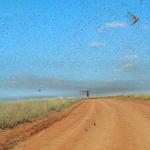
Where do we look for God? [Photo taken by Rich Potts]
Where divine revelation happens
We might want to start by noticing things around us: the rising of the sun, the spring thaw. The overwhelming scale of the universe. The moment a sickness leaves a body, or that a check “miraculously” clears the bank.
Yes. Maybe.
But when we start here we are showing a lack of nerve. It’s like when a child (or adult!) in class hears a hard question and looks down at her desk so the teacher won’t make eye contact with her.
Those answers, while not wrong, avoid the response that is at one and the same time the most obvious and the most difficult answer: God reveals Godself in us.
I call it the most obvious because of the shape of the Christian gospel. When the world had forgotten how to recognize the hand of its creator, God inhabited a human body and dwelt among us. This meant, for the 7th theologian Maximus the Confessor, that human nature itself has become a mystery, a site of revelation. “Christ elevated human nature to himself, making that nature itself another mystery…”
For humans especially, whom I will assume comprise the bulk of this blog’s readers, human nature is the primary site of divine revelation.
The human energy of Christ
By the late classical era, the church had clarified in its christology that Jesus was fully human and fully divine. Still, some theologians argued that Jesus was a kind of human performance that God put on for us. Like the sunrise or the check in the bank, Jesus was a display of God’s power and care that existed “out there” in the world.
Maximus argued against this that when we say Jesus was fully human, we must mean that he had not only a body and soul as we do, but also what Maximus called “human energy.” Energy names the power that gives us our natural way of being a creature in the world. An exhausted parent gets up to care for a child not because their body feels rested, and not because they are in that moment flooded by will power in the depths of their soul, but because they rely on a natural— even biological we could now say—impulse, or energy, to do the next right human thing. (I’ll need to say more in another post about the need to pay attention to habits that affect our human energy, for good and for ill.)
Jesus had all of that normal human energy, and it’s there, not anywhere else, that his life reveals God, becomes a divine revelation. He does human things in a divine way, Maximus says.
Little incarnations
But the risk of saying it that way is that now we place ourselves in the midst of the discussion. We just made eye contact with the teacher. Now all that exists as the life force that my parents named “Tony” is fair game for divine revelation. I have, at least potentially, become “another mystery.”
Theology 101 teaches that humans are made in the image of God. Maximus, though, takes us up to the upper level classes. Yes, all things are made in God’s image, little logoi reflecting the divine Logos. Humans, though, are the ones invited to take on this likeness by practicing the virtues like faithfulness, hopefulness, love, courage, and justice. In doing so, he said, we don’t just remain images of God. We develop practices that “manifest God who is invisible by nature” in our very bodies. All things are little images; humans are called to become little incarnations.
Becoming a little incarnation is not something we do alone, of course. The lives of saints and mentors show how natural human energy can be caught up into the energy of God. When I hear of the remarkable acts of faithfulness among Rwandan Christians, for instance, forgiving those who slaughtered their families, I am ready to say that I see human nature flooded from within by a mysteriously divine revelation.
Mysterious Me
And then eventually I find that I too am called not just to claim my creation in God’s image, but to own my calling to grow into God’s incarnate likeness. I noticed that the hope and faithfulness taking shape in me is analogous to what I have seen in others: in saints like Maximus, in the Rwandan church, in the prayers of my grandparents…
And as we consider all this evidence together, we find ourselves compelled to stand and say— bravely, even as our voice shakes and our knees wobble—that in Christ, we ourselves have become a beautiful, infinite, divine mystery.
Doctrines for Various Occasions
Previous Post
October 14, 2023
The Year of the Locust: A Sermon on War
Next Post

September 29, 2021 Yahweh: The God beyond Verb Tenses
Browse Our Archives
Select a Category Church Fathers Doctrines for Various Occasions Ecotheology Eschatology Liturgical Seasons Prayer Theology and Literature Uncategorized
Select a Month October 2023 September 2023 August 2023 July 2023 June 2023 February 2023 January 2023 December 2022 November 2022 October 2022 September 2022 August 2022 July 2022 June 2022 May 2022 April 2022 March 2022 February 2022 January 2022 December 2021 November 2021 October 2021 September 2021
Follow Us!
TAKE THE
Religious Wisdom Quiz
Who suggested throwing Moses into the Nile as a baby?
Select your answer to see how you score.
Miriam Pharaoh A Hebrew midwife Pharaoh's daughter
Related posts from The Diagonal Way

The Year of the Locust: A Sermon on...
Does Saint Paul Believe in the Trinity?

TRENDING AT PATHEOS General Christian

Seventy and Five Years Old: God Still Starts...
There is a small detail tucked into Genesis 12 that I skipped...

A Biblical Vision of Success in Christian Life...
The Concern and Quest Recent trends and tendencies I note around me...

Indigenous Peoples’ Day and the Church
Indigenous' Peoples Day or Columbus Day? Depending on where you live...

When Spiritual Growth Looks Like Losing Ground
Four Passive Spiritual Disciplines: An Introduction When I was a college freshman,...

Faith and Finding Your Current Season
“To everything there is a season,” Ecclesiastes tells us, “and a time...

Did Jesus Fear God's Wrath in Gethsemane?
That Time Jesus Was Terrified Before we begin, let me say at...
view all General Christian blogs
Ad-Free & Subscriber Log-In Subscription Support
- About Us
- 2026 Calendar
- Videos
- Podcasts
- Library of World Religions
- Faith In Media Tracker
- Advertise With Us
- Write for Us
- Privacy Policy
- Terms of Service
- Do Not Sell My Data
- Contact Us
- Radiant Digital
- Manage Newsletter Subscriptions
- Unsubscribe From Notifications
- Sitemap
Copyright 2008-2026, Patheos. All rights reserved.
Subscription Support Ad-Free & Subscriber Log-In
Follow Patheos