
BuddhistCatholicContemplativeEvangelicalGeneral ChristianHinduJewishLatter-day SaintMuslimNew VisionsProgressive Christian
Beliefs
- Buddhist
- Catholic
- Contemplative
- Evangelical
- General Christian
- Hindu
- Jewish
- Latter-day Saint
- More Voices
- Muslim
- New Visions
- Pagan
- Progressive Christian
Topics
- Religion News
- Food and Religion
- Sports and Religion
- Religious Art
- Religious Music and Entertainment
- Religious Events
- History and Religion
- Style and Religion
- Politics and Religion
- Women in Religion
- Recreation Outdoors and Religion
- Business Finance and Religion
- Careers Workplace and Religion
- Education and Religion
- Family Parenting and Religion
- Health Fitness and Religion
- Home and Religion
- Relationships and Religion
- Technology and Religion
- Travel and Religion
Columnists
- Buddhist Columnists
- Business Finance and Religion Columnists
- Careers Workplace and Religion Columnists
- Catholic Columnists
- Contemplative Columnists
- Education and Religion Columnists
- Evangelists Columnists
- Family Parenting and Religion Columnists
- General Christian Columnists
- Health Fitness and Religion Columnists
- Hindu Columnists
- History and Religion Columnists
- Home and Religion Columnists
- Jewish Columnists
- More Voices Columnists
- Latter Day Columnists
- Muslim Columnists
- New Visions Columnists
- Nonreligious Columnists
- Pagan Columnists
- Politics and Religion Columnists
- Progressive Columnists
- Recreation Outdoors and Religion Columnists
- Relationships and Religion Columnists
- Religion News Columnists
- Religious Art Columnists
- Religious Events Columnists
- Religious Music and Entertainment Columnists
- Sports and Religion Columnists
- Style and Religion Columnists
- Technology and Religion Columnists
- Travel and Religion Columnists
- Women in Religion Columnists
Resource Library
- 2026 Calendar
- Library of World Religions
- The 100 Most Holy Places on Earth
- Patheos Answers
- Podcasts
- Videos
- Faith Leaders Database
- Anglican Episcopalian
- Bahai
- Baptist
- Buddhism
- Christianity
- Confucianism
- Eastern Orthodoxy
- Hinduism
- Holiness and Pentecostal
- ISKCON
- Islam
- Judaism
- Lutheran
- Methodist
- The Church of Jesus Christ of Latter-day Saints
- New Age
- Paganism
- Presbytarian and Reformed
- Protestantism
- Religion Behind the Scenes
- Roman Catholic
- Scientology
- Shia Islam
- Sikhism
- Sufism
- Sunni Islam
- Taoism
- Zen
- See all religions
Research Tools
 Ad-Free & Subscriber Log-In Subscription Support
Ad-Free & Subscriber Log-In Subscription Support
Follow Patheos 

- Trending:
- Forgiveness
- |
- Marriage
- |
- Consciousness
- |
- Death Penalty
- |
- Election
- |
- Halloween

- Home
- New Visions
- Politics and Religion
- A Decade of Deconstruction: Do I Need a Group?
A Decade of Deconstruction: Do I Need a Group?
Last updated on: November 10, 2025 at 2:48 pm by Karl J. Forehand
A Decade of Deconstruction: Do I Need a Group? 2025-11-10T14:48:46-06:00 Karl J. Forehand
Patheos Explore the world's faith through different perspectives on religion and spirituality! Patheos has the views of the prevalent religions and spiritualities of the world.

A Decade of Deconstruction: Do I Need a Group?
More than ever before, it seems like the world is divided into groups.
We cheer for different sports teams with great enthusiasm, even though the team is simply the one the owner assembled in our region and not significantly more deserving of our devotion than the other team. We classify ourselves by political group labels, wishing the other group would disappear, even though we know individuals in that group whom we care about. We divide ourselves by passionately committing ourselves to religious groups. Sometimes, the other group is very similar to ours, but we can’t bring ourselves to even listen to them.
We invest less in the initial study of the groups we join than in choosing which mower to use for our lawn. Even lawnmower brands can become cult-like when we spend enough money to care more about which one is the best. Often, our choices of groups to join are mainly influenced by where we live and what we are exposed to.
Sometimes, it’s a harsh realization to see that the ideals and group goals we strongly uphold have serious flaws. As we grow, change, and learn, we often join groups that align with our new understanding. This regret over our past ignorance and supporting the wrong “team” can lead us to lash out in anger, even though we once faithfully belonged to that group. Religion, in particular, has taught us to demonize and otherize the opposing faction and to avoid questioning the contradictions within our own group. All groups employ cult-like tactics to control our time, money, and loyalty by segregating us from others so that we learn to despise them and support our own tribe.
I mean, you can’t cheer for the Buffalo Bills and the Kansas City Chiefs, just like you can’t support two different churches or speak kindly of both liberals and conservatives. If you do, then you are not committed, and you don’t get to enjoy the benefits of either group peacefully. Even Jesus chose a group, favoring Jews over Gentiles, and referred to the other group as “dogs” without remorse.
My Experience
In my family of origin, we never talked about politics or religion, possibly because our religion in the South focused more on American football and friday night lights. But make no mistake, even in those small towns, we were fiercely against and hated the other team that lived 8 miles away. They were the enemy, and we supported the opinions and actions of the people closest to us, giving little thought to those a few miles away who were almost exactly like us.
Even though we didn’t discuss religion, even the smallest towns have multiple religious groups that don’t get along and don’t support each other unless there’s a major event like a farmer’s death during harvest.
By the way, even occupations can become cult-like, dismissing others without reason just because they work for or lead a different organization.
So why do we do this?
The High of Righteousness
In April of this year, we interviewed Robert N. Minor on The Desert Sanctuary podcast, and he introduced us to the concept of the “High of Righteousness.” The things he said to me resonated deeply with my 20 years of experience as a pastor and my lifelong relationship with Christianity. For me, I have come to express this idea as “We are right, and God is on our side.”
In our talk with Bob, we discussed how religion itself doesn’t do anything. It’s what people do with it that can make it harmful, helpful, or good. But why do we get addicted to things like religions, sports teams, or other groups in society?
It is the feeling we get when we cheer for the right team, worship the right god, or vote for the right party (even if it’s left). Just like drug addicts chase the first high of their lives, we keep trying to justify and praise the choices we make. Once we decide, we put a lot of effort into defending it. We do this even though our understanding is limited and we’re exposed to only a small part of the world. Modern society provides us with a wealth of information, but doesn’t teach us how to sift through and make sense of it all.
Meanwhile, the group usually encourages interaction among its members and spends a lot of time demonizing people who made different choices based on the information they had, or perhaps simply where they were born. When something goes wrong, the scapegoat is often the outside world or another group. Religion does this consistently!
Much like drug addicts, we never quite reach that high because no religion, political party, or football team ever fully satisfies us and often leaves us disappointed when we experience it. As a result, all of these groups help us avoid the necessary work of addressing our issues, including taking responsible actions such as mental health care, caring for our physical health, and managing our finances responsibly and productively.
Sometimes, tweaked-out religious junkies line the front row of the sanctuary, unaware that they are still chasing the feelings and emotions they felt the first time they were there. Political junkies long for their leaders to be in charge, hoping some of the power might trickle down and make them feel better. Sports fans remember the first game that their team miraculously won and continue to “use” even when their team becomes irrelevant that season. At the same time, they wish bad fortune on the opposing team’s quarterback and his fans. They call it faithfulness!
Our Deep Need for Connection
Humans have a profound need for connection and a sense of belonging. A lack of attachment for infants can contribute to a life-threatening condition known as Failure to Thrive (FTT), where a child fails to gain weight or grow normally. Attachment and nurture are crucial for infants, as well as for growing children and adults.
Because we feel this instinctively, we long for community, which we sometimes mistakenly attribute to the groups we frequent. We assume that joining the right church, cheering for the right team, or belonging to the correct political group will, in some way, serve as our community and lead us to that connection we desire. Most often, we find these things are only a false example of how we actually discover the deep connection we need.
Communities like this start with a condition: you can belong if you share our beliefs and despise the same people we do. Group assumptions can be as ridiculous as hoping the Dallas Cowboys will win another Super Bowl. Therefore, the group’s loyal members encourage newcomers to believe and have faith that things will eventually turn out the way they envision. When this doesn’t happen, the group urges its members to give more, do more, and worship more passionately to help turn their hopes and assumptions into reality.
However, please understand that the infant didn’t find her attachment by belonging to a specific group, holding a certain belief, or going to a place every week. She also couldn’t buy that attachment with money. She didn’t need a large group to join. She needed someone to attach and connect to her.
I might high-five a fellow fan of my sports team like we’re old friends, just as I might hug someone in church after sharing an experience. But that’s not a definite sign that we truly connected. We can like the same things and dislike the same people and still be just as unconnected as with people we hardly know.
I don’t think this connection occurred when I attended the comedy show for my birthday. All of us existed peacefully under the same roof because, for about an hour, we shared the same goal: to escape from our everyday lives and do the same thing at the same time. But I don’t even know the names of the people who were there. Did I enjoy it? Yes! Was there a real connection with the comedian or the audience? No!
We shared some similarities, like being mainly from the Midwest and enjoying that kind of comedy, as well as a particular performer. We had a shared experience, but it wasn’t a real connection. Mostly, we forget about our daily lives and the problems we face because we pay someone to entertain us, and sadly, that’s probably the main reward for being in a group: entertainment. True community happens individually, not necessarily collectively.
Where Community is Found
Groups are used to unify power and streamline coordination and communication. We often discussed the advantages of an association in my former denomination, which is a larger collective of similar churches in the area. This enabled us to take on bigger projects and have a more substantial influence because people could join a large group that matches their individual hopes, desires, and beliefs.
I would never discourage people from having support systems, safety nets, and other associations that help protect workers, the underprivileged, and those in need. But don’t confuse occasional benefits with a real connection. Even a family that is deeply committed to each other can be disconnected and unattached in the ways that truly matter. A dad who protects his family from external physical threats and provides income, but fails to connect with his daughter, has only done part of what was necessary. People can be utterly alone in an auditorium full of individuals who share the same beliefs and aspirations if they don’t form genuine connections with others who will take the time to engage with them in a positive and lasting way.
We are often like frantic teenagers hoping to be popular by joining the groups we believe will complete us, while forming dozens of superficial relationships that never truly connect us to our classmates. Being in the right friend group can definitely influence us and shape our views about the world, God, and humanity. Still, without genuine connections with individual people, we are more like walking corpses than thriving human beings.
Groups usually unite around sameness, but often the best connections are with those who are uniquely different than us.
Since deconstructing my religion, I have learned to value individual relationships more than the group. This allows me to live in a community where people may vote differently or support different teams, yet still have genuine connections. I realized that belonging isn’t about the group I’m part of but more about how I feel about myself and the personal connections I forge with others.
A Way Forward
Think back as far as you can remember and recall the relationships that genuinely connected you to another person. Try to remember how long it took to build that relationship and invest in that connection, even though some of these connections might not last forever. Discover the impact that a connection or lack thereof can have on your well-being.
At the same time, remember how much energy and effort you previously invested in groups, associations, and even sports teams that you no longer support. Just this week, I struggled with whether to stay connected to a volunteer group, and I also recalled the initial excitement I felt when I first discovered it. The key to deciding whether it’s beneficial to stay involved is honestly assessing the valuable connections made with individual people. Those are the parts that stick with me, even if I decide to disassociate or no longer participate in the group.
As I enter the later stages of my life, I am beginning to realize that the true treasures I will carry are not the groups I participated in or the places where I dedicated most of my energy and resources. Even if someone recites these associations to those mourning my loss when I pass, what truly matters will always be the deep connections I formed with others.
I hope I’m getting better at this even now.
Be where you are, Be who you are, Be at peace!
Karl Forehand
A Decade of Deconstruction: I Don’t Need Church Drugs
A Decade of Deconstruction: I Don’t Need the Bible
A Decade of Deconstruction: I Don’t Believe in the Devil
Progressive Christian
Politics and Religion
Family, Parenting and Religion
Previous Post

November 6, 2025
A Decade of Deconstruction: I Don’t Need a Shepherd
Next Post

February 3, 2026 My Favorite Things to Say - Language of My Deconstruction
Browse Our Archives
Select a Category Abuse Addiction Advent adventure Alpha Male Animals Answers Attachment Attitude authenticity Authenticty Authentiicity Awareness being Bible Black Community BLM body awarenss book Books Bravery Bullying Bypassing Certainty Certianty Chamge change children Christianity Christmas Church Comfort community Compaasion Compassion Complementarian Complementarianism Conditioning Consciousness Contemplation Control Conversation Converstations Covid-19 Creation Darkness Death Debate deconstruction demons depression desert Devil Disciples discussion Divine dreams Easter Eclipse Empathy Essence evolution evolve faith fatherhood Fear fiction Flood Focus Focusing Focussing Future Genesis Goals God Gratitude grief growth Guns Hate healing Health Heart Hell Holiday Hypnosis ignorance Improvement infallible Inner Child Integrity Intuition Jesus Jezebel Journey King LGBTQ+ Love MAGA Marriage meditation Men Mercy Message metaphysical Mindfulness Misogyny Mourning Music Mystic mystical Narcissism Nationalism Nature New Year Novel Nutrition Organization other Pain Pandemic parenting Pastors Patriarchy Patriotism Personal Growth Plan Poet poets Police politics Power practice praise Prayer presence pro-life Problem Solving Progress prolife Prophet prophets Purity Culture Purpose Queer Questions Racism Rape Rapture reconstruction Recovery Religion Resolutions Restoration Resurrection Retribution Reviews Root Cause Sanctuary Satan SBC Scripture Seeking Self-Care Self-esteem Seminary Sex Shadow shame social justice social media solitude Spirits Spirituality stillness Story Survivor Thanksgiving Theologians Theology Tradition Trauma travel Trump Uncategorized Unchurching Universe Violence Vision Voice Volunteer Vulnerability War Women Word worship Writing
Select a Month September 2026 August 2026 June 2026 May 2026 April 2026 March 2026 February 2026 November 2025 October 2025 September 2025 August 2025 July 2025 June 2025 May 2025 April 2025 March 2025 February 2025 January 2025 December 2024 November 2024 October 2024 September 2024 August 2024 July 2024 June 2024 May 2024 April 2024 March 2024 February 2024 January 2024 December 2023 November 2023 October 2023 September 2023 August 2023 July 2023 June 2023 May 2023 April 2023 March 2023 February 2023 January 2023 December 2022 November 2022 October 2022 September 2022 August 2022 July 2022 June 2022 May 2022 April 2022 March 2022 February 2022 January 2022 December 2021 November 2021 October 2021 September 2021 August 2021 July 2021 June 2021 May 2021 April 2021 March 2021 February 2021 January 2021 December 2020 November 2020 October 2020 September 2020 August 2020 July 2020 June 2020
Follow Us!
TAKE THE
Religious Wisdom Quiz
What city did Jesus grow up in?
Select your answer to see how you score.
Jericho Nazareth Bethlehem Capernaum
Books by This Author Books by The Desert Sanctuary
Related posts from The Desert Sanctuary
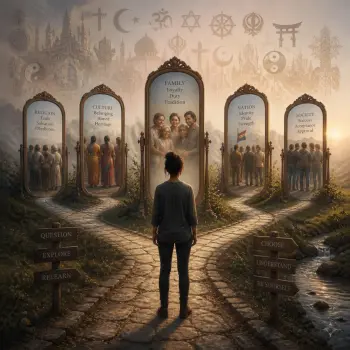

A Decade of Deconstruction: I Don't Need Church...

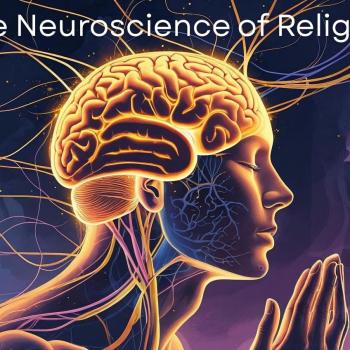
The Real Neuroscience of Religion – Doing Drugs...
TRENDING AT PATHEOS New Visions

I was strolling through the top floor of the brand new Parthenon...

What Does Gêvâh Mean For Kimberley Guifoyle &...
This week, a lot of the news is focused on Kimberly Guilfoyle....

INNER CIRCLE: Profound Mystery (Of Christ In All...
Ephesians 5:31-32 “For this reason, a man will leave his father and...

Do Not Rejoice When Your Enemy Falls: The...
Turning an execution into a public spectacle is a disturbing expression of...

'The Chosen' S6 Trailer: The Passion Gets Very...
Not many watching 'The Chosen' worry about spoilers, but just because they...

The purpose-driven labor priest
A labor activist reads Rick Warren and it gets me wondering about...
view all New Visions blogs
Ad-Free & Subscriber Log-In Subscription Support
- About Us
- 2026 Calendar
- Videos
- Podcasts
- Library of World Religions
- Faith In Media Tracker
- Advertise With Us
- Write for Us
- Privacy Policy
- Terms of Service
- Do Not Sell My Data
- Contact Us
- Radiant Digital
- Manage Newsletter Subscriptions
- Unsubscribe From Notifications
- Sitemap
Copyright 2008-2026, Patheos. All rights reserved.
Subscription Support Ad-Free & Subscriber Log-In
Follow Patheos