
BuddhistCatholicContemplativeEvangelicalGeneral ChristianHinduJewishLatter-day SaintMuslimNew VisionsProgressive Christian
Beliefs
- Buddhist
- Catholic
- Contemplative
- Evangelical
- General Christian
- Hindu
- Jewish
- Latter-day Saint
- More Voices
- Muslim
- New Visions
- Pagan
- Progressive Christian
Topics
- Religion News
- Food and Religion
- Sports and Religion
- Religious Art
- Religious Music and Entertainment
- Religious Events
- History and Religion
- Style and Religion
- Politics and Religion
- Women in Religion
- Recreation Outdoors and Religion
- Business Finance and Religion
- Careers Workplace and Religion
- Education and Religion
- Family Parenting and Religion
- Health Fitness and Religion
- Home and Religion
- Relationships and Religion
- Technology and Religion
- Travel and Religion
Columnists
- Buddhist Columnists
- Business Finance and Religion Columnists
- Careers Workplace and Religion Columnists
- Catholic Columnists
- Contemplative Columnists
- Education and Religion Columnists
- Evangelists Columnists
- Family Parenting and Religion Columnists
- General Christian Columnists
- Health Fitness and Religion Columnists
- Hindu Columnists
- History and Religion Columnists
- Home and Religion Columnists
- Jewish Columnists
- More Voices Columnists
- Latter Day Columnists
- Muslim Columnists
- New Visions Columnists
- Nonreligious Columnists
- Pagan Columnists
- Politics and Religion Columnists
- Progressive Columnists
- Recreation Outdoors and Religion Columnists
- Relationships and Religion Columnists
- Religion News Columnists
- Religious Art Columnists
- Religious Events Columnists
- Religious Music and Entertainment Columnists
- Sports and Religion Columnists
- Style and Religion Columnists
- Technology and Religion Columnists
- Travel and Religion Columnists
- Women in Religion Columnists
Resource Library
- 2026 Calendar
- Library of World Religions
- The 100 Most Holy Places on Earth
- Patheos Answers
- Podcasts
- Videos
- Faith Leaders Database
- Anglican Episcopalian
- Bahai
- Baptist
- Buddhism
- Christianity
- Confucianism
- Eastern Orthodoxy
- Hinduism
- Holiness and Pentecostal
- ISKCON
- Islam
- Judaism
- Lutheran
- Methodist
- The Church of Jesus Christ of Latter-day Saints
- New Age
- Paganism
- Presbytarian and Reformed
- Protestantism
- Religion Behind the Scenes
- Roman Catholic
- Scientology
- Shia Islam
- Sikhism
- Sufism
- Sunni Islam
- Taoism
- Zen
- See all religions
Research Tools
 Ad-Free & Subscriber Log-In Subscription Support
Ad-Free & Subscriber Log-In Subscription Support
Follow Patheos 

- Trending:
- Forgiveness
- |
- Marriage
- |
- Consciousness
- |
- Death Penalty
- |
- Election
- |
- Halloween

- Home
- New Visions
- History and Religion
- Why did the Elephant Cross the Bridge?
Why did the Elephant Cross the Bridge?
Last updated on: September 29, 2025 at 10:51 am by Karl J. Forehand
Why did the Elephant Cross the Bridge? 2025-09-29T10:51:41-06:00 Karl J. Forehand
Patheos Explore the world's faith through different perspectives on religion and spirituality! Patheos has the views of the prevalent religions and spiritualities of the world.
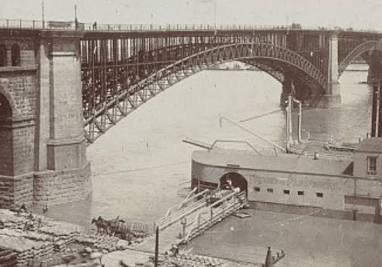
The image depicts the Eads Bridge, a historic steel arch bridge that spans the Mississippi River, connecting St. Louis, Missouri, and East St. Louis, Illinois.
Why did the Elephant Cross the Bridge?
Last weekend, we took a short day-trip to Saint Louis, Missouri, to hear one of our friends speak on a topic that interests us. In a way, it was a heavy subject—seclusion and restraint—but the trip might have been the most tiring part of the journey. It was a 5 1/2-hour drive each way, and when we reached the hotel exit, it was closed. We were rerouted through a college campus, where several major events were taking place. The Friday night crowd could best be described jokingly as “feral,” and it felt like Animal House in a broader context.
At 60 years old and not being the biggest fan of driving at night, we finally arrived at our motel, feeling agitated and somewhat exhausted from a long day. But after a good night’s sleep, we enjoyed a nice, relaxing breakfast based on a local recommendation. We had just enough time to venture out into the now somewhat normal level of human activity. We visited the Missouri History Museum, where we spent an hour and a half, nerding out on history, despite the fact that they were busy working on several exhibits.
The basement provided access to the auditorium and another exhibit that were unfortunately closed, so our only option was a display space that was open to the second level with lots of sunlight. Fortunately, this turned out to be the perfect discovery for us, as I had never heard of this bridge in St. Louis, and it was celebrating its sesquicentennial anniversary. It is named Eads Bridge, after its founder, James B. Eads. I always find the most interesting things below the surface!
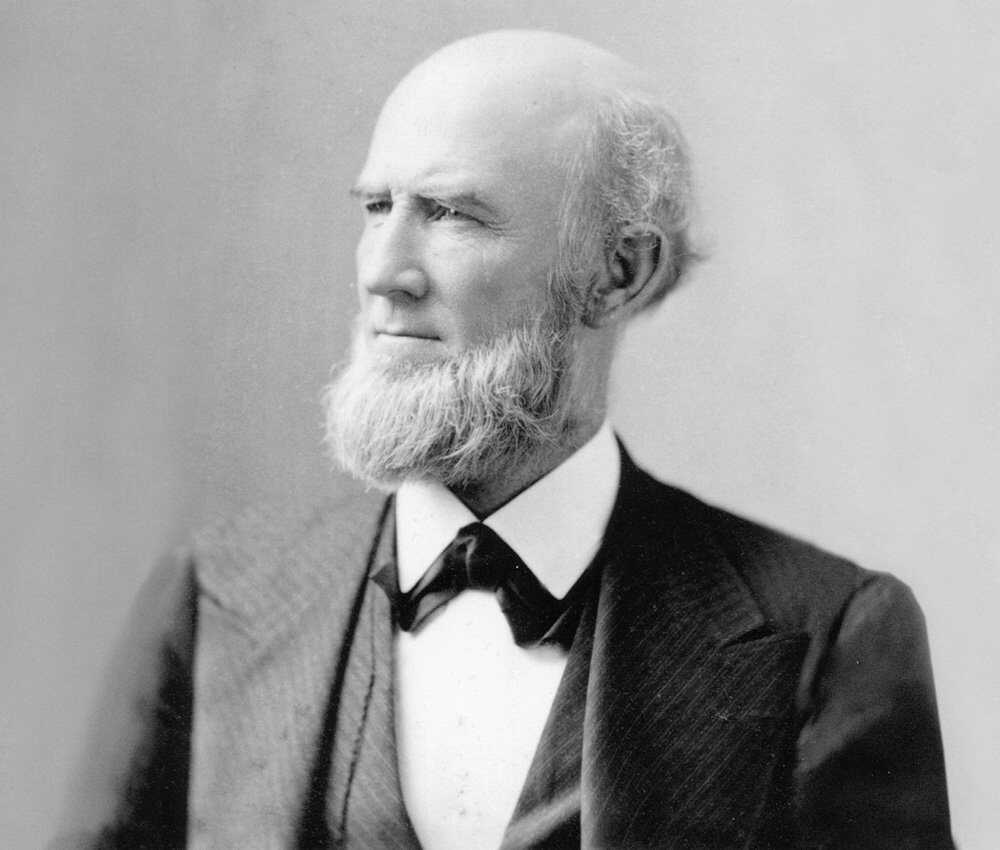
James Buchanan Eads (1820–1887), a renowned American engineer. Credit: PBS
After the Civil War, St. Louis experienced significant growth; however, the Mississippi River posed a major obstacle for railroads, resulting in slow and cumbersome goods transfers.
The bridge, completed in 1874, was the world’s first steel arch bridge and the first to use steel as a key structural element, revolutionizing construction for bridges and buildings. Designed by a self-taught engineer, it was a marvel of its time, pioneering the use of pneumatic caissons for its piers and cantilever construction for its steel superstructure. The bridge also became the first to cross the Mississippi River by railroad, with Eads famously demonstrating its strength by having 14 loaded locomotives cross on its opening day, July 4, 1874.
But that isn’t even the most interesting part of the story. At the time, many believed that elephants wouldn’t walk over unsafe surfaces, and residents doubted that this new type of bridge could safely carry trains across the river. To demonstrate the bridge’s reliability, Mr. Eads had an elephant walk across it. The Brooklyn Bridge followed suit nine years later by hiring P.T. Barnum to escort 21 elephants to prove its safety.
The bridge’s success and the technologies developed for it led to a revolution in the construction of other bridges and buildings. Ead’s Bridge still functions today and is recognized as a National Historic Landmark, a testament to its brilliant designer and enduring engineering principles.
Besides being an important part of history, especially regarding bridges and buildings, why was it necessary for me to learn this fact about my state? To avoid overdoing the wordplay, I’d say that lessons about building bridges are essential because creating connection points is very difficult, considering the state of our world today. It’s hard to picture a bridge that’s strong enough, especially when we’ve linked it to mystical things and magical thinking.
Building bridges isn’t mystical or magical—It’s mechanical.
Essential Keys to Building Bridges
A scene inspired by Evel Knievel, a famous American daredevil and stunt performer known for his motorcycle jumps. Credit: eBay
I built a few simple bridges and ramps during my childhood. I can tell you from experience that even a basic bridge for riding my bicycle can be painful and disappointing. Many things I didn’t know only became clear through failed attempts. My grandpa was known as a bridge builder in his county in rural Oklahoma. Those bridges were small county bridges, but they were crucial for local travel and farming transportation. As he taught me, they are much harder to build than you might think and more complicated than you might imagine.
Site Analysis and Conditions
Congress once debated a well-known pork project called “The Bridge to Nowhere.” Initially loudly condemned as a prime example of wasteful government spending, the money was eventually accepted by Alaska’s then-governor, Sarah Palin, under the guise of a broader appropriation. Therefore, it is crucial to examine the conditions at the site where we are building a bridge. Is it truly a place we want to go, and do the conditions on the other side of the river support building a bridge there?
Geotechnical, environmental, load statistics, and other factors are used to determine the type of bridge needed, as well as whether the current environment can support the weight of this bridge and maintain its effectiveness.
Why does this matter in human relationships?
Let me be clear: this does not mean some people are not worth bridging the gap. However, it does mean that we need to evaluate the toxicity of environments, lest we build a bridge to a place we don’t even really want to go, or the bridge falls the first time we ride our bicycle across it. How many ministries have failed because the well-meaning adventurers didn’t understand the environment they were entering and didn’t build strong foundations of relationships? They often caused more damage than the help they proposed.
Everyone is valuable, but some environments are toxic. We can’t assume that building a bridge in an unstable environment will be easy, and it isn’t just about talking to each other. In reality, it requires hard work, planning, and laying strong foundations that will last when there is a raging river below the surface and unstable ground on the other side.
The Materials We Build With
It’s been about 150 years since James Eads proved to us that steel was a reliable building material to carry humans and locomotives from one side of a big river to the other. We now accept it as fact and know that steel has many benefits for building bridges and buildings, but we also understand that it is not the ultimate material. It still isn’t the answer to every application.
Some people want us to see the experiences of the 1st century as the ideal model for 21st-century humans. But remember, these people didn’t understand concepts like mental health or trauma, and even the one some now call God made some wrong assumptions about humanity. His main defender falsely claimed that people were worthless without the Messiah he was defending, and once persecuted.
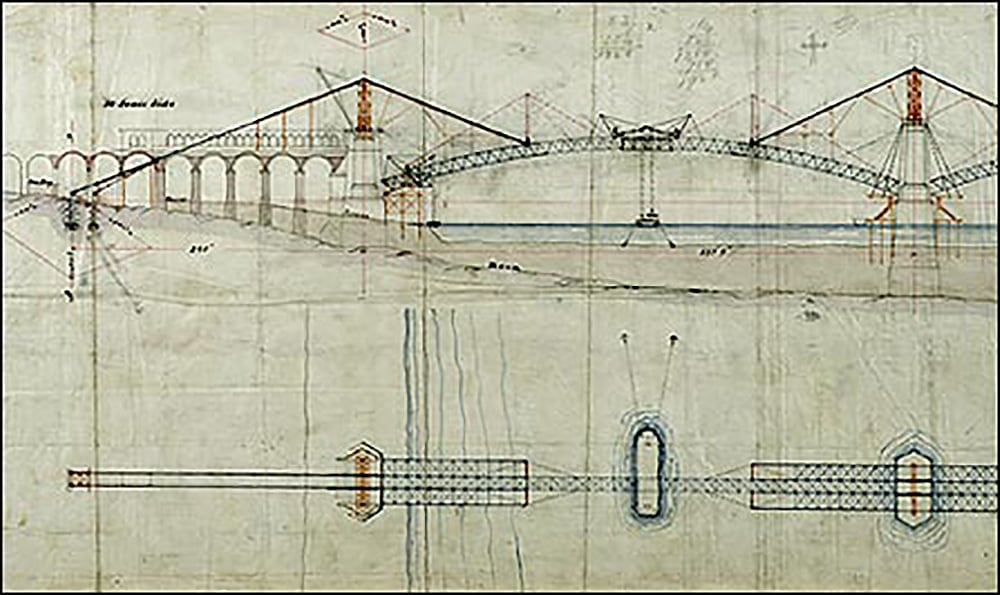
A blueprint or historical drawing of the Eads Bridge in St. Louis, Missouri. Credit: PBS
I’m not trying to dispute or discourage anyone’s faith. I do want to point out that steel once appeared almost magical and was regarded as the ultimate material for building bridges and structures throughout much of American history. A nearby bridge showed me that even steel doesn’t last forever, and without proper inspection and maintenance, bridges like the one in Minnesota can collapse when steel rusts and decays. It remains a valuable building material, but we need to understand its limitations.
Even when we discover fundamental concepts like love, compassion, and empathy that seem universal, eternal, and almost magical, we must remember that there are nuances and complex aspects to all of these, mainly because they are used in different ways and sometimes misused by people with malicious intentions. Things like unconditional love and forgiveness are highly valuable tools, but that doesn’t mean they have no limits in their effectiveness; in the wrong hands, they can even be turned into weapons.
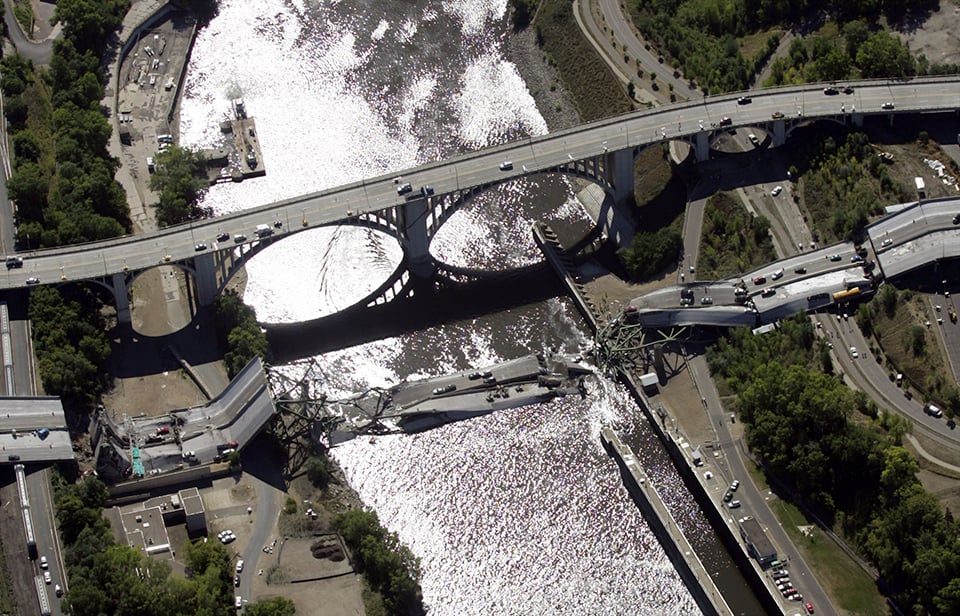
An aerial view of the collapsed Interstate 35W bridge, which spans the Mississippi River, in Minneapolis, Minnesota August 2, 2007. Four people are confirmed dead, but the death toll is expected to rise due to more than 50 vehicles which plunged into the river during the evening rush hour on August 1. REUTERS/Eric Miller (UNITED STATES)
A Way Forward
My mind raced as I headed home from Saint Louis. I thought of at least a dozen topics I could write about on my little blog, but to put it simply, we can find examples for nearly everything in our world. That’s why I find history so fascinating. It tells of human achievement and the power of imagination, creativity, and determination. But it also reminds us of our failures and how many people might have been mistreated in Saint Louis during the time Mr. Eads was building his famous bridge.
During the Civil War, St. Louis was a divided city, marked by fierce political battles between pro-slavery and abolitionist groups. One major event, known as the Camp Jackson Affair, pitted long-standing pro-slavery supporters against German-American immigrants in the city. The city made a significant contribution to the Union war effort, which was supported by the immigrants, undoubtedly angering the other factions. On May 10, 1861, Captain Nathaniel Lyon’s forces forced the pro-Confederate militia at Camp Jackson to surrender. During the prisoners’ march through the city, hostile crowds jeered at the Union soldiers, who responded by firing into the mob, killing dozens and injuring many more.
The “Camp Jackson Affair” led to anti-German rioting in St. Louis, further worsening the already tense situation. Lyon’s actions were credited with saving Missouri for the Union. On August 10, 2014, following the fatal police shooting of unarmed 18-year-old Michael Brown by Officer Darren Wilson in neighboring Ferguson, MO, on August 9, 2014, widespread national outrage erupted, resulting in extensive protests and civil unrest. This incident sparked a vital national conversation about race, policing, and systemic racism in America. It not only showed that these issues persist but also opened up a potential for moving forward.
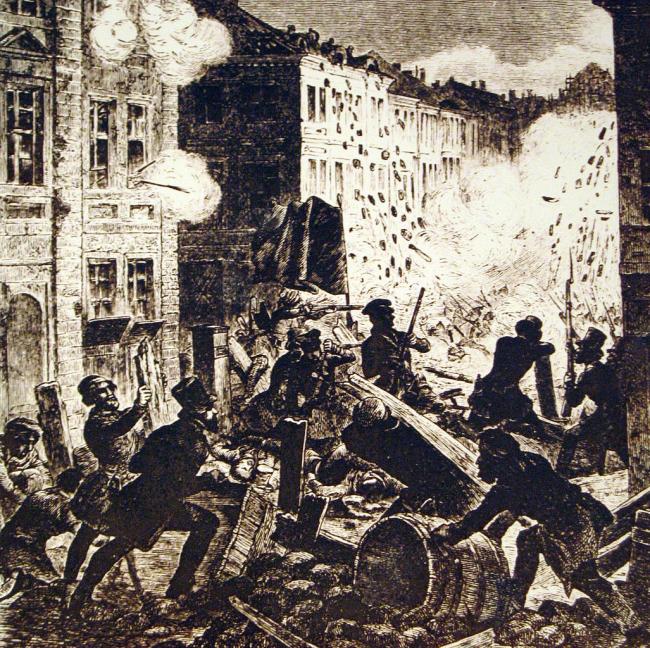
An illustration published in Harper’s Weekly June 1, 1861 depicting the “Camp Jackson Affair” of May 10, 1861, which resulted in the death of 28 civilians.
The need to build the bridge in St. Louis, MO, was accelerated by rapid growth. While growth is positive, it also brings challenges. This now-famous self-taught engineer designed an instrumental bridge that lasted for 150 years. However, he didn’t rely on old traditions, magical thinking, or quick fixes. Instead, he carefully examined the current situation, considered new materials available at the time, and thoughtfully envisioned a new way to cross the river.
I never spent more than five minutes thinking about the bridges I built. I relied on what I already knew and the materials nearby. I wanted quick results, and I have the scars to prove I did it wrong. I also regret the relationships I fumbled along the way because I didn’t take the time to build the bridges properly. I assumed I was right and that God was on my side, so I expected everyone to follow along, especially if I presented it convincingly.
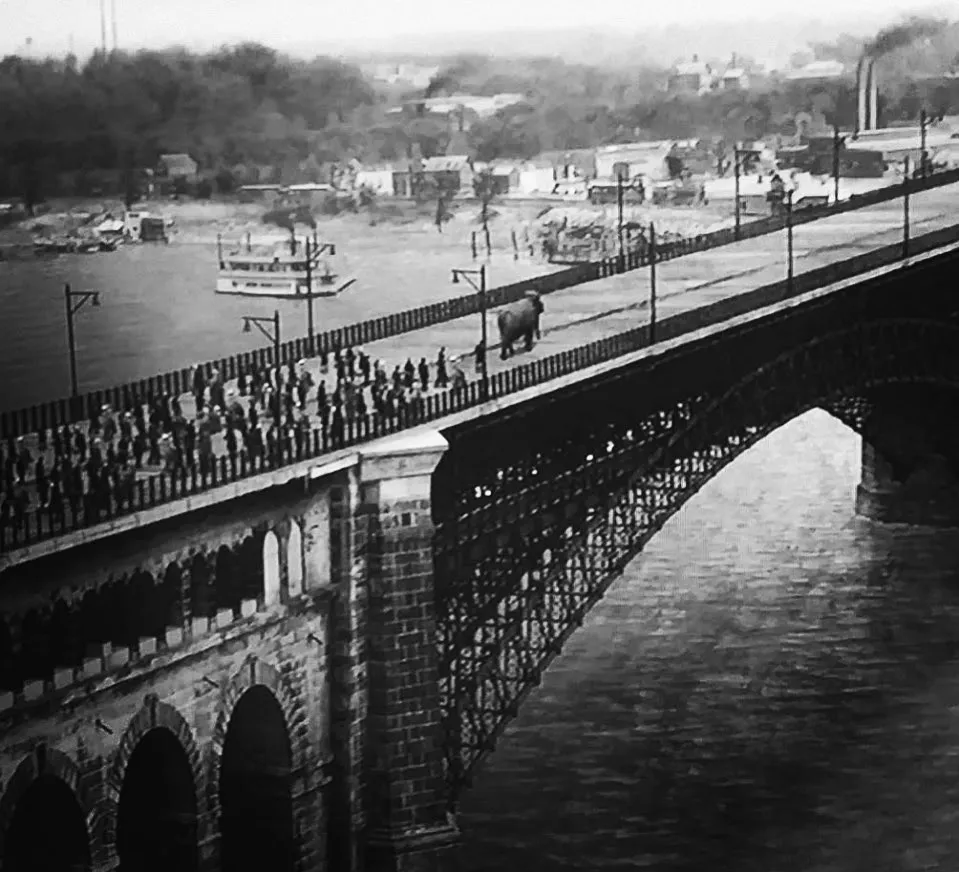
Photo from @gatewayarchstl
But bridges that support locomotives and allow elephants to cross aren’t built in such haste. I wish we were using people like Mr. Eads to erect the structures of our future society. Unfortunately, we are more captivated by the energetic salesman than the thoughtful architects who effectively shaped our past. Leaders we need to follow for the future understand the past, but recognize the shortcomings of our previous assumptions. Wood is not the ideal building material for bridges that carry larger payloads, and our perceptions of the past and its glory should be viewed in light of the new knowledge we have gained.
These are the types of leaders I will aim to emulate and encourage in the future, and the kind of person I hope to become as I move forward, though with a bit of dread and caution.
The future requires better beliefs (assumptions), but it also demands better bridges. The load is heavier, the environment is harsher, and failure results in more disastrous consequences.
Be where you are, Be who you are, Be at Peace,
Karl Forehand
Learn to be Where You Are (Presence)
Learn to be Who You Are (Authenticity)
Finding Regulating and Somatic Healing
Are you genuinely committed to deconstruction and seeking more profound answers?
If that’s the case, this book was created for you. As a former pastor, I made the mistake of deconstructing a bit and then trying to start something new, as I was trained to do. The problem with that approach is that I wasn’t ready to begin something new.

I hadn’t delved deeply enough or asked enough questions. The first stage of deconstruction typically includes assessing our beliefs regarding hell and the afterlife, supporting queer individuals and women in their fight for equality, and achieving a better understanding of racism and privilege.
Many people in deconstruction communities expend significant effort criticizing Evangelicals and attempting to gain a following. While I believe they deserve intense criticism, this strategy fails to effectively tackle the problem because they generally don’t listen to us!
Our tendency to punish our former organizations sometimes overlooks the challenging process of healing and growth. It is the same trap we fell into in our former associations.

Campfires occupy a special spot in the mosaic of history. They act as communal hubs across different cultures and faiths. The campfire’s circular design fosters equal participation within the collective group. The flames at the center draw our focus and encourage face-to-face interactions as we exchange experiences, wisdom, and insights about the world beyond. It is where legendary myths and tales are born.
Order Now – Study Questions in each chapter!
This book is named Campfires in the Desert as it stems from nearly 400 discussions we held with individuals on our podcast, The Desert Sanctuary, and our aspiration to improve.
Available now!
Thanks for considering us, autographed copies are $20
Karl Forehand Campfires in the Desert – A Soft Book Release. Karl Forehand is a former pastor, podcaster, and award-winning author. His books include Out into the Desert, Leaning Forward, Apparent Faith: What Fatherhood Taught Me About the Father’s Heart, The Tea Shop, and Being: A Journey Toward Presence and Authenticity. He is the creator of The Desert Sanctuary podcast and community. He has been married to his wife, Laura, for 35 years and has one dog named Winston. His three children are grown and are beginning to multiply! You can read more about the author here.
Progressive Christian
History and Religion
Previous Post

September 27, 2025
Are We Addicted to Religion?
Next Post
October 12, 2025 A Decade of Deconstruction: I Don’t Need Religion
Browse Our Archives
Select a Category Abuse Addiction Advent adventure Alpha Male Animals Answers Attachment Attitude authenticity Authenticty Authentiicity Awareness being Bible Black Community BLM body awarenss book Books Bravery Bullying Bypassing Certainty Certianty Chamge change children Christianity Christmas Church Comfort community Compaasion Compassion Complementarian Complementarianism Conditioning Consciousness Contemplation Control Conversation Converstations Covid-19 Creation Darkness Death Debate deconstruction demons depression desert Devil Disciples discussion Divine dreams Easter Eclipse Empathy Essence evolution evolve faith fatherhood Fear fiction Flood Focus Focusing Focussing Future Genesis Goals God Gratitude grief growth Guns Hate healing Health Heart Hell Holiday Hypnosis ignorance Improvement infallible Inner Child Integrity Intuition Jesus Jezebel Journey King LGBTQ+ Love MAGA Marriage meditation Men Mercy Message metaphysical Mindfulness Misogyny Mourning Music Mystic mystical Narcissism Nationalism Nature New Year Novel Nutrition Organization other Pain Pandemic parenting Pastors Patriarchy Patriotism Personal Growth Plan Poet poets Police politics Power practice praise Prayer presence pro-life Problem Solving Progress prolife Prophet prophets Purity Culture Purpose Queer Questions Racism Rape Rapture reconstruction Recovery Religion Resolutions Restoration Resurrection Retribution Reviews Root Cause Sanctuary Satan SBC Scripture Seeking Self-Care Self-esteem Seminary Sex Shadow shame social justice social media solitude Spirits Spirituality stillness Story Survivor Thanksgiving Theologians Theology Tradition Trauma travel Trump Uncategorized Unchurching Universe Violence Vision Voice Volunteer Vulnerability War Women Word worship Writing
Select a Month September 2026 August 2026 June 2026 May 2026 April 2026 March 2026 February 2026 November 2025 October 2025 September 2025 August 2025 July 2025 June 2025 May 2025 April 2025 March 2025 February 2025 January 2025 December 2024 November 2024 October 2024 September 2024 August 2024 July 2024 June 2024 May 2024 April 2024 March 2024 February 2024 January 2024 December 2023 November 2023 October 2023 September 2023 August 2023 July 2023 June 2023 May 2023 April 2023 March 2023 February 2023 January 2023 December 2022 November 2022 October 2022 September 2022 August 2022 July 2022 June 2022 May 2022 April 2022 March 2022 February 2022 January 2022 December 2021 November 2021 October 2021 September 2021 August 2021 July 2021 June 2021 May 2021 April 2021 March 2021 February 2021 January 2021 December 2020 November 2020 October 2020 September 2020 August 2020 July 2020 June 2020
Follow Us!
TAKE THE
Religious Wisdom Quiz
How many brothers did Joseph have?
Select your answer to see how you score.
One Five Eleven Two
Books by This Author Books by The Desert Sanctuary
Related posts from The Desert Sanctuary
Top 10 Questions I Have for God
Laura Forehand / Sherri Bothwell Death of the...
The Murderous God and His Army
TRENDING AT PATHEOS New Visions

The Sermon on the Mount, Part I: Matthew...
The Sermon on the Mount, Part I (Matthew 4:12-5:12) St. Matthew moves...

What's up from Crossway: Reviewing some of their latest A few weeks...

Janie Learns the Way of the Cross: A...
Teaching children about Jesus' Passion can be challenging. Many parents and educators...

Looking For Good Catholic Writing - October 2026
He alone extends the heavens, and he walks upon the waves of...

In "Irreplaceable," our book on vocation and technology, Trevor Sutton and I...

I was strolling through the top floor of the brand new Parthenon...
view all New Visions blogs
Ad-Free & Subscriber Log-In Subscription Support
- About Us
- 2026 Calendar
- Videos
- Podcasts
- Library of World Religions
- Faith In Media Tracker
- Advertise With Us
- Write for Us
- Privacy Policy
- Terms of Service
- Do Not Sell My Data
- Contact Us
- Radiant Digital
- Manage Newsletter Subscriptions
- Unsubscribe From Notifications
- Sitemap
Copyright 2008-2026, Patheos. All rights reserved.
Subscription Support Ad-Free & Subscriber Log-In
Follow Patheos