
BuddhistCatholicContemplativeEvangelicalGeneral ChristianHinduJewishLatter-day SaintMuslimNew VisionsProgressive Christian
Beliefs
- Buddhist
- Catholic
- Contemplative
- Evangelical
- General Christian
- Hindu
- Jewish
- Latter-day Saint
- More Voices
- Muslim
- New Visions
- Pagan
- Progressive Christian
Topics
- Religion News
- Food and Religion
- Sports and Religion
- Religious Art
- Religious Music and Entertainment
- Religious Events
- History and Religion
- Style and Religion
- Politics and Religion
- Women in Religion
- Recreation Outdoors and Religion
- Business Finance and Religion
- Careers Workplace and Religion
- Education and Religion
- Family Parenting and Religion
- Health Fitness and Religion
- Home and Religion
- Relationships and Religion
- Technology and Religion
- Travel and Religion
Columnists
- Buddhist Columnists
- Business Finance and Religion Columnists
- Careers Workplace and Religion Columnists
- Catholic Columnists
- Contemplative Columnists
- Education and Religion Columnists
- Evangelists Columnists
- Family Parenting and Religion Columnists
- General Christian Columnists
- Health Fitness and Religion Columnists
- Hindu Columnists
- History and Religion Columnists
- Home and Religion Columnists
- Jewish Columnists
- More Voices Columnists
- Latter Day Columnists
- Muslim Columnists
- New Visions Columnists
- Nonreligious Columnists
- Pagan Columnists
- Politics and Religion Columnists
- Progressive Columnists
- Recreation Outdoors and Religion Columnists
- Relationships and Religion Columnists
- Religion News Columnists
- Religious Art Columnists
- Religious Events Columnists
- Religious Music and Entertainment Columnists
- Sports and Religion Columnists
- Style and Religion Columnists
- Technology and Religion Columnists
- Travel and Religion Columnists
- Women in Religion Columnists
Resource Library
- 2026 Calendar
- Library of World Religions
- The 100 Most Holy Places on Earth
- Patheos Answers
- Podcasts
- Videos
- Faith Leaders Database
- Anglican Episcopalian
- Bahai
- Baptist
- Buddhism
- Christianity
- Confucianism
- Eastern Orthodoxy
- Hinduism
- Holiness and Pentecostal
- ISKCON
- Islam
- Judaism
- Lutheran
- Methodist
- The Church of Jesus Christ of Latter-day Saints
- New Age
- Paganism
- Presbytarian and Reformed
- Protestantism
- Religion Behind the Scenes
- Roman Catholic
- Scientology
- Shia Islam
- Sikhism
- Sufism
- Sunni Islam
- Taoism
- Zen
- See all religions
Research Tools
 Ad-Free & Subscriber Log-In Subscription Support
Ad-Free & Subscriber Log-In Subscription Support
Follow Patheos 

- Trending:
- Forgiveness
- |
- Marriage
- |
- Consciousness
- |
- Death Penalty
- |
- Election
- |
- Halloween

- Home
- New Visions
- Health, Fitness and Religion
- Does God Change?
Does God Change?
Last updated on: August 9, 2025 at 5:02 am by Karl J. Forehand
Does God Change? 2025-06-27T10:10:43-06:00 Karl J. Forehand
Patheos Explore the world's faith through different perspectives on religion and spirituality! Patheos has the views of the prevalent religions and spiritualities of the world.
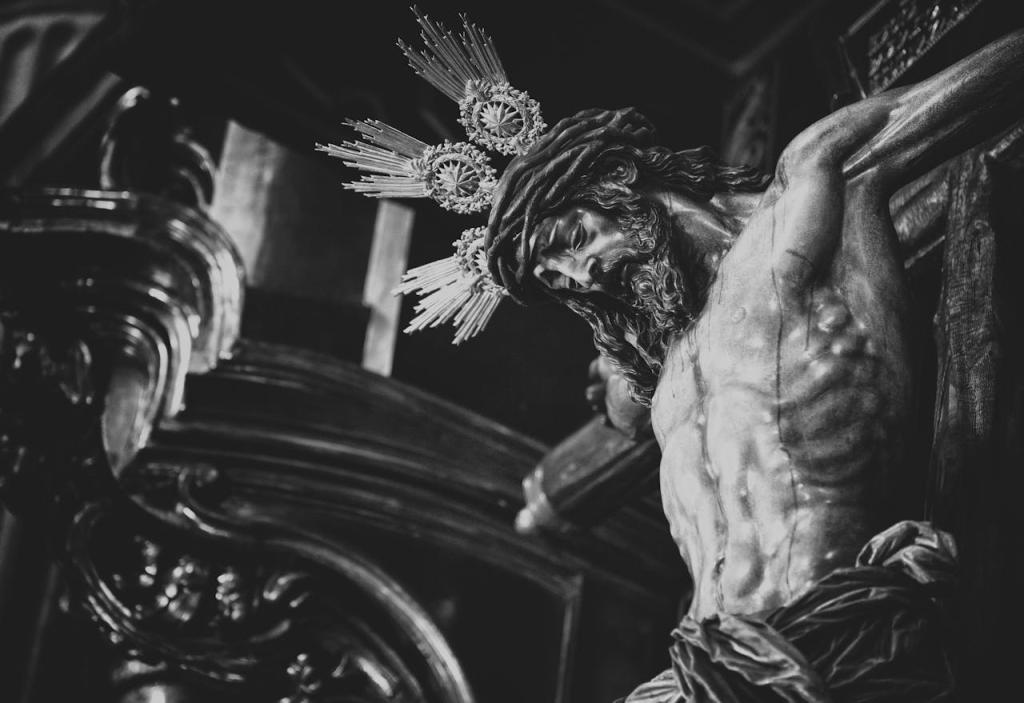
Photo by Alem Sánchez: https://www.pexels.com
Excerpt from the book Campfires in the Desert: A Deconstruction Travel Guide Copyright © 2025 by Karl Forehand
Does God Change?
“Immutability means God does not change in any way;
He is unchanging and, for that reason, perfect in every way.” – Gospel coalition
The universe is constantly evolving, mainly because it is consistently expanding. This indicates that galaxies are drifting further apart over time, and this expansion is even accelerating due to a mysterious force known as dark energy.
Molecules are constantly in motion—vibrating, rotating, and translating. Their positions and orientations change continuously due to thermal energy. This movement is called Brownian Motion, which is influenced by temperature; higher temperatures lead to faster molecular movement.
Energy is always in flux, as it can only transform from one form to another. While the total energy in a system remains constant, its form can change continuously due to interactions within the system. This principle is known as the Law of Conservation of Energy.
Atoms are primarily made up of energy, as much of an atom’s mass comes from the energy within its nucleus, according to Einstein’s equation E=mc². Although atoms may appear to be mostly empty space because the nucleus is small compared to the volume occupied by electrons, the energy in these particles constitutes most of their mass. Therefore, the essence of an atom is fundamentally energy.
Theological Assumptions
Most theological perspectives view God not as “energy” or “matter” but as the creator of both. This implies that God transcends the physical realm and is not constrained by the limits of the universe, including energy and matter. Therefore, describing God as “energy” is an oversimplification that does not fully capture the theological understanding.
Religion asserts that God created everything, yet we observe that creation continuously evolves. Nothing remains static. Even if God is the exception, he wouldn’t be perfect if he said one thing and acted differently.
The concept of God’s immutability, or unchanging nature, is a central tenet of Christianity. However, some argue that God is not immutable because He changes His mind or is surprised by certain events.
Some Things to Think About
- God changes his mind. If God changes his mind, then he is not immutable. For example, in the Bible, God regrets making Saul king.
- God is surprised by things. If God can be surprised by events, then he cannot be all-knowing. For instance, in the Bible, God expresses surprise when the Israelites forsake him for a statue of a calf.
- God changes roles. At times, we view God as a narcissistic king who eliminates His enemies. We might even picture Him as a warlord imposing His will on nations and communities, dominating them while seizing their property and mistreating their women and children. Ultimately, He appears as both a lion and a lamb. Predictions suggest He will return as a conqueror, despite not presenting himself this way during the life of Jesus.
- Acting contrary to the Universe. Although humans are described as image-bearers of God, meaning we are created in His image, the source of creation seems to contradict the principles we uphold as reflections of the original. Christians often remind one another to keep in mind that we are image-bearers of God, yet they absolve Him by presenting Him as unchanging and separate from His creation.
- Changes the Covenants with Man. If God is real and all-knowing, why would He need to change His covenant if He supposedly does not? Why did we need a temporary solution that lasted thousands of years, only to switch to a new covenant that is valid until this second time, during which we will operate under different rules?
- Why did God Stop Speaking? In the Old Testament, God speaks directly to His chosen people. The prevailing belief about the time Jesus walked the earth is that He was the Word who would convey messages to us. When even His closest disciples struggled to understand what He was saying, He promised that another aspect of the Godhead would come later to help us grasp the meaning. If he is unchanging, why not use the most effective solution first instead of playing games and pretending to be unchanging?
- Why doesn’t God evolve with the universe? Everything about the universe is expanding and changing, as I mentioned earlier. Animals evolve in response to shifting conditions to adapt for reproduction and survival. We observe much of the universe operating this way, particularly humans with more advanced reasoning abilities. But if everything else in the universe changes, why do we assume that God does not?
- Why is the revelation complete when it’s not perfect? Christians can sometimes be closed-minded toward literature beyond the canon accepted 1,600 years ago. Our world has evolved dramatically since early Christians wandered in the desert, trying to imagine what God was like. We don’t live in the same world as when the Bible was written; we have a deeper understanding of mental health, the complexities of our existence, and the motivations behind our actions. My biggest question isn’t whether God changes, but “Why Shouldn’t He?
The Case Against God
When I began to deconstruct my faith, my aim was not to attack the church or discredit God. I sought to discover the truth and live my life more meaningfully than merely entering a building to repeat past practices and reinforce beliefs in which I was starting to lose faith. I didn’t just gather opinions from others; while I read many books, I also spent ample time in silence, reflecting on the nature of the universe and my assumptions about God and the afterlife.
All the unanswered questions began to emerge, starting with whether God should be superior to me. However, this is one of those questions that theologians have never managed to answer adequately. The writers of the Bible contradicted themselves when they initially quoted God as saying that He never changes, yet they also documented instances when He did. This is simply inconsistent with the truth, does not align with how the universe operates that He supposedly created, and, frankly, it doesn’t make logical sense.
Things that do not adapt tend to die or go extinct. If we assume he is different and perfect, then we must also show that the many mistakes he appears to have made do not support that hypothesis. He created a being that causes us incredible frustration, or if he didn’t create it, he allowed it to impede our efforts. Apparently, due to his foreknowledge, he knew we would fail the system and test he had established. Then, he waited thousands of years to propose the solution, and we are currently awaiting the completion of that process with the Second Coming.
God has violated His own laws multiple times if we consider Scripture reliable. According to the narrative, He is said to have killed far more people than Satan. At times, He became jealous and faced criticism in the New Testament. Even Jesus seemed to contradict himself by discussing unconditional love while also showing favoritism. In most versions of Christianity, Jesus is regarded as equal to God. Yet, He and the New Testament writers accepted slavery and promoted the idea that God only accepts individuals who obey Him.
The absence of quality answers to these questions ultimately led me to leave Christianity. When I asked why God would allow something like rape to happen, it was hard for me to accept that God is both loving and powerful. If He can stop abuse but chooses not to, then He isn’t genuinely loving. He isn’t all-powerful if He has the desire but lacks the ability to intervene.
To make matters worse, Christians have adopted a mantra of blaming themselves for everything they don’t understand or for things that go wrong in their lives. The flip side of that idea is that they give God credit for everything that goes right. While this may serve as a temporary fix, it doesn’t address the core issue or provide an answer to the question. Not only does he not intervene, but according to the narrative, he doesn’t seem to care much either. I should clarify that, according to the narrative, he cares, but since he doesn’t act, I assume he can’t or doesn’t want to. Personally, I don’t need any more privileged people in my life, especially from a God who doesn’t follow the rules he supposedly established.
I’m done making excuses for God. I’ve also stopped blaming myself for God’s lack of communication and the flawed holy texts we’ve attributed to Him based on our assumptions. As I’ve stated, there is value in religion, spirituality, and our imaginations about God and whether there is an afterlife. However, I can’t let my need for certainty overshadow the unanswered questions.
When I persist with my questions, I sometimes uncover puzzle pieces scattered throughout my world. However, I don’t gain insight from centuries-old assumptions that essentially ignore discrepancies and inconsistencies to uphold the business of religion. Like other Mystics, I am on a quest to experience God, if He exists, and to continue asking questions even when the common tendency is to avoid them.
The answer to the question has never been to ignore it. When there doesn’t seem to be a response, the worst thing we can do is cultivate confidence in our guesses. Perhaps the most important lesson I’ve learned during my deconstruction is to confidently say, “I don’t know,” and continue to engage with what I know, feel, and the few things I can prove.
Questions About Questions
What belief(s) did you inherit concerning this question?
How is your response to this question changing?
Learn to be Where You Are (Presence)
Learn to be Who You Are (Authenticity)
Finding Regulating and Somatic Healing
Are you serious about deconstruction and asking bigger questions?
If that’s the case, this book was created for you. As a former pastor, I made the mistake of deconstructing a bit and then trying to start something new, as I was trained to do. The problem with that approach is that I wasn’t ready to begin something new.

I hadn’t delved deeply enough or asked enough questions. The first stage of deconstruction typically includes assessing our beliefs regarding hell and the afterlife, supporting queer individuals and women in their fight for equality, and achieving a better understanding of racism and privilege.
Many people in deconstruction communities expend significant effort criticizing Evangelicals and attempting to gain a following. While I believe they deserve intense criticism, this strategy fails to effectively tackle the problem because they generally don’t listen to us!
Our tendency to punish our former organizations sometimes overlooks the challenging process of healing and growth. It is the same trap we fell into in our former associations.

Campfires occupy a special spot in the mosaic of history. They act as communal hubs across different cultures and faiths. The campfire’s circular design fosters equal participation within the collective group. The flames at the center draw our focus and encourage face-to-face interactions as we exchange experiences, wisdom, and insights about the world beyond. It is where legendary myths and tales are born.
Order Now – Study Questions in each chapter!
This book is named Campfires in the Desert as it stems from nearly 400 discussions we held with individuals on our podcast, The Desert Sanctuary, and our aspiration to improve.
Available now!
Thanks for considering us, autographed copies are $20
Karl Forehand Campfires in the Desert – A Soft Book Release. Karl Forehand is a former pastor, podcaster, and award-winning author. His books include Out into the Desert, Leaning Forward, Apparent Faith: What Fatherhood Taught Me About the Father’s Heart, The Tea Shop, and Being: A Journey Toward Presence and Authenticity. He is the creator of The Desert Sanctuary podcast and community. He has been married to his wife Laura for 35 years and has one dog named Winston. His three children are grown and are beginning to multiply! You can read more about the author here.
Progressive Christian
Health, Fitness and Religion
Family, Parenting and Religion
Previous Post

August 7, 2025
All Beliefs are Assumptions
Next Post

August 11, 2025 Am I Getting Better?
Browse Our Archives
Select a Category Abuse Addiction Advent adventure Alpha Male Animals Answers Attachment Attitude authenticity Authenticty Authentiicity Awareness being Bible Black Community BLM body awarenss book Books Bravery Bullying Bypassing Certainty Certianty Chamge change children Christianity Christmas Church Comfort community Compaasion Compassion Complementarian Complementarianism Conditioning Consciousness Contemplation Control Conversation Converstations Covid-19 Creation Darkness Death Debate deconstruction demons depression desert Devil Disciples discussion Divine dreams Easter Eclipse Empathy Essence evolution evolve faith fatherhood Fear fiction Flood Focus Focusing Focussing Future Genesis Goals God Gratitude grief growth Guns Hate healing Health Heart Hell Holiday Hypnosis ignorance Improvement infallible Inner Child Integrity Intuition Jesus Jezebel Journey King LGBTQ+ Love MAGA Marriage meditation Men Mercy Message metaphysical Mindfulness Misogyny Mourning Music Mystic mystical Narcissism Nationalism Nature New Year Novel Nutrition Organization other Pain Pandemic parenting Pastors Patriarchy Patriotism Personal Growth Plan Poet poets Police politics Power practice praise Prayer presence pro-life Problem Solving Progress prolife Prophet prophets Purity Culture Purpose Queer Questions Racism Rape Rapture reconstruction Recovery Religion Resolutions Restoration Resurrection Retribution Reviews Root Cause Sanctuary Satan SBC Scripture Seeking Self-Care Self-esteem Seminary Sex Shadow shame social justice social media solitude Spirits Spirituality stillness Story Survivor Thanksgiving Theologians Theology Tradition Trauma travel Trump Uncategorized Unchurching Universe Violence Vision Voice Volunteer Vulnerability War Women Word worship Writing
Select a Month September 2026 August 2026 June 2026 May 2026 April 2026 March 2026 February 2026 November 2025 October 2025 September 2025 August 2025 July 2025 June 2025 May 2025 April 2025 March 2025 February 2025 January 2025 December 2024 November 2024 October 2024 September 2024 August 2024 July 2024 June 2024 May 2024 April 2024 March 2024 February 2024 January 2024 December 2023 November 2023 October 2023 September 2023 August 2023 July 2023 June 2023 May 2023 April 2023 March 2023 February 2023 January 2023 December 2022 November 2022 October 2022 September 2022 August 2022 July 2022 June 2022 May 2022 April 2022 March 2022 February 2022 January 2022 December 2021 November 2021 October 2021 September 2021 August 2021 July 2021 June 2021 May 2021 April 2021 March 2021 February 2021 January 2021 December 2020 November 2020 October 2020 September 2020 August 2020 July 2020 June 2020
Follow Us!
TAKE THE
Religious Wisdom Quiz
What did Eve eat in the Garden of Eden?
Select your answer to see how you score.
Bread Fruit from the Tree of Knowledge A vine branch An unclean animal
Books by This Author Books by The Desert Sanctuary
Related posts from The Desert Sanctuary



Top 10 Questions I Have for God
TRENDING AT PATHEOS New Visions

Janie Learns the Way of the Cross: A...
Teaching children about Jesus' Passion can be challenging. Many parents and educators...

Looking For Good Catholic Writing - October 2026
He alone extends the heavens, and he walks upon the waves of...

In "Irreplaceable," our book on vocation and technology, Trevor Sutton and I...

I was strolling through the top floor of the brand new Parthenon...

What Does Gêvâh Mean For Kimberley Guifoyle &...
This week, a lot of the news is focused on Kimberly Guilfoyle....

INNER CIRCLE: Profound Mystery (Of Christ In All...
Ephesians 5:31-32 “For this reason, a man will leave his father and...
view all New Visions blogs
Ad-Free & Subscriber Log-In Subscription Support
- About Us
- 2026 Calendar
- Videos
- Podcasts
- Library of World Religions
- Faith In Media Tracker
- Advertise With Us
- Write for Us
- Privacy Policy
- Terms of Service
- Do Not Sell My Data
- Contact Us
- Radiant Digital
- Manage Newsletter Subscriptions
- Unsubscribe From Notifications
- Sitemap
Copyright 2008-2026, Patheos. All rights reserved.
Subscription Support Ad-Free & Subscriber Log-In
Follow Patheos