
BuddhistCatholicContemplativeEvangelicalGeneral ChristianHinduJewishLatter-day SaintMuslimNew VisionsProgressive Christian
Beliefs
- Buddhist
- Catholic
- Contemplative
- Evangelical
- General Christian
- Hindu
- Jewish
- Latter-day Saint
- More Voices
- Muslim
- New Visions
- Pagan
- Progressive Christian
Topics
- Religion News
- Food and Religion
- Sports and Religion
- Religious Art
- Religious Music and Entertainment
- Religious Events
- History and Religion
- Style and Religion
- Politics and Religion
- Women in Religion
- Recreation Outdoors and Religion
- Business Finance and Religion
- Careers Workplace and Religion
- Education and Religion
- Family Parenting and Religion
- Health Fitness and Religion
- Home and Religion
- Relationships and Religion
- Technology and Religion
- Travel and Religion
Columnists
- Buddhist Columnists
- Business Finance and Religion Columnists
- Careers Workplace and Religion Columnists
- Catholic Columnists
- Contemplative Columnists
- Education and Religion Columnists
- Evangelists Columnists
- Family Parenting and Religion Columnists
- General Christian Columnists
- Health Fitness and Religion Columnists
- Hindu Columnists
- History and Religion Columnists
- Home and Religion Columnists
- Jewish Columnists
- More Voices Columnists
- Latter Day Columnists
- Muslim Columnists
- New Visions Columnists
- Nonreligious Columnists
- Pagan Columnists
- Politics and Religion Columnists
- Progressive Columnists
- Recreation Outdoors and Religion Columnists
- Relationships and Religion Columnists
- Religion News Columnists
- Religious Art Columnists
- Religious Events Columnists
- Religious Music and Entertainment Columnists
- Sports and Religion Columnists
- Style and Religion Columnists
- Technology and Religion Columnists
- Travel and Religion Columnists
- Women in Religion Columnists
Resource Library
- 2026 Calendar
- Library of World Religions
- The 100 Most Holy Places on Earth
- Patheos Answers
- Podcasts
- Videos
- Faith Leaders Database
- Anglican Episcopalian
- Bahai
- Baptist
- Buddhism
- Christianity
- Confucianism
- Eastern Orthodoxy
- Hinduism
- Holiness and Pentecostal
- ISKCON
- Islam
- Judaism
- Lutheran
- Methodist
- The Church of Jesus Christ of Latter-day Saints
- New Age
- Paganism
- Presbytarian and Reformed
- Protestantism
- Religion Behind the Scenes
- Roman Catholic
- Scientology
- Shia Islam
- Sikhism
- Sufism
- Sunni Islam
- Taoism
- Zen
- See all religions
Research Tools
 Ad-Free & Subscriber Log-In Subscription Support
Ad-Free & Subscriber Log-In Subscription Support
Follow Patheos 

- Trending:
- Forgiveness
- |
- Marriage
- |
- Consciousness
- |
- Death Penalty
- |
- Election
- |
- Halloween

- Home
- New Visions
- Family, Parenting and Religion
- What Do I Fear?
What Do I Fear?
Last updated on: July 28, 2025 at 5:30 am by Karl J. Forehand
What Do I Fear? 2025-07-19T09:37:44-06:00 Karl J. Forehand
Patheos Explore the world's faith through different perspectives on religion and spirituality! Patheos has the views of the prevalent religions and spiritualities of the world.

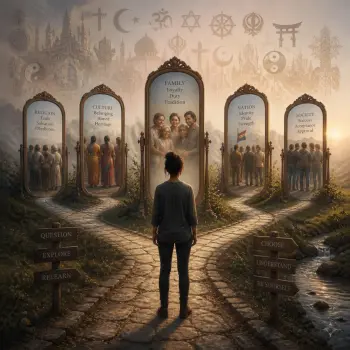
Photo by Toni Cuenca: https://www.pexels.com
Excerpt from the book Campfires in the Desert: A Deconstruction Travel Guide Copyright © 2025 by Karl Forehand
What Do I Fear?
“The wise man doesn’t give the right answers, he poses the right questions.” – Claude Levi-Strauss
Having been raised as a Christian, I am well acquainted with the concept of the Christian holy book. The Bible often suggests that we should not give in to fear. As Christians, we observe instances such as the angels communicating with the shepherds and urging them to “Fear not,” along with numerous passages in both the Jewish and Christian Scriptures that encourage us to resist fear.
We recognized that eliminating fear or the need for caution isn’t realistic. Living completely without fear could pose risks for both us and others. While we understand the difference between reasonable and unreasonable fears, many Christians became somewhat fixated on their anxieties, trying to erase those fears from the world. This fixation was further fueled by an authoritative figure on stage who reminded us weekly of what we should fear.
Where do we learn what we should be afraid of?
Often, our fears are shaped by our families of origin. They warn us about dangers, like a hot stove, which also leads us to trust their judgments in other areas. I eventually wondered, “Do they truly understand the subjects they caution me about, or are they simply fearful due to their lack of knowledge?” The people around us often share information from similar individuals, and their sources may not be reliable or credible.
My maternal grandparents were good people, but a small Baptist church, which was a significant influence in their remote area, largely shaped their worldview. Like many other churches, when they encounter information that they disagree with, they dismiss that person and seek someone else to provide the information they prefer. Religion often distances us from societal norms and promotes unique narratives. Preachers, politicians, and salespeople know that fear makes us vulnerable to their solutions.
While we cherish our parents and grandparents, we must reflect on the origins of their insights and any gaps in their knowledge. We can appreciate the valuable lessons they provide while recognizing that their perspectives may be shaped by their environments and social circles. They may not always have the most accurate information and often share what they’ve heard without thoroughly researching or verifying it through multiple sources.
Before we follow someone blindly, such as a pastor, we should recognize their limitations in understanding. They are likely just conveying what has been communicated to them. Questions and challenges to their beliefs have often been dismissed, causing them to share the same information, regardless of its truth, logic, or practicality. Theology and much of our folk wisdom stem from assumptions shaped by a narrow perspective. Explore Plato’s Allegory of the Cave for deeper insight into this concept*.*
Most things we worry about never happen.
As I mentioned earlier, some concerns can lead to fear. However, many of these fears are unfounded. I take specific steps to secure my home against intruders; considering our location, I have little reason to be afraid. I could easily spend all my waking hours and sleepless nights worrying about potential threats.
Now, after 60 years of experience, I reflect on my past. I find myself less impressed by the precautions I took out of fear, whether those fears were real or imagined, and more impressed by the moments I dared to explore on my own. This led me to try skydiving, learn about hunting, and confront some of the fears my father may have instilled in me. I stopped following authority figures blindly, realizing that holding power doesn’t necessarily mean having wisdom.
You may have noticed a societal shift toward a more mystical approach to spirituality. Mystics draw their insights from personal experiences rather than merely repeating beliefs handed down to them (theology). Unlike theologians, who seek to validate historical assumptions, mystics do not attempt to reinterpret old ideas to draw audiences to their next event.
We must emerge from the cave, view the world through new perspectives, and ask genuine questions instead of simply echoing the fears of our past.
How religion uses fear to control
Despite the numerous Protestant denominations within Christianity, each offering its unique perspective, we often face admonitions when questioning their teachings or exploring our own paths. They assert, “You will never find safety outside our community!” They claim to hold the ultimate truth, insisting that God supports their views while warning us that ignoring their guidance would be unwise. However, many pastors are beginning to realize that they have invested too much energy in nurturing our fears to sustain doctrines and beliefs that, in many cases, were merely assumptions.
Religious followers often live in deep fear of being outside the protection of their belief system. They receive constant reminders to be afraid, especially of things they do not understand or have not experienced. Therefore, if you are brave enough to challenge the organization’s assumptions, be prepared for fear-driven warnings from the faithful.
There’s also the implication, “You experience hardship if you don’t conform.” The organization, the pastor’s salary, and their concepts of well-being rest on assumptions that must be defended at all costs. Acknowledging mistakes or the possibility of unknown information can jeopardize the entire system. Driven by a fear of organizational collapse, they want you to feel that being disconnected from their assumptions and failing to defend them puts you at risk.
They warn, “You will not find community.” This warning profoundly impacts us due to our deep need for connection. Most spiritual practices emphasize large group interactions over solitude and stillness, creating a superficial sense of community that only partially fulfills us. Time and again, we demonstrate that smaller groups foster deeper intimacy, while organized religion often prioritizes the organization’s goals over individual needs for connection.
My previous denomination warned me, “You will expose yourself to the Devil” whenever I questioned the church’s doctrines or stopped attending services. They treated it like a contagious virus I might catch once I stepped outside their shield. My spiritual journey advanced significantly when I realized that the church had never truly protected me.
The church promised to protect me, yet when I faced genuine emotional struggles, they failed to understand and were reluctant to take the time to support my recovery. My grief seemed unimportant to them, and their commitment to addressing trauma-related issues was minimal. After two decades of observing their practices, I ultimately recognized that their focus was not on my protection but on preserving their organization’s longevity and the careers of their ministry personnel.
I no longer fear a being I don’t believe in. As I began to think independently and trust my experiences and intuition, I realized that concepts like hell and the devil were merely assumptions that fed the fear, keeping me trapped in religion.
Responses to challenges against Christianity often assert, “You won’t know how to live without us.” I used to challenge others by asking, “If you don’t trust the Bible, where will your truth come from?” However, in recent years, I’ve realized that wisdom and truth are not limited to a group with shared worldviews. Instead, they often arise when we step outside our comfort zones, acknowledging that wisdom can be found in various sources, such as nature, the universe, mindfulness, and personal experiences.
Since I’ve reduced my Bible reading, I feel I’ve become a better person. The text often contradicts itself and falls short as a life guide, regardless of its assigned labels. While it contains some valuable insights, considering it the sole source of universal wisdom requires much effort.
The preachers I once respected were exceptionally skilled at conveying the notion that “The world is against you.” This message resonated with my congregations, who often preferred escaping reality by immersing themselves in an artificial community. However, we might discover the opposite if we step back and view the universe more objectively. Some may even argue that the world, or the universe, actually supports our progress.
When we move beyond narrow religious beliefs, we don’t endanger ourselves; instead, we open the door to connect with our world and experience more of what we desire. If God exists, perhaps this is what was meant by “Fear not,” and maybe we will understand the intent of the Divine when we move away from fear-based systems.
Questions About Questions
What belief(s) did you inherit concerning this question?
How is your response to this question changing?
Learn to be Where You Are (Presence)
Learn to be Who You Are (Authenticity)
Finding Regulating and Somatic Healing
Are you genuinely committed to deconstruction and seeking more profound answers?
If that’s the case, this book was created for you. As a former pastor, I made the mistake of deconstructing a bit and then trying to start something new, as I was trained to do. The problem with that approach is that I wasn’t ready to begin something new.

I hadn’t delved deeply enough or asked enough questions. The first stage of deconstruction typically includes assessing our beliefs regarding hell and the afterlife, supporting queer individuals and women in their fight for equality, and achieving a better understanding of racism and privilege.
Many people in deconstruction communities expend significant effort criticizing Evangelicals and attempting to gain a following. While I believe they deserve intense criticism, this strategy fails to effectively tackle the problem because they generally don’t listen to us!
Our tendency to punish our former organizations sometimes overlooks the challenging process of healing and growth. It is the same trap we fell into in our former associations.

Campfires occupy a special spot in the mosaic of history. They act as communal hubs across different cultures and faiths. The campfire’s circular design fosters equal participation within the collective group. The flames at the center draw our focus and encourage face-to-face interactions as we exchange experiences, wisdom, and insights about the world beyond. It is where legendary myths and tales are born.
Order Now – Study Questions in each chapter!
This book is named Campfires in the Desert as it stems from nearly 400 discussions we held with individuals on our podcast, The Desert Sanctuary, and our aspiration to improve.
Available now!
Thanks for considering us, autographed copies are $20
Karl Forehand Campfires in the Desert – A Soft Book Release. Karl Forehand is a former pastor, podcaster, and award-winning author. His books include Out into the Desert, Leaning Forward, Apparent Faith: What Fatherhood Taught Me About the Father’s Heart, The Tea Shop, and Being: A Journey Toward Presence and Authenticity. He is the creator of The Desert Sanctuary podcast and community. He has been married to his wife Laura for 35 years and has one dog named Winston. His three children are grown and are beginning to multiply! You can read more about the author here.
Progressive Christian
Family, Parenting and Religion
Health, Fitness and Religion
Previous Post

July 27, 2025
We Don't Need a God, We Need People
Next Post

July 29, 2025 What We Got Wrong About Behavior
Browse Our Archives
Select a Category Abuse Addiction Advent adventure Alpha Male Animals Answers Attachment Attitude authenticity Authenticty Authentiicity Awareness being Bible Black Community BLM body awarenss book Books Bravery Bullying Bypassing Certainty Certianty Chamge change children Christianity Christmas Church Comfort community Compaasion Compassion Complementarian Complementarianism Conditioning Consciousness Contemplation Control Conversation Converstations Covid-19 Creation Darkness Death Debate deconstruction demons depression desert Devil Disciples discussion Divine dreams Easter Eclipse Empathy Essence evolution evolve faith fatherhood Fear fiction Flood Focus Focusing Focussing Future Genesis Goals God Gratitude grief growth Guns Hate healing Health Heart Hell Holiday Hypnosis ignorance Improvement infallible Inner Child Integrity Intuition Jesus Jezebel Journey King LGBTQ+ Love MAGA Marriage meditation Men Mercy Message metaphysical Mindfulness Misogyny Mourning Music Mystic mystical Narcissism Nationalism Nature New Year Novel Nutrition Organization other Pain Pandemic parenting Pastors Patriarchy Patriotism Personal Growth Plan Poet poets Police politics Power practice praise Prayer presence pro-life Problem Solving Progress prolife Prophet prophets Purity Culture Purpose Queer Questions Racism Rape Rapture reconstruction Recovery Religion Resolutions Restoration Resurrection Retribution Reviews Root Cause Sanctuary Satan SBC Scripture Seeking Self-Care Self-esteem Seminary Sex Shadow shame social justice social media solitude Spirits Spirituality stillness Story Survivor Thanksgiving Theologians Theology Tradition Trauma travel Trump Uncategorized Unchurching Universe Violence Vision Voice Volunteer Vulnerability War Women Word worship Writing
Select a Month September 2026 August 2026 June 2026 May 2026 April 2026 March 2026 February 2026 November 2025 October 2025 September 2025 August 2025 July 2025 June 2025 May 2025 April 2025 March 2025 February 2025 January 2025 December 2024 November 2024 October 2024 September 2024 August 2024 July 2024 June 2024 May 2024 April 2024 March 2024 February 2024 January 2024 December 2023 November 2023 October 2023 September 2023 August 2023 July 2023 June 2023 May 2023 April 2023 March 2023 February 2023 January 2023 December 2022 November 2022 October 2022 September 2022 August 2022 July 2022 June 2022 May 2022 April 2022 March 2022 February 2022 January 2022 December 2021 November 2021 October 2021 September 2021 August 2021 July 2021 June 2021 May 2021 April 2021 March 2021 February 2021 January 2021 December 2020 November 2020 October 2020 September 2020 August 2020 July 2020 June 2020
Follow Us!
TAKE THE
Religious Wisdom Quiz
What woman was turned into a pillar of salt?
Select your answer to see how you score.
Sarah Lot’s wife Rebekah Esther
Books by This Author Books by The Desert Sanctuary
Related posts from The Desert Sanctuary


A Decade of Deconstruction: I Don't Need Church...
TRENDING AT PATHEOS New Visions

Janie Learns the Way of the Cross: A...
Teaching children about Jesus' Passion can be challenging. Many parents and educators...

Looking For Good Catholic Writing - October 2026
He alone extends the heavens, and he walks upon the waves of...

In "Irreplaceable," our book on vocation and technology, Trevor Sutton and I...

I was strolling through the top floor of the brand new Parthenon...

What Does Gêvâh Mean For Kimberley Guifoyle &...
This week, a lot of the news is focused on Kimberly Guilfoyle....

INNER CIRCLE: Profound Mystery (Of Christ In All...
Ephesians 5:31-32 “For this reason, a man will leave his father and...
view all New Visions blogs
Ad-Free & Subscriber Log-In Subscription Support
- About Us
- 2026 Calendar
- Videos
- Podcasts
- Library of World Religions
- Faith In Media Tracker
- Advertise With Us
- Write for Us
- Privacy Policy
- Terms of Service
- Do Not Sell My Data
- Contact Us
- Radiant Digital
- Manage Newsletter Subscriptions
- Unsubscribe From Notifications
- Sitemap
Copyright 2008-2026, Patheos. All rights reserved.
Subscription Support Ad-Free & Subscriber Log-In
Follow Patheos