
BuddhistCatholicContemplativeEvangelicalGeneral ChristianHinduJewishLatter-day SaintMuslimNew VisionsProgressive Christian
Beliefs
- Buddhist
- Catholic
- Contemplative
- Evangelical
- General Christian
- Hindu
- Jewish
- Latter-day Saint
- More Voices
- Muslim
- New Visions
- Pagan
- Progressive Christian
Topics
- Religion News
- Food and Religion
- Sports and Religion
- Religious Art
- Religious Music and Entertainment
- Religious Events
- History and Religion
- Style and Religion
- Politics and Religion
- Women in Religion
- Recreation Outdoors and Religion
- Business Finance and Religion
- Careers Workplace and Religion
- Education and Religion
- Family Parenting and Religion
- Health Fitness and Religion
- Home and Religion
- Relationships and Religion
- Technology and Religion
- Travel and Religion
Columnists
- Buddhist Columnists
- Business Finance and Religion Columnists
- Careers Workplace and Religion Columnists
- Catholic Columnists
- Contemplative Columnists
- Education and Religion Columnists
- Evangelists Columnists
- Family Parenting and Religion Columnists
- General Christian Columnists
- Health Fitness and Religion Columnists
- Hindu Columnists
- History and Religion Columnists
- Home and Religion Columnists
- Jewish Columnists
- More Voices Columnists
- Latter Day Columnists
- Muslim Columnists
- New Visions Columnists
- Nonreligious Columnists
- Pagan Columnists
- Politics and Religion Columnists
- Progressive Columnists
- Recreation Outdoors and Religion Columnists
- Relationships and Religion Columnists
- Religion News Columnists
- Religious Art Columnists
- Religious Events Columnists
- Religious Music and Entertainment Columnists
- Sports and Religion Columnists
- Style and Religion Columnists
- Technology and Religion Columnists
- Travel and Religion Columnists
- Women in Religion Columnists
Resource Library
- 2026 Calendar
- Library of World Religions
- The 100 Most Holy Places on Earth
- Patheos Answers
- Podcasts
- Videos
- Faith Leaders Database
- Anglican Episcopalian
- Bahai
- Baptist
- Buddhism
- Christianity
- Confucianism
- Eastern Orthodoxy
- Hinduism
- Holiness and Pentecostal
- ISKCON
- Islam
- Judaism
- Lutheran
- Methodist
- The Church of Jesus Christ of Latter-day Saints
- New Age
- Paganism
- Presbytarian and Reformed
- Protestantism
- Religion Behind the Scenes
- Roman Catholic
- Scientology
- Shia Islam
- Sikhism
- Sufism
- Sunni Islam
- Taoism
- Zen
- See all religions
Research Tools
 Ad-Free & Subscriber Log-In Subscription Support
Ad-Free & Subscriber Log-In Subscription Support
Follow Patheos 

- Trending:
- Forgiveness
- |
- Marriage
- |
- Consciousness
- |
- Death Penalty
- |
- Election
- |
- Halloween

- Home
- New Visions
- Health, Fitness and Religion
- Learn to Trust Yourself
Learn to Trust Yourself
Last updated on: July 4, 2025 at 4:35 pm by Karl J. Forehand
Learn to Trust Yourself 2025-07-04T16:35:54-06:00 Karl J. Forehand
Patheos Explore the world's faith through different perspectives on religion and spirituality! Patheos has the views of the prevalent religions and spiritualities of the world.

Excerpt from the book Campfires in the Desert: A Deconstruction Travel Guide Copyright © 2025 by Karl Forehand
Learn to Trust Yourself
“When you reach the end of what you should know,
you will be at the beginning of what you should sense.”
– Kahlil Gibrán
Organized religion and many other institutions operate under the mistaken belief that we cannot trust ourselves due to our inherent flaws. We often think leaders possess a unique ability that distinguishes them from others, leading us to defer to and submit to them.
In these organizations, both actual and perceived hierarchical structures rely on a certain level of shame to maintain control and functionality. The organization consistently takes precedence over the individual, and one of the Christian teachings asserts that we cannot trust our intuition because of our inherent flaws. Consequently, in my tradition, I was taught to trust and obey—and to keep questions to a minimum!
The Leadership Myth
There is a common misconception about leaders, especially in religious contexts. We often view leaders as nearly supernatural beings with exceptional qualities that seem to justify high salaries for managing our organizations. While some leaders may indeed possess natural talents that draw us in, more often than not, they are determined individuals willing to take risks. In reality, many—especially men—seek control and tend to follow a strong leader to gain some of that leader’s influence. Ultimately, determination and persistence are more important than natural talent or acquired skills.
Indeed, skills such as communication and decision-making can be developed; however, no supernatural or extraordinary qualities render someone 100 times more valuable than those who may not have had the fortune of being in the right place at the right time. In the 21st century, it’s clear that sometimes being difficult is just as significant as intelligence or any so-called “God-given” talent. Narcissistic leaders primarily care about themselves, and nowhere is the narcissistic leader more prevalent than in organized religion!
Religion, much like the corporate world, can be pretty confusing. While thousands of people write books on effective leadership, much of it involves speculation and false equivalence. Sometimes, leaders can be as foolish as a post and possess no magical abilities. In the realm of religion, they maintain the belief that they are right, and that God is on their side. They stubbornly cling to this conviction, as their persistence is their greatest asset.
Leadership is primarily a learned skill, with the necessary abilities differing across various situations. The average employee often possesses more skills that allow them to perform their job effectively than many leaders ever did. In many instances, the assembly line worker exerts significantly more effort and excels at their job more than the leader. Leadership can greatly benefit from listening to employees and parishioners more frequently. Survivors of abuse consistently urge us to listen to their stories to gain valuable insights.
What we admire most in religious leaders is their perceived charisma. Much like movie stars, their public image can indeed be crafted. We want to believe that they are genuine and authentic. Still, my experience, particularly with religious leaders, is that they are often very troubled individuals beneath the surface and in private. They can’t fully articulate why people are drawn to them, but they thrive on the energy of others, accept money from people, and receive their free time in the form of voluntary labor.
We often buy into leadership myths and use terms like “follow” and “submit” to describe our relationship. We convince ourselves that we can gain some of their power and favor with God by supporting them. The very reason we believe we need what they possess comes from a widespread, manipulative notion that we are inherently flawed.
The Doctrine of Depravity
For most Protestant Christians, I think I don’t really need to explain this common belief. It encourages people to embrace our religious system because we are perceived as incapable of connecting with God due to our sinful nature. It depicts an immoral person who lacks the inherent ability to relate to God since the one who created these flawed beings is perfect.
You see the apparent contradiction, don’t you? A perfect God supposedly created an imperfect being that disobeyed the Holy One. Many people going through deconstruction are deeply examining this idea. How can we be so utterly depraved when, according to the narrative, we were made by a perfect deity?
This worldview collapsed immediately after our first grandchild was born. When my wife, Laura, gazed into the eyes of our daughter’s baby, she saw nothing but goodness, purity, and love. We had recognized this in our children in many ways but were too exhausted and busy to notice back then. We had already been indoctrinated with the idea that we were hopelessly wicked and somehow useless to God without the specific religion-prescribed cure. We don’t even have time to discuss the fact that most of them don’t agree on the cure, and there are thousands of different beliefs about what God is like and who their deity approves of.
A Benedictine nun once told me, “None of us is right,” which likely contradicts some of her tradition’s understanding of our supposed “partial” depravity. I didn’t convert to Catholicism, but it made me reflect and explore the complexities of my inherited beliefs.
My tradition often quoted the verse that even my righteous acts are like “filthy rags.”[1] Popular contemporary worship songs manipulate followers by saying, “There is nothing good in me.”[2] Calvinism, a branch of Protestant Reformed theology, asserts in its first tenet[3] that we are totally depraved, and then immediately points to the unconditional election of some in the second. This line of thinking leads congregants to accept the solution, regardless of its merit, because it creates a scenario where we cannot “succeed” without it.
Instead of spending an excessive amount of time defending my thoughts and countering their ideas, I’ll express that I don’t recognize this cruel and manipulative worldview in the world I inhabit. I observe individuals entirely outside of religion who lead morally upright lives. Conversely, I encounter people within the church who are among the worst I have ever known. I see white individuals demonizing people of color in the church, and then I witness their children taking the lives of their peers in mass shootings, often due to the trauma inflicted by their “saved” parents.
The issue of immorality is not something that religion addresses effectively. It instills a fear that we cannot trust ourselves and are inherently wicked unless we accept their solutions. Some individuals commit immoral acts, often due to their religious trauma or experiences with high-control churches and faiths. However, I believe, and have observed, that there is goodness within all of us, and we reveal this goodness when we look inward and learn to trust ourselves rather than rely on a fabricated solution designed to answer the question, “Why is there evil in the world?”
The Role Religion Plays
Religion is an organization. I recognize that it is also a community, albeit one that resembles a false community, failing to genuinely reflect reality. There are advantages to being part of a group and appreciating the benefits of community. However, since it is not a natural community, it suffers from all the shortcomings of a typical corporation or other volunteer organization. Religion lacks the inherent power to tackle the challenges we face.
The inherent shortcomings of religion are similar to those of other organizations. Namely, the most significant factor is that the organization comes first before the individual in an organization. The only individual in an organization that rivals the importance of the organization is the very top leadership. They can shut down the organization or temporarily delay its functioning for their own benefit. However, individuals usually can’t impact the organization significantly unless they organize into another organization. Then, it’s still the priority of organizations to make money, attract and maintain members and/or employees, and keep investors, customers, and members happy.
When was the last time you saw someone interrupt the pastor’s message to ask a question or share a concern? When did the last worship service get delayed so members could discuss their mental health issues and unresolved trauma? Have you ever noticed a significant amount of funds that religious organizations dedicate to addressing trauma? How often have you observed religious organizations continuing their usual activities while neglecting instances of abuse within the congregation?
When survivors of abuse, or even those raising concerns or questions, are often viewed as troublemakers in various ways, they are encouraged to “get on the bus” and stop impeding the organization’s progress. The organization’s objectives and goals are intricately crafted by the appointed leadership, who rarely accept criticism or honest questioning.
Followers are often reminded that they are inherently corrupt and should not trust their intuitions, emotions, or feelings, even though that is precisely what the leadership does. Since a myth surrounds the leaders, they apply different standards to their intuition and essential goodness. We learn from experience not to develop or trust our intuition and not to entertain our doubts because we are fundamentally flawed.
Voices From the Desert
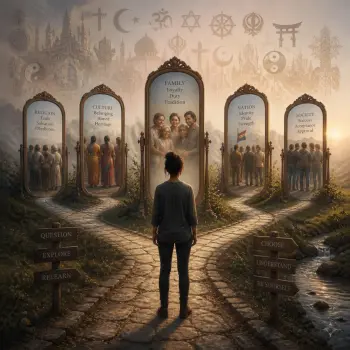
We interviewed hundreds of individuals on our podcast, The Desert Sanctuary. When we asked those who were deconstructing what helped them the most on their journey, they emphasized one key insight more than any other: they learned to explore within themselves and to trust and nurture their intuition. While they all encountered trusted guides along the less-traveled path, they ultimately discovered something good within themselves. They realized they could access it with practice and uncover goodness, purpose, morality, and direction there.
Personally, I have also observed this understanding in various organizations around the world and throughout history. The interesting aspect is that it’s not limited to a single place, as most belief systems contain elements of goodness. However, they can also fall prey to power, control, and corruption when they think they are the only ones who are right, and God is on their side. For instance, a Catholic tradition of centering prayer and mindfulness practices from different places and times has benefited me.
I no longer consider myself a Christian and don’t spend much time reading the Bible, but I agree with the apostle Paul that some parts of it are “useful,” like loving your neighbor and treating others as you would like to be treated. Since the Bible presents conflicting ideas, we can still find valuable insights if we trust ourselves to develop our intuition and pay little attention to the religious hucksters who peddle their contrived solutions.
We relinquish our power and voice when taught not to trust ourselves. Those assigned to determine what is best for the organization rarely have time for input from the individuals who sit in the sanctuary. The authorities who dictate what to believe, how to act, and what we should focus on seldom seek feedback from those not appointed to leadership. Religious institutions have historically overlooked valuable insights from the broader population.
One example of this, which is quite damaging, is when religious institutions respond inadequately to reports of sexual abuse. Prioritizing their reputation over the well-being of victims can lead to further trauma and more victims. Over the course of history, religion has proved deficient at listening to concerns of discrimination and exclusion. Religion-backed crusades have been responsible for many deaths, even though some cried out for restorative justice. From suppression of dissenters to ignoring health and safety concerns, narcissistic leaders forge ahead, sometimes creating more significant problems because they refuse to listen to the honest concerns of their subordinates.
Patriarchal hierarchies allow these issues to continue because they repeatedly ignore the intuition of groups of people like women and those who aren’t even allowed to be in charge. They emphasize the need for authority and control because it benefits them to be in charge, and they don’t understand how many of the answers they might be seeking are already available if they listen to people. Eventually, their fears get the better of them, and they continue with determination to meet the goals they have imagined for themselves and the organization.
Could the revival everyone is looking for be available by listening to the intuition of marginalized groups and those suffering throughout the ages under this type of leadership? Not all churches or organizations are extreme in their views or practices. Still, organizations systemically suffer from these tendencies, especially if they don’t listen to the people who make up the organization’s heart.
It may take some time, but learn to trust yourself more. Intuition requires time, and we must discover what it feels like to think for ourselves and make our own decisions. Helpful guides will appear when we need them, but none of us requires a narcissist to belittle us into submission every week. That is neither intuition nor wisdom; it is simply power and control over the masses. It is abuse!
Trust Yourself – Action Steps
How do you define Trusting Yourself?
How can you build trust in yourself?
How can trusting yourself enhance your life?
Spend 5 minutes writing freely about your thoughts on this chapter and the questions that arose for you.
[1] Isaiah 64:6
[2] Romans 7:18
[3] https://reformationbiblecollege.org/blog/what-are-the-five-points-of-calvinism
Learn to be Where You Are (Presence)
Are you serious about deconstruction and asking bigger questions?
If that’s the case, this book was created for you. As a former pastor, I made the mistake of deconstructing a bit and then trying to start something new, as I was trained to do. The problem with that approach is that I wasn’t ready to begin something new.

I hadn’t delved deeply enough or asked enough questions. The first stage of deconstruction typically includes assessing our beliefs regarding hell and the afterlife, supporting queer individuals and women in their fight for equality, and achieving a better understanding of racism and privilege.
Many people in deconstruction communities expend significant effort criticizing Evangelicals and attempting to gain a following. While I believe they deserve intense criticism, this strategy fails to effectively tackle the problem because they generally don’t listen to us!
Our tendency to punish our former organizations sometimes overlooks the challenging process of healing and growth. It is the same trap we fell into in our former associations.

Campfires occupy a special spot in the mosaic of history. They act as communal hubs across different cultures and faiths. The campfire’s circular design fosters equal participation within the collective group. The flames at the center draw our focus and encourage face-to-face interactions as we exchange experiences, wisdom, and insights about the world beyond. It is where legendary myths and tales are born.
Order Now – Study Questions in each chapter!
This book is named Campfires in the Desert as it stems from nearly 400 discussions we held with individuals on our podcast, The Desert Sanctuary, and our aspiration to improve.
Available now!
Thanks for considering us, autographed copies are $20
Karl Forehand Campfires in the Desert – A Soft Book Release. Karl Forehand is a former pastor, podcaster, and award-winning author. His books include Out into the Desert, Leaning Forward, Apparent Faith: What Fatherhood Taught Me About the Father’s Heart, The Tea Shop, and Being: A Journey Toward Presence and Authenticity. He is the creator of The Desert Sanctuary podcast and community. He has been married to his wife Laura for 35 years and has one dog named Winston. His three children are grown and are beginning to multiply! You can read more about the author here.
Progressive Christian
Health, Fitness and Religion
Family, Parenting and Religion
Previous Post

June 28, 2025
Learn From Survivor Stories
Next Post

July 12, 2025 Learning to Celebrate Yourself
Browse Our Archives
Select a Category Abuse Addiction Advent adventure Alpha Male Animals Answers Attachment Attitude authenticity Authenticty Authentiicity Awareness being Bible Black Community BLM body awarenss book Books Bravery Bullying Bypassing Certainty Certianty Chamge change children Christianity Christmas Church Comfort community Compaasion Compassion Complementarian Complementarianism Conditioning Consciousness Contemplation Control Conversation Converstations Covid-19 Creation Darkness Death Debate deconstruction demons depression desert Devil Disciples discussion Divine dreams Easter Eclipse Empathy Essence evolution evolve faith fatherhood Fear fiction Flood Focus Focusing Focussing Future Genesis Goals God Gratitude grief growth Guns Hate healing Health Heart Hell Holiday Hypnosis ignorance Improvement infallible Inner Child Integrity Intuition Jesus Jezebel Journey King LGBTQ+ Love MAGA Marriage meditation Men Mercy Message metaphysical Mindfulness Misogyny Mourning Music Mystic mystical Narcissism Nationalism Nature New Year Novel Nutrition Organization other Pain Pandemic parenting Pastors Patriarchy Patriotism Personal Growth Plan Poet poets Police politics Power practice praise Prayer presence pro-life Problem Solving Progress prolife Prophet prophets Purity Culture Purpose Queer Questions Racism Rape Rapture reconstruction Recovery Religion Resolutions Restoration Resurrection Retribution Reviews Root Cause Sanctuary Satan SBC Scripture Seeking Self-Care Self-esteem Seminary Sex Shadow shame social justice social media solitude Spirits Spirituality stillness Story Survivor Thanksgiving Theologians Theology Tradition Trauma travel Trump Uncategorized Unchurching Universe Violence Vision Voice Volunteer Vulnerability War Women Word worship Writing
Select a Month September 2026 August 2026 June 2026 May 2026 April 2026 March 2026 February 2026 November 2025 October 2025 September 2025 August 2025 July 2025 June 2025 May 2025 April 2025 March 2025 February 2025 January 2025 December 2024 November 2024 October 2024 September 2024 August 2024 July 2024 June 2024 May 2024 April 2024 March 2024 February 2024 January 2024 December 2023 November 2023 October 2023 September 2023 August 2023 July 2023 June 2023 May 2023 April 2023 March 2023 February 2023 January 2023 December 2022 November 2022 October 2022 September 2022 August 2022 July 2022 June 2022 May 2022 April 2022 March 2022 February 2022 January 2022 December 2021 November 2021 October 2021 September 2021 August 2021 July 2021 June 2021 May 2021 April 2021 March 2021 February 2021 January 2021 December 2020 November 2020 October 2020 September 2020 August 2020 July 2020 June 2020
Follow Us!
TAKE THE
Religious Wisdom Quiz
What is the central Christian doctrine that God exists as Father, Son, and Holy Spirit?
Select your answer to see how you score.
Trinity Predestination Salvation Incarnation
Books by This Author Books by The Desert Sanctuary
Related posts from The Desert Sanctuary


A Decade of Deconstruction: I Don't Need Church...
TRENDING AT PATHEOS New Visions

The Sermon on the Mount, Part I: Matthew...
The Sermon on the Mount, Part I (Matthew 4:12-5:12) St. Matthew moves...

What's up from Crossway: Reviewing some of their latest A few weeks...

Janie Learns the Way of the Cross: A...
Teaching children about Jesus' Passion can be challenging. Many parents and educators...

Looking For Good Catholic Writing - October 2026
He alone extends the heavens, and he walks upon the waves of...

In "Irreplaceable," our book on vocation and technology, Trevor Sutton and I...

I was strolling through the top floor of the brand new Parthenon...
view all New Visions blogs
Ad-Free & Subscriber Log-In Subscription Support
- About Us
- 2026 Calendar
- Videos
- Podcasts
- Library of World Religions
- Faith In Media Tracker
- Advertise With Us
- Write for Us
- Privacy Policy
- Terms of Service
- Do Not Sell My Data
- Contact Us
- Radiant Digital
- Manage Newsletter Subscriptions
- Unsubscribe From Notifications
- Sitemap
Copyright 2008-2026, Patheos. All rights reserved.
Subscription Support Ad-Free & Subscriber Log-In
Follow Patheos