
BuddhistCatholicContemplativeEvangelicalGeneral ChristianHinduJewishLatter-day SaintMuslimNew VisionsProgressive Christian
Beliefs
- Buddhist
- Catholic
- Contemplative
- Evangelical
- General Christian
- Hindu
- Jewish
- Latter-day Saint
- More Voices
- Muslim
- New Visions
- Pagan
- Progressive Christian
Topics
- Religion News
- Food and Religion
- Sports and Religion
- Religious Art
- Religious Music and Entertainment
- Religious Events
- History and Religion
- Style and Religion
- Politics and Religion
- Women in Religion
- Recreation Outdoors and Religion
- Business Finance and Religion
- Careers Workplace and Religion
- Education and Religion
- Family Parenting and Religion
- Health Fitness and Religion
- Home and Religion
- Relationships and Religion
- Technology and Religion
- Travel and Religion
Columnists
- Buddhist Columnists
- Business Finance and Religion Columnists
- Careers Workplace and Religion Columnists
- Catholic Columnists
- Contemplative Columnists
- Education and Religion Columnists
- Evangelists Columnists
- Family Parenting and Religion Columnists
- General Christian Columnists
- Health Fitness and Religion Columnists
- Hindu Columnists
- History and Religion Columnists
- Home and Religion Columnists
- Jewish Columnists
- More Voices Columnists
- Latter Day Columnists
- Muslim Columnists
- New Visions Columnists
- Nonreligious Columnists
- Pagan Columnists
- Politics and Religion Columnists
- Progressive Columnists
- Recreation Outdoors and Religion Columnists
- Relationships and Religion Columnists
- Religion News Columnists
- Religious Art Columnists
- Religious Events Columnists
- Religious Music and Entertainment Columnists
- Sports and Religion Columnists
- Style and Religion Columnists
- Technology and Religion Columnists
- Travel and Religion Columnists
- Women in Religion Columnists
Resource Library
- 2026 Calendar
- Library of World Religions
- The 100 Most Holy Places on Earth
- Patheos Answers
- Podcasts
- Videos
- Faith Leaders Database
- Anglican Episcopalian
- Bahai
- Baptist
- Buddhism
- Christianity
- Confucianism
- Eastern Orthodoxy
- Hinduism
- Holiness and Pentecostal
- ISKCON
- Islam
- Judaism
- Lutheran
- Methodist
- The Church of Jesus Christ of Latter-day Saints
- New Age
- Paganism
- Presbytarian and Reformed
- Protestantism
- Religion Behind the Scenes
- Roman Catholic
- Scientology
- Shia Islam
- Sikhism
- Sufism
- Sunni Islam
- Taoism
- Zen
- See all religions
Research Tools
 Ad-Free & Subscriber Log-In Subscription Support
Ad-Free & Subscriber Log-In Subscription Support
Follow Patheos 

- Trending:
- Forgiveness
- |
- Marriage
- |
- Consciousness
- |
- Death Penalty
- |
- Election
- |
- Halloween

- Home
- New Visions
- Family, Parenting and Religion
- Parenting in the Desert – Part 1 of 2 – Karl
Parenting in the Desert – Part 1 of 2 – Karl
Last updated on: June 24, 2024 at 5:51 am by Karl J. Forehand
Parenting in the Desert – Part 1 of 2 – Karl 2024-05-25T08:26:21-06:00 Karl J. Forehand
Patheos Explore the world's faith through different perspectives on religion and spirituality! Patheos has the views of the prevalent religions and spiritualities of the world.
Parenting in the Desert – Part 1

(From our new book, Evolving From Religious Trauma. June 4th)
Listen to this blog – AI-Generated
Karl
Parenting is a daunting endeavor. I always felt like it was the most monumental task I ever attempted, yet I had the least training of anything else. There were classes and books available, but they were all over the place regarding theories and practices. To make it worse, I grew up during the Dr. Spock era, and we were rapidly discovering how what we initially thought was all wrong. My parents got some interesting advice from their religious peers, which only caused me more confusion when considering how I would tackle this challenging road ahead.
As I experimented with different approaches, I found something that worked with the firstborn but not nearly as well with the strong-willed middle child. My third child was magnificently different from either of them and then religion and being a pastor muddied the water even further. It was like an excursion with no map and bad travel guides. Everyone had a theory, but no coherent way forward emerged.
To add to the mix, I entered parenthood with a reasonable amount of unaddressed trauma that I did not even realize I had. During the early years of parenthood, there was not enough time to breathe, much less address shadow material or consider such things. Their lives depended on us, and we were doing our best to keep our heads above water.
Later, there were the challenges of middle school and watching our precious children turn into something we could not recognize, only to turn back shortly after that into reasonable human beings, only to move out and begin to live their own lives. Sometimes, when I sit with them these days, I cannot believe that we survived all this, much less did it well by anyone’s standard. I extract from my experiences not an extensive list of guaranteed parenting advice, but more reasonably, just a few things that I am glad I accidentally did well.
The following writings originate from things that Laura and I wrote and discussed. They were initially released in a parenting book called Parenting Deconstructed. Just in case you noticed some similarities, they all originate from the same source—our personal musings.
Evolving out of a Fear-Based Paradigm
I kneeled over a flower bed when I noticed my daughter standing beside me. She stood like she wanted to talk, so I sat back on the grass. Lily faced me directly with her hands on her hips, and then, she let me have it!
For a few years during earlier parenting, I told people that I was paddling my man boat through the estrogen sea because I had two teenage daughters, and I had no idea what to do. Lily has been articulate since she was a toddler and retains information like a sponge. So, I would have to conclude that since I have known her (her whole life), I have never won an argument with her.
Shortly after she started informing me about a few things, I became agitated. You know, we have thoughts like, “Who does she think she is?” This incident happened again later, and I had the same initial emotion. I am glad I did not say something silly like, “Just calm down, and we’ll talk later.” She needed to express what she was thinking, and thankfully, I realized this shortly after she started talking.
I couldn’t comprehend everything she was trying to teach me, but she did teach me that day. She taught me about what makes her tick, about what she felt, and about her heart. It was a deeply intimate moment when she became the teacher that I always wanted to be for her. I am glad that I was able to dodge my initial instincts and hear her emotions as well as her wisdom.
At this time, I started to understand some things that worked for us as parents. It would become clarified after I went through deconstruction and our children matured. But I imagine most of the years when our kids were growing, I had a bewildered look on my face most of the time. We received too much advice from many people who did not know what would work either.
Not only were we learning what was working, but we were also slowly discovering what never had a chance of maturing into anything viable. Some of these ideas were rooted in bad theology. Some of our decisions were conceived in ignorance. And many were just flawed assumptions and listening to the wrong people. The common denominator in most bad choices is that they all originated from fear.
Our worst decisions were rooted in fear.
I often state that every religion I have studied begins its theology with what we should be afraid of. It does not really matter what the other person is selling; if they can convince us to be afraid of hell, dying, or not being popular, they can sell us anything.
It happened that way often in parenting. We heard a news report that something was happening in record numbers. Other times, a pastor’s message might warn us about something we had never considered, and then we became determined to act or do something about it. When I was a preacher, I did this subconsciously. Influencers know that fear is the most potent motivator, especially for parents.
But fear causes us to be reckless in our strategies. Because we fear what might happen, we over-emphasize the urgency to fix a problem we did not even know existed yesterday. I was that way with purity rings after I watched a video that first created fear, then made me feel guilty and prompted me to act as quickly as I could. I deeply regret giving them the rings—they never spoke of them after that day. The purity culture used our fears to market an agenda that was traumatizing to women and created more problems than it solved.
We were also often afraid of what people thought. In some ways, we realized it was happening and apologized to our children because we were in ministry and did not see another way out of it. Our children were incredibly gracious, but I always felt like I was sacrificing my integrity for someone in the church that would turn on us a little later in the journey.
Today, I write about being who we are (authenticity), and I deeply understand how much better respect is than affinity. Even though my teenage children understood compromise, they respect me so much more now that they are older. I wish I had been more authentic for them and myself during their formative years. I do not even attend church now, so I regret much of that activity that I wasted trying to get the congregation to accept me.
I could write a book about how fear motivated me to make hasty and unwise decisions in my life and as a parent. Our children understood that we were not perfect, but mostly because we learned to apologize when we got it wrong. Fear is never a good starting place for any decision. When we are misinformed, our emotions cause us to venture outside reasonable logic and make dangerous decisions. But we did get a few things right.
The Things We Got Right
Learning to be Brave
My dad never learned to swim. My grandpa is a person I relate to spiritually in a strange, metaphysical way. I can feel him sometimes. But I remember a time when he teased my dad about never learning to swim and about being lazy. It had a deep, powerful impact on me—not because it was Good Parenting 101, but because of the opposite of what I described above—I did not want to be afraid of anything.
As I described, I often succumbed to my fears, especially when people I admired told me I should be afraid. But, after listening to my grandpa and my father, I determined that I never wanted to regret missing an opportunity simply because I was scared. I made eleven skydiving jumps, took Karate, and did things like writing books. I had a crippling fear of speaking in public, and I overcame it to be an effective speaker and preacher. I traveled overseas and changed careers several times because I did not want to regret what I was afraid to experience. It would be okay if I failed, but it would not be acceptable if I did not try.
I was determined to instill this type of bravery in my children. I wanted them to learn to be confident to answer the phone, speak in public, and make their own decisions. So, when our oldest daughter (Abbey) was young, I started whispering in her ear to “be brave.” Many years later, I saw a social media post from her that said, “I don’t need a man to slay the dragon—I am the dragon.” She has undoubtedly been courageous in achieving the goals she set out to accomplish, and she is thriving as an RN in the Kansas City area.
Occasionally, I overheard my children talking. Sometimes, it wasn’t comforting, and other times, it was life-giving. The latter occurred when I heard Abbey whispering to her sister to “be brave.”
You cannot imagine how inspiring and uplifting that was! It was one of the greatest moments in my life, and now I have witnessed her teaching bravery to her two daughters and her husband.
Children are sometimes naturally reckless, but bravery must be modeled and taught. Amidst the sea of machismo, crowd-following and foolish behavior can be genuine, character-building bravery. It is authentic, honest, and inspiring. I challenge you to experience true bravery in your journey and to share that challenge with those who look up to you.
Finding Our Voice
My parents told me stories of how I would hide under the coffee table when people came over. I played sports and participated in most activities but always found a way not to talk. When I went to college, I had to take a speech class. I was doing okay in the class, which interested me because it was a new adventure. But I almost flunked the class because I left off over half of a 15-minute speech—I just forgot it!
Early in my career, a manager called me into her office and informed me of her issue with my performance. She told me I was a good worker but needed to learn to speak to others better, or “it is just not going to work out.”
She referred me to a group that met on that campus, and I started attending reluctantly after work. It was a little club for people like me. We mostly spoke extemporaneously, which felt like torture. When it was your turn, someone would hand you a topic, and you would have to talk for a minute or two. It felt like an eternity, and I almost vomited a few times. The experience challenged me and caused me to get better. Later, I would join a Toastmasters group while working for another employer. I won a couple of awards and later became president of that group.
I thought I had conquered my fear until I had to teach from the Bible for the first time. I was being licensed for ministry, and my pastor let me teach a lecture at our church, and again, I felt like I was going to be sick. It got easier over time until I preached my first sermon. With each new challenge came a new level of pain, adjustment, and proficiency (or as close as I could come to it).
So, one day, when Laura and I started writing about “Finding Our Voice,” I assumed I had already found my voice, especially since I was a pastor and got to say what I thought every Sunday. As I reflected on this after leaving the pastorate, I realized I did not authentically have a voice because I always had to answer the board, the deacons, or the congregation. I subconsciously knew I could only go so far with challenging long-held beliefs. No matter how smart, talented, or insightful I might be, the people wanted their pastor to talk about what they expected him to talk about.
After deconstructing and leaving the pulpit, I began to understand finding my voice and reflected on how I shared that with my children. I remember a painful conversation with my son, Jordan, when I needed him to tell me about something that happened to him at college. It was like he was experiencing the difficulty I experienced all those years trying to learn to communicate.
What was it that had to happen in those speeches and conversations? We have to be vulnerable—it is so important. Bravery and vulnerability go together. I did not know what he would say, and he did not know how I would receive it. Being vulnerable is essential in my writing, healing, and all aspects of my journey. But I also had to teach it to my children. It has something to do with being seen with eyes of grace. When we “spill the beans” and do not die, it heals the shame and creates new confidence.
We are so vulnerable with our children since we have deconstructed—much less judgmental.
But finding our voice also births in us a deeper root into authenticity. We can now speak to each other as ourselves without playing a role. Because we now realize how much every person needs their autonomy, we do not play roles or put expectations on them. We are learning to be who we are.
Figuring out who we are is difficult after deconstruction. So much of what we identified with before was what we did and what was expected of us. Now that much of that is stripped away, we must ask questions like, “What do we really like to do?” “What do we really care about?” and “What is our truth that needs telling?” The wonderful thing we can now do is ask those questions honestly to our grown children and, for the first time, not have any expectations.
Knowing who we are and discovering who our children are may be one of the greatest gifts to give our family members.
Learning to Think for Ourselves
I always said that I wanted them to find their own faith, even when I was deep into ministry. But what I really wanted was for them to find MY faith. Eventually, they were all baptized into the faith I was participating in. What I did not see was, at the same time, I was teaching them to think for themselves. I remember seeing an essay Jordan wrote at college about the legalization of marijuana and realizing he honestly was thinking for himself.
All our kids moved away from our home, went to college, and established lives for themselves. They all have their own lives, beliefs, and political views. I am so thankful we fostered this passion in them to discover how they feel about various things in life. There were times when it worried me, but now it is the greatest gift we could have given them.
I remember when we told the girls that we were deconstructing. They just acknowledged that they had been waiting for us to evolve. They were accepting and gracious to us for our past and how we raised them. They took the good things from our experience and found the best of all their experiences. None of us are in the same place on any issue, but we are all thinking for ourselves and accepting each other.
Controlling our children into believing like us almost never works. Our energy might be better spent fostering love, forgiveness, and compassion for others. It is better to give them analysis tools than to give them what we consider to be treasure.
My daughter, who stood over me and told me off, was at my house the other day. We sat on the porch with her son, and she composed some music on her guitar to one of my poems about my dog. It was a beautiful night, and I realized how much I respect her. She is brave—she thinks for herself—and she has found her authentic, vulnerable voice.
But our relationship would not have been the same if I had not evolved through deconstruction and the work I have done in my shadow. Some of my beliefs were toxic, and I needed to be brave and rethink what was important to me. I have become a much more present and authentic Dad and Papa.
Laura and I joke that we want to be like our kids at various times. It is true. Most of the things we thought we cared about when we were young turned out to be unimportant, just desires of our ego and a fear of what others would think. The good things we are discovering now echo what our children are finding. We are on a brave, exciting journey that includes our children. We hardly ever agree totally, but we have tools of discovery that will lead us all to where we should go.
The only thing we are afraid of now is returning to where we came from.
Karl Forehand
My Top 10 Suggestions for Theologians
Was Jesus well-known in the 1st Century?
https://thedesertsanctuary.org/leaning-forward-2023/

Karl Forehand is a former pastor, podcaster, and award-winning author. His books include Out into the Desert, Leaning Forward, Apparent Faith: What Fatherhood Taught Me About the Father’s Heart, The Tea Shop, and Being: A Journey Toward Presence and Authenticity. He is the creator of The Desert Sanctuary podcast and community. He has been married to his wife Laura for 35 years and has one dog named Winston. His three children are grown and are beginning to multiply! You can read more about the author here.
Progressive Christian
Family, Parenting and Religion
Previous Post

June 17, 2024
Thriving Outside Religion
Next Post
June 24, 2024 A Prescription for Healing
Browse Our Archives
Select a Category Abuse Addiction Advent adventure Alpha Male Animals Answers Attachment Attitude authenticity Authenticty Authentiicity Awareness being Bible Black Community BLM body awarenss book Books Bravery Bullying Bypassing Certainty Certianty Chamge change children Christianity Christmas Church Comfort community Compaasion Compassion Complementarian Complementarianism Conditioning Consciousness Contemplation Control Conversation Converstations Covid-19 Creation Darkness Death Debate deconstruction demons depression desert Devil Disciples discussion Divine dreams Easter Eclipse Empathy Essence evolution evolve faith fatherhood Fear fiction Flood Focus Focusing Focussing Future Genesis Goals God Gratitude grief growth Guns Hate healing Health Heart Hell Holiday Hypnosis ignorance Improvement infallible Inner Child Integrity Intuition Jesus Jezebel Journey King LGBTQ+ Love MAGA Marriage meditation Men Mercy Message metaphysical Mindfulness Misogyny Mourning Music Mystic mystical Narcissism Nationalism Nature New Year Novel Nutrition Organization other Pain Pandemic parenting Pastors Patriarchy Patriotism Personal Growth Plan Poet poets Police politics Power practice praise Prayer presence pro-life Problem Solving Progress prolife Prophet prophets Purity Culture Purpose Queer Questions Racism Rape Rapture reconstruction Recovery Religion Resolutions Restoration Resurrection Retribution Reviews Root Cause Sanctuary Satan SBC Scripture Seeking Self-Care Self-esteem Seminary Sex Shadow shame social justice social media solitude Spirits Spirituality stillness Story Survivor Thanksgiving Theologians Theology Tradition Trauma travel Trump Uncategorized Unchurching Universe Violence Vision Voice Volunteer Vulnerability War Women Word worship Writing
Select a Month September 2026 August 2026 June 2026 May 2026 April 2026 March 2026 February 2026 November 2025 October 2025 September 2025 August 2025 July 2025 June 2025 May 2025 April 2025 March 2025 February 2025 January 2025 December 2024 November 2024 October 2024 September 2024 August 2024 July 2024 June 2024 May 2024 April 2024 March 2024 February 2024 January 2024 December 2023 November 2023 October 2023 September 2023 August 2023 July 2023 June 2023 May 2023 April 2023 March 2023 February 2023 January 2023 December 2022 November 2022 October 2022 September 2022 August 2022 July 2022 June 2022 May 2022 April 2022 March 2022 February 2022 January 2022 December 2021 November 2021 October 2021 September 2021 August 2021 July 2021 June 2021 May 2021 April 2021 March 2021 February 2021 January 2021 December 2020 November 2020 October 2020 September 2020 August 2020 July 2020 June 2020
Follow Us!
TAKE THE
Religious Wisdom Quiz
According to James, what should elders do for someone who is sick?
Select your answer to see how you score.
Lay hands on them Pray over them and anoint them with oil Fast for them Give them holy water
Books by This Author Books by The Desert Sanctuary
Related posts from The Desert Sanctuary

Why Trump is in our Deconstruction Stories
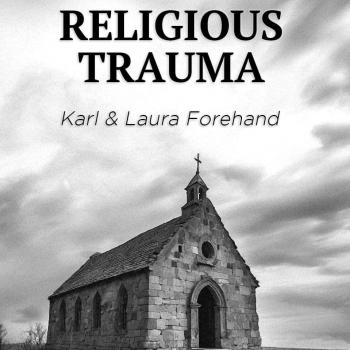
New Book - Evolving from Religious Trauma

Parenting in the Desert - Part 2 of...
TRENDING AT PATHEOS New Visions

The Real AI Story Is Adoption Without Trust
Artificial intelligence has crossed a political threshold. It is no longer a...

A new article, written by Jeff Lindsay and Gale L. Pooley,...

Swimfan: Forgotten Aughts Pleasures
This is a recovery effort. In 2002, My Big Fat Greek Wedding...

Top Three Anti-Catholic Lies About Catholicism
This is my initial transcript for the video, "THE 3 WORST...

Pope Leo Celebrates Mass for Nurses & Docs...
I don't have any idea how he did it, but Pope Leo...

The Sermon on the Mount, Part I: Matthew...
The Sermon on the Mount, Part I (Matthew 4:12-5:12) St. Matthew moves...
view all New Visions blogs
Ad-Free & Subscriber Log-In Subscription Support
- About Us
- 2026 Calendar
- Videos
- Podcasts
- Library of World Religions
- Faith In Media Tracker
- Advertise With Us
- Write for Us
- Privacy Policy
- Terms of Service
- Do Not Sell My Data
- Contact Us
- Radiant Digital
- Manage Newsletter Subscriptions
- Unsubscribe From Notifications
- Sitemap
Copyright 2008-2026, Patheos. All rights reserved.
Subscription Support Ad-Free & Subscriber Log-In
Follow Patheos