
BuddhistCatholicContemplativeEvangelicalGeneral ChristianHinduJewishLatter-day SaintMuslimNew VisionsProgressive Christian
Beliefs
- Buddhist
- Catholic
- Contemplative
- Evangelical
- General Christian
- Hindu
- Jewish
- Latter-day Saint
- More Voices
- Muslim
- New Visions
- Pagan
- Progressive Christian
Topics
- Religion News
- Food and Religion
- Sports and Religion
- Religious Art
- Religious Music and Entertainment
- Religious Events
- History and Religion
- Style and Religion
- Politics and Religion
- Women in Religion
- Recreation Outdoors and Religion
- Business Finance and Religion
- Careers Workplace and Religion
- Education and Religion
- Family Parenting and Religion
- Health Fitness and Religion
- Home and Religion
- Relationships and Religion
- Technology and Religion
- Travel and Religion
Columnists
- Buddhist Columnists
- Business Finance and Religion Columnists
- Careers Workplace and Religion Columnists
- Catholic Columnists
- Contemplative Columnists
- Education and Religion Columnists
- Evangelists Columnists
- Family Parenting and Religion Columnists
- General Christian Columnists
- Health Fitness and Religion Columnists
- Hindu Columnists
- History and Religion Columnists
- Home and Religion Columnists
- Jewish Columnists
- More Voices Columnists
- Latter Day Columnists
- Muslim Columnists
- New Visions Columnists
- Nonreligious Columnists
- Pagan Columnists
- Politics and Religion Columnists
- Progressive Columnists
- Recreation Outdoors and Religion Columnists
- Relationships and Religion Columnists
- Religion News Columnists
- Religious Art Columnists
- Religious Events Columnists
- Religious Music and Entertainment Columnists
- Sports and Religion Columnists
- Style and Religion Columnists
- Technology and Religion Columnists
- Travel and Religion Columnists
- Women in Religion Columnists
Resource Library
- 2026 Calendar
- Library of World Religions
- The 100 Most Holy Places on Earth
- Patheos Answers
- Podcasts
- Videos
- Faith Leaders Database
- Anglican Episcopalian
- Bahai
- Baptist
- Buddhism
- Christianity
- Confucianism
- Eastern Orthodoxy
- Hinduism
- Holiness and Pentecostal
- ISKCON
- Islam
- Judaism
- Lutheran
- Methodist
- The Church of Jesus Christ of Latter-day Saints
- New Age
- Paganism
- Presbytarian and Reformed
- Protestantism
- Religion Behind the Scenes
- Roman Catholic
- Scientology
- Shia Islam
- Sikhism
- Sufism
- Sunni Islam
- Taoism
- Zen
- See all religions
Research Tools
 Ad-Free & Subscriber Log-In Subscription Support
Ad-Free & Subscriber Log-In Subscription Support
Follow Patheos 

- Trending:
- Forgiveness
- |
- Marriage
- |
- Consciousness
- |
- Death Penalty
- |
- Election
- |
- Halloween

- Home
- New Visions
- Family, Parenting and Religion
- The Four Existential Concerns
The Four Existential Concerns
Last updated on: May 9, 2024 at 6:29 pm by Karl J. Forehand
The Four Existential Concerns 2024-05-09T18:29:11-06:00 Karl J. Forehand
Patheos Explore the world's faith through different perspectives on religion and spirituality! Patheos has the views of the prevalent religions and spiritualities of the world.
The Four Existential Concerns

(From our new book, Evolving From Religious Trauma. June 4th)
Audio version of this blog!
AI Generated
Healing religious trauma and embarking on a journey of discovery can be terrifying! Many assumptions about the dangers of setting out on our own exist, but there are also the very real fears that all of us have. For simplicity’s sake, let us just call them existential concerns.
For more information on these topics, see Yalom (1980), Heidegger (1957), and the National Library of Medicine.
There are some things we should be concerned about. If we conduct our lives without concern, we may find ourselves at the mercy of the more dangerous aspects of our world. Conversely, if we exaggerate those concerns, we may find ourselves immobilized and unable to function, which also makes us vulnerable to high-control religion and manipulative people who promise to keep us safe as they take advantage of our fears.
When we enter a new territory, like trying to heal from trauma or discovering new things, we will inevitably face these existential concerns. Since religion and our families of origin are usually unequipped to deal with these concerns, they opt for easy, manufactured answers that cause us to bypass the real issues and adopt solutions that help us survive instead of evolving forward. We wait for something or someone to rescue us from life’s difficulties instead of exploring the question more thoroughly.
Bypassing or ignoring big questions doesn’t make them smaller or resolve them for us.
1. Fear of Death
In the 1970’s, Ernest Becker won the Pulitzer Prize for his book Denial of Death. In this work, he postulated that non-human animals know nothing about dying by stating, “The knowledge of death is reflective and conceptual, and animals are spared it.” Others, such as psychologist James Anderson of Scotland, now assert, “I believe we are now justified in thinking that chimpanzees have some kind of awareness of death.” Until animals grow a more developed cortex or learn to speak, we may have to assume they are concerned with more fundamental concerns like food and inherent dangers.
Even though we are unsure whether other animals have this concern, we know that humans do! The only reason the fear of death is below the fear of public speaking is because most phobias and fears are connected to the fear of dying, so much so that we subdivide it into multiple other categories.
Most of us generally focus on minor concerns and treat them like life and death. This gives us the false assumption that we control our environment and make our world safer. In some ways, this makes sense and is a practical approach to life, but we still haven’t addressed fear and its more significant issues.
We join religious groups because they promise the antidote to death. Once we accept their creed and promises, it becomes very uncomfortable to question the obvious flaws and inconsistencies in their suppositions. At least they keep us entertained and distracted so that we don’t think about existential questions too often.
We are forevermore searching for the latest snake oil that the salesman promises will answer all of our concerns about our health and well-being, only to replace it with something else the following year. If possible, we hope to avoid hard work, like dealing with mental and physical health, while we continue our search for the magic elixir.
Since leaving organized religion, one of the biggest revelations for me was to accept the fact that I would die, and I did not know what would happen after that. Obsession with the afterlife and theories of what happens next sometimes caused me to avoid living the life that was before me. The “One day, it will all be better” mantra is another form of bypassing that causes me to miss experiences of genuine existence.
In the movie Big Fish, Albert Finney’s character can live carefree because he believes in his own stories, one of which is about a witch telling him how he would die. He thought that he didn’t have to worry because “This is not the way I’m going to die.” His son helps him untangle reality from his “big fish” stories, and in the end, they grow closer. I love the movie more every time I watch it, but in the end, it’s just a tale about the stories we tell ourselves.
We don’t know when we’ll die or how, but we can live better by learning and growing. We can decide to live authentically instead of in service to our fears. In the movie, Ed Bloom’s son seemed to grasp this balance to living authentically, even though he went to the other extreme.
To live authentically, we must answer the question, “Who am I?” To do this, we must disassociate with all our other identities that life has assigned us. We may very well be a Baptist, a Methodist, an American, or a plumber. But those are just labels and groups that we have associated with. They are not who we are.
The ”I am” statements are compelling. Apparently, Jesus and Yahweh both said, “I am,” in a very declarative and universal way. But attaching things like “Plummer” and “Baptist” to “I am” is inauthentic because not all plumbers and Baptists are the same, and those are not our core identities—they are only the things we do.
We must remember our true and authentic selves. When we disassociate all our labels and false identities, we can live more authentically in the present. We are then able to accept realities like death without needing to manipulate them. We make better decisions about everything by being with reality rather than creating a fish story to tell us how we are going to die and where we are going to go.
Knowing who we are makes it easier to be where we are.
2. Fear of Freedom
There is a lot of talk these days about freedom. The reality is that most of these discussions are really about being free from one group as they conform and attach to a new belief system and group. These people may be releasing their attachment to fundamentalist or conservative groups only to become connected to another dogmatic system. In this way, they spend time disproving and condemning the old while celebrating the new.
There are inherent problems with this approach. First, it avoids the necessary work of finding healing, identity, and purpose for us. We never address our personal needs because we assume that attaching to the right group will solve our problems. However, we never improve without focused attention because organizations focus on the group’s survival over the individual, and it doesn’t seem to trickle down.
Along with avoiding individual work, we bypass our fear of being free. It’s the feeling that we had when we left home, started our first job, or started escaping from toxic religion. It’s why, in the story of Moses, the Israelites begged to return to captivity. The Desert was new, unpredictable, and difficult. Many of us have a cloak of privilege even in our captivity. But when we step into freedom and autonomy, it can make us feel very vulnerable.
We must fully own ourselves, our beliefs, our feelings, and even our suffering. We have to understand that some of these are things we caused. There are also things we can’t control. When we own up to reality, we can begin to respond to these things instead of reacting.
There very well may be people who help us along the way, but until we accept the responsibility to accept, reject, or change those things, we will never be free. The group is universally not going to take responsibility for us because it is focused on the larger group. In my experience, they rarely get around to the “least of these.” (Matthew 25:40).
Most religions claim to free us from whatever they disagree with. But most of that freedom comes from realizing we are personally responsible. It is scary to face freedom from whatever enslaves us, and groups can be helpful if they truly support, encourage, and listen to us. However, groups can also become new prisons requiring regular attendance, money, and volunteer labor. People with an addiction tend to trade one addiction for another, and addiction to religion is one of the main substitutes.
Freedom is scary, but surrendering our freedom to a religious group, a political party, or even a family can be problematic. And not taking responsibility is a decision to let others decide for us.
3. Fear of Isolation
Humans seem to live in a contradiction. Quantum Mechanics shows that “the Universe is made up of space filled with fields of vibration, interconnected, unified and in constant communication.” With theories like Six Degrees of Separation, we propose that “everyone in the world is connected through six or fewer social connections.” Social connection has benefitted much, such as how trees interact with fungi through the “Wood Wide Web,” called the Mycorrhizal Network.
But why do most people experience such loneliness, even in a crowded room? Why do we feel separated even in groups supposed to be “like-minded?” Why are we alone in such a connected universe?
Our fear of isolation leads us away from helpful solitude. When we can clear the distractions and commune with our true selves, we will connect with nature and develop authentic, mutual relationships that satisfy our deep need for connection. Brené Brown explained it this way in an interview with Lewis Howes:
“I feel I belong everywhere I go, no matter where it is or who I’m with as long as I never betray myself. And the minute I become who you want me to be in order to fit in and make sure people like me is the moment I no longer belong anywhere.”
Group conformity often debilitates our natural ability to connect. Religious institutions foster faux communities that force us to abandon or betray ourselves to fit into the group. As Brown suggests, when we become what the group insists that we should be, we “no longer belong anywhere.”
Groups do a great job of introducing people, but unless authenticity is a top priority, they generally suck at genuine connection. People find themselves isolated in church just as often as at home alone. The only reason they don’t leave is their fear of the unknown and the existential dread of further isolation. The myth of hell is even propagated in some churches to stoke this fear of separation and keep them from leaving.
We even create groups on social media where we get likes, loves, and cares, which also don’t truly fulfill the communal need for connection. Again, it’s about authenticity, vulnerability, and belonging. All these things are difficult.
Healthy community stresses, “I want the best for you even if it’s not here or even if it’s not with our group.” If it’s unhealthy, we can be alone in the same room with thousands of other people. We have to be able to strengthen bonds with others without losing ourselves.
Healthy language can sound like, “For me…” or “This is how I see it.” If we can only celebrate the areas where we think the same, what exactly are we celebrating?
A healthy community stresses time for solitude, and we must become comfortable with solitude long enough to find ourselves. Once we know who we are, we will know what to do and who to connect with.
4. Fear of Meaninglessness
Philosophers have long postulated theories of nihilism to assert that the universe contains no universal sense of meaning. Many people who inherited their belief systems eventually conclude that much of what they were indoctrinated with is void of real meaning.
Because meaning is helpful to humans, we create new meanings through our culture, language, and religion. Religion is very good at providing simple, sometimes naïve, statements of meaning. But they do not allow for the questions that remain. “Which is more accurate than all the others, and what about this other thing?” are the questions that keep narcissistic theologians employed. “We will tell you what meaning to extract if you put us on a stage and pay us for the performance”
Meaning and purpose are hard to achieve when aimed at directly. We find them better by living authentically and staying curious. We must remove the exploration obstacles and be aware of packaged solutions.
When I worked in the software industry, there were always versions of our products. With other products, there is always a model number. Why? Because we could never account for possible improvements or mistakes in our evaluation. We just wanted to be better than the other company and meet the customer demands, so we gave up on an ultimate solution and gave them our best.
Isn’t it fair to say the same things about organized religion and our creeds and belief systems? Declaring that 1.0, or even 5.0, in any religion, is absolute meaning is naive and misguided. No version is the supreme essence of meaning, especially since they find it hard to agree with each other.
We can find meaning without idolatry. Even though it may be frightening to approach nihilism, atheism, or something else we were taught to be afraid of, unraveling everything may be necessary to find the truth. Otherwise, the meaninglessness we worry about may be the religious practices we thought would save us. We will address these concerns in more detail later in this manuscript. As always, when navigating deep waters, it’s appropriate to find seasoned guides to help as long as they let you find meaning from your own experience instead of forcing you to adopt theirs.
Be where You Are, Be who you are,
Karl Forehand
My Top 10 Suggestions for Theologians
Was Jesus well-known in the 1st Century?

Karl Forehand is a former pastor, podcaster, and award-winning author. His books include Out into the Desert, Leaning Forward, Apparent Faith: What Fatherhood Taught Me About the Father’s Heart, The Tea Shop and Being: A Journey Toward Presence and Authenticity. He is the creator of The Desert Sanctuary podcast and community. He is married to his wife Laura of 35 years and has one dog named Winston. His three children are grown and are beginning to multiply! You can read more about the author here.
Progressive Christian
Family, Parenting and Religion
Previous Post

May 6, 2024
What is Trauma?
Next Post

May 15, 2024 In Search of a Grown-up
Browse Our Archives
Select a Category Abuse Addiction Advent adventure Alpha Male Animals Answers Attachment Attitude authenticity Authenticty Authentiicity Awareness being Bible Black Community BLM body awarenss book Books Bravery Bullying Bypassing Certainty Certianty Chamge change children Christianity Christmas Church Comfort community Compaasion Compassion Complementarian Complementarianism Conditioning Consciousness Contemplation Control Conversation Converstations Covid-19 Creation Darkness Death Debate deconstruction demons depression desert Devil Disciples discussion Divine dreams Easter Eclipse Empathy Essence evolution evolve faith fatherhood Fear fiction Flood Focus Focusing Focussing Future Genesis Goals God Gratitude grief growth Guns Hate healing Health Heart Hell Holiday Hypnosis ignorance Improvement infallible Inner Child Integrity Intuition Jesus Jezebel Journey King LGBTQ+ Love MAGA Marriage meditation Men Mercy Message metaphysical Mindfulness Misogyny Mourning Music Mystic mystical Narcissism Nationalism Nature New Year Novel Nutrition Organization other Pain Pandemic parenting Pastors Patriarchy Patriotism Personal Growth Plan Poet poets Police politics Power practice praise Prayer presence pro-life Problem Solving Progress prolife Prophet prophets Purity Culture Purpose Queer Questions Racism Rape Rapture reconstruction Recovery Religion Resolutions Restoration Resurrection Retribution Reviews Root Cause Sanctuary Satan SBC Scripture Seeking Self-Care Self-esteem Seminary Sex Shadow shame social justice social media solitude Spirits Spirituality stillness Story Survivor Thanksgiving Theologians Theology Tradition Trauma travel Trump Uncategorized Unchurching Universe Violence Vision Voice Volunteer Vulnerability War Women Word worship Writing
Select a Month September 2026 August 2026 June 2026 May 2026 April 2026 March 2026 February 2026 November 2025 October 2025 September 2025 August 2025 July 2025 June 2025 May 2025 April 2025 March 2025 February 2025 January 2025 December 2024 November 2024 October 2024 September 2024 August 2024 July 2024 June 2024 May 2024 April 2024 March 2024 February 2024 January 2024 December 2023 November 2023 October 2023 September 2023 August 2023 July 2023 June 2023 May 2023 April 2023 March 2023 February 2023 January 2023 December 2022 November 2022 October 2022 September 2022 August 2022 July 2022 June 2022 May 2022 April 2022 March 2022 February 2022 January 2022 December 2021 November 2021 October 2021 September 2021 August 2021 July 2021 June 2021 May 2021 April 2021 March 2021 February 2021 January 2021 December 2020 November 2020 October 2020 September 2020 August 2020 July 2020 June 2020
Follow Us!
TAKE THE
Religious Wisdom Quiz
What does Jeremiah use to symbolize Israel's relationship to God in Jeremiah 18?
Select your answer to see how you score.
A bride and bridegroom A potter and clay A tree and fruit A shepherd and sheep
Books by This Author Books by The Desert Sanctuary
Related posts from The Desert Sanctuary

Why Trump is in our Deconstruction Stories
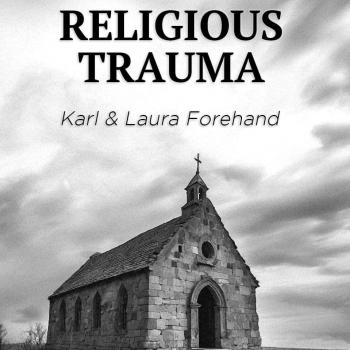
New Book - Evolving from Religious Trauma


Parenting in the Desert - Part 2 of...
TRENDING AT PATHEOS New Visions

I was strolling through the top floor of the brand new Parthenon...

What Does Gêvâh Mean For Kimberley Guifoyle &...
This week, a lot of the news is focused on Kimberly Guilfoyle....

INNER CIRCLE: Profound Mystery (Of Christ In All...
Ephesians 5:31-32 “For this reason, a man will leave his father and...

Do Not Rejoice When Your Enemy Falls: The...
Turning an execution into a public spectacle is a disturbing expression of...

'The Chosen' S6 Trailer: The Passion Gets Very...
Not many watching 'The Chosen' worry about spoilers, but just because they...

The purpose-driven labor priest
A labor activist reads Rick Warren and it gets me wondering about...
view all New Visions blogs
Ad-Free & Subscriber Log-In Subscription Support
- About Us
- 2026 Calendar
- Videos
- Podcasts
- Library of World Religions
- Faith In Media Tracker
- Advertise With Us
- Write for Us
- Privacy Policy
- Terms of Service
- Do Not Sell My Data
- Contact Us
- Radiant Digital
- Manage Newsletter Subscriptions
- Unsubscribe From Notifications
- Sitemap
Copyright 2008-2026, Patheos. All rights reserved.
Subscription Support Ad-Free & Subscriber Log-In
Follow Patheos