
BuddhistCatholicContemplativeEvangelicalGeneral ChristianHinduJewishLatter-day SaintMuslimNew VisionsProgressive Christian
Beliefs
- Buddhist
- Catholic
- Contemplative
- Evangelical
- General Christian
- Hindu
- Jewish
- Latter-day Saint
- More Voices
- Muslim
- New Visions
- Pagan
- Progressive Christian
Topics
- Religion News
- Food and Religion
- Sports and Religion
- Religious Art
- Religious Music and Entertainment
- Religious Events
- History and Religion
- Style and Religion
- Politics and Religion
- Women in Religion
- Recreation Outdoors and Religion
- Business Finance and Religion
- Careers Workplace and Religion
- Education and Religion
- Family Parenting and Religion
- Health Fitness and Religion
- Home and Religion
- Relationships and Religion
- Technology and Religion
- Travel and Religion
Columnists
- Buddhist Columnists
- Business Finance and Religion Columnists
- Careers Workplace and Religion Columnists
- Catholic Columnists
- Contemplative Columnists
- Education and Religion Columnists
- Evangelists Columnists
- Family Parenting and Religion Columnists
- General Christian Columnists
- Health Fitness and Religion Columnists
- Hindu Columnists
- History and Religion Columnists
- Home and Religion Columnists
- Jewish Columnists
- More Voices Columnists
- Latter Day Columnists
- Muslim Columnists
- New Visions Columnists
- Nonreligious Columnists
- Pagan Columnists
- Politics and Religion Columnists
- Progressive Columnists
- Recreation Outdoors and Religion Columnists
- Relationships and Religion Columnists
- Religion News Columnists
- Religious Art Columnists
- Religious Events Columnists
- Religious Music and Entertainment Columnists
- Sports and Religion Columnists
- Style and Religion Columnists
- Technology and Religion Columnists
- Travel and Religion Columnists
- Women in Religion Columnists
Resource Library
- 2026 Calendar
- Library of World Religions
- The 100 Most Holy Places on Earth
- Patheos Answers
- Podcasts
- Videos
- Faith Leaders Database
- Anglican Episcopalian
- Bahai
- Baptist
- Buddhism
- Christianity
- Confucianism
- Eastern Orthodoxy
- Hinduism
- Holiness and Pentecostal
- ISKCON
- Islam
- Judaism
- Lutheran
- Methodist
- The Church of Jesus Christ of Latter-day Saints
- New Age
- Paganism
- Presbytarian and Reformed
- Protestantism
- Religion Behind the Scenes
- Roman Catholic
- Scientology
- Shia Islam
- Sikhism
- Sufism
- Sunni Islam
- Taoism
- Zen
- See all religions
Research Tools
 Ad-Free & Subscriber Log-In Subscription Support
Ad-Free & Subscriber Log-In Subscription Support
Follow Patheos 

- Trending:
- Forgiveness
- |
- Marriage
- |
- Consciousness
- |
- Death Penalty
- |
- Election
- |
- Halloween

- Home
- New Visions
- Health, Fitness and Religion
- Advocates for Healing and Change with Janyne McConnoughey
Advocates for Healing and Change with Janyne McConnoughey
Last updated on: February 5, 2024 at 9:50 am by Karl J. Forehand
Advocates for Healing and Change with Janyne McConnoughey 2024-02-05T09:50:55-06:00 Karl J. Forehand
Patheos Explore the world's faith through different perspectives on religion and spirituality! Patheos has the views of the prevalent religions and spiritualities of the world.
Advocates for Healing and Change with Janyne McConnoughey
Photo by cottonbro studio: pexels.com
I was lucky to create a Leaning Forward conference with all these women and their wisdom!
Leaning Forward is the title of a book by Karl and Laura Forehand about moving beyond the confines of organized religion. It is also the title of an online conference we have hosted for several years. This year, we decided to host a series of podcasts primarily to help us understand religious trauma and how to move forward. We are also hosting an online conference with the understanding that amplifying women’s voices is probably the most important component.
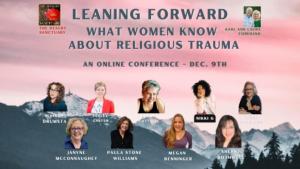
This is a conference powered by women but designed for men and women who want to heal from trauma and identify ways to do better in the future!
Janyne McConnoughey shared “Women as Advocates for Healing and Change.“
Preview – Transcript and Video Below
https://wp-media.patheos.com/blogs/sites/1333/2023/12/Janyne-ad.mp4
Transcript – Video Below
Women as Advocates for Healing and Change
by Janyne McConnaughhey
Leaning Forward Conference: What Women Know about Trauma
I am an educator and I completed 40 years in education, and I was I started as a preschool teacher, preschool director kindergarten teacher, and taught at the college level teacher education for 33 years. At the end of all that I went on a healing journey to heal from childhood trauma and that’s how I ended out in the trauma world.
Currently, I am an author I have four books and I’ll be talking about those a little bit later on so I’ll just mention that the latest one is Trauma in the Pews and that the impact of faith and spiritual practices and that’s kind of how I end up here at this and so um I also have I’m on the board for the Attachment and Trauma Network and just completed two years as board president and I am completing my last year now on the board and also teach for Taber College in their MS in Education and Neuroscience and Trauma and I’m teaching a class for them right and acting as the distinguished visiting professor.
it’s kind of interesting how I even got involved in the religious trauma arena. It was never my intent. Life takes you places where you do not expect to go. After I healed from childhood trauma, I published a book, and I started listening to people’s stories, which led to other things. Because I had been in the Christian world all of these years so, most of the people talking to me had some kind of background with that, and would always say after they told their story of childhood trauma:
“I’ve just always felt so like such a failure spiritually because I couldn’t do this, or I couldn’t do this or I just didn’t feel like God loved me.”
There were so many things that people would say, and I started realizing we had a theme going. So, I started to get into religious trauma. I realized that whether the abuse was intentional or unintentional, didn’t matter. Harm is harm. It doesn’t matter how we get there. It may be easier for us to heal if we don’t think people intentionally harmed us and, of course, that does not include the category of sexual abuse, ritual abuse, etc. All of that is just evil.
The other things that people were telling me were due to Ministry leaders not understanding trauma and not understanding the impact of trauma. That was what happened to me in my life and that’s where Trauma in the Pews came from. I attempted to help ministry leaders understand how people, who were sitting in the pews, had experienced trauma and needed compassion. They needed to be understood.
Mostly what I do is write. Today, I’m going to talk about how I found my lane and how I now have to work to stay in my lane. I speak a lot on podcasts and different speaking engagements, but mainly I’m an author. I’m a Storyteller. Everything has a story and so when I thought about how to explain purpose, it has to be somehow connected to a story.
Purpose
When my parents were alive, my mother had a box of nice pottery dishes that got dropped by movers. They were in pieces! My dad, being handy and loving my mother, decided that he would make a cross and put all the pieces of pottery on the cross. So, when she passed and he packed up the house, I said, “I want the cross.”
But there was no room for the cross for me to take it. I was asked to do a presentation at the college. I was teaching at Chapel and it was on the theme of the Cross, and I thought there was no room at the cross. There’s no room for the cross so I started thinking about the cross and when I researched it, I discovered the disciples didn’t even know what Jesus meant when he said, “Pick up your cross.” There wasn’t any story to go with that yet, so I researched some more. Picking up your cross means “to take a stand or to find your purpose.”
After that, I started thinking about what was Jesus’ purpose. It wasn’t the same as my purpose. Everybody has a different purpose in life.
A lot of us who have ended up in the arena with religious trauma know we’re finding our purpose, and it looks different for everyone. I mean it looks different for everyone. I know their purpose comes out in a little bit different way, so I started thinking about the fact that knowing what our purpose is—knowing what our lane is—knowing where we’re going to take a stand is essential to effectively do what we set out to do.
I didn’t begin my healing Journey till I was 60. Here I am 65 and I’m trying to find my purpose in life, I posted a meme and about 70 people weighed in and said yes I’m 60, I’m 50, I’m 70 and they were healing, and looking for purpose.
I realize now that it isn’t enough to heal, and there’s a purpose that comes out of our healing we are we are women with purpose. I believe it’s the women who have the power to make an impact on how people are being harmed. how they can heal, and how they can find purpose. That’s kind of where the title comes from.
The Cost of Taking a Stand
I don’t know very many people who take a stand that it doesn’t cost them something. I know my decision to be in this arena cost me. However, I thought that people were going to attack me and all that stuff that survivors think. Those catastrophic things never happened. People have been very kind to me, but it has cost us financially and it has cost me health-wise. I took September off because I didn’t fully understand how to stay in my lane and follow my purpose to do good self-care.
Because I’m 70 now, I find it harder and harder to do what I’m doing because it is a cost. But it is purpose, at the same time.
Advocates / Activists
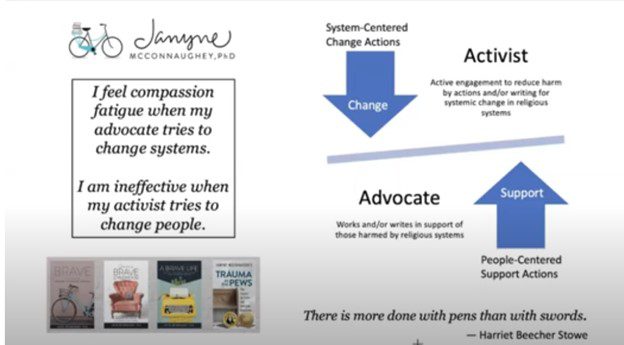
I realize that an activist is actively engaged in reducing harm by actions or writing for systemic change in religious systems. I always add writing in because that’s my purpose. That’s what an activist does where an advocate works and/or writes in support of those harmed by religious systems.
Sometimes we give the illustration: Are we catching the people who fall off the edge from being harmed or are we going back and trying to change the system? It’s Desmond Tutu’s quote where he says “We need to stop pulling people out of the river and go find out why they’re falling in in the first place” I’m not saying that one or the other should be more important, but I think that we do both. I do both of these. One is where I’m working toward change, and it is system-centered and the other one is support and it is people-centered actions.
I realized I was doing this when I felt compassion fatigue when my advocate tried to change systems Along the way, as people started telling me their stories, I got so angry I was just like really this is horrible. Even though I had my own story of religious trauma, when I try to change people then I’m ineffective. When my activist starts trying to change people instead of changing systems, it’s like trying to beat a nail into the door with my forehead. I’m on the wrong path. I can support people and I can work to change systems, but I cannot change people. These are our issues.
My best way to do either one of those is to write. I can be an activist through my writing, and I can be an advocate. I think when you find your purpose you can do both of those and you can find a balance between the two.
How Women Are Perceived
When I started looking at this, I realized the church is pretty happy for me to go out there and be an advocate by supporting people who are hurting. But, when I start to do activist work, they’re like, “Wait a minute, wait a minute.” Is this a gender issue? Are we pigeonholing women into being advocates so we will go support people? That’s what you do. You’re nurturing—You’re kind—you need to go and support people. But then when we venture off into being an activist and try to change systems, suddenly, we get all the all the typical stereotypical gender complaints (You’re being pushy, You’re stepping in where you don’t belong).
I think this is especially true if we get confused and instead of being an activist who’s trying to change systems, if we’re an advocate who tries to change people, once again, we can’t change people. There is no way. I mean you might discuss with them if they’re self-aware and able to have discussion and able to see different viewpoints, you might move them off dead center and get them to see. In this case, what you are doing is what I try to do with my books. I just try to move people off dead center.
We are never going to fundamentally change people through activism. I think gender plays into that and you know since we’re examining women’s viewpoints, I think that everyone, including men, need to know that it is okay for a woman to step in as an advocate and men don’t need to take it personally. If we’re trying to change a system, that does not mean we are attacking you as a person. We are trying to change the system that is causing harm. Sometimes that’s a theological system—sometimes it’s a system of how churches are run—sometimes it’s gender—it’s all sorts of things. But it doesn’t mean we’re personally attacking someone when we’re an activist.
Finding Your Purpose
The purpose will always be embedded in your story. I have lots of skills that I could have utilized in my life, aside from the trauma that happened to me. But it was the trauma that happened to me that defined what my purpose eventually turned out to be. I’m on the board for the Attachment and Trauma Network, so we do lots of interviews for people who are interested in being on the board. We talk to them at the conference, and almost inevitably people are interested in learning more about trauma and becoming involved in in the organization because they have a story behind it.
I think that I think that the best way to find purpose is to look at your own story and I do not believe that everything happens for a purpose. That’s just disgusting. My abuse began when I was three years old. There is no redeeming purpose there—there is nothing but evil in that. So, when people say, “Isn’t it amazing you know what happened to you now because….” I say, “No, no, noooo!” I could have lived a perfectly happy life without being traumatized. I get to choose if I want that to if I want to build purpose out of that trauma, but I don’t want anyone else to define my purpose. Because then we run into where we’re saying that somehow God was in that. God was not in that!
I that we can take what happens to us and we can heal first of all because without fully healing you up being an angry activist. You have to have a little bit of anger to be an activist. You can’t just pretend life is fine and then go out and be an activist. That’s not going to work. We are fueled by our story and by the things that are happening to us that are wrong. But there is a difference between anger that comes out of purpose and anger that just comes out of just wanting to burn the world down. There are two different things, the purpose, and story, that fit together.
Effective Ways to Heal
If you look at my books, Brave is my therapy story. Brave is me walking into therapy realizing and peeling back the onion of all the layers of the trauma that happened to me. My amazing therapist who helped me on this journey our journey together and the relationship that we built to help me heal.
When I got the book done my first book was like the Treatise of Theopolis. It was huge and so it was divided into two parts. You can see in the second one that Brave is sitting in the chair, and this is Genie’s story that I pulled out of the first book. They go together but this one talks about my behaviors as a child and how to understand children with behaviors that are that come out of trauma. Then a Brave Life was moving me toward the religious trauma because I wrote that one about my adult life journey in the church and the things that happened to me and so forth and then and then that eventually evolved into Trauma in the Pews.
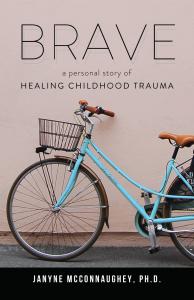
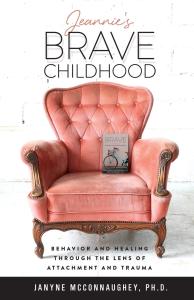
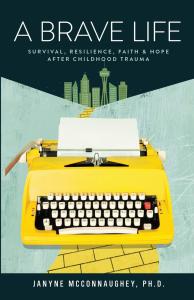
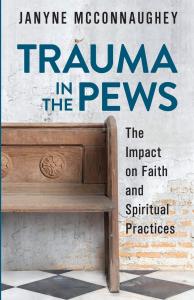
Because I was born to be a writer, the way for me to heal was through what I was born to do, and that is writing. I mean journaling is good for everyone. Writing is good for everyone. It is an important part of healing for many people. But for me, it was essential. I wrote all four of those books in five years and actually, there’s another one in the wings right now being reviewed this week. It’s called Trauma in the Pews 2.0: Healing as a Spiritual Practice, which kind of answers this. But I think that writing is important.
EMDR therapy. Many modalities are treating trauma now and we’re finding more and more and becoming more effective and finding ways that help to lessen the turmoil of healing. Therapy is good, but it needs to be trauma-informed. Talk therapy is not going to heal trauma. it just doesn’t. Sitting around and continuing to talk about what happened to you does not. Trauma is held in the body so it needs to be semantic, or it needs to be something like EMDR, or it needs to be trauma-informed therapy.
In Jeanie’s book, the second book, near the end of the book, I talk about all the things I did between therapy sessions to help me heal. Because I was healing a child, I did Art. I did collages. I worked on puzzles. I walked along the Creek. It’s just filled with all of the ways that I helped myself heal in this process. So, between those and relationships, you need to find people who are willing to support you, to understand trauma, and not flinch when you have a trauma response as you’re healing. Healing is super messy, and I liken it to taking you know a closet is piled up for 40 years and then you just open the door and dump it all in the hallway and then you have to sort it all out and discover it’s just messy. So, you need people who understand the messiness of trauma and do not judge do not flinch, and do not hand you a Scripture verse. Especially when religious trauma is involved.
In my next, book I talk about how there are some people that the Bible is very comforting for them. That is because they have spiritual experiences around the Bible that are helpful to them. They had good relationships with it, but that is not my case. When we talk about that someone just needs to read your Bible, that’s never going to work. For me ever it doesn’t work for anybody. What I said is it’s in the body, so I say in the next book to think about this. Where is your Bible? If you have one and not that you have to, but if you have one, walk toward it. What happens inside your body? if your body starts to feel settled and calm then that’s a positive thing for you. If your body starts to dysregulate and to feel tense, then that is because the Bible is dysregulating for you.
It all depends on your story, and it depends on how that how that was used. Was it used as a weapon? Was it used as a comfort? Was it used to shame you? Was it used at all? It depends on that and it’s and how your body responds. It’s not your fault. It has to do with your story so when I talk about spiritual practices, I take a very different slant. I assume you need to find your practices and then maybe you don’t. And that’s okay too. All of that was involved in my healing, it was me finding the ways that helped my body heal, not what other people were telling me I should do or which I couldn’t do.
A Message to Men
I wrote Trauma in the Pews to men because I was writing for ministry leaders and other men, so I knew I knew that I had written three Memoirs and that unless a man completely respected me or wanted to understand me or unless I asked for an endorsement, that men usually do not read survivor stories. So, I don’t know that you can walk into a pastor’s office across America and find stories written by women survivors. I would say it would be almost impossible to find. They have theology books, they have leadership books, and they have counseling books. They do not have women’s stories and it feels disrespectful that men will not read our stories.
I was speaking at a Ministry Conference, and I spoke to the Early Childhood section of the Ministry Conference, which was mostly women of course because women go into early childhood and because we have designed roles. Even though I did a session on Trauma in the Pews for the main conference, most of the people who came to our booth were women. I was off speaking, and my husband was sitting at the booth when a man came up picked up the book, looked through it, very interested in the book, and then he looked up at my husband and said, “So you’re the author and Scott said ‘No, my wife is the author.’” He closed the book, set it on the table, and walked away.
When I came back, Scott my husband said, “You’re not GNA believe what happened!” Unfortunately, I did believe him. It was all too common in my experience.
Men have been so supportive of me and they have asked me on podcasts, etc., so I do not bash men, I’m just saying, that if they want to understand what it is like to be a woman in this religious world and to be abused and to be diminished and to be not listened to, then they need to read our stories—they need to read our books!
They need to come to conferences, like Leaning Forward, and listen to the women who speak. I’m so appreciative of any man that is listening to me right now. My abusers from the age of 3 to 23 were all men in the church. So, there’s very little logic that I have that I am doing this work. But I want to speak to men and ask them to do a better job.
They can do better–we all can do better–by listening to us and by bringing us into the meetings. We deserve to be there. The wisdom of women is such an important part of getting it right and so many times when decisions are made in churches that are so harmful, there are no women in the room to moderate the discussion when the decision is made.
I did a research paper when I was working on my doctorate and my conclusion was that if it’s about doctrine women would still be held highly and they would be brought into
the room to be listened to. If it’s about bias against women, then they pull out the theology card and use that. If the women are part of your discussions, then you are listening to women and you have books written by survivors on your shelves.
A Message to Everyone
There is such hope and purpose in healing and it’s never too late to heal. When I first started I wrote Brave, the bicycle was my bicycle when I was a little girl and everybody adopted it, so I have the bicycle on everything and I had a picture of a little girl and it looked like a billboard and it said, “helping the world heal one child at a time.” And that was where my purpose began–I began with healing myself. The first child that I needed to help heal was the little girl inside of me who had been crying for help for 60 years.
Do whatever you have to do to heal.
I have been working with a group that before I joined the group on Facebook was originally started to help people understand Dissociative Identity Disorder and now it has a much broader audience. Even though we do try to help because it’s such an important part of Early Childhood Trauma. It’s a coping mechanism and we call it a response to trauma. I began helping on that page and it’s grown we have over 200,000 followers. We don’t even know what to do and I realize, as I listen to more and more stories, that religious trauma is almost always involved when people tell their stories.
With fear and trepidation, because people get so triggered by going to a page for help and finding out they’re talking about religion there, we very carefully entered the arena blogs that I post at my blog janyne.org about religious trauma. I have four up right now. The one that I did most recently was about how what we believe about children impacts religious trauma and how religious trauma and its roots are often in what we believe about children.
The complete version of Janyne’s talk is on YouTube!
Janyne McConnaughey, Ph.D., is an award-winning author and trauma-informed advocate who lived with the effects of childhood sexual abuse from the time she was three years old until she entered therapy and began her healing journey at the age of sixty-one.
Janyne McConaughey Trauma Resources
To see other speakers and a few extras, access the following link:
https://thedesertsanctuary.org/leaning-forward-2023/
The videos below are from the conference held on December 9th. They are free to access, but please consider donating to help offset expenses using the scan below.
If you share the videos, please use this page to share as it contains pointers to resources, etc.
 About Karl Forehand
Karl Forehand is a former pastor, podcaster, and award-winning author. His books include Out into the Desert, Leaning Forward, Apparent Faith: What Fatherhood Taught Me About the Father’s Heart, The Tea Shop and Being: A Journey Toward Presence and Authenticity. He is the creator of The Desert Sanctuary podcast and community. He is married to his wife Laura of 35 years and has one dog named Winston. His three children are grown and are beginning to multiply! You can read more about the author here.
How to Speak Women with Susan Cottrell
Usurping Women’s Voices from the Patriarchy, Sherri Bothwell
Progressive Christian
Health, Fitness and Religion
Previous Post
December 13, 2023
What I Learned from Women about Religious Trauma
Next Post

December 18, 2023 As A Woman with Paula Stone Williams
Browse Our Archives
Select a Category Abuse Addiction Advent adventure Alpha Male Animals Answers Attachment Attitude authenticity Authenticty Authentiicity Awareness being Bible Black Community BLM body awarenss book Books Bravery Bullying Bypassing Certainty Certianty Chamge change children Christianity Christmas Church Comfort community Compaasion Compassion Complementarian Complementarianism Conditioning Consciousness Contemplation Control Conversation Converstations Covid-19 Creation Darkness Death Debate deconstruction demons depression desert Devil Disciples discussion Divine dreams Easter Eclipse Empathy Essence evolution evolve faith fatherhood Fear fiction Flood Focus Focusing Focussing Future Genesis Goals God Gratitude grief growth Guns Hate healing Health Heart Hell Holiday Hypnosis ignorance Improvement infallible Inner Child Integrity Intuition Jesus Jezebel Journey King LGBTQ+ Love MAGA Marriage meditation Men Mercy Message metaphysical Mindfulness Misogyny Mourning Music Mystic mystical Narcissism Nationalism Nature New Year Novel Nutrition Organization other Pain Pandemic parenting Pastors Patriarchy Patriotism Personal Growth Plan Poet poets Police politics Power practice praise Prayer presence pro-life Problem Solving Progress prolife Prophet prophets Purity Culture Purpose Queer Questions Racism Rape Rapture reconstruction Recovery Religion Resolutions Restoration Resurrection Retribution Reviews Root Cause Sanctuary Satan SBC Scripture Seeking Self-Care Self-esteem Seminary Sex Shadow shame social justice social media solitude Spirits Spirituality stillness Story Survivor Thanksgiving Theologians Theology Tradition Trauma travel Trump Uncategorized Unchurching Universe Violence Vision Voice Volunteer Vulnerability War Women Word worship Writing
Select a Month September 2026 August 2026 June 2026 May 2026 April 2026 March 2026 February 2026 November 2025 October 2025 September 2025 August 2025 July 2025 June 2025 May 2025 April 2025 March 2025 February 2025 January 2025 December 2024 November 2024 October 2024 September 2024 August 2024 July 2024 June 2024 May 2024 April 2024 March 2024 February 2024 January 2024 December 2023 November 2023 October 2023 September 2023 August 2023 July 2023 June 2023 May 2023 April 2023 March 2023 February 2023 January 2023 December 2022 November 2022 October 2022 September 2022 August 2022 July 2022 June 2022 May 2022 April 2022 March 2022 February 2022 January 2022 December 2021 November 2021 October 2021 September 2021 August 2021 July 2021 June 2021 May 2021 April 2021 March 2021 February 2021 January 2021 December 2020 November 2020 October 2020 September 2020 August 2020 July 2020 June 2020
Follow Us!
TAKE THE
Religious Wisdom Quiz
What is the main symbol of Christianity?
Select your answer to see how you score.
Rainbow Olive branch Lion The cross
Books by This Author Books by The Desert Sanctuary
Related posts from The Desert Sanctuary
Laura Forehand / Sherri Bothwell Death of the...
New Book - Evolving from Religious Trauma

Parenting in the Desert - Part 2 of...
TRENDING AT PATHEOS New Visions

The Sermon on the Mount, Part I: Matthew...
The Sermon on the Mount, Part I (Matthew 4:12-5:12) St. Matthew moves...

What's up from Crossway: Reviewing some of their latest A few weeks...

Janie Learns the Way of the Cross: A...
Teaching children about Jesus' Passion can be challenging. Many parents and educators...

Looking For Good Catholic Writing - October 2026
He alone extends the heavens, and he walks upon the waves of...

In "Irreplaceable," our book on vocation and technology, Trevor Sutton and I...

I was strolling through the top floor of the brand new Parthenon...
view all New Visions blogs
Ad-Free & Subscriber Log-In Subscription Support
- About Us
- 2026 Calendar
- Videos
- Podcasts
- Library of World Religions
- Faith In Media Tracker
- Advertise With Us
- Write for Us
- Privacy Policy
- Terms of Service
- Do Not Sell My Data
- Contact Us
- Radiant Digital
- Manage Newsletter Subscriptions
- Unsubscribe From Notifications
- Sitemap
Copyright 2008-2026, Patheos. All rights reserved.
Subscription Support Ad-Free & Subscriber Log-In
Follow Patheos