
BuddhistCatholicContemplativeEvangelicalGeneral ChristianHinduJewishLatter-day SaintMuslimNew VisionsProgressive Christian
Beliefs
- Buddhist
- Catholic
- Contemplative
- Evangelical
- General Christian
- Hindu
- Jewish
- Latter-day Saint
- More Voices
- Muslim
- New Visions
- Pagan
- Progressive Christian
Topics
- Religion News
- Food and Religion
- Sports and Religion
- Religious Art
- Religious Music and Entertainment
- Religious Events
- History and Religion
- Style and Religion
- Politics and Religion
- Women in Religion
- Recreation Outdoors and Religion
- Business Finance and Religion
- Careers Workplace and Religion
- Education and Religion
- Family Parenting and Religion
- Health Fitness and Religion
- Home and Religion
- Relationships and Religion
- Technology and Religion
- Travel and Religion
Columnists
- Buddhist Columnists
- Business Finance and Religion Columnists
- Careers Workplace and Religion Columnists
- Catholic Columnists
- Contemplative Columnists
- Education and Religion Columnists
- Evangelists Columnists
- Family Parenting and Religion Columnists
- General Christian Columnists
- Health Fitness and Religion Columnists
- Hindu Columnists
- History and Religion Columnists
- Home and Religion Columnists
- Jewish Columnists
- More Voices Columnists
- Latter Day Columnists
- Muslim Columnists
- New Visions Columnists
- Nonreligious Columnists
- Pagan Columnists
- Politics and Religion Columnists
- Progressive Columnists
- Recreation Outdoors and Religion Columnists
- Relationships and Religion Columnists
- Religion News Columnists
- Religious Art Columnists
- Religious Events Columnists
- Religious Music and Entertainment Columnists
- Sports and Religion Columnists
- Style and Religion Columnists
- Technology and Religion Columnists
- Travel and Religion Columnists
- Women in Religion Columnists
Resource Library
- 2026 Calendar
- Library of World Religions
- The 100 Most Holy Places on Earth
- Patheos Answers
- Podcasts
- Videos
- Faith Leaders Database
- Anglican Episcopalian
- Bahai
- Baptist
- Buddhism
- Christianity
- Confucianism
- Eastern Orthodoxy
- Hinduism
- Holiness and Pentecostal
- ISKCON
- Islam
- Judaism
- Lutheran
- Methodist
- The Church of Jesus Christ of Latter-day Saints
- New Age
- Paganism
- Presbytarian and Reformed
- Protestantism
- Religion Behind the Scenes
- Roman Catholic
- Scientology
- Shia Islam
- Sikhism
- Sufism
- Sunni Islam
- Taoism
- Zen
- See all religions
Research Tools
 Ad-Free & Subscriber Log-In Subscription Support
Ad-Free & Subscriber Log-In Subscription Support
Follow Patheos 

- Trending:
- Forgiveness
- |
- Marriage
- |
- Consciousness
- |
- Death Penalty
- |
- Election
- |
- Halloween

- Home
- Catholic
- History and Religion
- A Clarification on Constantinople IV and Luke 10:16
A Clarification on Constantinople IV and Luke 10:16
Last updated on: February 24, 2025 at 10:54 am by Nicholas Gulda
A Clarification on Constantinople IV and Luke 10:16 2025-02-24T10:54:33-06:00 Nicholas Gulda
Patheos Explore the world's faith through different perspectives on religion and spirituality! Patheos has the views of the prevalent religions and spiritualities of the world.

In the previous article, I discussed Luke 10:16, the question of authority, and how this text has been viewed throughout the ages. In that article, I cited Canon 21 of the Fourth Council of Constantinople to demonstrate that point. That is because the index in Denzinger’s Enchiridion lists it as a source.[1] It is very clear in this version of the text that Lk 10:16 is directly being cited (along with Mt 10:40). Here it is:
Canon 21, Constantinople IV
“The word of God that Christ spoke to his holy apostles and disciples: ‘Who receives you, receives me’ [Mt 10:40]: ‘and whoever rejects you, rejects me’ [Lk 10:16], we believe was addressed also to all those who, after them in accordance with them, became supreme pontiffs and leaders of the pastors in the Catholic Church. We, therefore, determine that absolutely none of the ruling powers of this world shall dishonor or attempt to remove from his throne any of those who occupy patriarchal sees, but they must judge them worthy of all reverence and honor; especially the most holy pope of elder Rome; and also, in order of succession, the patriarch of Constantinople, then indeed those of Alexandria, Antioch, and Jerusalem…. ” (Denzinger 661, my emphasis).
It can be seen here that the Council Fathers took brief citations of each Gospel to demonstrate their point. Unfortunately, this was not as apparent in the version of the text that I originally used in the previous article article when first published, which was from Norman P. Tanner’s (now out of print ) Decrees of the Ecumenical Councils, as found on papalencyclicals.net. That version reads:
“We believe that the saying of the Lord that Christ addressed to his holy apostles and disciples, Whoever receives you receives me, and whoever despises you despises me, was also addressed to all who were likewise made supreme pontiffs and chief pastors in succession to them in the catholic church. Therefore we declare that no secular powers should treat with disrespect any of those who hold the office of patriarch or seek to move them from their high positions, but rather they should esteem them as worthy of all honour and reverence. This applies in the first place to the most holy pope of old Rome, secondly to the patriarch of Constantinople, and then to the patriarchs of Alexandria, Antioch and Jerusalem.”
In hindsight, I wish I wouldn’t have been so lazy as to cut and paste the Tanner translation from the web. Nevertheless,, Denzinger’s translation makes the point more clearly, so I will go and patch up the original article.
It might be worth noting that Canon 21 of this ninth-century Council, now numbered as the Eighth Ecumenical Council by the Catholic Church, preserves the mind of its authors with respect to the taxis of the five patriarchal sees. Although Pope St. Leo the Great criticized the ascension of Constantinople to second in his day, the practice of the East is still reflected above, and would become accepted in the West.
[1] Index of Scripture References, p. 1346. Cf. pp. 227-8. San Francisco: 2012, Ignatius Press.
Previous Post
February 17, 2025
Luke 10:16 and the Question of Authority
Next Post
May 27, 2025 The Canon, Papal Infallibility and the Assumption of Mary
Recent Comments
"Hello Amanda Ingalls, thanks for commenting! For what it's worth to you, in Catholicism there ..."
Why the Assumption of Mary Stands ..."
"Mother Mary is a Goddess, because She is already worshipped as one."
Why the Assumption of Mary Stands ..."
"Sorry for this late post, I'm a Protestant evangelical and I don't question that the ..."
Three Reasons to Believe that St. ..."
"I'm not Catholic and have, over decades of study, become quite "progressive" in theology, treating ..."
Modern Scholarship on Peter in Rome
Browse Our Archives
Select a Category Book Reviews Byzantium Catholicism Islam Spain The Canon The Crusades The Papacy Uncategorized
Select a Month August 2025 May 2025 February 2025 August 2024 April 2024 February 2024 October 2023 September 2023 August 2023 July 2023 June 2023 May 2023 April 2023 March 2023 January 2023 December 2022 November 2022 October 2022 September 2022 January 2022 January 2021 December 2020 August 2020 December 2019 April 2019 March 2019 February 2019 January 2019
TAKE THE
Religious Wisdom Quiz
What was the primary liquid measurement in Biblical times?
Select your answer to see how you score.
Cor Ephah Bath Hin
Related posts from The Crossroads
The Canon, Papal Infallibility and the Assumption of...
Luke 10:16 and the Question of Authority
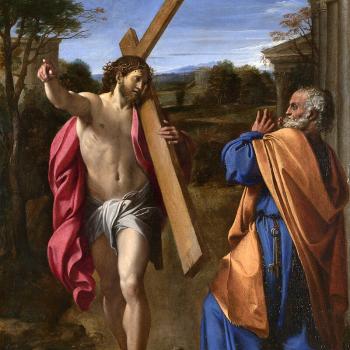
Three Reasons to Believe that St. Peter Went...
The Donation of Constantine and the Papacy (Pope...
TRENDING AT PATHEOS Catholic

Rejecting Doom: Christian Hope And Human Action
Christianity is a religion of hope. We are to have hope and...

It’s What Comes From Within Which Matters
One of the most difficult things for us to understand is why...

Why I Choose the Eucharist Over the Sermon
Choose the Eucharist, Not the Sermon What are we supposed to get...

5 Design Elements Found in Spiritually Rooted Homes
Putting Spirituality Into Home Decor Our homes are more than our living...

Credo: A Story of God Told with the...
About 10 years ago, I began to imagine a personal "Credo" that...

The Anatomy of Divine Revelation in Catholic Thought
The claim that God has made Himself known to human beings is...
view all Catholic blogs
What Are Your Thoughts?leave a comment
Ad-Free & Subscriber Log-In Subscription Support
- About Us
- 2026 Calendar
- Videos
- Podcasts
- Library of World Religions
- Faith In Media Tracker
- Advertise With Us
- Write for Us
- Privacy Policy
- Terms of Service
- Do Not Sell My Data
- Contact Us
- Radiant Digital
- Manage Newsletter Subscriptions
- Unsubscribe From Notifications
- Sitemap
Copyright 2008-2026, Patheos. All rights reserved.
Subscription Support Ad-Free & Subscriber Log-In
Follow Patheos