
BuddhistCatholicContemplativeEvangelicalGeneral ChristianHinduJewishLatter-day SaintMuslimNew VisionsProgressive Christian
Beliefs
- Buddhist
- Catholic
- Contemplative
- Evangelical
- General Christian
- Hindu
- Jewish
- Latter-day Saint
- More Voices
- Muslim
- New Visions
- Pagan
- Progressive Christian
Topics
- Religion News
- Food and Religion
- Sports and Religion
- Religious Art
- Religious Music and Entertainment
- Religious Events
- History and Religion
- Style and Religion
- Politics and Religion
- Women in Religion
- Recreation Outdoors and Religion
- Business Finance and Religion
- Careers Workplace and Religion
- Education and Religion
- Family Parenting and Religion
- Health Fitness and Religion
- Home and Religion
- Relationships and Religion
- Technology and Religion
- Travel and Religion
Columnists
- Buddhist Columnists
- Business Finance and Religion Columnists
- Careers Workplace and Religion Columnists
- Catholic Columnists
- Contemplative Columnists
- Education and Religion Columnists
- Evangelists Columnists
- Family Parenting and Religion Columnists
- General Christian Columnists
- Health Fitness and Religion Columnists
- Hindu Columnists
- History and Religion Columnists
- Home and Religion Columnists
- Jewish Columnists
- More Voices Columnists
- Latter Day Columnists
- Muslim Columnists
- New Visions Columnists
- Nonreligious Columnists
- Pagan Columnists
- Politics and Religion Columnists
- Progressive Columnists
- Recreation Outdoors and Religion Columnists
- Relationships and Religion Columnists
- Religion News Columnists
- Religious Art Columnists
- Religious Events Columnists
- Religious Music and Entertainment Columnists
- Sports and Religion Columnists
- Style and Religion Columnists
- Technology and Religion Columnists
- Travel and Religion Columnists
- Women in Religion Columnists
Resource Library
- 2026 Calendar
- Library of World Religions
- The 100 Most Holy Places on Earth
- Patheos Answers
- Podcasts
- Videos
- Faith Leaders Database
- Anglican Episcopalian
- Bahai
- Baptist
- Buddhism
- Christianity
- Confucianism
- Eastern Orthodoxy
- Hinduism
- Holiness and Pentecostal
- ISKCON
- Islam
- Judaism
- Lutheran
- Methodist
- The Church of Jesus Christ of Latter-day Saints
- New Age
- Paganism
- Presbytarian and Reformed
- Protestantism
- Religion Behind the Scenes
- Roman Catholic
- Scientology
- Shia Islam
- Sikhism
- Sufism
- Sunni Islam
- Taoism
- Zen
- See all religions
Research Tools
 Ad-Free & Subscriber Log-In Subscription Support
Ad-Free & Subscriber Log-In Subscription Support
Follow Patheos 

- Trending:
- Forgiveness
- |
- Marriage
- |
- Consciousness
- |
- Death Penalty
- |
- Election
- |
- Halloween

- Home
- Catholic
- History and Religion
- In What Sense is Scripture Sufficient? (Part III)
In What Sense is Scripture Sufficient? (Part III)
Last updated on: May 8, 2023 at 8:39 pm by Nicholas Gulda
In What Sense is Scripture Sufficient? (Part III) 2023-05-08T20:39:29-05:00 Nicholas Gulda
Patheos Explore the world's faith through different perspectives on religion and spirituality! Patheos has the views of the prevalent religions and spiritualities of the world.
Introduction:
In the previous post, some advancement was made towards answering and juxtaposing the contrary concepts of the material and formal sufficiency of Scripture. It was stated that while the former is a position that could be held by Catholics, the latter is a view closely associated with Sola Scriptura. As such, it is more or less the Protestant view on the authority of Sacred Scripture.[1] Also in the previous post and with the assistance of Catholic apologist Jimmy Akin, it was argued that one idea that helps to differentiate material from formal sufficiency is the Protestant doctrine of the perspicuity (i.e. clearness) of Scripture. Thus, any view on the sufficiency of Scripture that includes the idea that it is perspicuous (in the Protestant understanding), is to be rejected by Catholics, as Akin indicated. It remains then in the following article to define what is meant by perspicuity.
Defining the Term:
The perspicuity of Scripture might be defined as, to borrow Akin’s words, “the position of claiming that Scripture is so clear that one does not need Apostolic Tradition or the Magisterium to interpret it”. As he notes, this is contrary to Catholic teaching. We might add that it is a position explicitly denied in our citation of St. Vincent of Lerins, as well as by the Early Church Fathers in general as indicated by J.N.D. Kelly’s survey of the relationship between Scripture and Tradition in their writings through the fourth century. Here are a couple of definitions from Protestant/ Evangelical authors:
- “The clarity of Scripture means that the Bible is written in such a way that its teachings are able to be understood by all who will read it seeking God’s help and being willing to follow it” (Wayne Grudem, Systematic Theology, 108.)
- “A third sense of sola Scriptura is the clarity of the Bible (sometimes called its perspicuity). This means that the average believer can understand the Scriptures and lead a life of obedience to God. People do not need some interpreter to tell them what is true” (Robert Saucy, Understanding Christian Theology, 127. Italics mine).
From the above, we can gather that the traditional roles played by the Catholic Church and by Sacred Tradition in the interpretation of Scripture are rejected as necessary. That is not to say that Protestant theologians mean to argue everything in Scripture is equally clear. On the contrary, the more careful ones recognize that is not the case. Thus, according to Grudem: “We must admit therefore that not all parts of Scripture are able to be understood easily”. This can be known both experientially and by the very words of Scripture in 2 Peter 3:16. What is more, he notes, historical controversies in Church History bear witness to the fact that Scripture is not so clear so as to eliminate the possibility of disparate interpretations.[2] As we have seen in the first post, the latter was a point driven home by St. Vincent Lérins over 1500 years ago. Agree as they may on this particular view, one major area of departure is how Grudem and Vincent (and Catholics by extension) move beyond this interpretive standoff.
For Grudem, it is primarily the sincerity of the seeker joined by the aid of the Holy Spirit, and the utilization of interpretive skills such as exegesis and hermeneutics, which allow for those more confusing passages to be interpreted properly by the individual believer.[3] On the contrary, Vincent’s prescription was “that the rule for the right understanding of the prophets and apostles should be framed in accordance with the standard of Ecclesiastical and Catholic interpretation”. As Catholic author Thomas Guarino notes, “the theologian of Lérins strongly emphasizes the material sufficiency of Sacred Scripture, with tradition as a necessary interpretive aid because of wonton and continual misrepresentations”.[4] That is not to say that Vincent necessarily denied what is offered by Grudem, especially the aid of the Holy Spirit (though he would affirm as do Catholics that He is active also in the teaching authority of the Catholic Church). It is that what Grudem offers simply isn’t enough to get Christians past the interpretive impasses that have arisen throughout Church History, those that exist now, and that inevitably will continue to do so.
So then, having defined the perspicuity of Scripture, we will discuss 2 Timothy 3:16 in the context of the sufficiency of Scripture, and bring this set of posts to a conclusion. To those who have been following, my apologies for the delays and I hope to get this next one out sooner.
[1] There are some Protestants out there, especially Anglicans it seems, who claim to hold to what has been termed Prima Scriptura. From what I have gathered anecdotally, they are the exception to the rule, and it should be recalled that Sola Scriptura was one of the rallying cries of the Protestant Reformation.
[2] Wayne Grudem, Systematic Theology, 105.
[3] Ibid. 107-109.
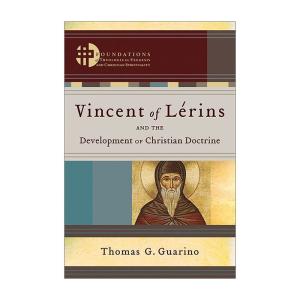
[4] Thomas Guarino, Vincent of Lérins and the Development of Christian Doctrine, 2.
Material sufficiency vs. formal sufficiency
Previous Post

April 3, 2023
In What Sense is Scripture Sufficient? (Part II)
Next Post
June 9, 2023 In What Sense is Scripture Sufficient? (Part IV)
Recent Comments
"Hello Amanda Ingalls, thanks for commenting! For what it's worth to you, in Catholicism there ..."
Why the Assumption of Mary Stands ..."
"Mother Mary is a Goddess, because She is already worshipped as one."
Why the Assumption of Mary Stands ..."
"Sorry for this late post, I'm a Protestant evangelical and I don't question that the ..."
Three Reasons to Believe that St. ..."
"I'm not Catholic and have, over decades of study, become quite "progressive" in theology, treating ..."
Modern Scholarship on Peter in Rome
Browse Our Archives
Select a Category Book Reviews Byzantium Catholicism Islam Spain The Canon The Crusades The Papacy Uncategorized
Select a Month August 2025 May 2025 February 2025 August 2024 April 2024 February 2024 October 2023 September 2023 August 2023 July 2023 June 2023 May 2023 April 2023 March 2023 January 2023 December 2022 November 2022 October 2022 September 2022 January 2022 January 2021 December 2020 August 2020 December 2019 April 2019 March 2019 February 2019 January 2019
TAKE THE
Religious Wisdom Quiz
What did Nehemiah rebuild in Jerusalem amid much opposition?
Select your answer to see how you score.
The city wall The palace The tower of Siloam The Temple
Related posts from The Crossroads
Why the Assumption of Mary Stands on Biblical...
The Canon, Papal Infallibility and the Assumption of...
Luke 10:16 and the Question of Authority
Three Reasons to Believe that St. Peter Went...
TRENDING AT PATHEOS Catholic

Rejecting Doom: Christian Hope And Human Action
Christianity is a religion of hope. We are to have hope and...

It’s What Comes From Within Which Matters
One of the most difficult things for us to understand is why...

Why I Choose the Eucharist Over the Sermon
Choose the Eucharist, Not the Sermon What are we supposed to get...

5 Design Elements Found in Spiritually Rooted Homes
Putting Spirituality Into Home Decor Our homes are more than our living...

Credo: A Story of God Told with the...
About 10 years ago, I began to imagine a personal "Credo" that...

The Anatomy of Divine Revelation in Catholic Thought
The claim that God has made Himself known to human beings is...
view all Catholic blogs
What Are Your Thoughts?leave a comment
Ad-Free & Subscriber Log-In Subscription Support
- About Us
- 2026 Calendar
- Videos
- Podcasts
- Library of World Religions
- Faith In Media Tracker
- Advertise With Us
- Write for Us
- Privacy Policy
- Terms of Service
- Do Not Sell My Data
- Contact Us
- Radiant Digital
- Manage Newsletter Subscriptions
- Unsubscribe From Notifications
- Sitemap
Copyright 2008-2026, Patheos. All rights reserved.
Subscription Support Ad-Free & Subscriber Log-In
Follow Patheos