
BuddhistCatholicContemplativeEvangelicalGeneral ChristianHinduJewishLatter-day SaintMuslimNew VisionsProgressive Christian
Beliefs
- Buddhist
- Catholic
- Contemplative
- Evangelical
- General Christian
- Hindu
- Jewish
- Latter-day Saint
- More Voices
- Muslim
- New Visions
- Pagan
- Progressive Christian
Topics
- Religion News
- Food and Religion
- Sports and Religion
- Religious Art
- Religious Music and Entertainment
- Religious Events
- History and Religion
- Style and Religion
- Politics and Religion
- Women in Religion
- Recreation Outdoors and Religion
- Business Finance and Religion
- Careers Workplace and Religion
- Education and Religion
- Family Parenting and Religion
- Health Fitness and Religion
- Home and Religion
- Relationships and Religion
- Technology and Religion
- Travel and Religion
Columnists
- Buddhist Columnists
- Business Finance and Religion Columnists
- Careers Workplace and Religion Columnists
- Catholic Columnists
- Contemplative Columnists
- Education and Religion Columnists
- Evangelists Columnists
- Family Parenting and Religion Columnists
- General Christian Columnists
- Health Fitness and Religion Columnists
- Hindu Columnists
- History and Religion Columnists
- Home and Religion Columnists
- Jewish Columnists
- More Voices Columnists
- Latter Day Columnists
- Muslim Columnists
- New Visions Columnists
- Nonreligious Columnists
- Pagan Columnists
- Politics and Religion Columnists
- Progressive Columnists
- Recreation Outdoors and Religion Columnists
- Relationships and Religion Columnists
- Religion News Columnists
- Religious Art Columnists
- Religious Events Columnists
- Religious Music and Entertainment Columnists
- Sports and Religion Columnists
- Style and Religion Columnists
- Technology and Religion Columnists
- Travel and Religion Columnists
- Women in Religion Columnists
Resource Library
- 2026 Calendar
- Library of World Religions
- The 100 Most Holy Places on Earth
- Patheos Answers
- Podcasts
- Videos
- Faith Leaders Database
- Anglican Episcopalian
- Bahai
- Baptist
- Buddhism
- Christianity
- Confucianism
- Eastern Orthodoxy
- Hinduism
- Holiness and Pentecostal
- ISKCON
- Islam
- Judaism
- Lutheran
- Methodist
- The Church of Jesus Christ of Latter-day Saints
- New Age
- Paganism
- Presbytarian and Reformed
- Protestantism
- Religion Behind the Scenes
- Roman Catholic
- Scientology
- Shia Islam
- Sikhism
- Sufism
- Sunni Islam
- Taoism
- Zen
- See all religions
Research Tools
 Ad-Free & Subscriber Log-In Subscription Support
Ad-Free & Subscriber Log-In Subscription Support
Follow Patheos 

- Trending:
- Forgiveness
- |
- Marriage
- |
- Consciousness
- |
- Death Penalty
- |
- Election
- |
- Halloween

- Home
- Muslim
- Religion News
- Saudi Reforms Are Softening Islam’s Role, But Critics Warn the Kingdom Will Still Take a Hard Line Against Dissent
Saudi Reforms Are Softening Islam’s Role, But Critics Warn the Kingdom Will Still Take a Hard Line Against Dissent
Last updated on: September 15, 2023 at 9:26 am by The Conversation
Saudi Reforms Are Softening Islam’s Role, But Critics Warn the Kingdom Will Still Take a Hard Line Against Dissent 2023-09-15T09:26:41-04:00 The Conversation
Patheos Explore the world's faith through different perspectives on religion and spirituality! Patheos has the views of the prevalent religions and spiritualities of the world.
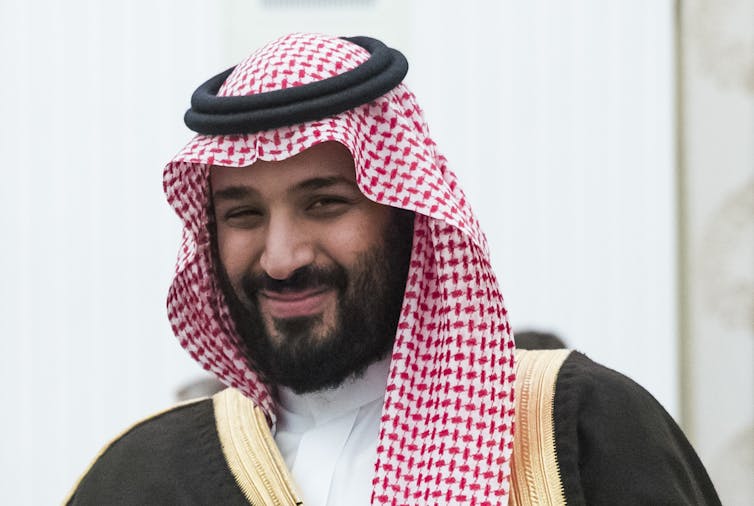
Saudi Crown Prince Mohammed bin Salman.
AP Photo/Pavel Golovkin, pool, File
By Nathan French of Miami University
The crown prince of Saudi Arabia, Mohammed bin Salman, or “MBS,” is bringing a new vision of a “moderate, balanced” Saudi Islam by minimizing the role of Saudi religious institutions once seen as critical to the monarchy.
For decades, Saudi kings provided support to religious scholars and institutions that advocated an austere form of Sunni Islam known as Wahhabism. The kingdom enforced strict codes of morality, placing restrictions on the rights of women and religious minorities, among others.
Under MBS, women have been allowed to drive; co-educational classrooms, movie theaters and all-night concerts in the desert – in which men and women dance together – are a new normal.
Scholars Yasmine Farouk and Nathan J. Brown call the diminishing role of Wahhabi religious scholars within Saudi domestic and international policy nothing short of a “revolution” in Saudi affairs.
MBS acknowledges that these reforms risk infuriating certain constituents or could even provoke retaliation. As a scholar who studies interpretations of Islamic law to justify or contest militancy, I’ve followed these reforms closely.
In the past, Saudis who challenged the authority of Wahhabis have provoked unrest. When King Fahd, who ruled between 1982-2005, rejected the advice of his Wahhabi scholars and allowed the U.S. military to station weapons and female service members on Saudi soil, several of them supported a violent insurrection against him.
MBS seems unconcerned with such challenges. In an interview broadcast widely throughout the kingdom, MBS chastised Wahhabi scholars, accusing some of falsifying Islamic doctrines. He then detained a major Wahhabi scholar from whom he once sought counsel, charging him with crimes against the monarchy. MBS defended these actions, claiming, “We are returning to what we were before. A country of moderate Islam that is open to all religions, traditions and people around the globe.”
Negotiating Wahhabism
This proclaimed return of “moderate Islam” echoes the reforms of MBS’s grandfather, King Abdulaziz, founder of the modern Saudi kingdom. This vision rejects policies toward Wahhabi Islam favored by his uncles, King Faisal and King Khalid.
Between 1925 and 1932, Abdulaziz suppressed Wahhabi scholars and militants who had demanded that he uphold their version of “pure Islam” and not open the kingdom to trade and development. He did the opposite and asserted the supremacy of the monarchy.
The booming Saudi oil economy developed by Abdulaziz required his son, King Faisal, who ruled from 1964 to 1975, to reconsider the monarchy’s relationship with Wahhabism. Unlike Abdulaziz, Faisal believed Wahhabis would help him save the kingdom.
Saudis who felt left behind in the emerging Saudi oil economy had found an inspirational symbol of liberation in Egyptian President Gamal Abdel Nasser, who helped overthrow the Egyptian monarchy in 1952 and implemented plans to redistribute Egyptian wealth.
Faisal encouraged Wahhabi scholars to work with politically driven Islamists to reject the revolutionary politics of Abdel Nasser’s Egypt and craft a new vision of Islam for Saudi youth.
Faisal permitted Wahhabi scholars to reform Saudi educational institutions with their conservative Islamic curriculum. Abroad, Faisal’s scholars presented Wahhabism as an authentic Islamic alternative to the Cold War ideologies of the U.S. and USSR. Wealthy Saudis, these Wahhabi scholars argued, had a religious duty to promote Wahhabism across the globe.
Resisting Wahhabism
Faisal’s reforms met with success. King Khalid, who followed Faisal, continued to favor Wahhabi scholars, particularly while responding to two major challenges in 1979.
A group of Saudi students, who believed Faisal’s and Khalid’s reforms to be illegitimate, seized the Grand Mosque in Mecca, Islam’s most sacred site, for two weeks in 1979. An attack on the Grand Mosque was viewed as an attack on the monarchy itself, which claims the mantle of “Custodian of the Two Holy Mosques.”
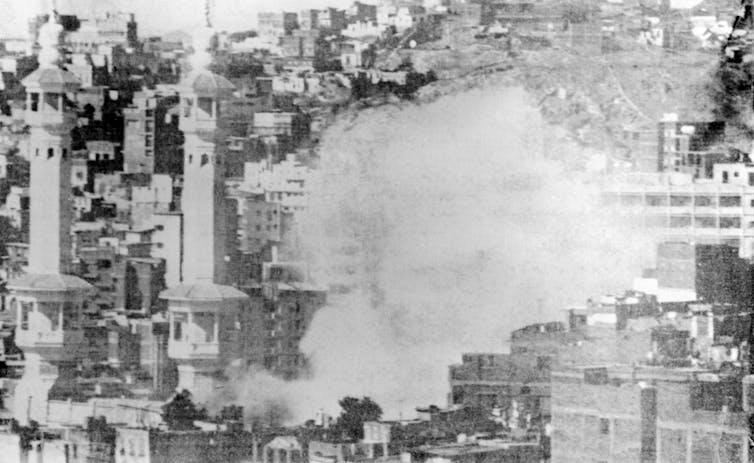
The 1979 seizure of the Grand Mosque.
AFP via Getty Images
The seizure came to a violent end with combined action by French and Saudi military forces. Afterward, Khalid agreed to elevate religious officials who affirmed the Islamic credentials of the monarchy.
Also in 1979, other Saudi youth traveled to join the resistance against the Soviet invasion of Afghanistan. One such Saudi who answered the call that year was Osama bin Laden, who would establish al-Qaida in 1988.
Bin Laden’s and al-Qaida’s grievances against the monarchy emerged following King Fahd’s acceptance of an increased deployment of U.S. soldiers to Saudi soil following Iraqi leader Saddam Hussein’s invasion of Kuwait in 1990. Bin Ladin proclaimed the presence of American infidels in Saudi Arabia to be a defilement of Islamic holy lands, an “affront” to Islamic sensibilities, and demanded the destruction of the monarchy. Al-Qaida launched anti-Saudi insurgent campaigns lasting through 2010.
Not all conservative Islamist leaders called for violence. As historian Madawi Al-Rasheed notes, many Saudi scholars framed themselves as reformers who sought to correct Fahd’s departures from “authentic” Islam and restore Faisal’s vision.
When MBS speaks of a “moderate Islam” he is not just condemning the violence of al-Qaida. He’s abandoning the monarchy’s accommodations of the Wahhabi establishment. He blames some Wahhabi scholars for the violence that the monarchy faced in 1979 and again in the the 1990s and 2000s.
He has worked quickly to erase those accommodations and, like his grandfather, affirm the supremacy of the monarchy.
A ‘moderate Wahhabism’ for Saudi society?
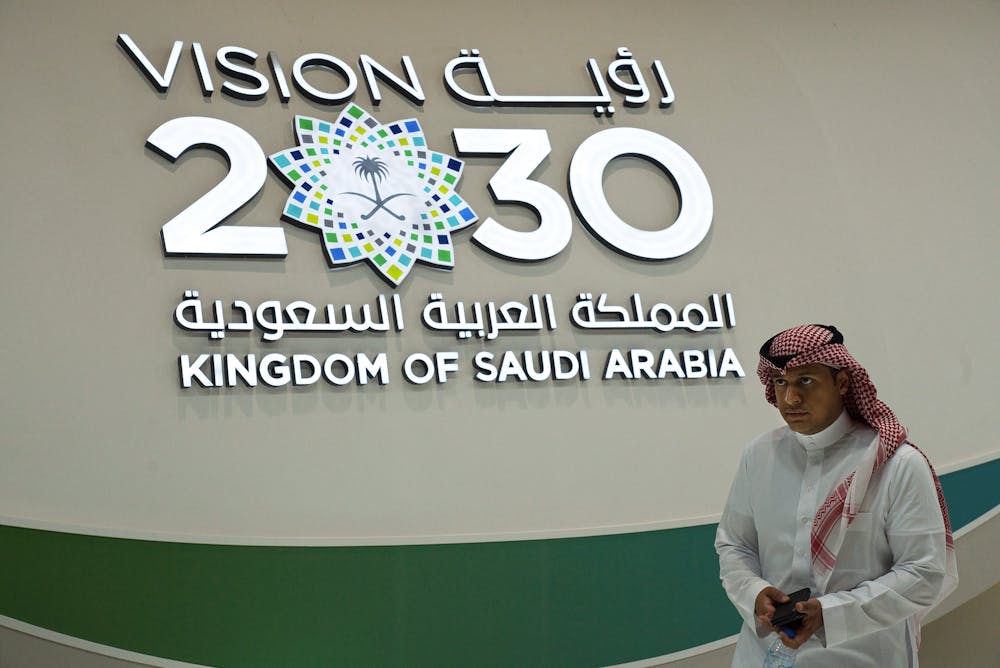
‘Saudi Vision 2030’ aims to bring a complete Saudi political, economic, educational and cultural transformation.
Many of these revolutionary changes occurred amid the 2016 unveiling of “Saudi Vision 2030,” a plan for complete Saudi political, economic, educational and cultural transformation. MBS believes that this will meet the demands of Saudis under the age of 30 – who number more than 60% of the kingdom’s population.
The religious curriculum shaped by King Faisal is gone, replaced with a “Saudi first” education, which removes Ibn abd al-Wahhab, the founder of Wahhabism, from textbooks and emphasizes Saudi patriotism over a Wahhabi Islamic religious identity. Saudi Arabia has announced it will no longer fund mosques and Wahhabi educational institutions in other countries.
Saudi religious police, once tasked with upholding public morality, saw their powers curtailed. They no longer have powers of investigation or arrest. They cannot punish behaviors deemed morally inappropriate.
Critics remain unimpressed, noting that demoting religious officials does not diminish the violence of the Saudi state. Religious police continue their online surveillance of social media. In 2018, Jamal Khashoggi, a Saudi journalist, was killed following his calls for a continued voice for Islamist reformers in Saudi Arabia. Al-Rasheed argues that the images of a new Saudi society conceal suppression of Saudi reformers. Some observers note that a growing Saudi “surveillance state,” with capacities to peek into the private lives of Saudis, underwrites these reforms.
As Peter Mandaville, a scholar of international affairs, observes, the “moderate Islam” offered by MBS is complicated. On the one hand, it characterizes a new tolerant Saudi Arabian Islam. Yet, inside the kingdom, Mandaville argues that the “moderate Islam” of MBS demands that Saudi youth – as good Muslims – will submit to the authority of the monarchy over the kingdom’s affairs.
Some observers believe this might not be enough. Mohammad Fadel, a professor of Islamic legal history, argues that the current configuration of the Saudi monarchy is incompatible with “the kind of independent thought the crown prince is calling for in matters of religion.” Saudi society will flourish, he adds, “when Prince Mohammed recognizes the right of Muslims to rule themselves politically.”
With these reforms to Wahhabism, MBS hopes to secure the loyalty of a generation of young Saudis. As Saudi history would indicate, however, such a bargain requires constant renegotiation and renewal.
This article is republished from The Conversation, a nonprofit, independent news organization dedicated to unlocking the knowledge of experts for the public good. .
Muslim

About Nathan French
Nathan French is an Associate Professor of Religion at Miami University. You can read more about the author here.

Browse Our Archives
Select a Category Buddhism Christianity Hinduism Islam Judaism Religion and society Uncategorized
Select a Month July 2024 March 2024 February 2024 January 2024 December 2023 November 2023 October 2023 September 2023 August 2023 July 2023 January 2023 August 2022 July 2022 April 2022 February 2022 January 2022 October 2021 July 2021 June 2021 May 2021 April 2021 March 2021 February 2021 January 2021 December 2020 November 2020 October 2020 September 2020 August 2020 July 2020 June 2020 May 2020
Follow Us!
TAKE THE
Religious Wisdom Quiz
How long did it take to rebuild Jerusalem's walls under Nehemiah?
Select your answer to see how you score.
40 days 52 days 7 years 12 months
Related posts from The Conversation


Electing A Virtuous President Would Make Immunity Irrelevant

Why The Olympic Games Are A ‘Civil Religious’...

The Catholic Church Is Using The Olympics To...
TRENDING AT PATHEOS Religion News

Catholic Integralists believe that religious values – specifically Christian ones – should...

Electing A Virtuous President Would Make Immunity Irrelevant
Presidential immunity can bring with it many risks. So how can we...

Why The Olympic Games Are A ‘Civil Religious’...
Sporting events form a vital space where Americans display their 'civil religious...

After more than a decade of news, research updates, and insights on...

Q: Why do Southern Baptists and like-minded Protestants...
THE RELIGION GUY’S ANSWER: Why? Simple. Because they believe that’s what the...

THE QUESTION: Is gambling evil? THE RELIGION GUY’S ANSWER: Analysts anticipate a...
view all Religion News blogs
Ad-Free & Subscriber Log-In Subscription Support
- About Us
- 2026 Calendar
- Videos
- Podcasts
- Library of World Religions
- Faith In Media Tracker
- Advertise With Us
- Write for Us
- Privacy Policy
- Terms of Service
- Do Not Sell My Data
- Contact Us
- Radiant Digital
- Manage Newsletter Subscriptions
- Unsubscribe From Notifications
- Sitemap
Copyright 2008-2026, Patheos. All rights reserved.
Subscription Support Ad-Free & Subscriber Log-In
Follow Patheos