
BuddhistCatholicContemplativeEvangelicalGeneral ChristianHinduJewishLatter-day SaintMuslimNew VisionsProgressive Christian
Beliefs
- Buddhist
- Catholic
- Contemplative
- Evangelical
- General Christian
- Hindu
- Jewish
- Latter-day Saint
- More Voices
- Muslim
- New Visions
- Pagan
- Progressive Christian
Topics
- Religion News
- Food and Religion
- Sports and Religion
- Religious Art
- Religious Music and Entertainment
- Religious Events
- History and Religion
- Style and Religion
- Politics and Religion
- Women in Religion
- Recreation Outdoors and Religion
- Business Finance and Religion
- Careers Workplace and Religion
- Education and Religion
- Family Parenting and Religion
- Health Fitness and Religion
- Home and Religion
- Relationships and Religion
- Technology and Religion
- Travel and Religion
Columnists
- Buddhist Columnists
- Business Finance and Religion Columnists
- Careers Workplace and Religion Columnists
- Catholic Columnists
- Contemplative Columnists
- Education and Religion Columnists
- Evangelists Columnists
- Family Parenting and Religion Columnists
- General Christian Columnists
- Health Fitness and Religion Columnists
- Hindu Columnists
- History and Religion Columnists
- Home and Religion Columnists
- Jewish Columnists
- More Voices Columnists
- Latter Day Columnists
- Muslim Columnists
- New Visions Columnists
- Nonreligious Columnists
- Pagan Columnists
- Politics and Religion Columnists
- Progressive Columnists
- Recreation Outdoors and Religion Columnists
- Relationships and Religion Columnists
- Religion News Columnists
- Religious Art Columnists
- Religious Events Columnists
- Religious Music and Entertainment Columnists
- Sports and Religion Columnists
- Style and Religion Columnists
- Technology and Religion Columnists
- Travel and Religion Columnists
- Women in Religion Columnists
Resource Library
- 2026 Calendar
- Library of World Religions
- The 100 Most Holy Places on Earth
- Patheos Answers
- Podcasts
- Videos
- Faith Leaders Database
- Anglican Episcopalian
- Bahai
- Baptist
- Buddhism
- Christianity
- Confucianism
- Eastern Orthodoxy
- Hinduism
- Holiness and Pentecostal
- ISKCON
- Islam
- Judaism
- Lutheran
- Methodist
- The Church of Jesus Christ of Latter-day Saints
- New Age
- Paganism
- Presbytarian and Reformed
- Protestantism
- Religion Behind the Scenes
- Roman Catholic
- Scientology
- Shia Islam
- Sikhism
- Sufism
- Sunni Islam
- Taoism
- Zen
- See all religions
Research Tools
 Ad-Free & Subscriber Log-In Subscription Support
Ad-Free & Subscriber Log-In Subscription Support
Follow Patheos 

- Trending:
- Forgiveness
- |
- Marriage
- |
- Consciousness
- |
- Death Penalty
- |
- Election
- |
- Halloween

- Home
- Buddhism
- Religion News
- ‘Journey to the West’: Why the Classic Chinese Novel’s Mischievous Monkey – and His Very Human Quest – Has Inspired Centuries of Adaptations
‘Journey to the West’: Why the Classic Chinese Novel’s Mischievous Monkey – and His Very Human Quest – Has Inspired Centuries of Adaptations
Last updated on: September 22, 2023 at 11:30 am by The Conversation
‘Journey to the West’: Why the Classic Chinese Novel’s Mischievous Monkey – and His Very Human Quest – Has Inspired Centuries of Adaptations 2023-09-22T11:30:26-04:00 The Conversation
Patheos Explore the world's faith through different perspectives on religion and spirituality! Patheos has the views of the prevalent religions and spiritualities of the world.
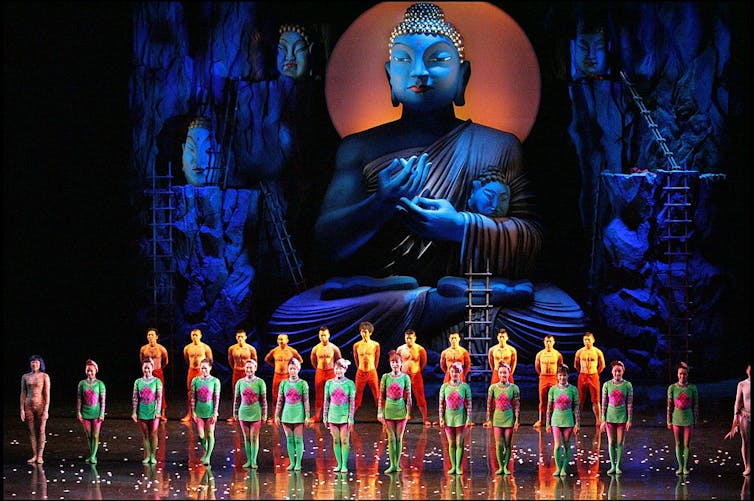
‘Monkey: Journey To The West,’ a nine-act opera adaptation performed at the Chatelet Theater in France.
Bertrand Rindoff Petroff/French Select via Getty Image
By Ji Hao of College of the Holy Cross
One summer afternoon in the late 1980s, my mother and I passed by a tea house on our trip out of town. The crowded building was usually a boisterous place filled with chatter, laughter, and the happy, clacking shuffle of mahjong tiles. At the moment we were passing, however, a great hush came over the teahouse: People were held spellbound by the black-and-white glow of a small TV in a corner, playing an episode of the series “Journey to the West.”
The TV series was adapted from a 16th century Chinese novel with the same title that has undergone numerous adaptations and has captured the imagination of Chinese people to this day. Like many kids in China, I was fascinated by the magic Monkey King, the beloved superhero in the novel, who went through amazing adventures with other pilgrims in their quest for Buddhist scriptures. While I had to quickly walk by the teahouse in order to catch our bus that day, this moment flashed back to me from time to time, making me wonder what made “Journey to the West” so fascinating for people of all ages and backgrounds.
After graduating from college, I embarked on the next chapter of my academic journey in the United States and reconnected with “Journey to the West” from a different perspective. Now, as a scholar with expertise in traditional Chinese literature, I am interested in the development of literary and cultural traditions around the story, including how it has been translated and reimagined by many artists.
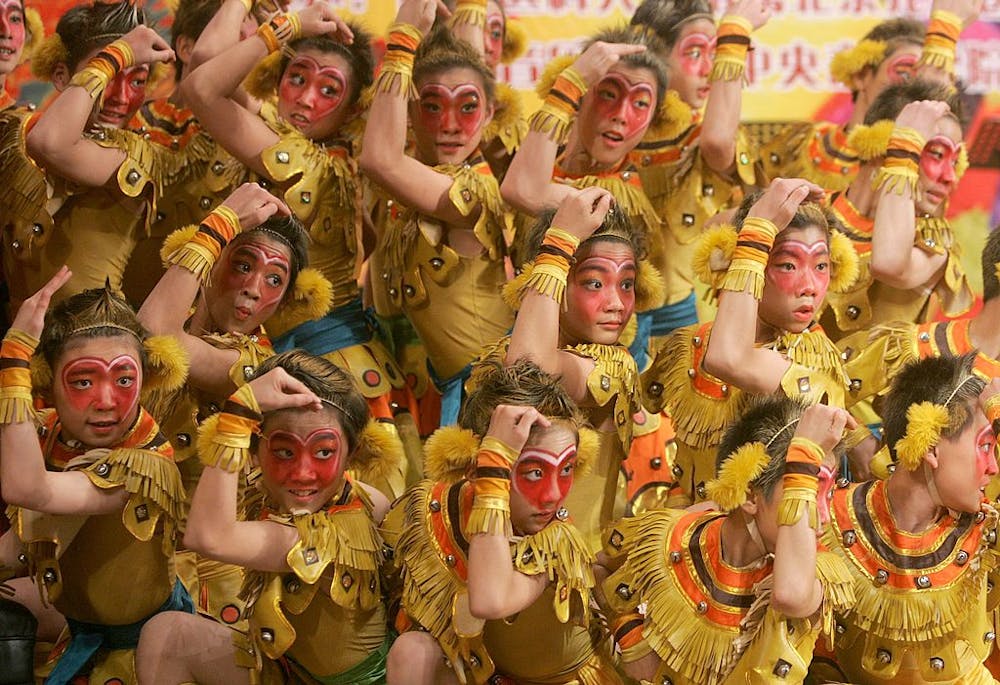
Students of a Beijing opera school dance during a performance about the ‘Monkey King’ in 2006.
China Photos/Getty Images
While deeply enmeshed in Chinese traditions, the story also resonates with readers from diverse cultures. “Journey to the West” creates shared ground by highlighting the quest for a common humanity, epitomized by its best-loved character, the Monkey King – a symbol of the human mind.
One journey, many stories
Scholars usually trace the beginning of this literary tradition to a Buddhist monk, Xuanzang, who set out on an epic pilgrimage to India in 627 C.E. He was determined to consult and bring back Sanskrit copies of Buddhist scriptures, rather than rely on previous Chinese translations. He did so after nearly 17 years and devoted the rest of his life to translating the scriptures.
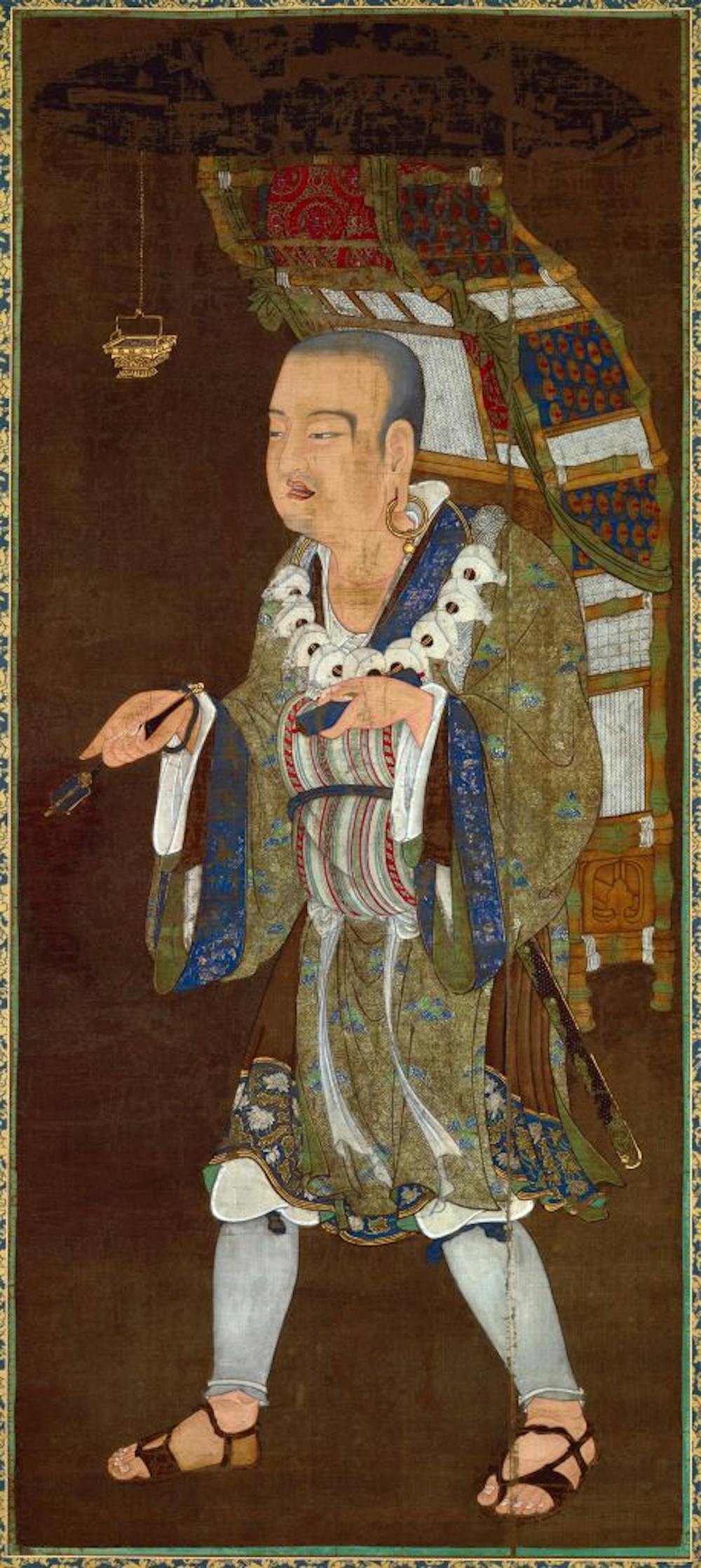
The seventh-century monk and translator Xuanzang traveled far and wide in India for Buddhist scriptures.
Pictures from History/Universal Images Group via Getty Images
The journey has inspired a wide variety of representations in literature, art and religion, making a lasting impact on Chinese culture and society. Legends began to emerge during Xuanzang’s lifetime. Over centuries, they gradually evolved into a distinct tradition of storytelling, often focused on how Xuanzang overcame obstacles with the help of supernatural companions.
This culminated in a 16th century Chinese novel, “Journey to the West.” By this point, the hero of the story had already shifted from Xuanzang to one of his disciples: the Monkey King of Flower-Fruit Mountain, who serves as Xuanzang’s protector. The Monkey King possesses strong magical powers – transforming himself, cloning himself and even performing somersaults that fly him more than 30,000 miles at once.
Despite this novel’s dominance, the broader tradition around “Journey to the West” encompasses a wide variety of stories in diverse forms. The canonic novel itself grew out of this collective effort, and its authorship is still debated – even as it continues to inspire new adaptations.
The deeper journey
Central to all Journey to the West stories is a theme of pilgrimage, which immediately raises a question regarding the nature of the novel: What is the journey really about?
Centuries-long debates about the journey’s deeper message center on the 16th century novel. Traditional commentators in late imperial China adopted a variety of approaches to the novel and underscored its connections with different religious and philosophical doctrines: Confucianism, Daoism, Buddhism and syntheses of those teachings.
For example, all these teachings highlight the role of the “xin” – a Chinese word for mind and heart – in self-cultivation. While Confucian readers might see the plot of “Journey to the West” as the quest for a more moral life, Buddhists might decipher it as an inward journey toward enlightenment.
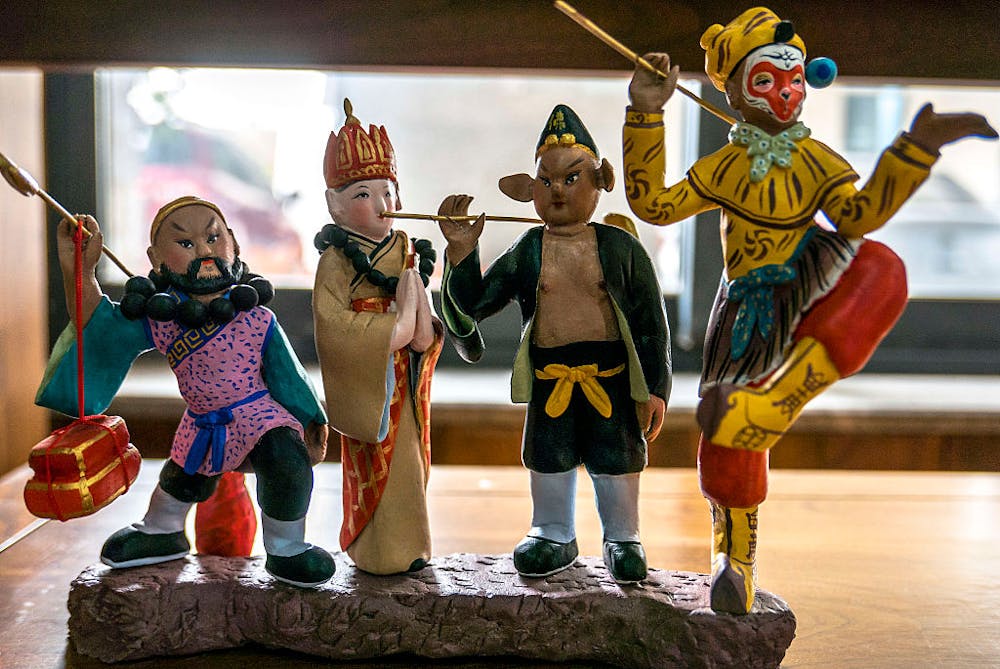
Four of the characters from ‘Journey to the West,’ made in the clay figurine technique of Huishan, China, including the Monkey King on the right.
Zhang Peng/LightRocket via Getty Images
In the early 20th century, Chinese scholar and diplomat Hu Shi criticized traditional allegorical interpretations, which he feared would make the novel seem less approachable for the general public.
His opinion influenced Arthur Waley’s “Monkey,” an abridged English translation of “Journey to the West” published in 1942, which has contributed to the canonization of the novel abroad. To a considerable extent, “Monkey” turns the pilgrims’ journey into Monkey’s own journey of self-improvement and personal growth.
Recent scholarship has further underlined religious and ritual connotations of the novel from different perspectives, and debates over the issue continue. But few people would deny that one idea plays a crucial role: the Monkey King as a symbol of the mind.
Mind monkey
There has been a long tradition in Chinese culture that associates the image of a simian creature with the human mind. On the one hand, a monkey often symbolizes a restless mind, calling for discipline and cultivation. On the other hand, an active mind also opens up the opportunity to challenge the status quo and even transcend it, progressing to a higher state.
The Monkey King in the novel demonstrates this dual dimension of the mind. He vividly displays adaptability in exploring uncharted territories and adjusting to changing circumstances – and learning to rely on teamwork and self-discipline, not merely his magic powers.
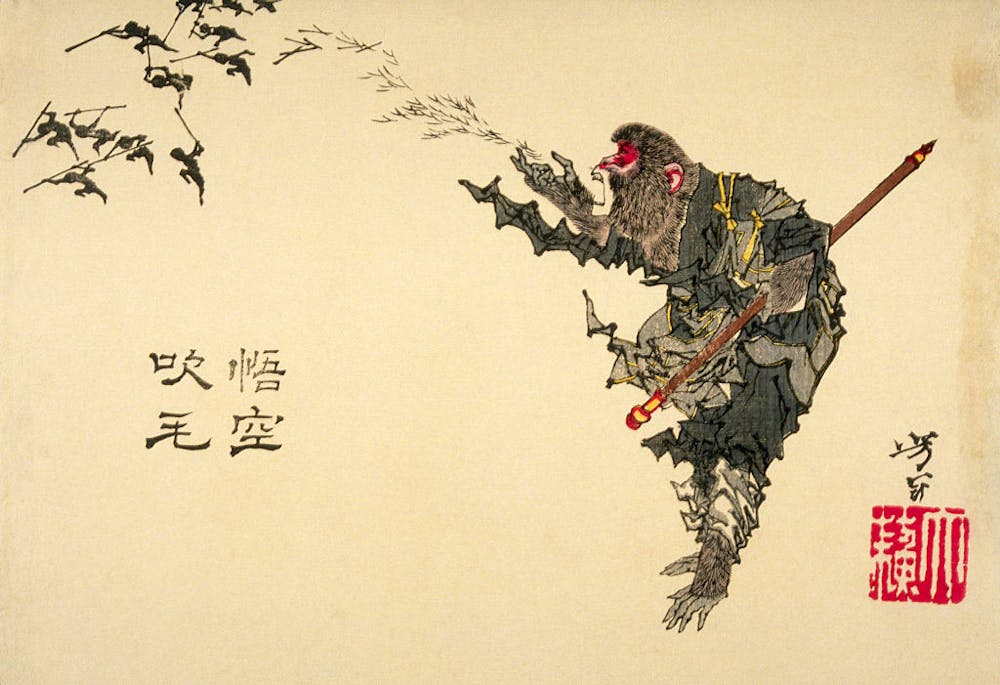
The Monkey King creates an army by plucking out his fur and blowing it into the air – each hair becomes a monkey-warrior. From the Japanese series ‘Yoshitoshi ryakuga.’
John Stevenson/Asian Art & Archaeology, Inc./Corbis Historical/Corbis via Getty Images
Before being sent on the pilgrimage, the Monkey King’s quest for self-gratification wreaked havoc in heaven and led to his imprisonment by the Buddha. The goddess Guanyin agreed to give him a second chance on the condition that he join the other pilgrims and assist them. His journey is fraught with the tensions between self-discipline and self-reliance, as he learns how to channel his physical and mental powers for good.
The Monkey King’s human qualities, from arrogance to fear, endow him with universal appeal. Readers gradually witness his self-improvement, revealing a common human quest. They may frown upon how the Monkey King is entrapped within his own ego, yet respect his courage in challenging authority and battling adversity. While his mischievous tricks give a good laugh, his loyalty to the monk Xuanzang and his sense of righteousness make a lasting impression.
Reviewing Waley’s “Monkey” in 1943, Chinese-American writer Helena Kuo commented of the pilgrims: “Humanity would have missed a great deal if they have been exemplary characters.” Indeed, each one depicts humanity’s quest for a better self, particularly the main character. Monkeying around on the path of life, this simian companion captivates readers – and makes them consider their own journey.
This article is republished from The Conversation, a nonprofit, independent news organization dedicated to unlocking the knowledge of experts for the public good.
Buddhism

About Ji Hao
Ji Hao is an Associate Professor of Chinese Studies at College of the Holy Cross. You can read more about the author here.


Browse Our Archives
Select a Category Buddhism Christianity Hinduism Islam Judaism Religion and society Uncategorized
Select a Month July 2024 March 2024 February 2024 January 2024 December 2023 November 2023 October 2023 September 2023 August 2023 July 2023 January 2023 August 2022 July 2022 April 2022 February 2022 January 2022 October 2021 July 2021 June 2021 May 2021 April 2021 March 2021 February 2021 January 2021 December 2020 November 2020 October 2020 September 2020 August 2020 July 2020 June 2020 May 2020
Follow Us!
TAKE THE
Religious Wisdom Quiz
How long did it take to rebuild Jerusalem's walls under Nehemiah?
Select your answer to see how you score.
40 days 52 days 7 years 12 months
Related posts from The Conversation


Electing A Virtuous President Would Make Immunity Irrelevant

Why The Olympic Games Are A ‘Civil Religious’...

The Catholic Church Is Using The Olympics To...
TRENDING AT PATHEOS Religion News

Catholic Integralists believe that religious values – specifically Christian ones – should...

Electing A Virtuous President Would Make Immunity Irrelevant
Presidential immunity can bring with it many risks. So how can we...

Why The Olympic Games Are A ‘Civil Religious’...
Sporting events form a vital space where Americans display their 'civil religious...

After more than a decade of news, research updates, and insights on...

Q: Why do Southern Baptists and like-minded Protestants...
THE RELIGION GUY’S ANSWER: Why? Simple. Because they believe that’s what the...

THE QUESTION: Is gambling evil? THE RELIGION GUY’S ANSWER: Analysts anticipate a...
view all Religion News blogs
Ad-Free & Subscriber Log-In Subscription Support
- About Us
- 2026 Calendar
- Videos
- Podcasts
- Library of World Religions
- Faith In Media Tracker
- Advertise With Us
- Write for Us
- Privacy Policy
- Terms of Service
- Do Not Sell My Data
- Contact Us
- Radiant Digital
- Manage Newsletter Subscriptions
- Unsubscribe From Notifications
- Sitemap
Copyright 2008-2026, Patheos. All rights reserved.
Subscription Support Ad-Free & Subscriber Log-In
Follow Patheos