
BuddhistCatholicContemplativeEvangelicalGeneral ChristianHinduJewishLatter-day SaintMuslimNew VisionsProgressive Christian
Beliefs
- Buddhist
- Catholic
- Contemplative
- Evangelical
- General Christian
- Hindu
- Jewish
- Latter-day Saint
- More Voices
- Muslim
- New Visions
- Pagan
- Progressive Christian
Topics
- Religion News
- Food and Religion
- Sports and Religion
- Religious Art
- Religious Music and Entertainment
- Religious Events
- History and Religion
- Style and Religion
- Politics and Religion
- Women in Religion
- Recreation Outdoors and Religion
- Business Finance and Religion
- Careers Workplace and Religion
- Education and Religion
- Family Parenting and Religion
- Health Fitness and Religion
- Home and Religion
- Relationships and Religion
- Technology and Religion
- Travel and Religion
Columnists
- Buddhist Columnists
- Business Finance and Religion Columnists
- Careers Workplace and Religion Columnists
- Catholic Columnists
- Contemplative Columnists
- Education and Religion Columnists
- Evangelists Columnists
- Family Parenting and Religion Columnists
- General Christian Columnists
- Health Fitness and Religion Columnists
- Hindu Columnists
- History and Religion Columnists
- Home and Religion Columnists
- Jewish Columnists
- More Voices Columnists
- Latter Day Columnists
- Muslim Columnists
- New Visions Columnists
- Nonreligious Columnists
- Pagan Columnists
- Politics and Religion Columnists
- Progressive Columnists
- Recreation Outdoors and Religion Columnists
- Relationships and Religion Columnists
- Religion News Columnists
- Religious Art Columnists
- Religious Events Columnists
- Religious Music and Entertainment Columnists
- Sports and Religion Columnists
- Style and Religion Columnists
- Technology and Religion Columnists
- Travel and Religion Columnists
- Women in Religion Columnists
Resource Library
- 2026 Calendar
- Library of World Religions
- The 100 Most Holy Places on Earth
- Patheos Answers
- Podcasts
- Videos
- Faith Leaders Database
- Anglican Episcopalian
- Bahai
- Baptist
- Buddhism
- Christianity
- Confucianism
- Eastern Orthodoxy
- Hinduism
- Holiness and Pentecostal
- ISKCON
- Islam
- Judaism
- Lutheran
- Methodist
- The Church of Jesus Christ of Latter-day Saints
- New Age
- Paganism
- Presbytarian and Reformed
- Protestantism
- Religion Behind the Scenes
- Roman Catholic
- Scientology
- Shia Islam
- Sikhism
- Sufism
- Sunni Islam
- Taoism
- Zen
- See all religions
Research Tools
 Ad-Free & Subscriber Log-In Subscription Support
Ad-Free & Subscriber Log-In Subscription Support
Follow Patheos 

- Trending:
- Forgiveness
- |
- Marriage
- |
- Consciousness
- |
- Death Penalty
- |
- Election
- |
- Halloween

- Home
- Religion News
- Just about anybody in America can officiate a wedding, thanks to the internet – and one determined preacher
Just about anybody in America can officiate a wedding, thanks to the internet – and one determined preacher
Last updated on: July 31, 2023 at 11:11 am by The Conversation
Just about anybody in America can officiate a wedding, thanks to the internet – and one determined preacher 2023-07-31T11:11:01-04:00 The Conversation
Patheos Explore the world's faith through different perspectives on religion and spirituality! Patheos has the views of the prevalent religions and spiritualities of the world.

Who did the honors: clergy, a justice of the peace or just a friend? More and more weddings are performed by someone ordained online.
Klaus Vedfelt/DigitalVision via Getty Images
By Dusty Hoesly, of University of California, Santa Barbara
Wedding season is here again, and my calendar is filling up – not just as a guest.
Over the past 15 years, I have officiated over 20 weddings for friends and family, plus nearly 200 more as a part-time professional wedding officiant. These weddings have ranged from simple elopements to fancy ceremonies before hundreds of guests. They have taken place at farms, beaches, mountaintops, hotels, wineries and warehouses – but never at a church. They have been secular, spiritual, religious and interfaith.
I became a nominal minister through the website of the Universal Life Church, a nondenominational church that offers free, lifelong ordination to anyone, regardless of their beliefs. More than 20 million people have been ordained so far. Just type in your name, email and mailing address and you will receive confirmation of your new status as a clergyperson, able to perform any legal marriage. You can adopt any religious title you please or none at all.
In the U.S., many, if not most, weddings today are officiated by a friend or relative of the couple rather than a traditional clergyperson or civil official authorized to perform the ceremony. According to the wedding planning website The Knot, 51% of couples in 2020 had a friend or family member officiate their wedding, up from 37% in 2015. Though there are multiple ways for a layperson to get ordained, the Universal Life Church is most popular.
When two friends whom I had introduced to each other asked me to officiate their wedding back in 2008, I was touched and honored. Each experience of performing a wedding for friends or family has moved me deeply. Since I’m a scholar of religion in contemporary America, they also piqued my interest in what this trend says about religion and wedding rituals today – questions that sparked my subsequent research on the ULC.
Mail-order ministry
The Universal Life Church was founded in 1959 in Modesto, California, by Kirby J. Hensley, an itinerant minister from North Carolina who could not read or write yet created Baptist and Pentecostal congregations across America.
Hensley’s religious views were hard to categorize, and the congregations that he formed kicked him out when disagreements arose. So he wanted to found a church where anyone could believe, teach and practice whatever they wanted, free of constraints imposed by religious or government authorities. The ULC’s only doctrine is to “do that which is right,” which each person can define for themselves.
Hensley offered free mail-order ordinations and soon began mass ordinations at spiritual conventions and college campuses, where he was a popular speaker. Classified ads in the magazines Rolling Stone and Fate helped grow the church’s popularity, as did a flurry of news reports.
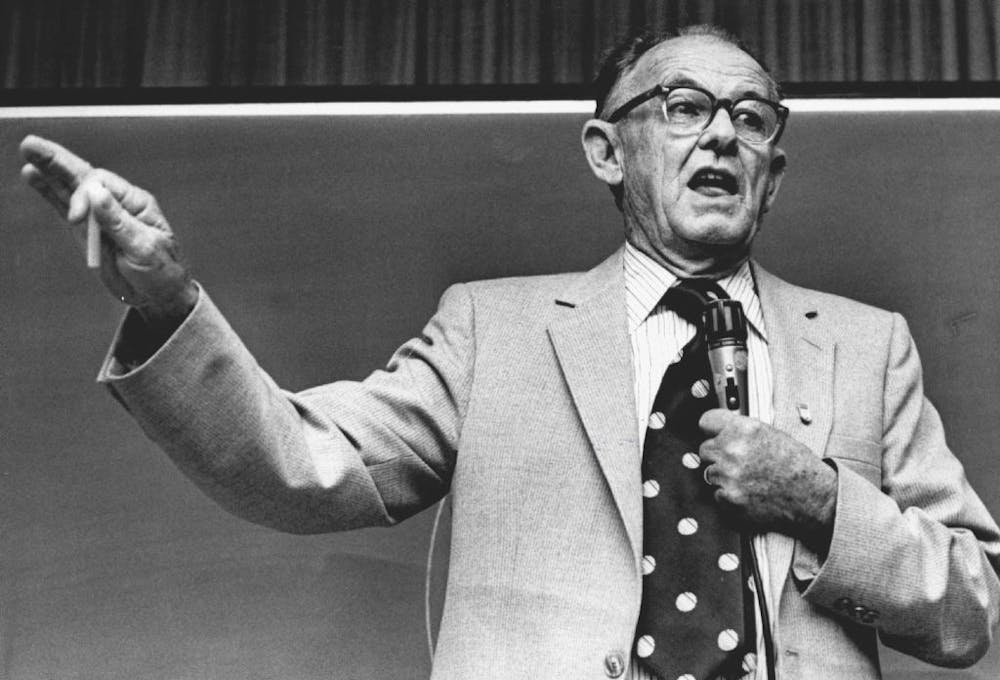
The Rev. Kirby Hensley, photographed in 1986.
Denver Post via Getty Images
Most people got ordained as a lark: after all, why not? Others felt a spiritual calling. Ordination also appealed to young men hoping that a ministerial credential could help them avoid the Vietnam War draft. Some became ministers, created their own churches chartered under the ULC and claimed income and property tax exemptions. In 1995, the church began offering ordination online.
After Hensley’s death in 1999, his wife, Lida, took over. Since her death in 2006, their son Andre has led the church, which still meets weekly in a church building in Modesto, California.
However, most people seeking ordination online today wind up using an offshoot of the Universal Life Church, not the original website.
In 2006, the Universal Life Church Monastery based in Seattle split off from the rest of the ULC under the leadership of minister George Freeman. The ULC Monastery’s websites now dominate the online ordination business, claiming to receive 1,000 requests each day.
My wedding, my way
The ULC is most famous for ordaining people to officiate weddings for friends and relatives. Couples want unique, customized ceremonies that reflect their values and beliefs. They want their weddings performed by someone they know, trust and care about and who will deliver a ceremony tailored to them. Typically, they want a nonreligious wedding.
These desires reflect two key trends in the wedding industry and in American religion: personalization and secularization.

Tying the knot – literally.
Wirestock/iStock via Getty Images Plus
With 29% of Americans reporting no religious affiliation, up from 7% in the 1990s, fewer couples identify with any religion, and far fewer belong to a congregation.
Most of these couples want a secular or spiritual officiant who reflects their beliefs and who will help them tailor the ceremony to their interests and values. And while these couples could have secular civil ceremonies at city hall, those are usually not personalized and the officiant is a stranger.
Most of the couples who use an online-ordained officiant say they and their weddings are nonreligious. However, they use the ULC’s religious status to ensure the legal validity of their marriages, showing how blurry the line between secular and religious can be in America today.
The ULC has transformed not only how people get married, but also who can get married. The church has authorized same-sex weddings since at least 1971, when Kirby Hensley presided over a wedding of two women. According to my research, Jim Obergefell, the lead plaintiff in the 2015 Supreme Court case that legalized same-sex marriage nationally, was married to his late partner John Arthur by Arthur’s aunt, who was ordained by the ULC for the occasion.
The church’s six-decade history reflects major, long-term transformations in American society. While the ULC often serves as a religion of convenience, it has allowed many spiritual and secular people to practice what is sacred to them.
This article is republished from The Conversation, a nonprofit, independent news organization dedicated to unlocking the knowledge of experts for the public good. .

About Dusty Hoesly
Dusty Hoesly is a Postdoctoral Researcher in Religious Studies at the University of California, Santa Barbara. You can read more about the author here.

Browse Our Archives
Select a Category Buddhism Christianity Hinduism Islam Judaism Religion and society Uncategorized
Select a Month July 2024 March 2024 February 2024 January 2024 December 2023 November 2023 October 2023 September 2023 August 2023 July 2023 January 2023 August 2022 July 2022 April 2022 February 2022 January 2022 October 2021 July 2021 June 2021 May 2021 April 2021 March 2021 February 2021 January 2021 December 2020 November 2020 October 2020 September 2020 August 2020 July 2020 June 2020 May 2020
Follow Us!
TAKE THE
Religious Wisdom Quiz
Who provided bread and Goliath's sword to David at Nob?
Select your answer to see how you score.
Abiathar Abner Ahimelech the priest Jonathan
Related posts from The Conversation


Electing A Virtuous President Would Make Immunity Irrelevant

Why The Olympic Games Are A ‘Civil Religious’...

The Catholic Church Is Using The Olympics To...
TRENDING AT PATHEOS Religion News

Catholic Integralists believe that religious values – specifically Christian ones – should...

Electing A Virtuous President Would Make Immunity Irrelevant
Presidential immunity can bring with it many risks. So how can we...

Why The Olympic Games Are A ‘Civil Religious’...
Sporting events form a vital space where Americans display their 'civil religious...

After more than a decade of news, research updates, and insights on...

Q: Why do Southern Baptists and like-minded Protestants...
THE RELIGION GUY’S ANSWER: Why? Simple. Because they believe that’s what the...

THE QUESTION: Is gambling evil? THE RELIGION GUY’S ANSWER: Analysts anticipate a...
view all Religion News blogs
Ad-Free & Subscriber Log-In Subscription Support
- About Us
- 2026 Calendar
- Videos
- Podcasts
- Library of World Religions
- Faith In Media Tracker
- Advertise With Us
- Write for Us
- Privacy Policy
- Terms of Service
- Do Not Sell My Data
- Contact Us
- Radiant Digital
- Manage Newsletter Subscriptions
- Unsubscribe From Notifications
- Sitemap
Copyright 2008-2026, Patheos. All rights reserved.
Subscription Support Ad-Free & Subscriber Log-In
Follow Patheos