
BuddhistCatholicContemplativeEvangelicalGeneral ChristianHinduJewishLatter-day SaintMuslimNew VisionsProgressive Christian
Beliefs
- Buddhist
- Catholic
- Contemplative
- Evangelical
- General Christian
- Hindu
- Jewish
- Latter-day Saint
- More Voices
- Muslim
- New Visions
- Pagan
- Progressive Christian
Topics
- Religion News
- Food and Religion
- Sports and Religion
- Religious Art
- Religious Music and Entertainment
- Religious Events
- History and Religion
- Style and Religion
- Politics and Religion
- Women in Religion
- Recreation Outdoors and Religion
- Business Finance and Religion
- Careers Workplace and Religion
- Education and Religion
- Family Parenting and Religion
- Health Fitness and Religion
- Home and Religion
- Relationships and Religion
- Technology and Religion
- Travel and Religion
Columnists
- Buddhist Columnists
- Business Finance and Religion Columnists
- Careers Workplace and Religion Columnists
- Catholic Columnists
- Contemplative Columnists
- Education and Religion Columnists
- Evangelists Columnists
- Family Parenting and Religion Columnists
- General Christian Columnists
- Health Fitness and Religion Columnists
- Hindu Columnists
- History and Religion Columnists
- Home and Religion Columnists
- Jewish Columnists
- More Voices Columnists
- Latter Day Columnists
- Muslim Columnists
- New Visions Columnists
- Nonreligious Columnists
- Pagan Columnists
- Politics and Religion Columnists
- Progressive Columnists
- Recreation Outdoors and Religion Columnists
- Relationships and Religion Columnists
- Religion News Columnists
- Religious Art Columnists
- Religious Events Columnists
- Religious Music and Entertainment Columnists
- Sports and Religion Columnists
- Style and Religion Columnists
- Technology and Religion Columnists
- Travel and Religion Columnists
- Women in Religion Columnists
Resource Library
- 2026 Calendar
- Library of World Religions
- The 100 Most Holy Places on Earth
- Patheos Answers
- Podcasts
- Videos
- Faith Leaders Database
- Anglican Episcopalian
- Bahai
- Baptist
- Buddhism
- Christianity
- Confucianism
- Eastern Orthodoxy
- Hinduism
- Holiness and Pentecostal
- ISKCON
- Islam
- Judaism
- Lutheran
- Methodist
- The Church of Jesus Christ of Latter-day Saints
- New Age
- Paganism
- Presbytarian and Reformed
- Protestantism
- Religion Behind the Scenes
- Roman Catholic
- Scientology
- Shia Islam
- Sikhism
- Sufism
- Sunni Islam
- Taoism
- Zen
- See all religions
Research Tools
 Ad-Free & Subscriber Log-In Subscription Support
Ad-Free & Subscriber Log-In Subscription Support
Follow Patheos 

- Trending:
- Forgiveness
- |
- Marriage
- |
- Consciousness
- |
- Death Penalty
- |
- Election
- |
- Halloween

- Home
- Religion News
- Is magic immoral? It played a role in the development of early Christianity
Is magic immoral? It played a role in the development of early Christianity
Last updated on: April 22, 2021 at 11:58 am by The Conversation
Is magic immoral? It played a role in the development of early Christianity 2021-04-22T11:58:02-04:00 The Conversation
Patheos Explore the world's faith through different perspectives on religion and spirituality! Patheos has the views of the prevalent religions and spiritualities of the world.

Magic fascinated and troubled early Christians as much as it does some people today.
Marvel Studios
By Shaily Shashikant Patel of Virginia Tech
Americans are fascinated by magic. TV shows like “WandaVision” and “The Witcher,” books like the Harry Potter series, plus comics, movies and games about people with powers that can’t be explained by God, science or technology, have all been wildly popular for years. Modern pop culture is a testament to how enchanted people are by the thought of gaining special control over an uncertain world.
“Magic” is often defined in the West as evil or separate from “civilized” religions like Christianity and also from the scientific observation and study of the world. But the irony is that magic was integral to the development of Christianity and other religions – and it informed the evolution of the sciences, too.
As an expert in ancient magic and early Christianity, I study how magic helped early adherents develop a Christian identity. One part of this identity was morality: the inner sense of right and wrong that guides life decisions. Of course, the darker side of this development is the slide into supremacy: seeing one’s own tradition as morally superior and rightfully dominant.
My work tries to return magic to its proper place as a part of the Christian tradition. I show how false distinctions between magic and Christianity were created to elevate ancient Christianity and how they continue to advance Christian supremacy today.
The origins of magic
In Western culture, magic is often defined in opposition to religion and science. This is problematic because all three concepts are rooted in colonialism. For centuries, many European scholars based their definitions of religion on Christianity, while at the same time describing the practices and beliefs of non-Christians as “primitive,” “superstitious” or “magical.”
This sense of superiority helped Europe’s Christian monarchies justify conquering and exploiting Indigenous peoples around the world in a bid to “civilize” them, often through extreme brutality. Imperialist legacies still color how some people think about non-Christians as “others,” and how they label others’ rituals and religions as “magic.”
But this modern understanding of magic doesn’t map neatly onto the world of the first Christians. “Magic” has always had many meanings. From what scholars can gather, the word itself was imported from the Persian word “maguš,” which may have described a class of priests with royal connections. Sometimes, these “magi” were depicted as performing divination, ritual activities or educating young boys who would take the throne.
Greek texts retained this earlier meaning and also added new ones. The famous ancient Greek historian Herodotus writes that the Persian magi interpreted dreams, read the skies and performed sacrifices. Herodotus uses the Greek word “magos.” Sophocles, a Greek playwright, uses the same term in his tragedy “Oedipus the King,” when Oedipus berates the seer Tiresias for scheming to overthrow him.
Although these two Greek texts both date from roughly the early 400s B.C., “magician” has different connotations in each.

The seven Harry Potter fantasies are the world’s best-selling book series, with more than 500 million novels sold since the first story was published in 1997.
Mike Clarke/AFP via Getty Images
Starting in the first century B.C., Latin authors also adapted the Persian term into “magus.”
While defending himself at trial for performing “evil deeds of magic,” the second-century philosopher Apuleius claimed he both was and was not a “magician.” He insisted he was like a high priest or a natural philosopher rather than someone who uses unsavory means to get what they want. What’s interesting here is that Apuleius uses one idea of high philosophical magic to combat another idea of crude, self-interested magic.
Christianity and magic
The first Christians inherited these varied ideas of magic alongside their Roman neighbors. In their world, people who did “magical” deeds like exorcisms and healings were common. Such people sometimes explained religious or philosophical texts and ideas, as well.
This presented a problem for early Christian authors: If wondrous deeds were fairly commonplace, how could a group looking to attract followers compete with “magicians”? After all, Christian leaders like Jesus, Peter and Paul did extraordinary deeds, too. So Christian writers made distinctions in order to elevate their heroes.
Take the biblical story of Simon the magician. In Acts 8, Simon’s magical deeds entice the Samaritans and convince them to follow him until the evangelist Philip performs even more amazing miracles, converting all the Samaritans and Simon, too. But Simon relapses when he tries to buy the power of the Holy Spirit, prompting the Apostle Peter to rebuke him. This story is where we get the sin of simony: the purchase of religious office.
As I’ve discussed elsewhere, texts like this do not depict real events. They are teaching tools aimed at showing new adherents the differences between good Christian miracle workers and evil magicians. The earliest converts needed such stories because wonder workers looked a lot alike.
Christianity and morality
To some ancient people, stories of Jesus’ miracles probably didn’t seem far removed from the deeds magicians performed for money in the marketplace. In fact, the church fathers had to shield Jesus and the Apostles against accusations of practicing magic. They include Origen of Alexandria, who in the middle of the third century A.D. defended Christianity against Celsus, a pagan philosopher who charged Jesus with being a magician.
Celsus argued that the miracles of Jesus were no different from the magic performed by marketplace sorcerers. Origen agreed the two shared superficial similarities, but claimed they were fundamentally different because magicians cavorted with demons while Jesus’ wonders led to moral reformation. Like the story of Simon the magician, Origen’s disagreement with Celsus was a means of teaching his audience how to tell the difference between morally suspect magicians who sought personal gain and miracle workers who acted for the benefit of others.
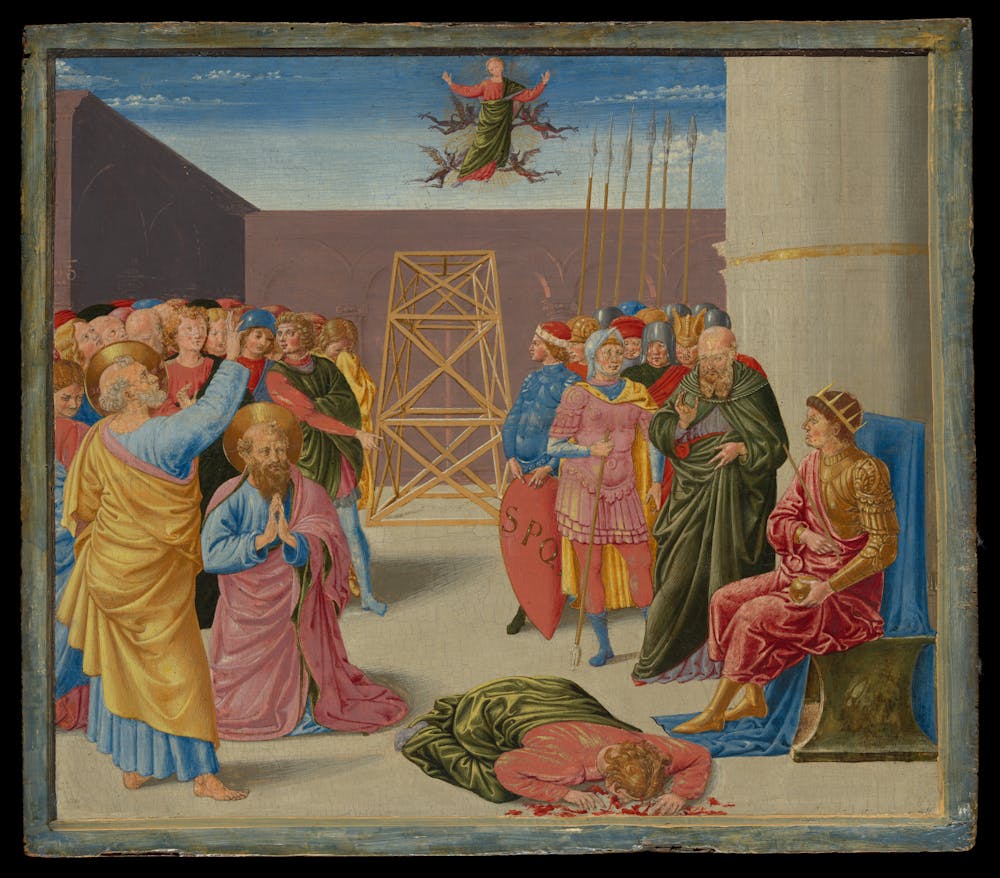
In early Christian stories, the magician Simon uses magic immorally to try and gain power and influence.
The Metropolitan Museum of Art
Ancient authors invented the idea that the miracles of Christians possessed inherent moral superiority over non-Christian magic because ancient audiences were as enticed by magic as modern ones. But in elevating Christianity above magic, these writers created false distinctions that linger even today.

This article is republished from The Conversation, a nonprofit news organization dedicated to unlocking ideas from academia, under a Creative Commons license.
[This week in religion, a global roundup each Thursday. Sign up.]

About Shaily Shashikant Patel
Shaily Shashikant Patel is an Assistant Professor of Early Christianity at Virginia Tech. You can read more about the author here.


Browse Our Archives
Select a Category Buddhism Christianity Hinduism Islam Judaism Religion and society Uncategorized
Select a Month July 2024 March 2024 February 2024 January 2024 December 2023 November 2023 October 2023 September 2023 August 2023 July 2023 January 2023 August 2022 July 2022 April 2022 February 2022 January 2022 October 2021 July 2021 June 2021 May 2021 April 2021 March 2021 February 2021 January 2021 December 2020 November 2020 October 2020 September 2020 August 2020 July 2020 June 2020 May 2020
Follow Us!
TAKE THE
Religious Wisdom Quiz
Who does Paul describe as his true son in the faith?
Select your answer to see how you score.
Onesimus Titus Philemon Timothy
Related posts from The Conversation


Why The Olympic Games Are A ‘Civil Religious’...

How Christians Hold Differing Views On The Resurrection

Pope Francis called surrogacy ‘deplorable’
TRENDING AT PATHEOS Religion News

Catholic Integralists believe that religious values – specifically Christian ones – should...

Electing A Virtuous President Would Make Immunity Irrelevant
Presidential immunity can bring with it many risks. So how can we...

Why The Olympic Games Are A ‘Civil Religious’...
Sporting events form a vital space where Americans display their 'civil religious...

After more than a decade of news, research updates, and insights on...

Q: Why do Southern Baptists and like-minded Protestants...
THE RELIGION GUY’S ANSWER: Why? Simple. Because they believe that’s what the...

THE QUESTION: Is gambling evil? THE RELIGION GUY’S ANSWER: Analysts anticipate a...
view all Religion News blogs
Ad-Free & Subscriber Log-In Subscription Support
- About Us
- 2026 Calendar
- Videos
- Podcasts
- Library of World Religions
- Faith In Media Tracker
- Advertise With Us
- Write for Us
- Privacy Policy
- Terms of Service
- Do Not Sell My Data
- Contact Us
- Radiant Digital
- Manage Newsletter Subscriptions
- Unsubscribe From Notifications
- Sitemap
Copyright 2008-2026, Patheos. All rights reserved.
Subscription Support Ad-Free & Subscriber Log-In
Follow Patheos