
BuddhistCatholicContemplativeEvangelicalGeneral ChristianHinduJewishLatter-day SaintMuslimNew VisionsProgressive Christian
Beliefs
- Buddhist
- Catholic
- Contemplative
- Evangelical
- General Christian
- Hindu
- Jewish
- Latter-day Saint
- More Voices
- Muslim
- New Visions
- Pagan
- Progressive Christian
Topics
- Religion News
- Food and Religion
- Sports and Religion
- Religious Art
- Religious Music and Entertainment
- Religious Events
- History and Religion
- Style and Religion
- Politics and Religion
- Women in Religion
- Recreation Outdoors and Religion
- Business Finance and Religion
- Careers Workplace and Religion
- Education and Religion
- Family Parenting and Religion
- Health Fitness and Religion
- Home and Religion
- Relationships and Religion
- Technology and Religion
- Travel and Religion
Columnists
- Buddhist Columnists
- Business Finance and Religion Columnists
- Careers Workplace and Religion Columnists
- Catholic Columnists
- Contemplative Columnists
- Education and Religion Columnists
- Evangelists Columnists
- Family Parenting and Religion Columnists
- General Christian Columnists
- Health Fitness and Religion Columnists
- Hindu Columnists
- History and Religion Columnists
- Home and Religion Columnists
- Jewish Columnists
- More Voices Columnists
- Latter Day Columnists
- Muslim Columnists
- New Visions Columnists
- Nonreligious Columnists
- Pagan Columnists
- Politics and Religion Columnists
- Progressive Columnists
- Recreation Outdoors and Religion Columnists
- Relationships and Religion Columnists
- Religion News Columnists
- Religious Art Columnists
- Religious Events Columnists
- Religious Music and Entertainment Columnists
- Sports and Religion Columnists
- Style and Religion Columnists
- Technology and Religion Columnists
- Travel and Religion Columnists
- Women in Religion Columnists
Resource Library
- 2026 Calendar
- Library of World Religions
- The 100 Most Holy Places on Earth
- Patheos Answers
- Podcasts
- Videos
- Faith Leaders Database
- Anglican Episcopalian
- Bahai
- Baptist
- Buddhism
- Christianity
- Confucianism
- Eastern Orthodoxy
- Hinduism
- Holiness and Pentecostal
- ISKCON
- Islam
- Judaism
- Lutheran
- Methodist
- The Church of Jesus Christ of Latter-day Saints
- New Age
- Paganism
- Presbytarian and Reformed
- Protestantism
- Religion Behind the Scenes
- Roman Catholic
- Scientology
- Shia Islam
- Sikhism
- Sufism
- Sunni Islam
- Taoism
- Zen
- See all religions
Research Tools
 Ad-Free & Subscriber Log-In Subscription Support
Ad-Free & Subscriber Log-In Subscription Support
Follow Patheos 

- Trending:
- Forgiveness
- |
- Marriage
- |
- Consciousness
- |
- Death Penalty
- |
- Election
- |
- Halloween

- Home
- Religion News
- 5 strategies for cultivating hope this year
5 strategies for cultivating hope this year
Last updated on: January 23, 2021 at 7:33 am by The Conversation
5 strategies for cultivating hope this year 2021-01-22T10:33:26-04:00 The Conversation
Patheos Explore the world's faith through different perspectives on religion and spirituality! Patheos has the views of the prevalent religions and spiritualities of the world.

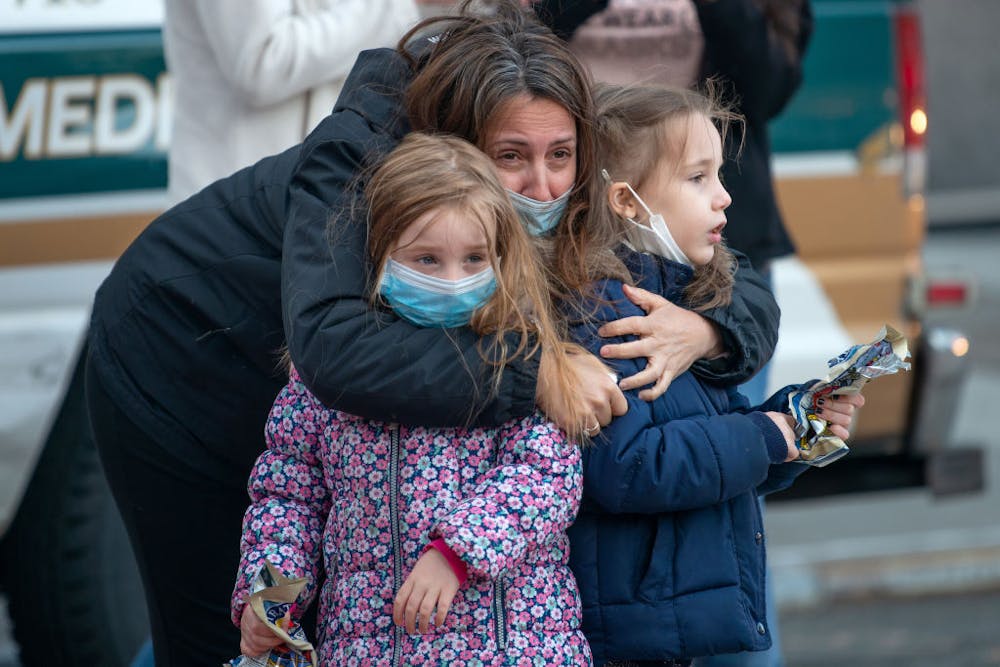
How do we find hope when times are bleak?
Peter Muhly/AFP via Getty Images
By Jacqueline S. Mattis of Rutgers University – Newark
The raging coronavirus pandemic, along with political turbulence and uncertainty, have overwhelmed many of us.
From almost the start of 2020, people have been faced with bleak prospects as illness, death, isolation and job losses became unwelcome parts of our reality. On Wednesday, many of us watched in horror and despair as insurgents stormed the U.S. Capitol.
Indeed, all through these times, both the dark and bright sides of human nature were evident as many people engaged in extraordinary compassion and courage when others were committing acts of violence, self-interest or greed.
As a research scientist whose work focuses on positive psychology among people facing challenges, I am deeply aware that if ever there were a time for a conversation about hope, it is now.
Hope vs. optimism
First, let’s understand what hope is. Many people confuse optimism with hope.
Charles R. Snyder, author of “The Psychology of Hope,” defined hope as the tendency to see desired goals as possible, and to approach those goals with “agency thinking,” a belief that you or others have the ability to achieve the goals. He also defined hope as “pathways thinking,” a focus on mapping routes and plans to achieve those goals.
Optimism is different. Psychologist Charles Carver defines optimism as a general expectation that good things will happen in the future. Optimists tend to seek out the positive and, at times, deny or avoid negative information. In sum, optimism is about expecting good things; hope is about how we plan and act to achieve what we want.
Here are five key strategies to cultivate hope in these trying times:
1. Do something – start with goals
Hopeful people do not wish – they imagine and act. They establish clear, achievable goals and make a clear plan. They believe in their agency – that is, their capacity to achieve the outcomes. They recognize that their path will be marked by stresses, roadblocks and failure. According to psychologists such as Snyder and others, people who are hopeful are able to “anticipate these barriers” and they “choose” the right “pathways.”
Hopeful people imagine and act.
Alexi Rosenfeld/Getty Images Entertainment
Further, hopeful people adapt. When their hopes are thwarted, they tend to become more focused on doing things to achieve their goals.
As psychologist Eddie Tong writes, “hopeful people tend to think that desired goals are attainable even if personal resources are exhausted.” In other words, people of hope persist even when prospects may not be so favorable.
Importantly, evidence suggests that the belief that one is capable of achieving one’s goals may be more important for hope than knowing how to achieve those goals.
2. Harness the power of uncertainty
Several researchers have argued that, for hope to arise, individuals need to be able to perceive the “possibility of success.”
Research shows that many of life’s uncertainties could help people cultivate hope in difficult times. For example, a 2017 study showed that parents of children diagnosed with multiple sclerosis used the fact that so little is known about the condition in childhood to fuel and sustain their sense of hope. Parents reasoned that since it is so hard to accurately diagnose childhood multiple sclerosis and prognosis is so varied, there was a chance that their children were misdiagnosed and they could recover and live normal lives.
In sum, a future that is uncertain holds lots of possibilities. As such, uncertainty is not reason for paralysis – it is a reason to hope.
3. Manage your attention
Hopeful and optimistic people show similarities and differences in the kinds of emotional stimuli they pay attention to in the world.
For example, psychologist Lucas Kelberer and his colleagues found that optimists tended to seek out positive images, such as that of happy people, and avoid images of people who seem depressed.
Hopeful people did not necessarily seek out emotionally positive information. However, people high on hope spent less time paying attention to emotionally sad or threatening information.
In a world in which we are overwhelmed with options for what we read, watch and listen to, maintaining hope may not require us to go after positive information, but it does require that we avoid negative images and messages.
4. Seek community. Don’t go it alone
Hope is hard to sustain in isolation. Research demonstrates that for people working to bring social change, particularly anti-poverty activists, relationships and community provided the reason for hope and ignited their conviction to keep fighting.
Connection to others allowed activists to feel a sense of accountability, to recognize that their work mattered and that they were part of something bigger than themselves.
Relationships are important, but health research also suggests that sustaining hope depends, in part, on the particular company we keep. For example, parents of chronically ill children often maintained hope by withdrawing from or avoiding interactions with negative people who challenged their efforts to seek positive ends. We can stay hopeful if we connect with others who hold us accountable and remind us of why our struggles matter.
5. Look at the evidence
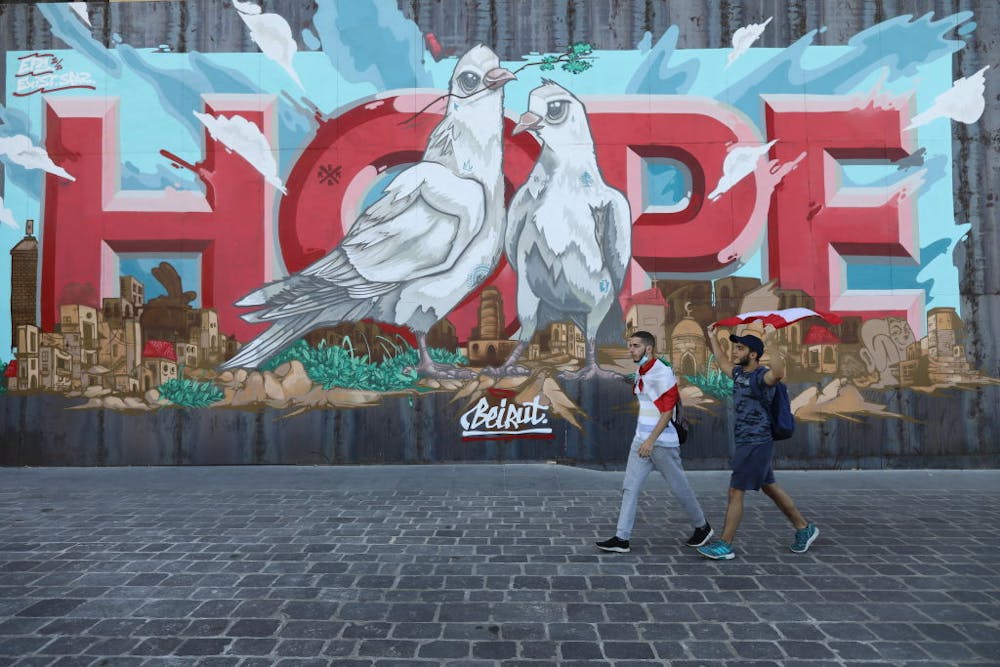
Cultivating hope can require trust and examining evidence from our lives.
Marwan Tahtah/Getty Images
Hope also requires trust. Hopeful people stake their trust in data, particularly in the evidence of history. Research demonstrates, for example, that anti-poverty activists drew hope from knowing that, historically, when people joined together in resistance they were able to create change.
Cultivating and sustaining hope, then, requires that we gather evidence from our own lives, history and the world at large and use that evidence to guide our plans, pathways and actions.
Hope also requires that we learn to use this data to effectively calibrate progress – no matter how small.
This article is republished from The Conversation, a nonprofit news organization dedicated to unlocking ideas from academia, under a Creative Commons license.
[Deep knowledge, daily. Sign up for The Conversation’s newsletter.]

About Jacqueline S. Mattis
Jacqueline S. Mattis is the Dean of Faculty at Rutgers University - Newark. You can read more about the author here.

Next Post

January 27, 2021 Think US evangelicals are dying out? Well, define evangelicalism ...
Browse Our Archives
Select a Category Buddhism Christianity Hinduism Islam Judaism Religion and society Uncategorized
Select a Month July 2024 March 2024 February 2024 January 2024 December 2023 November 2023 October 2023 September 2023 August 2023 July 2023 January 2023 August 2022 July 2022 April 2022 February 2022 January 2022 October 2021 July 2021 June 2021 May 2021 April 2021 March 2021 February 2021 January 2021 December 2020 November 2020 October 2020 September 2020 August 2020 July 2020 June 2020 May 2020
Follow Us!
TAKE THE
Religious Wisdom Quiz
Who fell from a window and died while Paul was preaching, then was raised back to life?
Select your answer to see how you score.
Tychicus Eutychus Timothy Erastus
Related posts from The Conversation


Electing A Virtuous President Would Make Immunity Irrelevant

Why The Olympic Games Are A ‘Civil Religious’...

The Catholic Church Is Using The Olympics To...
TRENDING AT PATHEOS Religion News

Catholic Integralists believe that religious values – specifically Christian ones – should...

Electing A Virtuous President Would Make Immunity Irrelevant
Presidential immunity can bring with it many risks. So how can we...

Why The Olympic Games Are A ‘Civil Religious’...
Sporting events form a vital space where Americans display their 'civil religious...

After more than a decade of news, research updates, and insights on...

Q: Why do Southern Baptists and like-minded Protestants...
THE RELIGION GUY’S ANSWER: Why? Simple. Because they believe that’s what the...

THE QUESTION: Is gambling evil? THE RELIGION GUY’S ANSWER: Analysts anticipate a...
view all Religion News blogs
Ad-Free & Subscriber Log-In Subscription Support
- About Us
- 2026 Calendar
- Videos
- Podcasts
- Library of World Religions
- Faith In Media Tracker
- Advertise With Us
- Write for Us
- Privacy Policy
- Terms of Service
- Do Not Sell My Data
- Contact Us
- Radiant Digital
- Manage Newsletter Subscriptions
- Unsubscribe From Notifications
- Sitemap
Copyright 2008-2026, Patheos. All rights reserved.
Subscription Support Ad-Free & Subscriber Log-In
Follow Patheos